If you have walked past the health food aisle lately, chances are a small red, wrinkled berry has caught your eye. Goji berries, also known as wolfberries or Lycium barbarum, have earned a reputation as one of the most talked about superfruits on the market. But do the benefits of goji berries actually live up to the hype, or is this just clever marketing dressed up in a health halo?
I am McLee Tembo, health consultant at NFH Clinic. Patients ask me everything from “can goji berries help me lose weight” to “is there really a goji berries cancer warning I should worry about.” So instead of another generic listicle, I put together a complete guide to goji berries benefits that answers these questions honestly, using both traditional use and current research, including named clinical trials most competing articles skip over entirely.
Overview
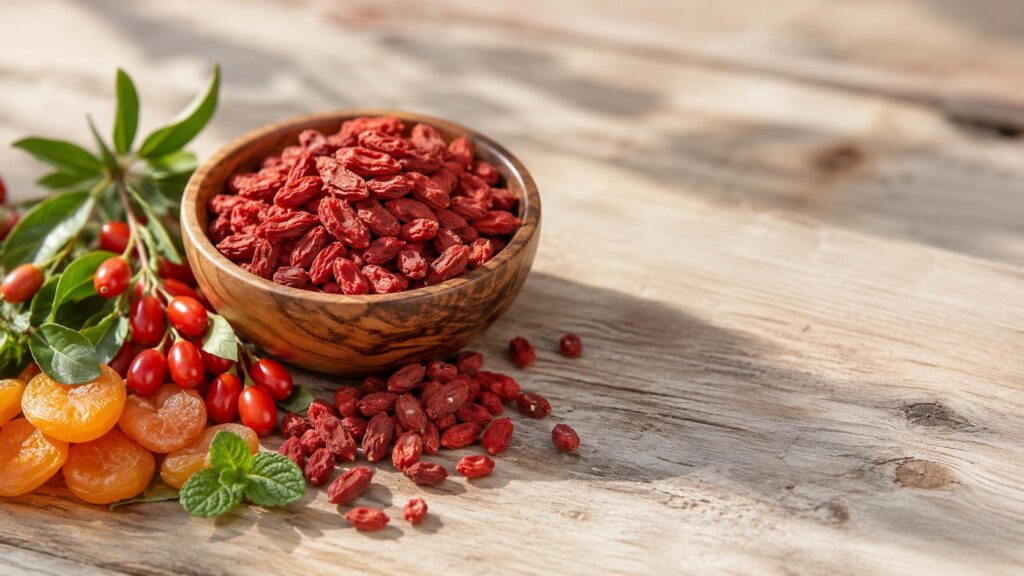
Goji berries are small red fruits from the Lycium barbarum plant, traditionally used in Chinese medicine and now sold worldwide as a dried snack, juice, powder, or tea. Their main appeal comes from a dense concentration of antioxidants, vitamin A, vitamin C, and fiber, nutrients tied to eye health, immune function, and general antioxidant support. Most healthy adults tolerate moderate daily amounts well, though people on blood thinners, diabetes medication, or blood pressure medication should check with a doctor first, since laboratory research and published case reports suggest goji berries can affect how the liver processes certain drugs.
Quick Facts: Goji Berries
| Fact | Detail |
|---|---|
| Scientific name | Lycium barbarum (most common commercial species) |
| Also known as | Wolfberry, Chinese wolfberry, gou qi zi |
| Plant family | Solanaceae (nightshade) |
| Native to | China, Mongolia, Tibetan plateau |
| Common forms | Dried, fresh, juice, powder, extract, tea |
| Taste | Tart, slightly sweet, faintly earthy |
| Glycemic index | Estimated as relatively low in several assessments, not independently lab-verified |
| Common serving used in studies | 20 to 30 g (about 2 to 3 tbsp) dried |
| Standout nutrients | Vitamin A, vitamin C, zeaxanthin, iron, fiber |
| Primary benefits | Eye health, immune support, antioxidant activity |
| Key caution | Linked in lab and case-report evidence to interactions with Warfarin and some heart medications |
Key Takeaways
- Goji berries are rich in antioxidants and carotenoids, especially zeaxanthin, which is tied to eye health.
- More than one human clinical trial has measured increased macular pigment or plasma zeaxanthin after regular goji berry intake, a biomarker associated with lower age-related macular degeneration risk, though this is not the same as a proven claim that goji berries prevent AMD.
- They are a good source of vitamin A, vitamin C, iron, and fiber, and contain small amounts of all nine essential amino acids, more a nutritional curiosity than a meaningful protein source.
- 20 to 30 grams of dried goji berries per day is a commonly used serving and sits within the range studied in several human trials, rather than an officially established recommended dose.
- Laboratory studies show goji berries can inhibit liver enzymes (CYP2C9 and CYP2D6) involved in processing Warfarin and certain heart medications, and separate published case reports describe serious bleeding events in patients on Warfarin after consuming goji tea or juice. The lab finding and the clinical case reports are distinct pieces of evidence that point the same direction.
- Goji berries support a healthy diet but are not a treatment, cure, or substitute for medical care.
In this article:
- What Are Goji Berries, and Are All "Goji Berries" the Same?
- Fresh vs Dried vs Juice vs Powder: Which Form Is Best?
- Goji Berries vs Raisins: What Is the Real Difference?
- Goji Berries Nutrition Facts
- Key Health Benefits of Goji Berries
- Goji Berries Benefits for Female Health
- Goji Berries Benefits for Male Health
- Goji Berries Benefits for Weight Loss
- Goji Berries Cancer Warning: Separating Fact From Fear
- What Current Research Says
- Are Goji Berries Better Than Other Superfruit Berries?
- How Much Goji Berries Per Day Is Safe?
- Best Time to Eat Goji Berries
- How to Eat and Use Goji Berries
- How Long Before You Notice Benefits?
- What Do Goji Berries Taste Like?
- How to Store Goji Berries
- Goji Berries Warnings: Who Should Not Eat Them?
- Goji Berries Side Effects and Drug Interactions
- Organic vs Non-Organic Goji Berries
- Frequently Asked Questions
- Bottom Line
What Are Goji Berries, and Are All “Goji Berries” the Same?
Goji berries come from shrubs in the Lycium genus, native to parts of Asia, particularly China, Mongolia, and the Tibetan plateau. They have been used in traditional Chinese medicine for centuries, often brewed into teas or added to soups to support energy, vision, and longevity.
Here is something almost no competing article mentions: not all goji berries are the same species. Most of what is sold commercially, especially the bright red dried berries in supermarkets, comes from Lycium barbarum. A close relative, Lycium chinense, is also used, mostly in traditional Chinese medicine preparations.
A separate, less common variety, black goji berry (Lycium ruthenicum), has a deep purple-black color and a different antioxidant profile, higher in anthocyanins rather than the carotenoids that dominate red goji berries. If you see “black goji berries” marketed as a distinct superfood, that is why: they are a genuinely different species with a different nutrient makeup, not just a color variant.
Fresh vs Dried vs Juice vs Powder: Which Form Is Best?
Not all goji products are equal, and this is one area most articles skip over entirely.
| Form | Antioxidant Density | Shelf Life | Best For |
|---|---|---|---|
| Dried berries | High, concentrated by weight | Long, up to a year sealed | Daily snacking, tea, baking |
| Fresh berries | Moderate, more water content | Very short, days | Rare, mostly local to growing regions |
| Juice | Variable, depends on processing | Weeks refrigerated | Convenient but often diluted or sweetened |
| Powder | High, concentrated | Long | Smoothies, baking, supplements |
| Extract or capsule | Concentrated, standardized in quality products | Long | Targeted supplementation, under guidance |
Dried Goji Berries Benefits: Why Most People Choose This Form
Drying goji berries removes water weight, which concentrates calories, sugar, and nutrients per gram compared to fresh fruit. This is why dried goji berries benefits are often discussed separately: ounce for ounce, dried berries deliver more fiber, more vitamin A, and more antioxidant activity than the same weight of fresh fruit, simply because you are eating more actual fruit solids per bite. The tradeoff is a higher sugar and calorie density, so portion control matters more with dried berries than with fresh ones.
For most people, dried goji berries are the most practical, shelf-stable option, and the form used in almost all of the clinical research behind their benefits, including the eye health trial discussed below.
Goji Berries vs Raisins: What Is the Real Difference?
Because both are small, chewy, dried fruits, people often ask how goji berries stack up against raisins, a far cheaper and more familiar snack.
| Factor | Goji Berries (dried) | Raisins |
|---|---|---|
| Calories per 28g | 90 to 100 | Around 85 |
| Sugar | 8 to 13 g | Around 20 g, generally higher |
| Vitamin A | Very high | Minimal |
| Vitamin C | Moderate to high | Minimal |
| Protein | 4 g | Under 1 g |
| Glycemic index | Estimated as relatively low in some assessments | Generally higher, in the moderate to high range |
Raisins are cheaper and more widely available. Goji berries are not automatically “healthier,” but they are nutritionally different: typically less sugar per serving, more protein, and a notably higher vitamin A and antioxidant content. Which one fits better depends on what you are optimizing for, blood sugar stability and micronutrient density favor goji berries, while cost and convenience favor raisins.
Goji Berries Nutrition Facts
Here is what a standard one ounce (28 gram) serving of dried goji berries typically provides:
| Nutrient | Amount per 28g serving | % Daily Value (approx.) |
|---|---|---|
| Calories | 90 to 100 kcal | — |
| Protein | 4 g | 8% |
| Fat | Under 1 g | 1% |
| Carbohydrates | 21 to 22 g | 8% |
| Fiber | 3 to 4 g | 13% |
| Sugars (natural) | 8 to 13 g | — |
| Vitamin A (as carotenoids) | Very high, often 100%+ | 100%+ |
| Vitamin C | Moderate to high, varies by drying method | 15 to 20% |
| Iron | 1.4 mg | 8% |
| Zinc | Trace to moderate | 3 to 5% |
| Copper | Present | 10% |
| Selenium | Trace | 5% |
| Potassium | 220 mg | 5% |
| Calcium | Trace | 1 to 2% |
| Zeaxanthin | Among the highest of any known food | — |
One nutritional curiosity worth noting: goji berries contain small amounts of all nine essential amino acids, which is unusual for a fruit. This does not make them a meaningful protein source, a 28-gram serving still only provides about 4 grams of protein, but it is an interesting quirk of their composition.
Some assessments estimate goji berries have a relatively low glycemic index compared to many other dried fruits, though this figure has not been established through rigorous, standardized lab testing for the specific products most people buy, and composition varies by source and processing.
Treat any specific GI number you see, including estimates in this guide, as a rough approximation rather than a settled fact, and remember that a full serving still carries a moderate glycemic load, so portion size matters regardless of the exact number.
Key Health Benefits of Goji Berries
1. Rich in Antioxidants
Goji berries contain a dense mix of antioxidants, including zeaxanthin, beta-carotene, and vitamin C. These compounds work by neutralizing free radicals, the unstable molecules that drive oxidative stress and contribute to cellular aging. Diets rich in antioxidant foods are consistently linked to lower markers of chronic inflammation.
2. Supports Eye Health (Goji Berries Benefits for Eyes)
This is one of the better studied goji berries benefits for eyes, and it is backed by more than just animal data. A double-masked, placebo-controlled trial published in Optometry and Vision Science (Bucheli et al., 2011) gave healthy adults aged 65 to 70 a daily 13.7 g dose of a proprietary milk-based goji berry formulation (not plain dried berries) for 90 days. Plasma zeaxanthin and antioxidant capacity rose significantly, and the goji group showed no increase in macular drusen, an early warning sign of age-related macular degeneration, while the placebo group did.
A separate randomized pilot trial had participants eat 28 grams of goji berries five times weekly, not daily, for 90 days, and measured a significant increase in macular pigment optical density, a biomarker linked to retinal protection. A third randomized study, in 114 people already diagnosed with early AMD, used 25 g of goji berry supplement daily for 90 days and found increased serum zeaxanthin and macular pigment.
Separately, animal research published in Drug Design, Development and Therapy found goji berry extract protected retinal ganglion cells, the cells damaged in glaucoma, though this has not yet been tested in human glaucoma patients and should be read as an early mechanistic lead, not a treatment claim.
Together these trials show consistent, measurable effects on eye-health biomarkers across different doses and formulations, though they measure surrogate markers rather than proving that goji berries prevent vision loss outright. Goji berries are naturally high in zeaxanthin, the carotenoid these studies point to as the likely mechanism, which helps filter harmful blue light in the retina.
3. Boosts Immune Function
Current evidence suggests goji berry polysaccharides may support normal immune function, potentially by influencing white blood cell activity, though larger human trials are still needed to confirm the effect size in everyday use. Alongside vitamin A and vitamin C, this is part of why goji berries appear so often in immune support blends, especially in colder months.
4. May Help Regulate Blood Sugar
Some research suggests goji berry polysaccharides may improve insulin sensitivity and slow the rate sugar enters the bloodstream, consistent with the fruit’s naturally low glycemic index. That said, dried goji berries carry meaningful natural sugar, so anyone managing diabetes should treat them as a controlled portion food and check with their doctor first.
5. Supports Skin Health
Between the antioxidants and beta-carotene, goji berries may help protect skin cells from UV related damage and support collagen production through their vitamin C content. This will not replace sunscreen, but it is a reasonable dietary addition alongside a proper skin care routine.
6. Aids Digestion
With roughly 3 to 4 grams of fiber per serving, goji berries support regular digestion and feed beneficial gut bacteria. Fiber also slows digestion slightly, which helps with satiety.
7. May Support Heart Health
Early research points to goji berry polysaccharides and antioxidants having a favorable effect on cholesterol and triglyceride levels. A review of human intervention trials found regular goji berry intake was linked to modest increases in HDL, the “good” cholesterol, of roughly 10 to 15 mg/dL, along with a small reduction in fasting glucose, but no significant change in body weight or blood pressure.
That last part matters: it is a useful, honest reminder that goji berries are not a weight-loss or blood-pressure-lowering food on their own, even though their fiber content can support a broader healthy eating pattern, as covered in the weight loss section below.
Combined with their fiber content, goji berries remain a reasonable addition to a heart conscious diet, though they are not a substitute for prescribed cardiovascular treatment, and, as covered below, they can seriously interfere with certain heart medications.
8. May Improve Mood and Energy
A randomized, double-blind, placebo-controlled trial published in the Journal of Alternative and Complementary Medicine (Amagase and Nance, 2008) had healthy adults drink a standardized goji juice daily for 14 days. Compared to placebo, participants reported measurable improvements in general feelings of wellbeing, better sleep quality, and reduced fatigue, with no adverse effects.
This is a genuinely rare case of a goji berry benefit tested directly in humans with a controlled study, rather than only in animal models.
Benefits Summary Table
| Benefit | Type of Evidence | Strength |
|---|---|---|
| Eye health support | Human randomized controlled trials | Moderate to strong |
| Antioxidant activity | Lab, cellular, and human trials | Strong |
| Immune support | Animal and preliminary human studies | Moderate |
| Blood sugar regulation | Small human trials, supported by low GI | Moderate |
| Skin protection | Mechanistic, nutrient based | Moderate |
| Heart health | Preliminary human and animal studies | Emerging |
| Mood and energy | Human randomized controlled trial (14 days) | Emerging to moderate |
| Weight management support | Indirect, via fiber and satiety | Moderate |
Goji Berries Benefits for Female Health
Search interest in goji berries benefits for female health has grown significantly, tied to traditional use in supporting hormonal balance and reproductive health. In traditional Chinese medicine, goji berries are considered nourishing for blood and yin energy, concepts often linked to menstrual health and fertility.
Modern research is starting to catch up in specific areas:
- Fertility evidence: Animal studies have shown goji berry extract can improve markers of ovarian health, including pregnancy and live birth rates in aged female mice, largely by reducing oxidative stress in reproductive tissue. Human clinical trials specifically on fertility remain limited, so this evidence should be viewed as promising rather than conclusive.
- Menopause and hormonal shifts: Some women report improved energy and reduced fatigue during perimenopause, which may relate to the antioxidant and vitamin C content supporting collagen and reducing oxidative stress rather than any direct hormonal action.
- Iron support: Goji berries provide a modest amount of non-heme iron, which can be a helpful, though not sufficient on its own, addition for women managing heavier menstrual cycles.
- PCOS: There is currently no direct clinical research on goji berries and PCOS specifically. Any potential benefit would likely come indirectly, through their effect on blood sugar and antioxidant status, both of which are relevant to PCOS management, but this should not be treated as a targeted treatment.
- Pregnancy myths: A persistent claim online suggests goji berries are dangerous during pregnancy. There is no strong evidence proving harm from typical whole-food amounts, but there is also no high-quality pregnancy-specific safety research establishing that regular or concentrated use is safe. Given that gap, and traditional medicine’s own caution around large, concentrated doses, the responsible approach is to check with your obstetrician before adding goji berries regularly during pregnancy rather than assuming they are automatically fine.
Goji Berries Benefits for Male Health
On the male side, goji berries have a long history in traditional medicine for supporting reproductive and sexual health, and there is now emerging scientific interest to back some of this up.
- Testosterone evidence: Goji berries contain zinc, a mineral directly involved in testosterone production. Animal research has found that goji berry compounds helped protect testicular tissue from heat related and oxidative stress while supporting healthy hormone levels. Human trials are still limited, so this remains a biologically plausible but not yet firmly proven benefit.
- Sperm quality: Animal and cell-based studies suggest goji berry compounds may support sperm count, motility, and morphology, largely attributed to their antioxidant effect on reducing oxidative damage to sperm cells, a known factor in a significant share of male infertility cases. Direct, high-quality human trials measuring sperm parameters after goji berry intake are still lacking, so this should be read as a plausible, mechanistically supported hypothesis rather than a proven effect in men.
- Athletic recovery: Because goji berries are rich in antioxidants and vitamin C, some athletes use them to support recovery from exercise-induced oxidative stress. Evidence here is mostly extrapolated from general antioxidant research rather than goji-specific sports science trials, so treat this as a reasonable, low-risk addition rather than a proven performance enhancer.
Goji Berries Benefits for Weight Loss
Can goji berries actually help you lose weight? Not on their own, and anyone claiming otherwise is overselling it. What they can do is support a weight loss friendly eating pattern in a few specific ways:
- Fiber: At 3 to 4 grams per serving, fiber slows digestion and supports fullness, which can reduce overall snacking.
- Satiety: The combination of fiber and a small amount of protein means goji berries are more filling than an equivalent amount of pure sugar or refined carbohydrate.
- Low glycemic index: Because they raise blood sugar gradually, goji berries may help avoid the energy crashes that often lead to overeating later.
- Snack replacement: Swapping candy or higher sugar dried fruit, like raisins, for a controlled portion of goji berries is a simple, sustainable change.
There is no credible evidence that goji berries boost metabolism or burn fat directly, and a review of human intervention trials found no significant effect on body weight from regular goji berry intake. Any weight-related benefit comes from how they fit into your overall eating pattern, not from a special fat-burning property.
Goji Berries Cancer Warning: Separating Fact From Fear
This is one of the most searched concerns, and it deserves a straight answer. There is currently no evidence that eating whole goji berries increases cancer risk. Most of the alarm behind this search term stems from internet misinformation, or from confusion between eating the whole fruit and laboratory studies that use highly concentrated extracts at doses no one consumes through diet.
In fact, the research trend runs in the opposite direction. Laboratory and animal studies have found that compounds in goji berries, particularly their polysaccharides and antioxidants, may slow the growth of certain cancer cells and reduce oxidative DNA damage, a known contributor to cancer development. Some early research has even explored goji extracts as a complementary support alongside standard treatment, with encouraging but preliminary results.
To be clear: these findings are preliminary and should not be interpreted as evidence that goji berries prevent or treat cancer in humans. Any real, documented safety concerns with goji berries relate to drug interactions and supplement quality, not to a cancer risk from the fruit itself. I will be direct with you: no natural food, goji berries included, should replace medical cancer screening or treatment. Treat the research as promising and worth watching, not as a green light to self-treat.
What Current Research Says
It helps to separate what is well established from what is still preliminary, and to be equally clear about what the evidence does not support.
Best-supported: Eye-related biomarkers, including macular pigment optical density and plasma zeaxanthin, have been measured in more than one human randomized controlled trial, including Bucheli et al. (2011) and a follow-up pilot trial. General antioxidant activity and nutrient density are also well documented. These are surrogate markers linked to eye health, not direct proof that goji berries prevent vision loss.
Promising but limited: The wellbeing, sleep, and fatigue improvements shown in Amagase and Nance’s 2008 double-blind trial fall here, real human data, but from a short 14-day study that has not been replicated at scale. Blood sugar and immune-related outcomes sit in this tier too, supported by small human trials and consistent animal research.
Preliminary: Fertility benefits, cardiovascular effects, and cancer-related mechanisms come mostly from animal models, cell studies, or small pilot trials. These are promising directions for future research, not settled conclusions, and should not be treated as proven benefits.
Not established: Claims that goji berries burn fat, treat or cure cancer, meaningfully boost testosterone in humans, or reverse any disease are not supported by current evidence. If you see a source making these claims outright, treat it with skepticism.
This kind of evidence hierarchy matters because health claims online often blur the line between “shown in a petri dish” and “proven in people.” Goji berries have real, evidence-backed benefits, but they are a supportive food, not a cure for anything.
Are Goji Berries Better Than Other Superfruit Berries?
A fair comparison, since goji berries often get lumped in with other trendy berries.
| Berry | Standout Nutrient | Antioxidant Strength | Sugar Content | Best For |
|---|---|---|---|---|
| Goji berries | Zeaxanthin, vitamin A | High | Moderate (dried), low glycemic index | Eye health, immune support |
| Blueberries | Anthocyanins | High | Low to moderate | Brain and heart health |
| Acai | Anthocyanins, healthy fats | High | Low | Heart health, energy |
| Cranberries | Proanthocyanidins | Moderate | Low (often high when sweetened) | Urinary tract health |
| Pomegranate | Punicalagins | Very high | Moderate | Heart and blood pressure support |
No single berry is objectively “best.” Goji berries stand out specifically for eye health and vitamin A content, while blueberries and pomegranate tend to edge ahead on total antioxidant capacity per gram. The most practical approach is rotating a variety of berries rather than relying on just one.
How Much Goji Berries Per Day Is Safe?
There is no officially established recommended daily dose for goji berries. What we can say is that 20 to 30 grams of dried goji berries per day, roughly a small handful or two to three tablespoons, is a commonly used serving that falls within the range studied in the human trials referenced above, which used doses from about 13.7 to 28 grams depending on the formulation.
For most healthy adults without the interaction risks covered later in this guide, this range is a reasonable, well-tolerated starting point, and consistency over time matters more than occasional larger amounts.
Recommended amounts vary by group:
- Children: There is limited research on goji berries specifically in children. A small taste as part of a varied diet is generally fine, but regular daily use should be discussed with a pediatrician, particularly because of the choking risk with whole dried fruit in younger kids.
- Pregnant women: Pregnancy-specific safety evidence on goji berries is limited, so no dose can be called confidently established as safe. Discuss any regular or concentrated use, including supplements, teas, or juices, with your obstetrician before adding them to your routine.
- People with diabetes: Stick to a small, consistent portion and monitor blood sugar response. The low glycemic index helps, but goji berries still contain meaningful natural sugar.
- Older adults: Goji berries can be a useful addition for eye and immune support, matching the population studied in the Bucheli trial, but those on blood thinners or blood pressure medication should check with their doctor first due to a documented interaction risk covered below.
- Athletes: A daily serving alongside a balanced diet is generally well tolerated and may support recovery through antioxidant activity, though it is not a substitute for proper post-workout nutrition.
Best Time to Eat Goji Berries
There is no strict rule here, but a few practical patterns work well:
- Morning: Adding them to breakfast, oatmeal, or a smoothie provides a steady source of fiber and antioxidants to start the day.
- Before a workout: A small serving can offer a light, natural source of carbohydrate energy.
- With meals: Eating goji berries alongside a meal containing some fat can improve absorption of their fat-soluble carotenoids like beta-carotene and zeaxanthin.
- At night: Some traditional use favors goji tea in the evening for its calming reputation, and this lines up loosely with the improved sleep quality reported in the Amagase and Nance trial, though timing itself was not specifically tested.
The most important factor is consistency, not timing.
How to Eat and Use Goji Berries
Goji berries are easy to work into a normal routine.
| Method | Best For |
|---|---|
| Straight as a snack | Quick, portable option, like raisins |
| Smoothies | Adding natural sweetness and antioxidants |
| Tea | Traditional preparation, mild and soothing |
| Oatmeal or overnight oats | Breakfast texture and nutrient boost |
| Yogurt | Contrast of tart and creamy |
| Salads | Adds tartness alongside greens and nuts |
| Trail mix | Balanced snack with nuts and seeds |
| Baking | Muffins, granola bars, energy balls |
| Soups | Traditional Chinese medicine preparations |
| Rice dishes | Traditional pairing in Asian cuisine |
| Infused water | Light, mild flavor addition |
| Desserts | Topping for dark chocolate or baked goods |
Soaking dried goji berries in warm water for about ten minutes before eating can soften them and make them easier to digest, particularly for first time use.
How Long Before You Notice Benefits?
There is no single, universal timeline for “feeling” the benefits of goji berries, and it’s worth being honest that most of what we know comes from specific biomarkers measured in specific trials, not from tracking how quickly people subjectively feel different. With that caveat, here is what the actual research measured:
- Same day: Fiber tends to increase fullness at the meal it’s eaten with, a general effect of fiber-rich foods rather than something specifically studied in goji berries.
- 14 days: In the Amagase and Nance trial, self-reported wellbeing, sleep quality, and fatigue scores were measurably better than placebo after 14 days of daily goji juice.
- 90 days: In the Bucheli and related eye-health trials, changes in plasma zeaxanthin, antioxidant capacity, and macular pigment density were measured after 90 days of consistent intake. These are biomarker changes, not a guarantee of noticeably different vision.
Outside of what these specific trials measured, there isn’t good evidence for how quickly other benefits, like skin or heart health effects, might appear. Treat goji berries as a long-term dietary habit rather than something with a predictable, fast timeline.
What Do Goji Berries Taste Like?
Goji berries have a tart, slightly sweet flavor, often compared to a cross between a cranberry and a raisin, with a faint earthy or tomato-like undertone that comes from their nightshade family origins. Dried berries are chewier and more concentrated in flavor than fresh ones. Most people find the taste easier to enjoy blended into smoothies, teas, or trail mixes than eaten in large quantities on their own, since the tartness can be intense in bigger portions.
How to Store Goji Berries
- Pantry: Dried goji berries store well in a sealed, airtight container in a cool, dark place for several months.
- Refrigerator: Refrigeration extends shelf life further and helps preserve color and nutrient content, especially in warmer climates.
- Freezer: Freezing dried goji berries can extend shelf life up to a year or more without significant nutrient loss.
- Moisture control: Keep them away from humidity, since moisture speeds up spoilage and mold risk. A small food-safe desiccant packet can help in humid environments.
Goji Berries Warnings: Who Should Not Eat Them?
While goji berries are safe for most healthy adults, certain groups should be cautious or avoid them without medical guidance:
- People taking Warfarin or other blood thinners, due to a well-documented interaction risk explained below
- People taking flecainide or other heart rhythm medications metabolized by the same liver enzyme pathway
- People on diabetes medication, since goji berries can affect blood sugar
- People on blood pressure medication, for similar interaction reasons
- Pregnant women, particularly with concentrated supplements or large doses
- People with a nightshade allergy, since goji berries belong to the same plant family as tomatoes and peppers
- Young children, mainly due to choking risk with whole dried fruit rather than a specific toxicity concern
- Organ transplant recipients, because of the potential immune-stimulating effect, which may be relevant for those on immunosuppressive therapy and should always be discussed with a treating physician
- People with known kidney disease, since goji berries contain potassium and should be reviewed with a doctor as part of a renal diet
Goji Berries Side Effects and Drug Interactions
Side Effects Table
| Side Effect | Who Is Affected |
|---|---|
| Digestive upset, bloating, loose stools | Anyone eating large amounts, especially dried |
| Allergic reaction (hives, itching, mild swelling) | People allergic to nightshades or peaches |
| Low blood pressure symptoms | People already on blood pressure medication |
| Blood sugar fluctuations | People with diabetes or on glucose-lowering drugs |
Drug Interaction Table
Here is the mechanism most articles leave out. In-vitro laboratory testing has found that goji berry extracts inhibit two liver enzymes, CYP2C9 and CYP2D6, which the body normally uses to break down several common medications.
That is a lab finding, not proof of the exact same effect at the exact same strength in every person who eats goji berries. What makes this more than a theoretical concern is that it lines up with a separate body of evidence: multiple published hospital case reports describe patients on Warfarin developing dangerously elevated INR and bleeding after drinking goji tea or juice, and one case report links goji berry consumption to flecainide toxicity.
The lab mechanism and the real-world case reports are two different types of evidence pointing in the same direction, which is why this interaction is taken seriously despite not being confirmed in a large-scale clinical trial.
| Medication | Why It Matters |
|---|---|
| Warfarin | Documented case reports describe elevated INR and serious bleeding after goji berry tea or juice, caused by CYP2C9 inhibition slowing warfarin breakdown |
| Flecainide and similar heart rhythm drugs | A published case report linked goji berry consumption to flecainide toxicity through CYP2D6 inhibition |
| Diabetes medication | May amplify blood sugar lowering effects |
| Blood pressure medication | May amplify blood pressure lowering effects, increasing risk of hypotension |
| Immunosuppressants | Potential immune-stimulating effect may counteract medication purpose |
Because hospital-documented bleeding events have occurred in this exact scenario, even though the underlying enzyme mechanism is based on lab data rather than a controlled clinical trial, anyone on Warfarin or a similar anticoagulant should treat goji berries, goji tea, and goji juice as off-limits unless specifically cleared by their prescribing doctor.
Sourcing also matters beyond drug interactions. Poor drying or storage conditions can introduce contaminants unrelated to the fruit itself. Choose goji berries from a reputable supplier, and where possible, look for products tested for pesticide residue.
Organic vs Non-Organic Goji Berries
Because goji berries are often imported and dried using varying agricultural standards, pesticide residue has been a documented concern with some non-organic sources. Choosing certified organic goji berries, or products tested by a third party for contaminants, is a reasonable precaution, especially since dried fruit concentrates whatever was present on the fresh berry. This does not mean non-organic goji berries are unsafe outright, but sourcing from a reputable, transparent supplier matters more with this fruit than with many others.
Frequently Asked Questions
What are goji berries good for?
Goji berries are best known for supporting eye health, backed by human clinical trials, along with immune function, skin health, and antioxidant intake. Evidence is still emerging for blood sugar control, heart health, and reproductive wellness.
How many goji berries should you eat a day?
Around 20 to 30 grams of dried goji berries per day, roughly two to three tablespoons, is the amount used in most clinical research and is considered safe for most adults.
Are dried goji berries healthy?
Yes. Drying concentrates their fiber, vitamin A, and antioxidant content per gram, though it also raises the sugar and calorie density, so portion size matters more than with fresh fruit.
Can you eat goji berries raw?
Yes, both fresh and dried goji berries can be eaten raw. Fresh berries are less common outside their growing regions and have a milder flavor than dried ones.
Are goji berries keto friendly?
Not really. Their carbohydrate content, largely from natural sugar, makes them a poor fit for strict keto diets in anything beyond a very small portion, despite their relatively low glycemic index.
Do goji berries raise blood sugar?
They can, though several assessments suggest less sharply than many other dried fruits, thanks to a relatively low glycemic index. That specific number has not been established through rigorous, standardized lab testing, so treat it as a general trend rather than a precise figure, and expect individual response to vary.
Do goji berries expire?
Yes. Dried goji berries typically last several months at room temperature in a sealed container, and longer when refrigerated or frozen.
Can you eat goji berries before bed?
Yes, a small serving is generally fine. A 2008 clinical trial found goji juice was linked to improved sleep quality after two weeks of daily use, which lends some support to the traditional practice of drinking goji tea in the evening.
Can diabetics eat goji berries?
In small, controlled portions, generally yes. Their low glycemic index is favorable, but they should still be treated as a carbohydrate source and monitored alongside other diabetes management strategies, ideally with a doctor’s input.
Are goji berries inflammatory or anti-inflammatory?
Current evidence points toward anti-inflammatory properties, largely due to their antioxidant and polysaccharide content, though goji berries are not a treatment for inflammatory conditions.
Can children eat goji berries?
In small amounts as part of a varied diet, generally yes, though whole dried berries carry a choking risk for very young children, and a pediatrician should be consulted for regular use.
Can goji berries improve eyesight?
They may support long-term eye health, and a human clinical trial found daily intake increased macular pigment density and protected against early markers of age-related macular degeneration. They will not reverse existing vision problems or replace corrective care.
Do goji berries support liver health?
Some traditional and preliminary research points to protective antioxidant effects on liver tissue, though this is not yet well established in human clinical trials. Separately, note that goji berries directly affect how the liver metabolizes certain drugs, which is the mechanism behind their documented Warfarin interaction.
Do goji berries contain caffeine?
No, goji berries are naturally caffeine free.
Can goji berries cause diarrhea?
In large amounts, yes, due to their fiber and natural sugar content. Starting with a small portion helps avoid this.
Should you soak goji berries before eating?
It is not required, but soaking dried goji berries in warm water for about ten minutes can soften them and make them easier to digest, particularly for first-time use.
Can you cook with goji berries?
Yes. They hold up well in soups, rice dishes, baked goods, and sauces, and are a traditional ingredient in various Asian cuisines.
Is there a real cancer risk with goji berries?
No. There is no evidence linking goji berries to cancer. Current research actually points toward potential anti-cancer properties in preliminary studies, though more human research is needed before firm conclusions can be drawn.
Are black goji berries different from red goji berries?
Yes. Black goji berries come from a different species, Lycium ruthenicum, and are higher in anthocyanins rather than the carotenoids that dominate common red goji berries. They are less studied overall than red goji berries.
Can dogs eat goji berries?
General veterinary-focused sources suggest small, occasional amounts are typically tolerated by dogs, though this is not backed by the kind of controlled veterinary studies used elsewhere in this guide. As with humans, goji berries may affect how certain medications are processed, so treat this as general guidance and confirm with your vet before making them a regular addition, particularly for dogs on blood thinners or diabetes medication.
Bottom Line
Goji berries are not a miracle cure, and I would be doing you a disservice if I told you otherwise. What they are is a nutrient dense, low glycemic addition to an already balanced diet, offering real, human-trial-supported benefits for your eyes and general wellbeing, alongside promising but still developing research on fertility, mood, and heart health.
My advice to patients at NFH Clinic stays the same regardless of which superfood we are discussing: use goji berries to complement good nutrition, consistent sleep, and regular movement, not to replace them. Start with a small daily handful, around 20 to 30 grams, watch how your body responds, and check with your doctor first if you are on Warfarin, flecainide, or any diabetes, blood pressure, or immunosuppressive medication, given the documented interaction risk covered above.
Used sensibly, and sourced from a reputable supplier, goji berries earn their place in a healthy pantry. Used as a substitute for real medical care, they will only ever disappoint you
Related Articles: