

Stool Softener Pregnancy
If you’re pregnant and every trip to the bathroom has become painful or frustrating, you’re far from alone. Constipation affects a large share of pregnant women, and the combination of hormones, prenatal iron, and your growing baby can make passing stool surprisingly difficult — even if you’ve never struggled with it before.
Rising progesterone slows gastrointestinal motility, your growing uterus adds physical pressure on the colon and rectum, and iron in your prenatal vitamin can compound the problem — a combination that makes constipation one of the most common complaints of pregnancy.
Choosing the right stool softener matters more than it might seem. Not every over-the-counter laxative has the same safety profile, and what’s fine to take occasionally isn’t always appropriate for daily or long-term use in pregnancy. Some ingredients that are perfectly safe outside of pregnancy — like castor oil or high-dose stimulant laxatives — carry theoretical risks once you’re expecting, while others, like docusate sodium and polyethylene glycol, have a long track record of use in pregnant patients with minimal systemic absorption.
This guide walks through exactly which stool softeners and laxatives are commonly recommended and considered low-risk, which to avoid, how safety considerations shift across the first, second, and third trimesters, and which natural and lifestyle remedies can reduce your need for medication in the first place. It also covers postpartum constipation, when hemorrhoids and fissures become a concern, and the specific warning signs that mean it’s time to call your provider rather than wait it out.
What Stool Softener is Safe During Pregnancy?
Quick Answer: Docusate (Colace) and polyethylene glycol (Miralax) are the two options most consistently recommended as first-line, pregnancy-safe stool softeners/laxatives, because very little of either drug is absorbed into your bloodstream. Bulk-forming fiber (psyllium, methylcellulose) and short-term use of magnesium hydroxide, lactulose, senna, or bisacodyl are also commonly used and considered low-risk. Castor oil, mineral oil, and sodium phosphate products should be avoided. This is general education, not personal medical advice — always confirm with your OB-GYN or midwife before starting anything new.
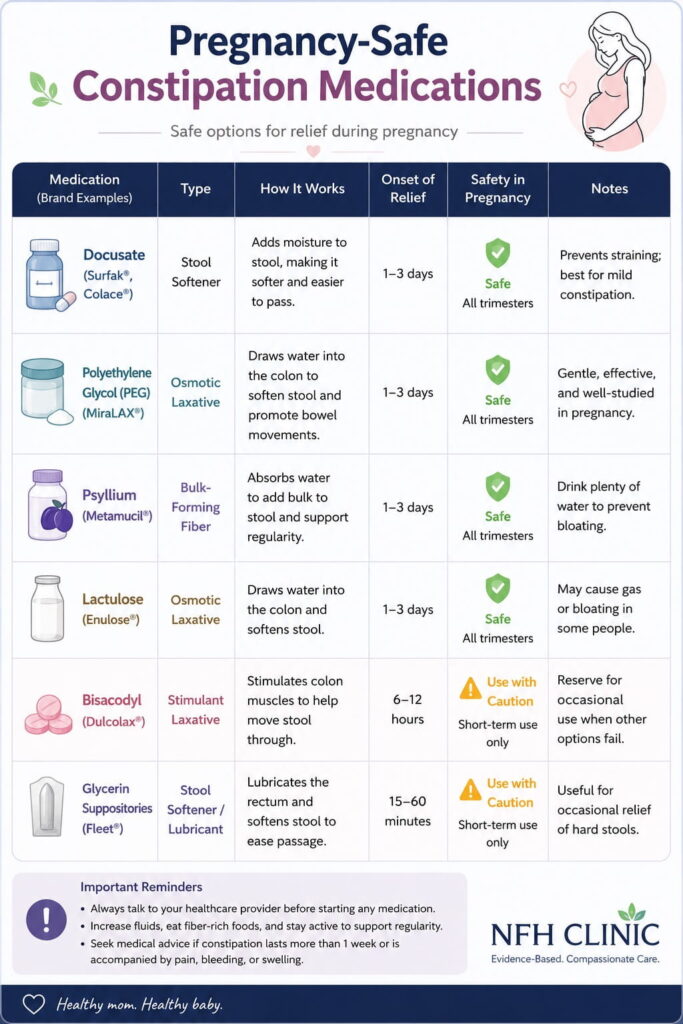
Quick Comparison
| Medication | Generally low-risk? | Works in | Best for |
|---|---|---|---|
| Docusate (Colace) | ✓ | 12–72 hrs | Hard, difficult-to-pass stool |
| Miralax (PEG 3350) | ✓ | 1–3 days | Ongoing constipation |
| Psyllium (fiber) | ✓ | 1–3 days | Prevention, mild constipation |
| Lactulose | ✓ | 1–2 days | Persistent constipation |
| Milk of Magnesia | Short-term | 30 min–6 hrs | Occasional relief |
| Dulcolax (bisacodyl) | Short-term | 6–12 hrs | Backup when other options fail |
Key Definitions
- Stool softener: A medication (like docusate) that draws water and fat into stool to make it easier to pass, without actively stimulating a bowel movement.
- Laxative: A broader term for any product that promotes a bowel movement, through several different mechanisms.
- Osmotic laxative: Draws water into the bowel to soften stool and increase movement frequency (e.g., Miralax, lactulose, Milk of Magnesia).
- Bulk-forming laxative: Adds fiber volume to stool to stimulate natural movement (e.g., psyllium).
- Stimulant laxative: Triggers intestinal muscle contractions directly (e.g., senna, bisacodyl).
- Peristalsis: The wave-like muscle contractions that move stool through the intestines.
In this article:
- Why Pregnancy Causes Constipation
- Is It Safe to Take a Stool Softener While Pregnant?
- Stool Softener vs. Laxative: What's the Difference?
- Decision Tree: Choosing a Treatment
- Medication-by-Medication Safety Breakdown
- Comparison Table: Constipation Treatments in Pregnancy
- Strength of Evidence by Medication
- Trimester-by-Trimester Guidance
- How to Relieve Constipation During Pregnancy Immediately
- Natural and Lifestyle Remedies
- Foods That Help vs. Foods That Worsen Constipation
- Daily Constipation Action Plan
- When Medication Isn't Working
- Anal Fissures and Hemorrhoids
- Postpartum and Breastfeeding Constipation
- Myths vs. Facts
- Common Mistakes to Avoid
- Red Flags: When to Seek Medical Care
- Pregnancy Constipation Checklist
- Ask-Your-Doctor Checklist
- Common Questions Your OB-GYN Hears
- FAQ: Stool Softener Pregnancy
- Key Takeaways
- How We Reviewed This Topic
- References
- About NFH Clinic
Note: Key definitions appear above in the Quick Comparison section; “Who Should Not Self-Treat” appears within the Decision Tree section.
Why Pregnancy Causes Constipation
Constipation affects a large share of pregnant women, and it isn’t just bad luck — it’s a predictable side effect of how your body changes to support a pregnancy.
Hormonal causes
Rising progesterone relaxes smooth muscle throughout your body, including the muscle lining your intestines. This slows gastrointestinal motility and the rhythmic contractions (peristalsis) that normally move stool through the colon, so waste sits longer than usual. The longer it sits, the more water your body reabsorbs from it — a process related to osmosis — leaving stool harder and more difficult to pass.
Physical causes
As your uterus grows, it gradually presses on the intestines and rectum, narrowing the space stool has to move through. In the third trimester, the baby’s head can add pressure low in the pelvis, compounding the problem. In severe or prolonged cases, this slowdown can progress to fecal impaction, where hardened stool becomes difficult to pass without intervention — one more reason not to let constipation go unaddressed for too long.
Clinical Insight: Most obstetric providers recommend starting with lifestyle changes — dietary fiber, fluids, and regular physical activity — before reaching for medication, because a meaningful number of pregnant women improve with these steps alone.
Other contributing factors
- Iron in prenatal vitamins is a well-known constipating agent — see our guide to managing iron-related constipation for strategies specific to prenatal iron.
- Reduced physical activity, especially later in pregnancy or with a high-risk pregnancy requiring rest.
- Lower fluid intake, sometimes from nausea or fear of frequent bathroom trips.
- Pre-existing irritable bowel syndrome (IBS-C) or a history of constipation.
- Anxiety about hemorrhoids or fissures, which can lead to stool withholding — ironically making constipation worse.
Symptoms of pregnancy constipation
- Fewer than three bowel movements a week
- Hard, lumpy, or pellet-like stools
- Straining or a feeling of incomplete emptying
- Bloating, abdominal discomfort, or gas
- Rectal pressure or pain with bowel movements
IBS and Pregnancy Constipation
If you already have irritable bowel syndrome with constipation (IBS-C), pregnancy hormones can make flare-ups more frequent or more intense, since progesterone slows the same gut motility that’s already sluggish with IBS. The safe treatment options are largely the same — fiber, hydration, and docusate or Miralax as needed — but it’s worth flagging your IBS history to your provider early, since they may tailor your fiber and fluid targets or watch more closely for symptom changes across trimesters.
Is It Safe to Take a Stool Softener While Pregnant?
Yes — for most pregnant women, docusate sodium (Colace) and similar stool softeners are generally considered one of the lower-risk categories of constipation treatment. The reason comes down to pharmacology: docusate acts locally in the gut to pull water and fat into the stool, and only a small fraction is absorbed into the bloodstream, so systemic exposure to the fetus is minimal.
That doesn’t mean every option is automatically fine, or that you should self-treat indefinitely without guidance. The American College of Obstetricians and Gynecologists (ACOG) and similar professional bodies generally support a step-up approach:
- Start with lifestyle changes — fiber, fluids, movement.
- Add a bulk-forming fiber supplement if diet alone isn’t enough.
- Add a stool softener or osmotic laxative (docusate or polyethylene glycol) if fiber isn’t enough.
- Reserve stimulant laxatives (senna, bisacodyl) for short-term, occasional use if the above steps fail.
- Avoid castor oil, mineral oil, and stimulant laxatives used long-term or in large doses, since these carry theoretical risks such as uterine stimulation, nutrient malabsorption, or electrolyte disturbance.
Always tell your prenatal provider what you’re taking, including OTC products — this is especially important if you have a history of preterm labor, preeclampsia, gestational diabetes, or kidney disease.
Stool Softener vs. Laxative: What’s the Difference?
A stool softener draws water into the stool to make it easier to pass; a laxative actively stimulates a bowel movement through one of several mechanisms. These terms get used interchangeably, but they aren’t the same thing.
- Stool softeners (docusate) don’t make you go — they make what eventually comes out softer and easier to pass by drawing water and fats into the stool. They’re gentle and slow-acting (12 hours to a few days).
- Laxatives actively stimulate a bowel movement through different mechanisms: osmotic laxatives pull water into the bowel (Miralax, lactulose, Milk of Magnesia); bulk-forming laxatives add fiber volume (psyllium); stimulant laxatives trigger intestinal muscle contractions (senna, bisacodyl); lubricant laxatives coat the stool (mineral oil, generally avoided in pregnancy).
If your main issue is hard, difficult-to-pass stool rather than infrequency, a softener is often the gentler first step. If stool isn’t moving at all, an osmotic or stimulant laxative may work faster.
Decision Tree: Choosing a Treatment
Use this as a general starting framework — not a substitute for guidance from your own provider.
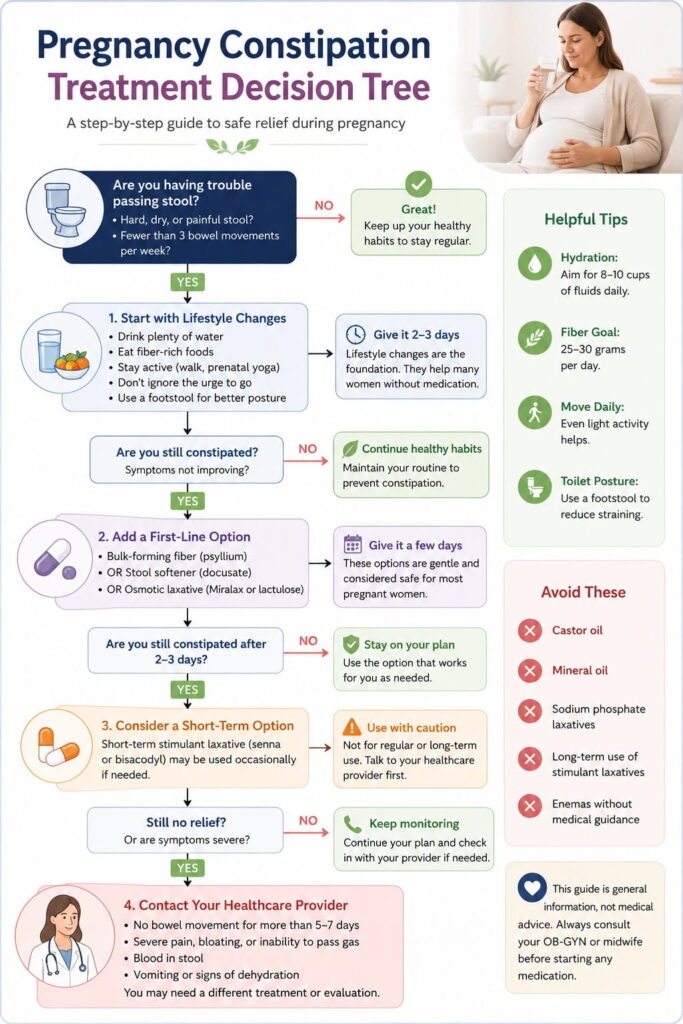
Are your stools hard, but you’re still going somewhat regularly? → Increase fluids and dietary fiber (soluble and insoluble) first. → Still constipated after a few days? Add a bulk-forming fiber supplement like psyllium. → Still constipated? Ask your provider about docusate sodium or polyethylene glycol (Miralax).
Are bowel movements infrequent (fewer than 3 per week) despite fiber and fluids? → Consider an osmotic laxative such as Miralax, lactulose, or short-term Milk of Magnesia, in consultation with your provider.
Have several days passed with no relief from the above? → A short-term stimulant laxative (senna or bisacodyl) may be appropriate under medical guidance.
Is constipation severe, painful, or accompanied by bleeding, no gas passage, or dehydration? → Skip self-treatment and seek medical review before using any laxative, especially a stimulant one.
Who Should Not Self-Treat
Talk to your provider before trying any stool softener or laxative on your own if you have:
- A history of bowel obstruction
- An inflammatory bowel disease (Crohn’s disease or ulcerative colitis) flare
- Severe or worsening abdominal pain
- Heavy or unexplained rectal bleeding
- Persistent vomiting alongside constipation
- A high-risk pregnancy where your obstetric provider has given specific instructions about medications
In these situations, self-treating can delay appropriate evaluation of what may be a different underlying issue.
Medication-by-Medication Safety Breakdown
The following is general education based on how these ingredients typically behave in pregnancy. It is not a substitute for a conversation with your own healthcare provider, who knows your full medical history. While decades of clinical use support these medications, randomized controlled trials in pregnant women are limited for ethical reasons — recommendations therefore rely on observational studies, pharmacology, and expert clinical guidance rather than large-scale pregnancy-specific trials.
Medication Safety Matrix
| Medication | Drug Class | OTC/Prescription | Typical Onset | Generally Considered Low-Risk | Often First Choice? |
|---|---|---|---|---|---|
| Docusate | Stool softener | OTC | 12–72 hrs | ✓ | ✓ |
| PEG 3350 (Miralax) | Osmotic laxative | OTC | 1–3 days | ✓ | ✓ |
| Psyllium | Bulk-forming | OTC | 1–3 days | ✓ | ✓ |
| Lactulose | Osmotic | Prescription (varies by region) | 1–2 days | ✓ | Sometimes |
| Milk of Magnesia | Saline/osmotic | OTC | 30 min–6 hrs | Short-term | Sometimes |
| Bisacodyl | Stimulant | OTC | 6–12 hrs | Short-term | No |
| Senna | Stimulant | OTC | 6–12 hrs | Short-term | No |
Colace Stool Softener (Docusate Sodium): Safety in Pregnancy
How it works: A stool softener that draws water and fat into the stool. Pregnancy status: Widely used and commonly recommended; only minimally absorbed systemically. MotherToBaby’s fact sheet on docusate sodium notes that, when used as directed, it is unlikely to increase the chance of birth defects above the general population risk. Often positioned as a first-line option. Typically used for: Hard stool, straining, prevention of straining after hemorrhoids or fissures. Precautions: Overuse has rarely been linked to low magnesium levels; stick to labeled dosing and check in with your provider for regular use beyond a few weeks. Side effects: Mild cramping, loose stools, occasional nausea.
Polyethylene glycol / PEG 3350 (Miralax)
How it works: An osmotic laxative that holds water in the stool to soften it and increase bowel movement frequency. Pregnancy status: Barely absorbed from the gut. Guidance from ACOG and gastroenterology professional bodies frequently names PEG 3350 a preferred first-choice treatment alongside docusate. Typically used for: Ongoing or more stubborn constipation not resolved by fiber alone. Precautions: Best for short-term or intermittent use unless your provider advises otherwise; stay well hydrated when using it. Side effects: Bloating, gas, occasional diarrhea if overused.
Lactulose
How it works: A non-absorbable sugar that osmotically draws water into the colon and softens stool. Pregnancy status: Generally considered low-risk; commonly used when other options aren’t tolerated. NICE (UK) guidance lists lactulose among the options considered suitable for constipation in pregnancy. Typically used for: Persistent constipation, sometimes preferred when a gentle, predictable osmotic effect is wanted. Precautions: Can cause significant bloating and gas, which some pregnant women find uncomfortable. Side effects: Flatulence, cramping, bloating.
Milk of Magnesia / Magnesium hydroxide
How it works: A saline (osmotic) laxative that draws water into the bowel. Pregnancy status: Generally regarded as low-risk for short-term, occasional use; some providers prefer to limit magnesium-containing products, particularly in women with kidney issues. Typically used for: Occasional, short-term relief when fiber and softeners aren’t enough. Precautions: Avoid regular or high-dose long-term use; check with your provider if you have kidney disease. Side effects: Diarrhea, cramping, electrolyte shifts with overuse.
Psyllium (Metamucil) and Methylcellulose (Citrucel)
How they work: Bulk-forming fibers that absorb water and add volume to stool, stimulating natural movement. Pregnancy status: Generally considered low-risk since they aren’t absorbed into the bloodstream; often the recommended starting point before medication. Typically used for: Mild to moderate constipation, prevention. Precautions: Must be taken with plenty of water, or they can worsen blockage; introduce gradually to reduce gas and bloating. Side effects: Bloating, gas, especially when started too quickly or without enough fluid.
Bisacodyl (Dulcolax)
How it works: A stimulant laxative that triggers intestinal muscle contractions. Pregnancy status: Short-term, occasional use is generally considered acceptable when gentler options have failed. Typically used for: Short-term relief when other treatments haven’t worked. Precautions: Not intended for regular or prolonged use; can cause cramping. Discuss with your provider before using regularly. Side effects: Abdominal cramping, low potassium with overuse, urgency.
Senna
How it works: A plant-derived stimulant laxative. Pregnancy status: Similar profile to bisacodyl — short-term, occasional use is typically considered low-risk. Typically used for: Short-term relief for stubborn constipation. Precautions: Avoid long-term or high-dose use; may cause more cramping than gentler options. Side effects: Cramping, diarrhea, electrolyte disturbances with overuse.
Glycerin suppositories
How they work: A rectally inserted osmotic agent that draws water into the stool and lubricates the rectum. Pregnancy status: Generally considered low-risk, with minimal systemic absorption, and useful when oral options are slow to act. Typically used for: Faster relief, especially with rectal discomfort or fissures. Precautions: Insert gently to avoid irritating hemorrhoids or fissures. Side effects: Mild rectal irritation, cramping.
What to generally avoid
- Castor oil — associated with stimulating uterine contractions; avoid unless specifically directed by a provider for labor induction purposes.
- Mineral oil — can interfere with absorption of fat-soluble vitamins with regular use and carries aspiration risk if taken incorrectly.
- Sodium phosphate preparations — risk of significant electrolyte shifts; generally avoided.
- Enemas — not typically first-line in pregnancy and should only be used under medical guidance, since they can occasionally trigger cramping.
Clinical Pearl: Most pregnant women do not need stimulant laxatives if constipation is treated early with hydration, dietary fiber, and an appropriate stool softener. Reaching for a stimulant laxative first, rather than as a backup, is one of the more common avoidable steps in self-treatment.
Miralax vs. Colace During Pregnancy: Which Is Better?
This is one of the most common questions pregnant women ask their provider or pharmacist, and the honest answer is that both are widely accepted, commonly used options — they just work differently.
- Colace (docusate sodium) is a stool softener. It doesn’t trigger a bowel movement; it makes stool softer and easier to pass by drawing water and fat into it. It’s a good match for hard, difficult-to-pass stool, or for preventing straining if you already have hemorrhoids or a fissure.
- Miralax (polyethylene glycol / PEG 3350) is an osmotic laxative. It pulls water into the bowel and tends to be more effective when constipation is more about infrequency than just hard stool.
In practice, many providers reach for docusate first because it’s gentler, and add Miralax if docusate alone isn’t enough. Some pregnant women use both together under medical guidance — a fiber supplement plus docusate, with Miralax added if needed — since they act through different mechanisms and are often well tolerated in combination. There’s no single “winner” between Miralax and Colace during pregnancy; the better option depends on whether your main symptom is hard stool or infrequent stool, and your provider can help you decide.
What’s the Best Stool Softener During Pregnancy?
Based on how consistently they appear in professional guidance and how minimally they’re absorbed into the bloodstream, docusate sodium (Colace) and polyethylene glycol (Miralax) are typically named as the best stool softener/laxative options during pregnancy. Bulk-forming fiber (psyllium) is often recommended as the very first step before either one. The “best” choice ultimately depends on your symptoms and history, so treat this as a starting point for a conversation with your provider rather than a one-size-fits-all answer.
What’s the Best Stool Softener After Pregnancy (Postpartum)?
Postpartum, docusate sodium remains the most commonly recommended option — it’s gentle, doesn’t cause cramping, and is considered compatible with breastfeeding. Many hospitals send new mothers home with it specifically to ease the first bowel movements after a vaginal delivery with stitches or a C-section. If docusate alone isn’t enough in the postpartum period, a fiber supplement or Miralax is often added next, following the same step-up approach used during pregnancy.
Comparison Table: Constipation Treatments in Pregnancy
| Treatment | Type | Onset | General Pregnancy Standing | Best For |
|---|---|---|---|---|
| Docusate (Colace) | Stool softener | 12 hrs–3 days | Low-risk, first-line | Hard stool, prevention |
| Polyethylene glycol (Miralax) | Osmotic laxative | 1–3 days | Low-risk, first-line | Ongoing constipation |
| Psyllium (Metamucil) | Bulk-forming fiber | 1–3 days | Low-risk | Mild constipation, prevention |
| Lactulose | Osmotic laxative | 1–2 days | Generally low-risk | Persistent constipation |
| Milk of Magnesia | Saline/osmotic laxative | 30 min–6 hrs | Low-risk, short-term | Occasional relief |
| Glycerin suppository | Rectal osmotic | 15–60 min | Low-risk | Fast relief, fissures |
| Bisacodyl (Dulcolax) | Stimulant laxative | 6–12 hrs | Short-term use only | Stubborn constipation |
| Senna | Stimulant laxative | 6–12 hrs | Short-term use only | Stubborn constipation |
| Castor oil | Stimulant | Varies | Generally avoided | — |
| Mineral oil | Lubricant | 6–8 hrs | Generally avoided | — |
This table is for general education. Individual recommendations depend on your health history — confirm with your provider.
Strength of Evidence by Medication
“Generally considered safe” doesn’t mean the same level of research backs every option. Here’s a general sense of how much clinical experience and evidence exists behind the most common choices:
| Medication | Strength of evidence | Clinical experience in pregnancy |
|---|---|---|
| Docusate (Colace) | Moderate | Extensive — decades of use |
| Polyethylene glycol (Miralax) | Moderate | Extensive |
| Psyllium / bulk fiber | High | Extensive |
| Lactulose | Moderate | Extensive |
| Milk of Magnesia | Moderate | Long-standing, short-term use |
| Senna / Bisacodyl | Moderate | Long-standing, short-term use |
“Moderate” evidence generally reflects a lack of large-scale, controlled human trials in pregnancy (which are hard to run for ethical reasons), not evidence of harm — much of what’s known comes from decades of clinical use, observational data, and pharmacokinetic studies showing minimal systemic absorption.
Trimester-by-Trimester Guidance
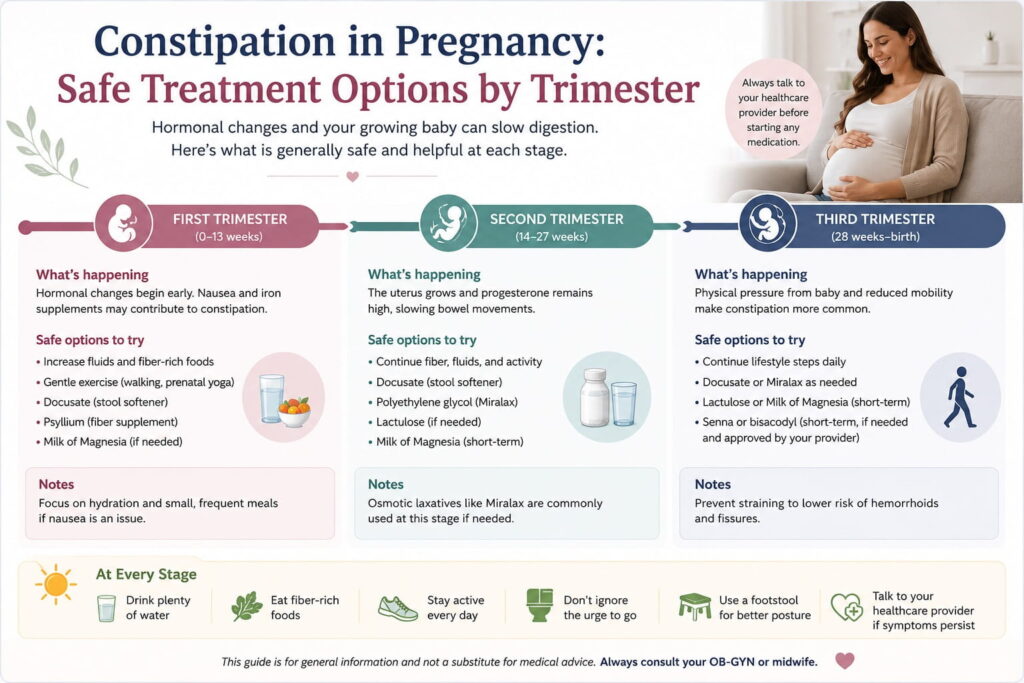
First Trimester: Safe Laxatives and Milk of Magnesia
Constipation often takes a back seat to nausea in early pregnancy, but iron supplementation and hormonal shifts can already start slowing digestion. When people search for safe laxatives during pregnancy in the first trimester, docusate and fiber are usually the answer — both are typically well tolerated even amid morning sickness. Milk of Magnesia is also generally considered appropriate in the first trimester if fiber and docusate aren’t enough, though as with any option, confirm with your provider first. If nausea limits fluid intake, gentle stool softeners paired with small, frequent sips of water are usually easier to manage than large fiber loads.
Second trimester
This is often when constipation becomes more noticeable, as the uterus rises and progesterone remains elevated. Osmotic options like Miralax or lactulose are commonly introduced here if fiber and softeners aren’t enough.
Third trimester
Physical compression from the growing baby, plus reduced mobility, tends to make constipation most pronounced now. This is also when hemorrhoids and fissures become more common, making stool softeners particularly useful to prevent straining. Short-term stimulant laxatives may be considered under medical guidance if other measures fail, though they’re typically used sparingly this close to delivery.
How to Relieve Constipation During Pregnancy Immediately
When you need relief now rather than in a day or two, a few options tend to act fastest:
- Glycerin suppository — often works within 15–60 minutes by drawing water into the stool and lubricating the rectum.
- Milk of Magnesia — an osmotic laxative that can bring relief in as little as 30 minutes to 6 hours.
- Warm water first thing in the morning — a simple home remedy that can stimulate the gastrocolic reflex and prompt a bowel movement.
- A brisk short walk — light movement can jump-start intestinal motility faster than sitting still.
- Prune juice — a natural, fiber- and sorbitol-rich option many pregnant women find effective within a few hours.
For immediate constipation relief during pregnancy, home remedies like these are usually the safest starting point; medications like docusate and Miralax work more gradually (12 hours to a few days) and are better suited to ongoing prevention than same-day relief. If you need fast relief regularly, that’s a sign to build a more consistent daily routine — see the action plan below — rather than relying on quick fixes each time.
Natural and Lifestyle Remedies
Fiber
Aim for roughly 25–30 grams of fiber daily from food sources where possible, increasing gradually to avoid gas and bloating. Both soluble fiber (found in oats, chia, and legumes, which dissolves into a gel and softens stool) and insoluble fiber (found in whole grains and vegetable skins, which adds bulk) play a role — see our high-fiber meal plans for pregnancy for a full week of ideas.
Hydration
Extra fluid needs during pregnancy make dehydration a common, overlooked constipation trigger. A general target is about 8–10 cups (roughly 2–2.5 liters) of fluid daily, more in hot climates or with physical activity — confirm your ideal intake with your provider. Our pregnancy hydration guide covers daily targets and easy ways to hit them if plain water gets tedious.
Movement
Even light daily activity — a 20–30 minute walk, prenatal yoga, or swimming — helps stimulate intestinal motility. Always get clearance from your provider for your specific pregnancy.
Toilet habits
- Don’t ignore the urge to go.
- Use a footstool to elevate your knees above your hips, which straightens the rectal angle and reduces straining.
- Avoid prolonged sitting or straining on the toilet.
Probiotic-rich foods
Yogurt, kefir, and fermented vegetables may support a healthier gut microbiome, which can indirectly support regularity, though evidence specific to pregnancy constipation is still developing.
Foods That Help vs. Foods That Worsen Constipation
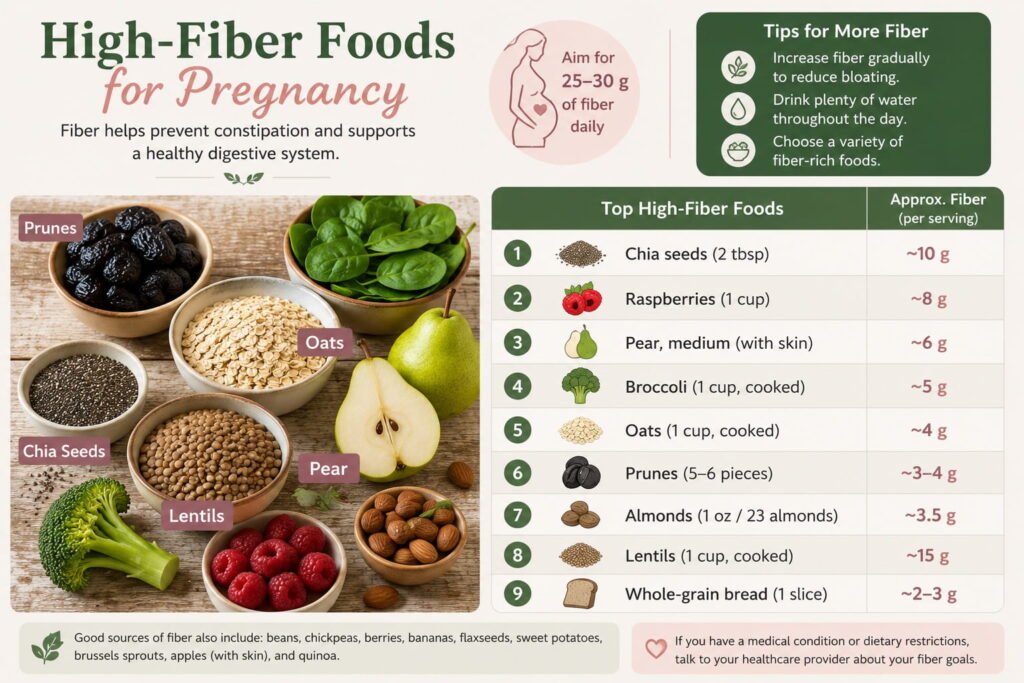
High-fiber foods and approximate fiber content
| Food | Approximate Fiber |
|---|---|
| Chia seeds (2 tbsp) | ~10 g |
| Lentils (1 cup, cooked) | ~15 g |
| Raspberries (1 cup) | ~8 g |
| Pear, medium (with skin) | ~6 g |
| Oats (1 cup, cooked) | ~4 g |
| Prunes (5–6) | ~3–4 g |
| Whole-grain bread (1 slice) | ~2–3 g |
| Broccoli (1 cup, cooked) | ~5 g |
| Almonds (1 oz) | ~3.5 g |
Foods that can worsen constipation
- Highly processed, low-fiber snack foods
- White bread, white rice, and refined grains
- Excess dairy in some individuals
- Fried and fast food
- Caffeinated beverages in excess (can contribute to dehydration)
- Unripe bananas (ripe bananas tend to be gentler)
Daily Constipation Action Plan
Morning: Warm water or herbal tea on waking; high-fiber breakfast (oats, chia, or a prune smoothie); take prenatal vitamin with food if iron is a suspected trigger, per your provider’s guidance.
Midday: Short walk after lunch; fiber-rich lunch with legumes or vegetables; steady water intake throughout the day rather than large amounts at once.
Evening: Light activity if tolerated; magnesium-rich foods (leafy greens, nuts) with dinner; avoid delaying bathroom visits.
As needed: If 2–3 days pass without a bowel movement despite these steps, consider adding a fiber supplement or stool softener, and check in with your provider if symptoms persist beyond a week.
When Medication Isn’t Working
If you’ve tried fiber, fluids, and an appropriate stool softener or osmotic laxative and still aren’t getting relief, don’t simply keep escalating doses on your own. Contact your provider if:
- You still haven’t had a bowel movement after 3–5 days of consistent treatment
- Severe or worsening abdominal pain develops
- You’re unable to pass gas at all, which can suggest a bowel obstruction
- Rectal bleeding is increasing rather than staying stable
- You show signs of dehydration — dark urine, dizziness, or reduced urination
These signs suggest it’s time for a medical evaluation rather than trying a stronger over-the-counter product, since they can occasionally point to something beyond ordinary pregnancy constipation, such as fecal impaction.
Anal Fissures and Hemorrhoids
Hard stool and straining during pregnancy are the most common causes of hemorrhoids (swollen veins around the anus or lower rectum) and anal fissures (small tears in the lining of the anus). Both can cause pain, itching, and bright red blood on toilet paper or in the stool.
Why constipation causes them
Straining increases pressure in the rectal veins and can tear the delicate skin around the anus. Because pregnancy already increases blood volume and pelvic pressure — and progesterone relaxes vein walls — pregnant women are more prone to hemorrhoids even before constipation is factored in. Add hard, difficult-to-pass stool, and the risk climbs further.
How stool softeners help
Softer stool passes with far less pressure and friction, which reduces the strain that causes fissures and aggravates hemorrhoids in the first place. This is one reason docusate is so often recommended proactively in the second and third trimesters, even before symptoms appear, rather than only after they develop.
Prevention tips
- Don’t delay bowel movements once you feel the urge
- Use a footstool to reduce straining
- Stay ahead of constipation with fiber and fluids rather than reacting to it
- Avoid sitting on the toilet longer than necessary
Recovery expectations
Most mild fissures and hemorrhoids improve within one to two weeks with softer stool, sitz baths, and topical care. Larger or persistent hemorrhoids may take longer and occasionally need in-office treatment postpartum.
If bleeding is heavy, doesn’t match what you’d expect from a fissure, or is accompanied by significant pain, contact your provider rather than assuming it’s routine. For a deeper dive, see our complete guide to hemorrhoids during pregnancy.
Postpartum and Breastfeeding Constipation
Constipation frequently continues — or even starts — after delivery, driven by:
- Lingering effects of pregnancy hormones
- Pain medication (especially opioids after a C-section)
- Perineal soreness or stitches making bowel movements intimidating
- Reduced mobility in the first days postpartum
- Ongoing iron supplementation
Postpartum stool softeners: Docusate sodium remains a commonly recommended first-line choice postpartum, including after a vaginal delivery with perineal repair or a C-section, because it’s gentle and doesn’t stimulate cramping. Many hospitals routinely offer it in the days after delivery for exactly this reason.
After a vaginal birth: If you had stitches from a tear or episiotomy, fear of pain often leads to delaying bowel movements — which only makes stool harder and the eventual movement more uncomfortable. A stool softener taken proactively in the first days postpartum can break this cycle.
After a C-section: Abdominal surgery, reduced mobility, and opioid pain medication all commonly slow the bowels. Opioid-related constipation in particular can be significant, since opioids directly slow intestinal motility — docusate or a gentle osmotic laxative is frequently paired with pain management for this reason.
Pelvic floor recovery: Straining during bowel movements adds pressure to a pelvic floor that’s already healing from pregnancy and delivery. Keeping stool soft supports pelvic floor recovery and can reduce the risk of aggravating hemorrhoids or a healing perineal repair. Our postpartum recovery checklist covers this alongside other early recovery essentials.
Breastfeeding considerations: Docusate and PEG 3350 are generally considered compatible with breastfeeding since minimal amounts pass into breast milk. Stimulant laxatives like senna have also been studied in breastfeeding mothers without significant reported effects on infants, but should still be used only as needed and discussed with your provider or pediatrician, especially with a newborn.
Myths vs. Facts
| Myth | Fact |
|---|---|
| “All laxatives are dangerous in pregnancy.” | Several categories — stool softeners, bulk fiber, and certain osmotic laxatives — are considered low-risk. |
| “Stool softeners will induce labor.” | Docusate and PEG-based softeners are not associated with triggering labor; castor oil is the one specifically linked to uterine stimulation and is generally avoided for that reason. |
| “You just have to live with pregnancy constipation.” | Diet, hydration, movement, and appropriately chosen medications can meaningfully improve symptoms. |
| “Natural remedies are always safer than medication.” | Some “natural” products, like castor oil, actually carry more theoretical risk than well-studied options like docusate. |
| “If one stool softener doesn’t work, none will.” | Different classes work through different mechanisms — a softener, osmotic laxative, and fiber supplement can be combined or swapped with medical guidance. |
Common Mistakes to Avoid
- Waiting too long to address mild constipation, letting it become severe or painful
- Increasing fiber quickly without enough water, which can worsen bloating and blockage
- Using stimulant laxatives regularly instead of as an occasional backup
- Ignoring rectal bleeding instead of mentioning it to a provider
- Skipping prenatal vitamins altogether to avoid iron-related constipation rather than addressing the constipation directly
- Self-treating for more than 1–2 weeks without checking in with a healthcare provider
Red Flags: When to Seek Medical Care
Contact your healthcare provider promptly if you experience:
- No bowel movement for more than a week despite home treatment
- Severe abdominal pain or cramping
- Rectal bleeding that is heavy, dark, or unexplained
- Vomiting alongside constipation
- Signs of a bowel obstruction: bloating with inability to pass gas or stool, severe pain
- Fever combined with abdominal symptoms
- Sudden, severe swelling, pain, or bleeding from hemorrhoids
Seek immediate/emergency care if you have severe, worsening abdominal pain, persistent vomiting, signs of heavy blood loss, or any symptom that feels alarming — these can occasionally signal something beyond simple constipation and warrant prompt evaluation.
Pregnancy Constipation Checklist
A simple, printable daily checklist to keep you on track:
☐ Drinking enough water (8–10 cups daily)
☐ Eating 25–30 g of fiber from food
☐ Walking or moving for at least 20–30 minutes
☐ Not delaying the urge to go
☐ Using a footstool to reduce straining
☐ Reviewed current medications and supplements with your provider
☐ Called your provider if symptoms have persisted beyond a week
Ask-Your-Doctor Checklist
Bring these notes to your next appointment (or a phone call) so your provider can give you the most useful guidance quickly:
- How long you’ve been constipated
- Stool consistency (hard, lumpy, or normal but infrequent)
- Any medications or supplements you’re currently taking
- Whether you’re taking an iron supplement, and how much
- Your approximate daily water intake
- Your approximate daily fiber intake
- Whether you’ve noticed any blood in your stool or on toilet paper
- Your pain level, if any, with bowel movements
Common Questions Your OB-GYN Hears
Is it safe to push while pregnant?
Pushing to have a bowel movement isn’t the same as straining forcefully, and normal, gentle pushing during a bowel movement is not dangerous to your pregnancy. Prolonged, forceful straining is best avoided because it can worsen hemorrhoids and fissures — which is exactly why softening the stool first is so useful.
Will constipation hurt my baby?
Ordinary constipation does not harm your baby. It affects your digestive tract, not your uterus or the baby’s environment directly. Severe, prolonged constipation is mainly a concern for your own comfort and bowel health, though it’s still worth treating rather than ignoring.
Can constipation cause miscarriage?
No — there’s no established link between typical pregnancy constipation and miscarriage. Miscarriage causes are unrelated to bowel habits. If you’re experiencing pain or bleeding you’re worried about, contact your provider so they can evaluate the actual cause.
Is daily Miralax okay?
Short courses are well studied, and many providers are comfortable with daily use for a period of time, but ongoing daily use is generally something to review with your provider rather than continue indefinitely on your own.
Can I use two medications together?
Sometimes — for example, a fiber supplement plus docusate is a common, generally well-tolerated combination. Combining multiple stimulant laxatives, or adding a stimulant laxative to an osmotic one without guidance, is best discussed with your provider first to avoid overcorrecting or causing cramping.
FAQ: Stool Softener Pregnancy
Is Colace safe during pregnancy?
Docusate sodium (Colace) is widely regarded as one of the safer stool softeners in pregnancy, since very little is absorbed into the bloodstream. Confirm dosing with your provider.
Is Miralax safe to take while pregnant?
Yes, polyethylene glycol (Miralax) is commonly considered a first-choice option because it’s barely absorbed from the gut, though it’s generally recommended for short-term or intermittent use.
Can you take Miralax every day while pregnant?
Short courses are well studied and many providers are comfortable with daily use for a limited period, but ongoing daily use long-term is generally something to review with your provider rather than continue indefinitely on your own.
Is magnesium hydroxide (Milk of Magnesia) safe during pregnancy?
Occasional, short-term use of magnesium hydroxide is generally considered low-risk in pregnancy, including in the first trimester, though some providers prefer to limit magnesium-containing products — check with your care team, especially if you have kidney concerns.
What is the best stool softener during pregnancy?
Docusate sodium and polyethylene glycol are the two options most consistently named as first-line choices, but the “best” one depends on your symptoms, history, and your provider’s guidance.
What is the best stool softener after pregnancy (postpartum)?
Docusate sodium is the most commonly recommended postpartum option, since it’s gentle, doesn’t stimulate cramping, and is considered compatible with breastfeeding.
Can I take a stool softener in my first trimester?
Yes, stool softeners like docusate are generally considered appropriate throughout all three trimesters, though always check with your provider given your specific history.
Is Dulcolax (bisacodyl) safe during pregnancy?
Short-term, occasional use is generally considered acceptable when gentler measures haven’t worked, but it isn’t intended for regular or prolonged use in pregnancy.
Is Milk of Magnesia safe during pregnancy?
Occasional, short-term use is generally considered low-risk, though some providers prefer to limit magnesium-containing products — check with your care team, especially if you have kidney concerns.
What can I take for immediate constipation relief while pregnant?
A glycerin suppository often works fastest (15–60 minutes), while Milk of Magnesia and other osmotic laxatives can bring relief within hours. Docusate and fiber work more gradually.
What natural stool softener works during pregnancy?
Prunes, prune juice, chia and flax seeds, warm water first thing in the morning, and adequate hydration are commonly used natural approaches alongside movement.
Are stool softeners safe after a C-section or vaginal delivery?
Yes, docusate is commonly recommended postpartum to reduce straining while healing, and it’s considered compatible with breastfeeding.
When should I worry about constipation during pregnancy?
If you go more than a week without a bowel movement, have severe pain, notice unusual rectal bleeding, or have bloating with an inability to pass gas or stool, contact your provider.
Can constipation affect labor?
No, constipation itself does not usually affect labor or delivery. However, severe constipation can add discomfort and may worsen existing hemorrhoids during pushing, so it’s still worth treating rather than ignoring as your due date approaches.
Should I stop taking my prenatal iron because it causes constipation?
No — don’t stop iron without talking to your provider first, since it plays an important role in preventing anemia during pregnancy. Instead, discuss adjusting the dosage or timing, switching to a different iron formulation, or adding a stool softener and dietary changes to manage the constipation while continuing your iron.
Key Takeaways
- Pregnancy constipation is extremely common and driven by hormones, physical pressure, and iron supplementation.
- Docusate sodium (Colace) and polyethylene glycol (Miralax) are the two options most often named as pregnancy-safe first-line choices.
- Bulk-forming fiber, magnesium hydroxide, lactulose, and glycerin suppositories are also commonly used and widely accepted as low-risk.
- Short-term senna or bisacodyl can be used occasionally under guidance; castor oil, mineral oil, and sodium phosphate products are generally avoided.
- Diet, hydration, movement, and toilet posture are foundational and often reduce the need for medication.
- Stool softeners remain useful postpartum, including while breastfeeding, to ease healing and reduce straining.
- Persistent, severe, or alarming symptoms — no bowel movement for a week, heavy bleeding, severe pain — warrant prompt medical attention.
Pregnancy constipation is uncomfortable, but it’s rarely something you have to simply tolerate. Starting with hydration, fiber, and movement resolves it for many women; when that’s not enough, options like docusate and polyethylene glycol have a long track record of use in pregnancy with a low-risk profile. The safest path is rarely to guess — it’s to combine what you know about your options with a quick conversation with your OB-GYN, midwife, or pharmacist, so your treatment fits your specific pregnancy.
How We Reviewed This Topic
This guide was created after reviewing obstetric guidelines, pharmacology references, and peer-reviewed pregnancy literature, then medically edited for clarity and readability. Where evidence is limited, as is common in pregnancy research for ethical reasons, that limitation is noted directly rather than glossed over.
References
- American College of Obstetricians and Gynecologists (ACOG)
- Mayo Clinic — Pregnancy constipation FAQ
- MotherToBaby fact sheets (docusate sodium, laxatives)
- NICE (National Institute for Health and Care Excellence, UK) guidance on constipation in pregnancy
- Drugs.com pregnancy monographs
- Peer-reviewed studies via PubMed/PMC on polyethylene glycol and pregnancy constipation
About NFH Clinic
NFH Clinic provides evidence-based preventive health education and telehealth consultations for adults and families, with content developed and reviewed by licensed and credentialed health professionals.
Related Articles: