
Table of Contents
- What Is Magnesium Glycinate?
- Health Benefits of Magnesium Glycinate
- Who Benefits Most From Magnesium Glycinate?
- Magnesium Glycinate for Women
- Magnesium Glycinate for Men
- Magnesium Glycinate Dosage Guide
- How Do You Know It's Working? (Timeline)
- Magnesium Glycinate Side Effects
- Magnesium Glycinate Interactions
- Who Should Avoid Magnesium Glycinate?
- Magnesium Glycinate Deficiency Symptoms
- Foods Rich in Magnesium
- Magnesium Glycinate vs. Other Forms
- Best Magnesium Glycinate: How to Choose a Quality Supplement
- Practical Magnesium Glycinate Uses
- Should You Take Magnesium Glycinate? A Quick Decision Guide
- Common Magnesium Glycinate Mistakes
- Magnesium Glycinate: Myth vs. Fact
- Magnesium Glycinate FAQs
- The Bottom Line
What Is Magnesium Glycinate?
Quick answer: Magnesium glycinate is a supplement made by binding magnesium to glycine, an amino acid. This pairing, known as chelation, makes the mineral gentler on digestion and easier for the body to absorb than many other magnesium forms.
If you’ve ever dealt with restless nights, tight muscles after a workout, or a doctor mentioning your magnesium levels were “a little low,” there’s a good chance magnesium glycinate came up in the conversation. It’s one of the most recommended forms of magnesium, and for good reason — but it’s also one of the most misunderstood.
Here’s the short version before we go deep: magnesium itself is a mineral your body needs for hundreds of everyday processes, from muscle contraction to heart rhythm to sleep regulation. Most magnesium supplements combine that mineral with something else to help it travel through your digestive tract. In magnesium glycinate’s case, that “something else” is glycine — and the combination happens to be one of the calmer, better-tolerated options on the shelf.
Keep reading, because the details matter more than the marketing. How much you actually absorb, when you should take it, who should be cautious, and how it stacks up against citrate, oxide, and threonate all change the answer to “is this right for me?”
Key Takeaways
- A gentle, well-absorbed form of magnesium, bound to the amino acid glycine.
- Often chosen to support sleep quality and muscle relaxation.
- Best suited for people with low dietary intake, increased needs, or a diagnosed deficiency — not necessarily everyone.
- Follow recommended dosages (elemental magnesium, not total compound weight) and check for medication interactions before starting.
How It Works
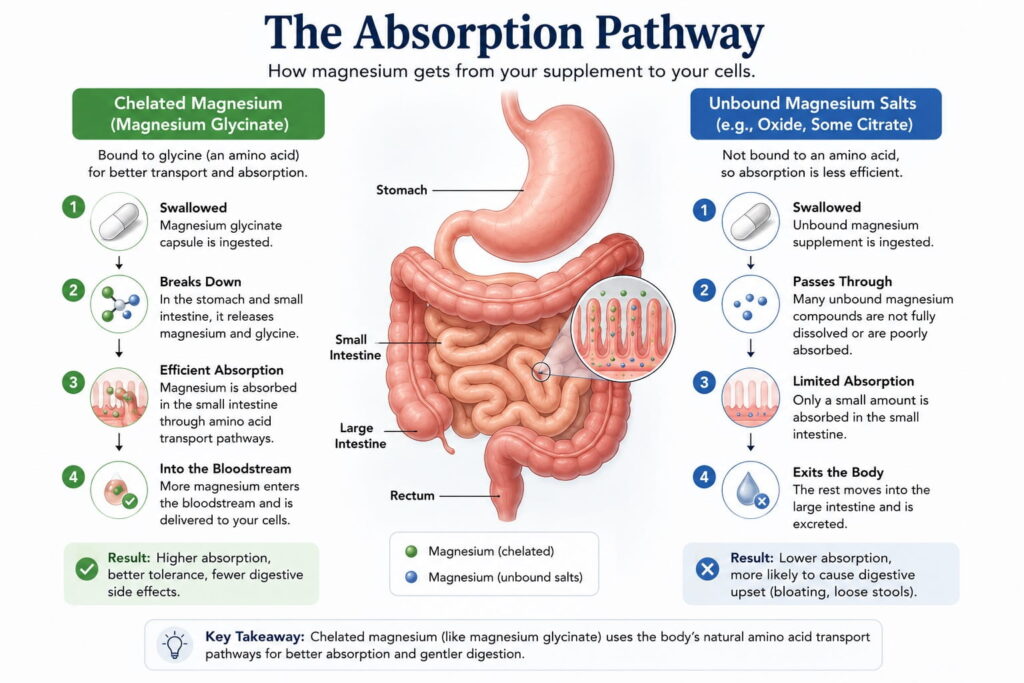
Once swallowed, magnesium glycinate breaks apart in the digestive tract, releasing magnesium ions that are absorbed primarily in the small intestine. Because the mineral is already bound to glycine — a molecule the body readily transports — it doesn’t rely as heavily on the same absorption pathway that overwhelms the gut with unbound magnesium salts, which is part of why it tends to cause less bloating and looser stools than options like magnesium oxide or citrate.
Elemental Magnesium and Bioavailability
This is the part almost every label glosses over, and it’s the single most useful thing to understand before you buy anything.
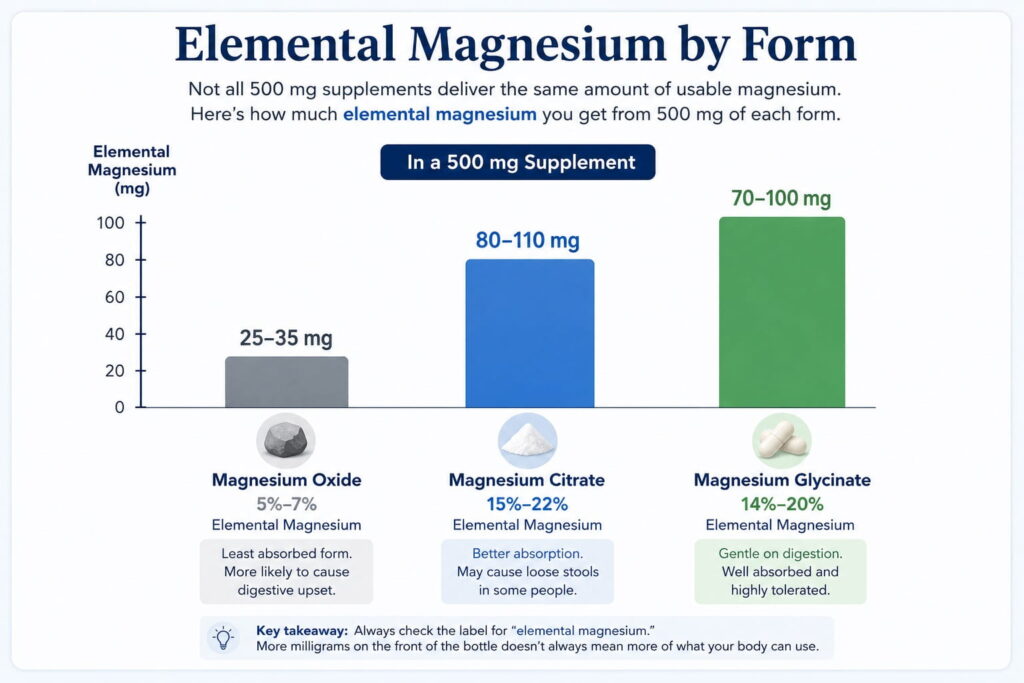
A “500 mg magnesium glycinate” capsule does not contain 500 mg of usable magnesium. Glycine adds bulk, so only a portion of that total weight — typically around 14% — is elemental magnesium, the form your cells actually use. That means a 500 mg capsule usually delivers somewhere close to 70–100 mg of elemental magnesium, depending on the manufacturer.
Definition box — Elemental Magnesium: The actual amount of magnesium your body can use, as opposed to the total weight of the compound (magnesium plus glycine, citrate, oxide, etc.). Always check the Supplement Facts panel for the “elemental magnesium” or “magnesium (as glycinate)” line, not just the front-of-bottle number.
Bioavailability — how much of what you swallow actually gets absorbed — is where glycinate tends to shine compared with poorly absorbed forms like oxide. It won’t outperform every form for every purpose (magnesium L-threonate, for instance, is studied specifically for crossing into brain tissue), but for general, everyday supplementation with minimal digestive upset, glycinate is considered one of the more dependable choices.
Health Benefits of Magnesium Glycinate
Before diving in, it’s worth being upfront: magnesium is essential, and correcting a real deficiency produces clear, well-established benefits. Many of the more specific claims you’ll see online — anxiety relief, migraine prevention, PMS relief — are supported by smaller or mixed studies rather than large, definitive trials. We’ll flag where the evidence is solid versus still emerging.
Evidence at a Glance
| Claim | Evidence Strength |
|---|---|
| Corrects magnesium deficiency | Strong |
| Supports bone health | Strong |
| Supports heart health / blood pressure | Moderate–Strong |
| Sleep support | Moderate |
| Migraine prevention | Moderate (dose-dependent, physician guidance advised) |
| Muscle cramp relief | Moderate |
| PMS support | Limited–Moderate |
| Blood sugar support | Limited–Moderate |
| Anxiety support | Limited |
| Testosterone boost | Weak |
Magnesium Glycinate for Sleep
Magnesium plays a role in regulating neurotransmitters that help the nervous system wind down, including GABA, which promotes relaxation. Some smaller trials suggest magnesium supplementation modestly improves subjective sleep quality, especially in people who start out with lower magnesium levels. It is not a sedative, and it will not knock you out — think of it as removing a mild obstacle to rest rather than adding a strong sleep aid.
Research snapshot: Several small, randomized trials have reported modest improvements in self-reported sleep quality with magnesium supplementation, particularly in older adults and people with lower baseline magnesium status. Sample sizes are generally small, and larger confirmatory trials are still needed before this can be called a proven sleep treatment.
Magnesium Glycinate for Anxiety (emerging evidence)
Magnesium is involved in regulating the body’s stress-response system, including cortisol activity. Several small studies report modest improvements in anxiety symptoms with supplementation, but larger, well-controlled trials haven’t consistently confirmed a strong effect. If anxiety is significantly affecting your life, magnesium may be a reasonable adjunct to discuss with a clinician — not a replacement for therapy or prescribed treatment.
Research snapshot: A number of small trials and systematic reviews suggest a possible link between magnesium status and anxiety symptoms, with some improvement seen after supplementation in mildly deficient individuals. The overall body of evidence is still considered preliminary, and results have been inconsistent across studies.
Clinical Insight (NFH Clinic): In practice, magnesium tends to help most when someone’s anxiety is tangled up with poor sleep, muscle tension, or a genuinely low-magnesium diet — not as a stand-alone fix for clinical anxiety disorders.
Stress Management
Because magnesium supports the nervous system’s ability to regulate itself, adequate intake may help the body handle everyday stress more smoothly. This is closely tied to the sleep and anxiety points above rather than a separate, independently proven effect.
Muscle Recovery and Cramps
Magnesium is directly involved in muscle contraction and relaxation. Athletes and physically active people sometimes use it to help ease exercise-related muscle tightness and support recovery, and glycinate’s gentler digestive profile makes it a popular pick for daily use around training.
Heart Health and Blood Pressure
This is one of the better-established areas. Magnesium supports normal heart rhythm and vascular function, and population studies consistently link adequate magnesium intake with a lower risk of high blood pressure and cardiovascular issues. Supplementation studies show modest blood-pressure benefits, particularly in people who are magnesium-insufficient to begin with.
Bone Health
Roughly 60% of the body’s magnesium is stored in bone, where it supports bone density and works alongside calcium and vitamin D. Long-term adequate intake is associated with stronger bone mineral density, particularly in older adults.
Blood Sugar Regulation
Magnesium is a cofactor in insulin activity. Research links low magnesium status with insulin resistance, and some trials show modest improvements in blood sugar markers with supplementation in people who are deficient — though it isn’t a treatment for diabetes on its own.
Migraine Prevention (emerging, dose-dependent)
The National Headache Foundation has noted that magnesium may reduce migraine frequency at doses above the standard RDA, though those higher doses raise the chance of digestive side effects and should be discussed with a physician rather than self-prescribed.
PMS Support
Small studies suggest magnesium, sometimes paired with vitamin B6, may ease PMS-related mood changes, bloating, and breast tenderness. Evidence is promising but not definitive.
Pregnancy Considerations
Magnesium needs increase slightly during pregnancy, and deficiency has been studied in relation to leg cramps and pregnancy-related complications. Any supplementation during pregnancy should be approved by an OB-GYN first — dosing and safety margins differ from the general adult population.
Menopause
Hormonal shifts during menopause can affect sleep, mood, and bone density — three areas where magnesium plays a supporting role. It isn’t a hormone therapy substitute, but it’s a reasonable piece of a broader menopause wellness plan.
Exercise Recovery
Beyond cramping, magnesium supports energy metabolism and protein synthesis, both relevant to recovery after intense training.
Who Benefits Most From Magnesium Glycinate?
| Person | Good Choice? | Why |
|---|---|---|
| Athlete or physically active person | ✅ Yes | Supports muscle recovery and cramp reduction |
| Office worker with high stress | ✅ Yes | May support relaxation and sleep wind-down |
| Older adult | ✅ Often | Supports bone health; deficiency risk rises with age |
| Person with a low-magnesium diet | ✅ Yes | Helps close a genuine dietary gap |
| Pregnant woman | ⚠️ Only with a doctor’s approval | Needs and safety margins differ during pregnancy |
| Person with kidney disease | ❌ No, without medical supervision | Impaired clearance raises toxicity risk |
| Person on interacting medications | ⚠️ Only with medical guidance | Timing and dosing need to be coordinated |
| Healthy adult with no symptoms and a magnesium-rich diet | ➖ Optional | Likely already meeting needs through food |
Magnesium Glycinate for Women
Women’s magnesium needs shift across different life stages, which is why generic advice often falls short.
- PMS: Magnesium, often combined with B6 in studies, has shown modest benefit for mood swings, bloating, and tenderness in the days before a period.
- Pregnancy: Magnesium requirements rise modestly, but supplementation should always go through your OB-GYN, since dosing safety margins are tighter during pregnancy.
- Menopause: As estrogen declines, bone density and sleep quality often need extra support — two areas where adequate magnesium intake plays a contributing role.
- Sleep: Many women report subjectively better wind-down routines when magnesium is taken consistently in the evening, particularly during high-stress periods.
- Anxiety: As above, evidence is promising but preliminary; it’s reasonable to try alongside — not instead of — other anxiety management strategies.
- Bone health: Because women face a higher lifetime risk of osteoporosis, magnesium’s role alongside calcium and vitamin D is particularly relevant after age 50.
Magnesium Glycinate for Men
- Testosterone myths: You’ll see claims that magnesium “boosts testosterone.” The honest answer: a couple of small, older studies in magnesium-deficient or athletic populations showed modest hormonal changes, but there is no solid evidence that magnesium raises testosterone in men who aren’t deficient. Be skeptical of supplement marketing that implies otherwise.
- Exercise recovery: Magnesium supports the muscle contraction/relaxation cycle and energy metabolism, both relevant to recovery after strength training or endurance work.
- Muscle cramps: A common, practical reason men use magnesium glycinate — its gentler digestive profile makes it easier to take consistently around workouts.
- Sleep: Similar to the general benefit above; useful for men whose training schedule or stress load disrupts sleep.
- Stress: Magnesium’s role in nervous system regulation applies equally regardless of sex.
- Heart health: Magnesium’s blood pressure and rhythm benefits are relevant to men, who statistically face higher cardiovascular risk at younger ages.
Magnesium Glycinate Dosage Guide
Quick answer: Most healthy adults do well with 200–350 mg of elemental magnesium per day from supplements, in addition to dietary intake. The NIH sets the Tolerable Upper Intake Level for supplemental magnesium at 350 mg/day for adults — this cap doesn’t apply to magnesium from food.
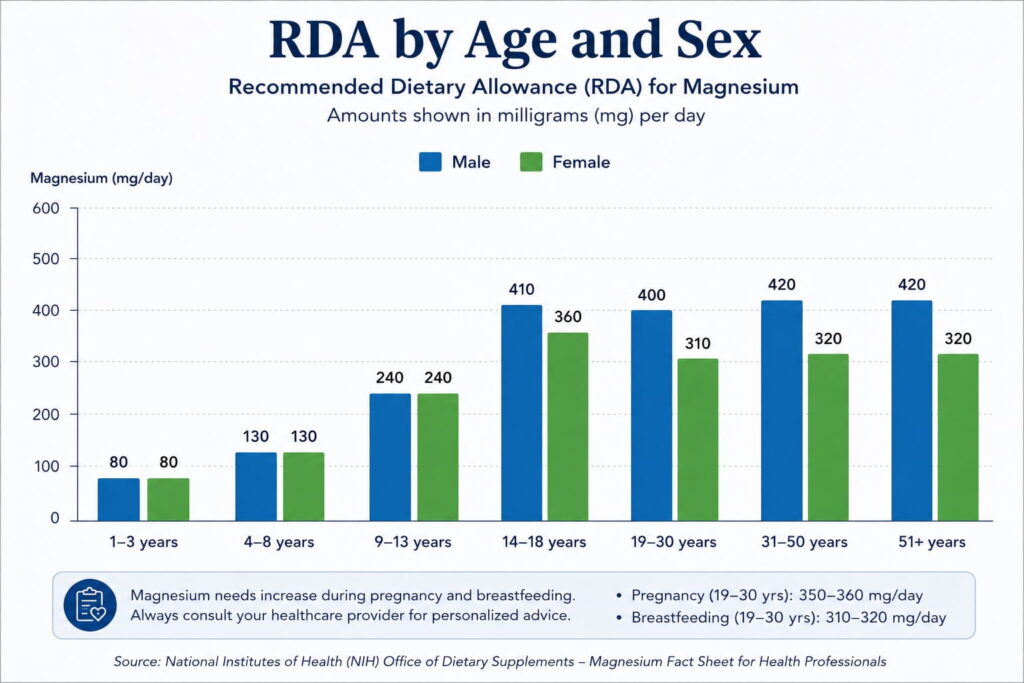
Recommended Dietary Allowance (RDA) — All Sources Combined
| Group | RDA (elemental magnesium/day) |
|---|---|
| Adult men (19–30) | 400 mg |
| Adult men (31+) | 420 mg |
| Adult women (19–30) | 310 mg |
| Adult women (31+) | 320 mg |
| Pregnant women | 350–360 mg |
| Breastfeeding women | 310–320 mg |
| Older adults (65+) | Same as adult RDA; often under-consumed in practice |
| Athletes | No separate official RDA, but higher training loads may increase needs |
Supplemental Upper Limit
The 350 mg/day Tolerable Upper Intake Level applies only to magnesium from supplements and medications — not to magnesium naturally found in leafy greens, nuts, or beans. Going over this ceiling doesn’t typically cause serious harm in healthy people, but it raises the odds of diarrhea and stomach upset. People with kidney disease face a different, more serious risk profile and should not supplement without medical guidance.
Best Time to Take It
- Morning vs. night: Magnesium glycinate can be taken at either time. Many people prefer evenings because of its calming reputation, but there’s no strict rule — consistency matters more than the exact hour.
- With food or without: Taking it with a meal reduces the (already lower) chance of stomach upset and may improve tolerance.
- Splitting doses: If your total daily amount is on the higher end, splitting it into two smaller doses (e.g., morning and evening) can improve comfort and absorption.
Clinical Insight (NFH Clinic): In practice, most adults who benefit noticeably from magnesium supplementation are the ones with a genuinely low dietary intake or an increased need — not everyone requires it. Supplements tend to work best alongside a balanced diet, consistent sleep habits, and appropriate medical guidance, rather than as a stand-alone fix.
How Do You Know It’s Working? (Timeline)
A common question once people start taking magnesium glycinate is simply: how will I know it’s doing anything? The honest answer is that effects tend to build gradually rather than arrive all at once.
Symptoms that often improve first:
- Slightly easier time winding down at night
- Fewer muscle twitches or leg cramps
- A little less tension in the shoulders and neck
- Modestly more stable energy through the day
- Fewer tension-type headaches, for some people
General Timeline
| Time Frame | What You May Notice |
|---|---|
| 1–3 days | Mostly about digestive tolerance — this is when GI side effects, if any, tend to show up |
| About 1 week | Some people notice mild relaxation or an easier bedtime wind-down |
| 2–4 weeks | Muscle-related benefits (fewer cramps or twitches) become more apparent |
| 1–3 months | If an actual deficiency is being corrected, this is the realistic window for more noticeable, sustained changes |
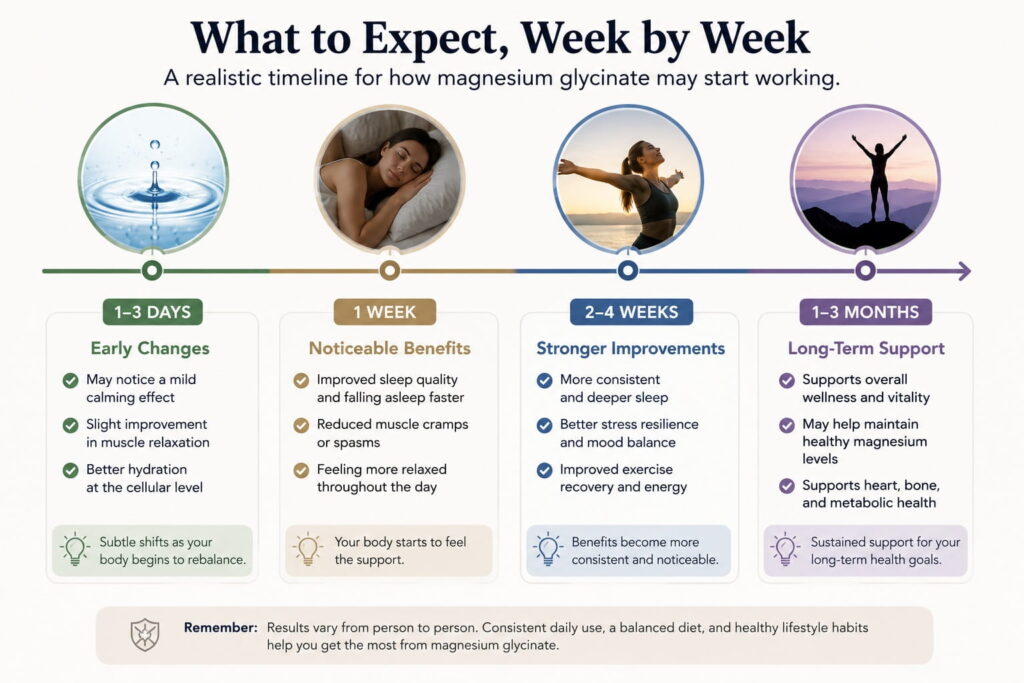
Individual response varies a lot depending on diet, baseline magnesium status, and consistency of use. If you notice no change at all after a few months of consistent, appropriately dosed use, it’s worth revisiting with your doctor rather than continuing to increase the dose on your own.
Magnesium Glycinate Side Effects
Quick answer: Magnesium glycinate is generally well tolerated. The most common side effects are mild — loose stools, nausea, or stomach cramping — and are less frequent than with forms like citrate or oxide. Serious effects, such as an irregular heartbeat or difficulty breathing, are rare and mainly occur at very high doses or in people with kidney disease.
Early warning signs of taking too much (usually mild and reversible if you reduce the dose):
- Diarrhea or looser stools
- Nausea
- Facial flushing
- Fatigue
- Mildly low blood pressure
Common (usually mild):
- Loose stools or mild diarrhea (less common than with citrate or oxide, but still possible at higher doses)
- Nausea
- Stomach cramping
Rare:
- Drowsiness or low blood pressure at high doses
- Allergic reactions (uncommon)
Overdose symptoms (hypermagnesemia) — rare in healthy people but more likely with kidney impairment or very high doses:
- Facial flushing
- Irregular heartbeat
- Muscle weakness
- Difficulty breathing
- In severe cases, cardiac arrest
If you experience persistent watery diarrhea, an irregular heartbeat, or breathing difficulty after taking magnesium, stop the supplement and contact a healthcare provider.
Magnesium Glycinate Interactions
Quick answer: Magnesium can reduce the absorption of certain antibiotics, thyroid medication, and osteoporosis drugs if taken at the same time, and its levels can be affected by diuretics and long-term proton pump inhibitor use. Spacing doses by a few hours and checking with a pharmacist usually resolves these concerns.
Magnesium can interact with several common medication classes. This is general information — always confirm with your pharmacist or doctor if you take any of the following:
| Medication Class | Interaction Concern |
|---|---|
| Antibiotics (tetracyclines, quinolones) | Magnesium can bind to these drugs in the gut and reduce absorption; typically spaced a few hours apart |
| Thyroid medication (levothyroxine) | Magnesium may reduce absorption; usually recommended to separate dosing by several hours |
| Osteoporosis medication (bisphosphonates) | Similar binding issue reduces drug absorption if taken together |
| Diuretics | Some (loop and thiazide diuretics) increase magnesium loss; potassium-sparing diuretics can raise magnesium levels |
| Proton pump inhibitors (PPIs) | Long-term use is associated with lower magnesium levels, which is one reason people on PPIs are sometimes advised to monitor magnesium status |
Can You Take Magnesium Glycinate With…
| Combined With | General Guidance |
|---|---|
| Vitamin D | Commonly paired — magnesium is actually needed to help convert vitamin D into its active form; no significant conflict |
| Zinc | Generally fine together; very high doses of zinc over time can affect magnesium absorption, so keep both within recommended ranges |
| Calcium | Can be taken the same day, but taking large doses at the exact same time may reduce absorption of each — spacing them by a couple of hours is a reasonable habit |
| Ashwagandha | No known significant interaction; both are sometimes combined in relaxation-focused routines |
| Melatonin | No known significant interaction; some people take both in the evening as part of a wind-down routine |
| Creatine | No known significant interaction; commonly used together by athletes |
| Fish oil | No known significant interaction |
| Iron | Magnesium may modestly reduce iron absorption if taken at the same time — spacing doses is a reasonable precaution |
This table reflects general, non-exhaustive guidance. Always check with a pharmacist about your full medication and supplement list.
Who Should Avoid Magnesium Glycinate?
Quick answer: People with kidney disease, significant heart rhythm conditions, or those taking interacting medications should talk to a doctor before taking magnesium glycinate. It should also be paused before surgery and avoided in cases of severe dehydration or existing hypermagnesemia without medical direction.
You should talk to a doctor before taking magnesium glycinate if you:
- Have kidney disease or reduced kidney function (magnesium is cleared through the kidneys, and impaired clearance raises toxicity risk)
- Have a heart block or other significant heart rhythm condition
- Are pregnant or breastfeeding
- Take any of the medications listed above on a regular basis
- Have a known allergy to glycine or magnesium compounds
When NOT to Take Magnesium Glycinate
A few situations call for stopping or avoiding supplementation altogether until you’ve spoken with a doctor:
- Before surgery: Magnesium can affect blood pressure and muscle function under anesthesia; most surgeons recommend pausing supplements beforehand.
- Severe or advanced kidney disease: The kidneys can no longer clear excess magnesium effectively, raising toxicity risk substantially.
- Severe dehydration: Electrolyte balance is already disrupted, and adding supplemental magnesium without medical guidance isn’t advisable.
- Existing hypermagnesemia: If you already have elevated magnesium levels, additional supplementation is inappropriate without medical direction.
- Myasthenia gravis: Magnesium can worsen muscle weakness in this condition and is generally avoided or used only under specialist supervision.
- AV block or other significant cardiac conduction issues: Magnesium affects electrical signaling in the heart and should only be used under a cardiologist’s guidance in these cases.
Magnesium Glycinate Deficiency Symptoms
Quick answer: Early magnesium deficiency often causes no obvious symptoms because the kidneys conserve magnesium efficiently. As it becomes more pronounced, common signs include fatigue, muscle cramps or twitches, nausea, headaches, irritability, and, in more severe cases, an abnormal heart rhythm.
Mild deficiency often has no obvious symptoms because the kidneys are efficient at conserving magnesium. As it becomes more pronounced, signs can include:
- Fatigue and low energy
- Muscle cramps, twitches, or spasms
- Nausea or loss of appetite
- Headaches
- Irritability or low mood
- Abnormal heart rhythm (in more significant deficiency)
- Numbness or tingling
- Difficulty sleeping
People with gastrointestinal diseases (like Crohn’s or celiac disease), type 2 diabetes, regular high alcohol intake, or long-term use of PPIs or certain diuretics are at higher risk of deficiency and may want to discuss testing with a doctor.
Foods Rich in Magnesium
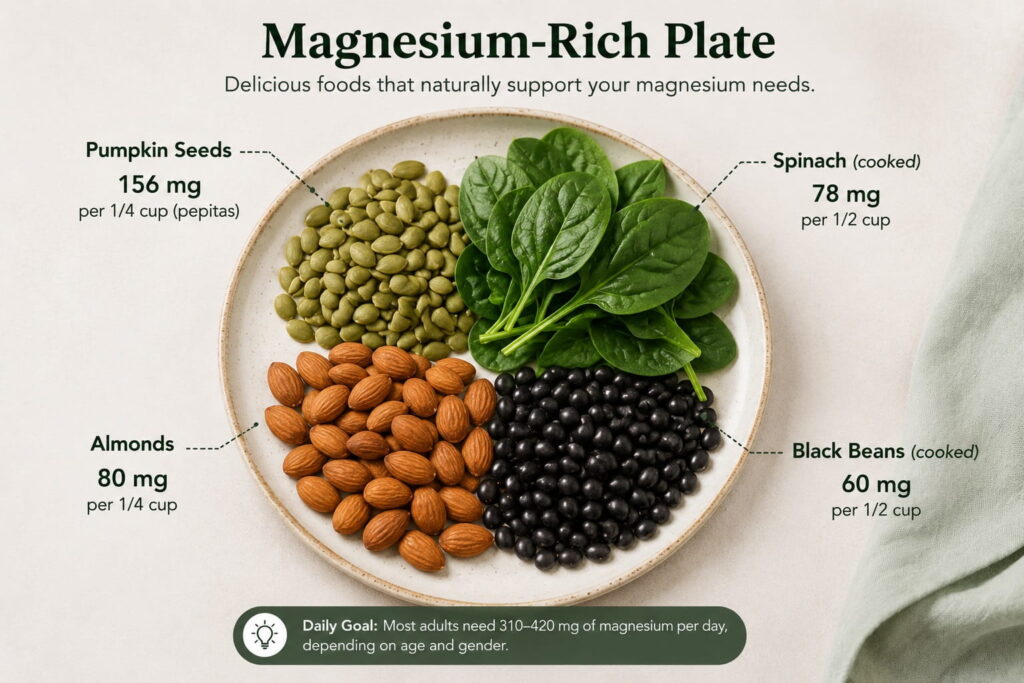
| Food | Approx. Magnesium (per typical serving) |
|---|---|
| Pumpkin seeds (1 oz) | ~150 mg |
| Almonds (1 oz) | ~80 mg |
| Spinach, cooked (1/2 cup) | ~78 mg |
| Black beans, cooked (1 cup) | ~120 mg |
| Cashews (1 oz) | ~74 mg |
| Dark chocolate (70–85% cacao, 1 oz) | ~65 mg |
| Edamame, cooked (1 cup) | ~99 mg |
| Peanut butter (2 tbsp) | ~49 mg |
| Whole wheat bread (2 slices) | ~46 mg |
| Avocado (1 medium) | ~58 mg |
Food-based magnesium doesn’t count toward the supplement upper limit and is absorbed alongside a broader mix of nutrients — a good reason to prioritize diet first and use supplements to fill genuine gaps.
Magnesium Glycinate vs. Other Forms
Quick answer: Magnesium glycinate and magnesium bisglycinate are essentially the same thing — “bisglycinate” is simply the more chemically precise name, since two glycine molecules bind to each magnesium ion. Compared with citrate, oxide, malate, taurate, and L-threonate, glycinate stands out for being gentle on digestion while still absorbing reasonably well.
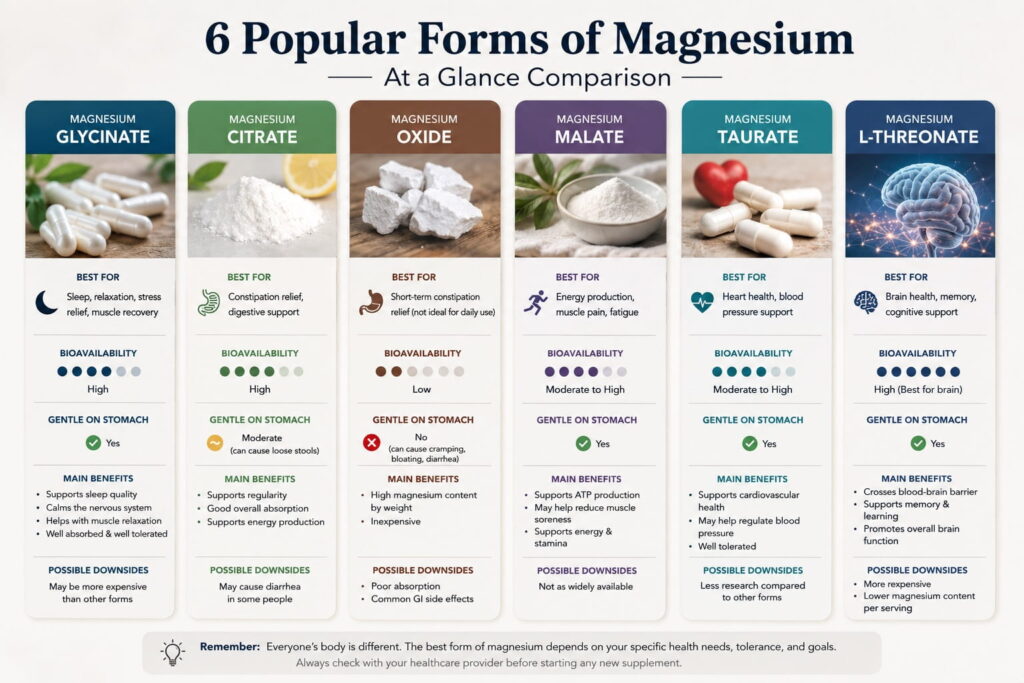
| Form | Absorption | Common Uses | Side Effects | Best For |
|---|---|---|---|---|
| Glycinate/Bisglycinate | Good | Sleep, general supplementation, sensitive stomachs | Low GI side effects | People who want steady daily use without stomach upset |
| Citrate | Good | General supplementation, constipation relief | Higher chance of loose stools | People who also want mild laxative support |
| Oxide | Poor | Budget supplements, antacids, laxatives | High GI side effects (poorly absorbed) | Occasional constipation relief, not daily supplementation |
| Malate | Good | Muscle pain, fatigue support | Generally mild | People focused on muscle/energy support |
| Taurate | Good | Heart and blood pressure-focused use | Generally mild | People prioritizing cardiovascular support |
| L-Threonate | Moderate–Good (crosses into brain tissue) | Cognitive/brain-focused research | Generally mild | People specifically interested in brain-targeted research applications |
Glycinate vs. Citrate (the most common comparison)
Both are reasonably well absorbed. Citrate tends to have a mild laxative effect, which some people want (occasional constipation) and others don’t (daily long-term use). Glycinate is generally the gentler choice for consistent, everyday supplementation.
Best Magnesium Glycinate: How to Choose a Quality Supplement
Because “best magnesium glycinate” is really a question of quality and fit rather than one single winning brand, here’s what actually separates a well-made product from a mediocre one.
- Third-party testing: Look for seals from organizations like USP, NSF, or Informed Choice, which verify that a product contains what the label claims and is free of unlisted contaminants.
- Elemental magnesium listed clearly: A trustworthy label states the elemental magnesium amount per serving, not just the total compound weight. If a label only shows “500 mg magnesium glycinate” with no elemental breakdown, treat that as a transparency red flag.
- True chelated form (look for named chelate technology): Some manufacturers use branded, patented chelation processes — such as Albion® TRAACS® — which are independently studied for consistent absorption. This isn’t required for a good product, but it’s a reasonable quality signal if you see it.
- Ingredient transparency: Avoid proprietary blends that hide exact amounts; fillers, unnecessary binders, and artificial dyes are yellow flags.
- Certifications relevant to your needs: USP verification confirms label accuracy; NSF certification (including NSF Certified for Sport) matters more if you’re a competitive athlete subject to drug testing; vegan capsule certification matters if you avoid gelatin.
- Capsules vs. powder: Capsules are convenient, pre-dosed, and easy to travel with. Powders allow more flexible, fine-tuned dosing but require accurate measuring and may have a noticeable taste.
- Avoid magnesium oxide “filler” blends: Some lower-cost products bulk up a glycinate label with cheaper oxide to inflate the total magnesium number. Check the ingredient list, not just the front label claim.
- Dosage per serving vs. serving size: Check how many capsules make up the labeled dose — some products require 3–4 capsules to reach the stated amount, which affects real cost per dose.
- Price vs. quality: The cheapest option is often cut with oxide or has minimal third-party verification. The most expensive option isn’t automatically better either — look for the testing and transparency markers above rather than price alone.
Clinical Insight (NFH Clinic): When comparing products, the elemental magnesium content and third-party testing matter far more than flashy packaging or proprietary blend names. A modest, well-tested 100–200 mg elemental dose from a transparent brand generally beats a large, vague number from an untested one.
Practical Magnesium Glycinate Uses
- Office workers: Evening dose to help unwind after a screen-heavy, sedentary day.
- Athletes: Post-workout or evening dose to support muscle recovery.
- Students: Evening use during high-stress exam periods, alongside good sleep habits.
- Older adults: Morning or split dosing, paired with a conversation with their doctor about existing medications.
- Women: Cycle-aware use, particularly in the week before a period, alongside a broader nutrition plan.
- Men: Post-training use to support recovery and sleep quality.
- People with poor sleep: Consistent evening timing, taken with a light snack, as part of a broader wind-down routine rather than a standalone fix.
Should You Take Magnesium Glycinate? A Quick Decision Guide
This isn’t a diagnostic tool, just a simple way to think through whether magnesium glycinate is worth discussing with your doctor.
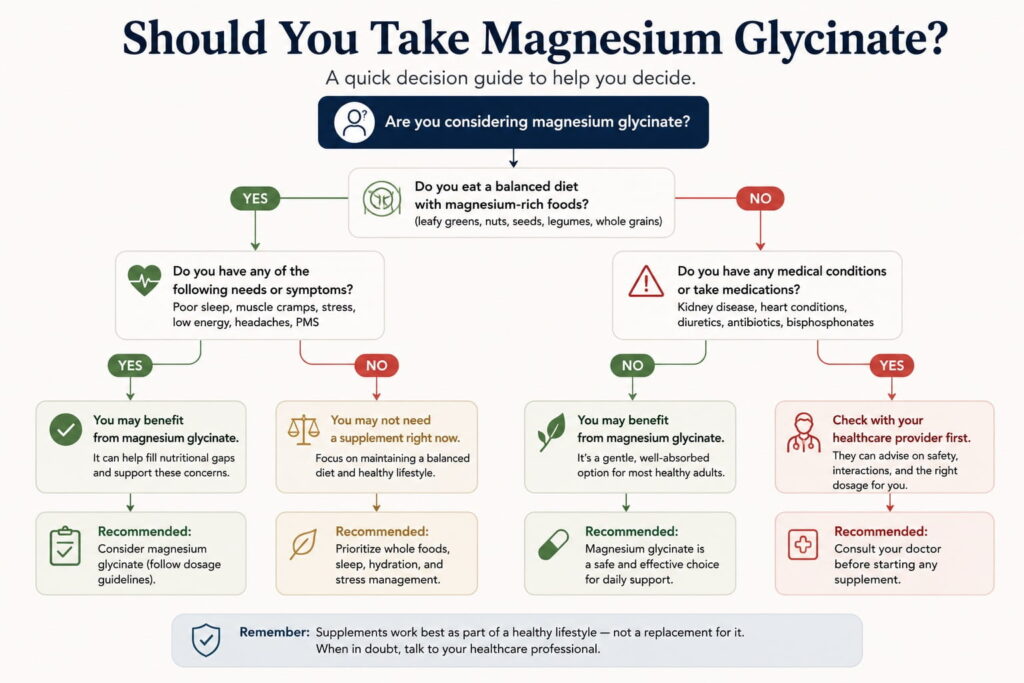
If your answer to the first question is “no” — no sleep issues, no cramps, and a magnesium-rich diet — supplementation may simply be unnecessary for you right now.
Common Magnesium Glycinate Mistakes
- Assuming the mg on the label is the same as elemental magnesium.
- Taking a high dose immediately instead of starting low and adjusting.
- Expecting a strong, immediate sedative effect (it’s subtle, not a sleeping pill).
- Skipping food, which slightly increases the chance of stomach upset.
- Not checking interactions with thyroid medication, antibiotics, or PPIs.
- Taking magnesium and calcium/iron supplements at the exact same time, which can compete for absorption.
- Using magnesium oxide when the goal is daily comfort, not laxative effect.
- Ignoring kidney health status before supplementing.
- Self-treating migraines or anxiety with high doses without medical input.
- Buying based on price alone, without checking for third-party testing.
- Assuming more is always better, despite the 350 mg supplemental upper limit.
- Stopping abruptly after noticing mild GI symptoms instead of adjusting dose or timing first.
Magnesium Glycinate: Myth vs. Fact
| Myth | Fact |
|---|---|
| “Magnesium glycinate will knock you out like a sleep aid.” | It supports relaxation and nervous system regulation; it isn’t a sedative. |
| “More magnesium is always better.” | Excess supplemental magnesium mainly causes GI symptoms, and very high doses can be dangerous, especially with kidney impairment. |
| “All magnesium supplements are absorbed the same way.” | Absorption varies significantly by form — oxide is poorly absorbed, while glycinate and citrate are better absorbed. |
| “Magnesium glycinate will boost your testosterone.” | Evidence for this is weak and mostly limited to specific deficient or athletic populations. |
| “You can’t get enough magnesium from food alone.” | A varied diet rich in leafy greens, nuts, seeds, and legumes can meet most people’s needs without supplementation. |
| “Magnesium glycinate and bisglycinate are different products.” | They refer to the same chelated compound; bisglycinate is the more chemically accurate name. |
| “Magnesium glycinate cures anxiety.” | It may offer modest support in some people, but it isn’t a proven, stand-alone treatment for anxiety disorders. |
| “You can’t overdose on magnesium.” | While food-based magnesium is very safe, supplemental magnesium does have an upper limit, and very high doses (especially with kidney impairment) can be dangerous. |
| “Everyone needs a magnesium supplement.” | Many people meet their needs through diet alone; supplementation is most useful for those with a genuine gap, increased needs, or diagnosed deficiency. |
Magnesium Glycinate FAQs
What is magnesium glycinate used for?
It’s most commonly used to support sleep quality, muscle relaxation, and to correct or prevent magnesium deficiency, with gentler digestive effects than many other forms.
Is magnesium glycinate the same as magnesium bisglycinate?
Yes. Bisglycinate is the more precise chemical name for the same compound — two glycine molecules bound to one magnesium ion.
How much magnesium glycinate should I take daily?
Most healthy adults do well with 200–350 mg of elemental magnesium per day from supplements, staying within the NIH’s 350 mg supplemental upper limit, alongside dietary intake.
Is it better to take magnesium glycinate in the morning or at night?
Either works. Many people prefer evenings for its calming reputation, but consistency matters more than the specific time of day.
Can I take magnesium glycinate every day?
Yes, for most healthy adults, daily use within recommended limits is considered safe and is how it’s typically studied.
What are the side effects of magnesium glycinate?
Mild stomach upset or loose stools are the most common, though it tends to cause fewer digestive issues than citrate or oxide.
Does magnesium glycinate help with anxiety?
Some smaller studies suggest a modest benefit, but the evidence isn’t strong enough to call it a proven anxiety treatment.
Does magnesium glycinate help you sleep?
It may modestly improve sleep quality, particularly in people with lower magnesium levels, but it isn’t a strong sedative.
What’s the difference between magnesium glycinate and magnesium citrate?
Both absorb reasonably well; citrate has more of a mild laxative effect, while glycinate tends to be gentler for daily long-term use.
Can pregnant women take magnesium glycinate?
Only under a doctor’s supervision — pregnancy changes both magnesium needs and safety margins.
What medications interact with magnesium glycinate?
Certain antibiotics, thyroid medication, bisphosphonates (osteoporosis drugs), diuretics, and proton pump inhibitors can all interact with magnesium supplementation.
Who should avoid magnesium glycinate?
People with kidney disease, certain heart rhythm conditions, or those on interacting medications should consult a doctor before use.
What are the signs of magnesium deficiency?
Fatigue, muscle cramps, nausea, headaches, irritability, and in more severe cases, abnormal heart rhythm.
Can magnesium glycinate cause vivid dreams?
Some people report more vivid dreams, possibly related to its effect on sleep cycles, though this isn’t well studied and isn’t universal.
Is magnesium glycinate good for muscle cramps?
Yes, magnesium plays a direct role in muscle contraction and relaxation, which is why it’s commonly used for cramp support.
How long does it take magnesium glycinate to work?
Some people notice subtle effects on sleep or muscle tension within days, while correcting an actual deficiency can take several weeks of consistent use.
Can magnesium glycinate lower blood pressure?
It may offer a modest benefit, particularly in people who are magnesium-insufficient, but it isn’t a substitute for prescribed blood pressure medication.
Does magnesium glycinate cause weight gain?
No, there’s no established link between magnesium glycinate and weight gain. Any changes in water retention are typically minor and temporary.
Can magnesium glycinate cause constipation?
It’s actually less likely to cause constipation than some other supplements; if anything, higher doses are more associated with loose stools than constipation.
Can I take magnesium glycinate on an empty stomach?
You can, but taking it with food generally reduces the already-low chance of stomach upset.
Is magnesium glycinate safe for seniors?
Generally yes, and older adults are often at higher risk of low intake — but seniors are also more likely to take interacting medications, so a doctor’s input is especially useful here.
Is magnesium glycinate vegan?
The mineral and glycine itself are typically vegan, but the capsule matters — check specifically for a vegan-certified capsule (avoiding gelatin) if that’s a priority.
Can children take magnesium glycinate?
Only under a pediatrician’s guidance — dosing for children is different from adult amounts and shouldn’t be self-directed.
Is magnesium glycinate safe while breastfeeding?
It’s generally considered compatible with breastfeeding at appropriate doses, but you should confirm timing and amount with your doctor.
Can I take magnesium glycinate with coffee?
Yes, there’s no significant interaction, though caffeine can modestly increase magnesium excretion over time, which is worth knowing if you’re a heavy coffee drinker.
Can I take magnesium glycinate before exercise?
Yes, some people prefer pre-workout timing to support muscle function, though evening use for recovery is equally common. Either can work depending on your goals.
The Bottom Line
Magnesium glycinate is one of the gentler, better-absorbed ways to top up a mineral that a large share of adults don’t get enough of. It’s reasonable for people dealing with poor sleep, muscle cramps, or a low-magnesium diet, and it’s backed by solid evidence for correcting deficiency and supporting bone and heart health. The evidence is thinner for anxiety, migraine, and hormone-related claims — promising, but not proof.
If you’re generally healthy, eat a varied diet, and have no specific symptoms, you may not need it at all. If you take regular medications, have kidney disease, or are pregnant or breastfeeding, talk to your doctor before starting. For most other adults, a modest, well-tested dose taken consistently is a reasonable, low-risk place to start.
Related Articles: