Healthy eating programs are structured plans that help people build lasting, balanced eating habits instead of chasing short-term diets. A good program combines nutrition education, meal planning, and practical support so the changes actually stick.
This guide walks through what these programs are, who benefits from them, and how to build one for yourself, your family, your school, or your workplace. You’ll also find a 7-day eating plan, food lists organized by group, budget strategies, and answers to the questions we hear most often in clinic.
In This Guide, You’ll Learn:
- What healthy eating programs are and how they work
- How to build balanced meals using the plate method
- The top healthy foods to eat, with nutrient breakdowns
- A full 7-day meal plan with calories and prep time
- Nutrition guidance for children, students, men, women, and older adults
- Common myths, food safety basics, and practical next steps
If you read nothing else: eating well is less about willpower and more about having the right structure around you. That structure is what a healthy eating program provides.
Key Takeaways: Healthy Eating Programs
- A healthy eating program is a structured, ongoing plan — not a temporary diet.
- Small, repeatable changes outperform dramatic overhauls almost every time.
- Government bodies like the WHO, NHS, and national dietary guideline agencies all run their own versions of these programs.
- This guide includes a 7-day plan, food lists, budget tips, and life-stage guidance for children, students, men, women, and older adults.
At NFH Clinic, the patients who succeed long-term are rarely the ones who overhaul everything overnight. They’re the ones who change one meal, one habit, or one shopping trip at a time, and keep going. That’s the philosophy behind this guide.
A note before you start: This guide provides general educational information. Individual nutrition needs differ for people with chronic illnesses, pregnancy, food allergies, eating disorders, or those following medically prescribed diets. If any of these apply to you, speak with a doctor or registered dietitian before making major dietary changes.
Table of Contents
- What Are Healthy Eating Programs?
- Why Healthy Eating Programs Matter
- Healthy Eating Programs Around the World
- The Plate Method: A Simple Visual Guide
- 20 Benefits of Healthy Eating
- Healthy Foods to Eat Every Day
- Top 10 Healthy Foods
- Balanced Diet Food List
- Healthy Food List
- Healthy Eating Habits
- Healthy Eating Habits for Students
- Healthy Eating Programs for Children
- Healthy Eating Programs for Men
- Healthy Eating Programs for Women
- Healthy Eating Programs for Older Adults
- Healthy Eating Programs in Schools
- Healthy Eating Programs in the Workplace
- 7-Day Healthy Eating Plan
- Healthy Eating on a Budget
- Food Safety Basics
- Nutrition and Physical Activity
- Myth vs. Fact
- How to Start Today
- Common Mistakes
- When to See a Doctor
- Healthy Eating Programs FAQs
- Conclusion
- Glossary of Key Terms
- References
What Are Healthy Eating Programs?
A healthy eating program is a structured approach to nutrition that combines education, planning tools, and ongoing support to help a person or group build sustainable eating habits.
Unlike a diet, which usually has a start and end date, a healthy eating program is designed to become a permanent part of daily life. It typically includes:
- Nutrition education — understanding food groups, portions, and labels
- Meal planning tools — templates, shopping lists, and weekly menus
- Behavior change support — habit tracking, goal setting, and accountability
- Access support — help with budgeting, food access, or cooking skills
Programs exist at different scales. Some are personal (a plan you follow at home), others are institutional (school nutrition programs, workplace wellness initiatives), and some are public health initiatives run by governments or health organizations to improve nutrition across entire communities.
Quick definition: A healthy eating program is any organized plan — personal, clinical, or community-based — that helps people eat a balanced diet consistently, rather than relying on motivation alone.
At NFH Clinic, one of the most common nutrition challenges we see is patients trying to follow restrictive diets that simply can’t be maintained past a few weeks. Rather than prescribing a rigid meal-by-meal plan, we usually start by improving one meal a day — often breakfast or lunch, since those tend to be easiest to control — before touching anything else. That single change, sustained for a month, tends to do more than a strict plan abandoned after ten days.
Quick Facts
- Structured nutrition programs are more effective at producing lasting change than one-off diet advice.
- Programs work best when they combine education and practical support (planning tools, budgeting help, cooking skills).
- The most effective personal programs start with one habit change, not a full overhaul.
Why Healthy Eating Programs Matter
Diet-related disease is one of the leading preventable causes of poor health worldwide. The World Health Organization has repeatedly linked unbalanced diets to the rise in obesity, type 2 diabetes, cardiovascular disease, and certain cancers. Most of this is preventable with sustained dietary change, not a single meal or a single week of “eating clean.”
That’s the core reason structured programs work better than willpower alone: they remove the guesswork. When a plan tells you what to buy, how much to eat, and how to prepare it, you make fewer decisions under pressure — and decision fatigue is one of the biggest reasons healthy eating attempts fail.
From a public health perspective, healthy eating programs matter because they:
- Reduce the burden of chronic disease on health systems
- Improve childhood development and academic performance through school nutrition
- Support workplace productivity and reduce absenteeism
- Narrow health disparities when programs include food-access support, not just education
From an individual perspective, they matter because they turn a vague goal (“eat healthier”) into something concrete and repeatable.
Research Snapshot Studies consistently show that diets rich in vegetables, fruits, whole grains, legumes, and healthy fats are associated with lower risks of cardiovascular disease, type 2 diabetes, and premature death. The strength of this pattern is one of the most consistent findings in nutrition science.
This is also why we encourage patients concerned about family history to think about preventing type 2 diabetes and supporting heart health through diet as part of the same conversation — diet quality tends to influence both together, not separately.
Healthy Eating Programs Around the World
Healthy eating programs aren’t just personal meal plans — they’re also formal initiatives run by governments, health organizations, schools, and communities. Understanding these gives useful context for building your own approach, and many national guidelines are a reliable, free source of evidence-based nutrition advice.
Government and public health guidelines
- WHO Healthy Diet Initiatives — The World Health Organization publishes global dietary guidance and runs regional programs (including through its European and African regional offices) aimed at reducing diet-related disease at a population level.
- US MyPlate — A visual guideline from the US Department of Agriculture that replaced the older food pyramid, showing recommended food group proportions on a single plate.
- NHS Eatwell Guide (UK) — The UK’s national reference for balanced eating, dividing daily intake across food groups with visual proportions similar to the Plate Method below.
- Australian Dietary Guidelines — National guidance from the Australian government covering recommended servings by age group and life stage.
- Canada’s Food Guide — Notable for de-emphasizing strict serving counts in favor of qualitative guidance: eat plenty of vegetables and fruit, choose whole grains, and make water the drink of choice.
- Zambia and regional Food-Based Dietary Guidelines — Many African nations, including Zambia, have developed Food-Based Dietary Guidelines (FBDGs) through the FAO, promoting balanced use of local staples such as maize meal (nshima), cassava, beans, groundnuts, and traditional leafy vegetables alongside animal protein sources.
Community and institutional programs
- School lunch and school feeding programs — Government or NGO-run programs that provide balanced meals to children during the school day, particularly important in areas with food insecurity.
- Community nutrition education programs — Local workshops, extension services, and public health campaigns that teach practical cooking and meal-planning skills.
- Food assistance programs — Programs that improve access to nutritious food for lower-income households, ranging from subsidized produce schemes to direct food distribution.
- Community gardens — Shared growing spaces that improve access to fresh vegetables, particularly valuable in urban areas with limited fresh food access.
- Corporate and workplace wellness programs — Employer-run initiatives combining nutrition education with healthier food environments at work (covered in more detail later in this guide).
Knowing that these formal programs exist matters because you don’t need to build your nutrition knowledge from scratch. National dietary guidelines are free, evidence-based, and typically reviewed by expert panels — they’re a solid foundation to build a personal plan on top of.
The Plate Method: A Simple Visual Guide
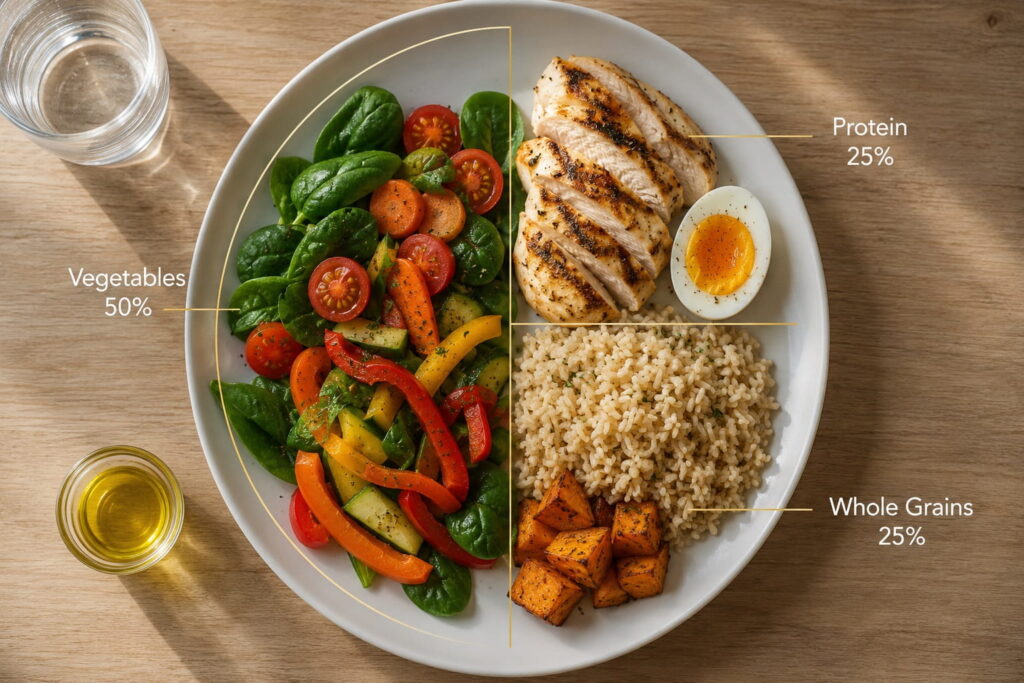
The plate method is the easiest way to build a balanced meal without counting calories or weighing food. It’s used, in slightly different forms, by the NHS Eatwell Guide, US MyPlate, and many dietitians worldwide.
| Plate Portion | Food Category | Examples |
|---|---|---|
| 50% | Vegetables (and some fruit) | Spinach, rape leaves, pumpkin leaves, carrots, tomatoes, okra |
| 25% | Lean protein | Chicken, fish, kapenta, beans, lentils, groundnuts, eggs, tofu |
| 25% | Whole grains or starchy vegetables | Brown rice, nshima made from whole maize meal, cassava, sweet potatoes, oats |
A small amount of healthy fat (olive oil, groundnut oil in moderation, avocado) and a glass of water complete the plate. This method works with virtually any cuisine — the proportions matter more than the specific foods.
20 Benefits of Healthy Eating
Healthy eating affects nearly every system in the body. Here are 20 evidence-based benefits, grouped for clarity.
Physical health
- Supports a healthy weight — Balanced meals with adequate protein and fiber help regulate appetite and reduce overeating.
- Lowers heart disease risk — Diets rich in vegetables, whole grains, and healthy fats help manage cholesterol and blood pressure.
- Reduces type 2 diabetes risk — Consistent, balanced meals help stabilize blood sugar over time.
- Strengthens bones — Calcium, vitamin D, and protein from a varied diet support bone density.
- Improves gut health — Fiber-rich foods feed beneficial gut bacteria, supporting digestion.
- Supports healthy skin — Antioxidants and healthy fats contribute to skin repair and appearance.
- Boosts immune function — Vitamins A, C, D, and zinc from whole foods support immune response.
- Improves sleep quality — Balanced blood sugar and avoiding heavy, late meals supports better rest.
- Increases energy levels — Steady nutrient intake avoids the energy crashes linked to sugar spikes.
- Supports healthy aging — Nutrient-dense eating is linked to lower risk of age-related decline.
Mental and cognitive health
- Supports brain function — Omega-3 fats and antioxidants are linked to better memory and focus.
- Improves mood stability — Stable blood sugar reduces irritability and energy dips.
- Reduces risk of depression — Several long-term studies associate diet quality with lower depression risk.
- Supports concentration in children and students — Regular, balanced meals improve classroom focus.
Disease prevention
- Lowers cancer risk — Diets high in fruits, vegetables, and fiber are linked to reduced risk of several cancers.
- Reduces inflammation — Whole foods reduce chronic low-grade inflammation linked to many diseases.
- Supports healthy blood pressure — Reduced sodium and increased potassium intake help regulate blood pressure.
Life quality and long-term outcomes
- Improves reproductive health — Balanced nutrition supports hormonal health in both men and women.
- Supports healthy pregnancy outcomes — Adequate folate, iron, and protein reduce pregnancy complications.
- Extends healthy life expectancy — Populations with consistently balanced diets show lower rates of premature death from chronic disease.
Healthy Foods to Eat Every Day
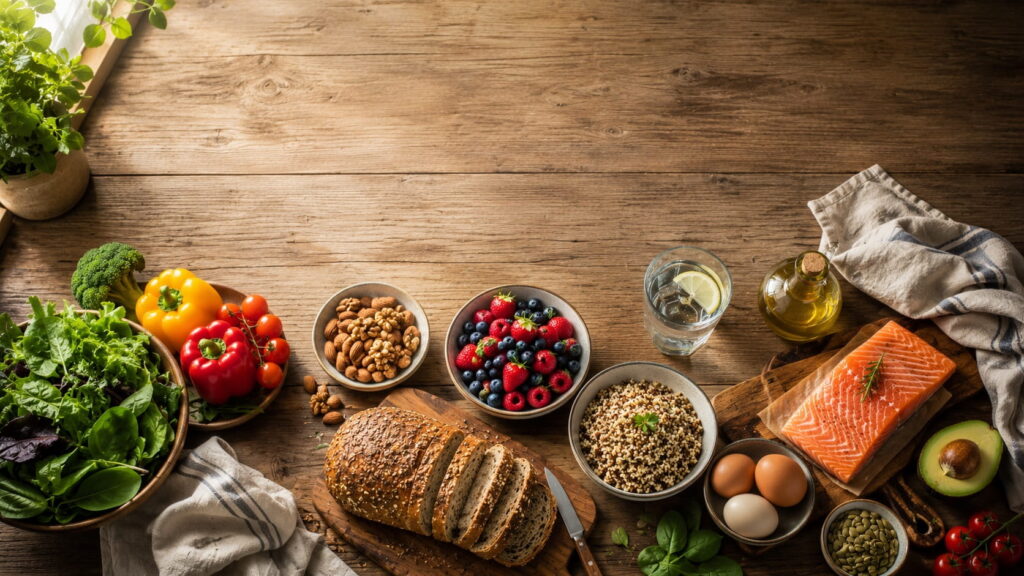
Certain foods are worth including in your diet almost every day because of their nutrient density and how well they support daily energy and long-term health.
- Leafy greens (spinach, kale, chard) — high in vitamins A, C, K, and folate
- Berries — antioxidant-rich with lower sugar impact than most fruit
- Whole grains (oats, brown rice, whole wheat) — steady energy and fiber
- Legumes (beans, lentils, chickpeas) — plant protein and fiber
- Nuts and seeds — healthy fats, protein, and minerals
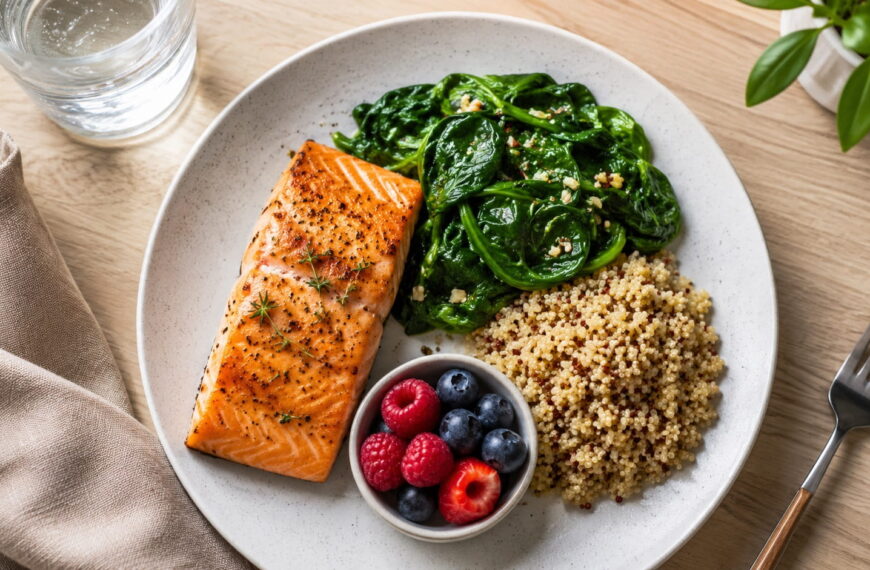
- Fatty fish (where accessible) — omega-3 fatty acids for heart and brain health
- Eggs — complete protein and choline
- Yogurt or fermented dairy — probiotics and calcium
- Colorful vegetables (carrots, peppers, tomatoes) — variety of antioxidants
- Water — not a food, but the most important daily intake for every bodily function
A simple rule we use in clinic: if half your plate is vegetables, a quarter is a lean protein, and a quarter is a whole grain or starchy vegetable, you’re covering most of your daily needs without counting a single calorie.
Local and regional options
Healthy eating doesn’t require imported “superfoods.” Staples common across Zambia and much of Southern Africa fit easily into a balanced diet:
- Whole maize meal (nshima) — a good energy source, especially when made from unrefined meal with more fiber and nutrients retained
- Cassava and sweet potatoes — nutrient-dense starchy vegetables that work well as a whole-grain alternative
- Rape leaves and pumpkin leaves — excellent sources of vitamins A, C, and iron, comparable to spinach or kale
- Okra — fiber-rich and low in calories
- Kapenta and other small fish — an affordable source of protein, calcium, and omega-3 fats
- Beans and groundnuts — inexpensive, widely available plant protein and healthy fat sources
Expert tip: Swapping refined maize meal for whole (unrefined) meal a few times a week is one of the simplest, most affordable upgrades available in this region — it adds fiber and micronutrients without changing your usual meals.
Nutrient snapshot
| Food | Rich In | Helps With |
|---|---|---|
| Spinach / rape leaves | Iron, folate, vitamin A | Blood health, immune function |
| Eggs | Protein, choline | Brain and muscle health |
| Beans / lentils | Fiber, plant protein | Digestion, blood sugar control |
| Fatty fish / kapenta | Omega-3s, calcium | Heart and brain health |
| Oats | Beta-glucan fiber | Cholesterol management |
| Berries | Antioxidants, vitamin C | Reduces inflammation |
Do healthy eating programs really help with weight loss? Yes. A balanced eating program can support gradual, sustainable weight loss when combined with appropriate physical activity and consistent habits — though weight loss works best as a byproduct of better habits, not the sole focus.
Top 10 Healthy Foods
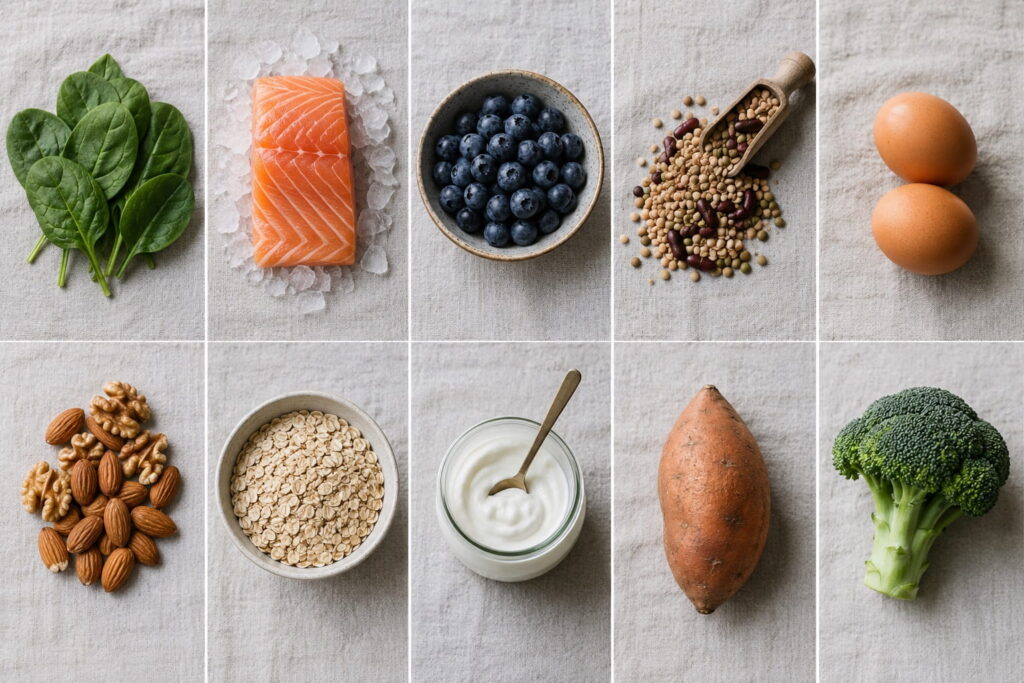
These ten foods stand out for their nutrient density relative to calories, meaning they deliver a lot of nutritional value per serving.
| Rank | Food | Key Nutrients | Main Benefit |
|---|---|---|---|
| 1 | Leafy greens (spinach, kale) | Vitamin K, A, C, folate | Supports bone and eye health |
| 2 | Salmon and other fatty fish | Omega-3s, vitamin D, protein | Heart and brain health |
| 3 | Berries (blueberries, strawberries) | Antioxidants, fiber | Reduces inflammation |
| 4 | Legumes (lentils, beans) | Plant protein, fiber, iron | Blood sugar control |
| 5 | Eggs | Complete protein, choline | Muscle and brain support |
| 6 | Nuts (almonds, walnuts) | Healthy fats, magnesium | Heart health |
| 7 | Oats | Beta-glucan fiber | Lowers cholesterol |
| 8 | Greek yogurt | Protein, probiotics, calcium | Gut and bone health |
| 9 | Sweet potatoes | Beta-carotene, fiber | Immune support |
| 10 | Broccoli and cruciferous vegetables | Vitamin C, fiber, sulforaphane | Cancer-protective compounds |
Balanced Diet Food List
A balanced diet includes foods from every major group, in the right proportions. Here’s how the groups break down.
| Food Group | Examples | Suggested Daily Intake (general adult guide) |
|---|---|---|
| Vegetables | Spinach, broccoli, carrots, peppers | 3–5 servings |
| Fruits | Apples, berries, oranges, bananas | 2–4 servings |
| Whole grains | Brown rice, oats, whole wheat bread | 3–6 servings |
| Protein foods | Fish, poultry, eggs, legumes, tofu | 2–3 servings |
| Dairy or alternatives | Milk, yogurt, cheese, fortified plant milk | 2–3 servings |
| Healthy fats | Olive oil, nuts, seeds, avocado | Small amounts daily |
| Water | — | 6–8 glasses, more with activity or heat |
These figures are general guidance, not individual prescriptions. Needs vary with age, activity level, pregnancy status, and existing health conditions — a registered dietitian can tailor this to you specifically.
Healthy Food List
For a practical, everyday reference, here is a healthy food list organized for quick grocery planning.
Vegetables: spinach, kale, broccoli, carrots, bell peppers, tomatoes, zucchini, onions, cucumbers
Fruits: apples, bananas, oranges, berries, mangoes, pears, grapes
Whole grains: brown rice, oats, quinoa, whole wheat bread, whole grain pasta
Proteins: eggs, chicken breast, fish, beans, lentils, chickpeas, tofu, low-fat dairy
Healthy fats: olive oil, avocado, almonds, walnuts, chia seeds, flaxseed
Beverages: water, unsweetened tea, low-fat milk
This list works as a base for a healthy grocery list — print it, keep it on your phone, or use it as a starting template for your weekly shop.
Healthy Eating Habits
Healthy eating habits are the small, repeated behaviors that make a balanced diet sustainable. These matter more than any single meal.
- Eat regular meals. Skipping meals often leads to overeating later and poor food choices driven by hunger.
- Practice portion awareness. Using smaller plates and paying attention to hunger cues helps prevent overeating.
- Plan meals ahead. A little planning each week reduces reliance on convenience food.
- Read food labels. Checking sugar, sodium, and serving size builds awareness over time.
- Cook more at home. Home-cooked meals give you control over ingredients and portions.
- Slow down while eating. Eating slowly improves digestion and helps you recognize fullness.
- Limit ultra-processed foods. These tend to be high in added sugar, sodium, and unhealthy fats.
- Stay hydrated. Thirst is sometimes mistaken for hunger.
- Allow flexibility. Rigid rules often backfire; balance matters more than perfection.
Healthy Eating Habits for Students
Students face unique nutrition challenges at each stage of education. Here’s how healthy eating habits shift by level.
Primary school
Young children need regular meals and snacks to support growth and concentration. Focus on introducing variety early, involving kids in simple meal prep, and limiting sugary drinks and snacks at school.
Secondary school
Teenagers have increased nutrient needs due to growth spurts and higher activity levels. Iron, calcium, and protein become especially important. Encourage balanced packed lunches and limit reliance on vending machine snacks.
College
College students often face their first experience of independent food choices, frequently combined with limited time and budget. Batch cooking, simple balanced recipes, and stocking a few pantry staples make the biggest difference here.
University
University students juggling demanding schedules benefit from quick, balanced options: overnight oats, grain bowls, and simple stir-fries that take 15–20 minutes. Meal prepping on lower-workload days helps maintain consistency during exam periods.
Healthy Eating Programs for Children
Children’s nutrition programs focus on supporting growth, cognitive development, and establishing lifelong habits early.
Key elements of an effective children’s eating program:
- Regular family meals rather than grazing throughout the day
- Involving children in grocery shopping and simple cooking tasks
- Limiting sugary drinks and offering water or milk instead
- Modeling healthy eating behavior as a caregiver — children copy what they see
- Introducing a wide variety of foods early to reduce picky eating over time
Parents and caregivers don’t need to aim for perfection. A pattern where most meals are balanced, with occasional treats included without guilt, tends to produce healthier long-term relationships with food than strict all-or-nothing rules.
Did You Know? Children often need to be offered a new food eight to ten times before they accept it. A single refusal doesn’t mean a food should be dropped from the rotation.
For more on supporting healthy growth and development, see our guide on nutrition for children’s development.
Healthy Eating Programs for Men
Men’s nutritional needs often center on higher calorie and protein requirements, along with cardiovascular and prostate health considerations as they age.
A well-structured program for men typically emphasizes:
- Adequate protein intake to support muscle mass, especially if physically active
- Heart-healthy fats (olive oil, fatty fish, nuts) to manage cardiovascular risk
- Fiber-rich foods to support digestive and metabolic health
- Limiting alcohol and processed meats, which are linked to higher chronic disease risk
- Zinc and selenium-rich foods (seeds, legumes, seafood) for hormonal and reproductive health
Since cardiovascular disease risk tends to rise earlier in men than women, it’s worth reading our guide on supporting heart health through diet alongside this section.
Healthy Eating Programs for Women
Women’s nutritional needs shift across life stages — from reproductive years through pregnancy, breastfeeding, and menopause.
Key focus areas include:
- Iron — particularly important during menstruating years to prevent deficiency
- Folate — essential for women who are pregnant or planning pregnancy
- Calcium and vitamin D — supports bone density, especially important around and after menopause
- Balanced blood sugar — helps manage hormonal fluctuations and energy levels
- Adequate protein — supports muscle maintenance, which becomes more important with age
Programs designed for women often combine nutrition education with hormonal-stage-specific guidance, since needs at 25, 35, and 55 can look quite different.
Healthy Eating Programs for Older Adults
Older adults face distinct nutrition challenges: reduced appetite, changes in taste and smell, medication interactions, and increased risk of nutrient deficiencies.
Effective elderly nutrition programs typically prioritize:
- Protein intake to prevent age-related muscle loss (sarcopenia)
- Calcium and vitamin D for bone health and fall prevention
- Vitamin B12, which absorption often declines with age
- Fiber and hydration to support digestive health
- Smaller, more frequent meals if appetite has decreased
- Social eating opportunities, since eating with others is linked to better nutritional intake in older adults
Community meal programs and home-delivered meal services play an important role here, particularly for older adults living alone or with mobility limitations. For older adults managing blood pressure, our guide on managing blood pressure with diet covers additional practical steps.
Healthy Eating Programs in Schools
School nutrition programs aim to ensure children have consistent access to balanced meals during the school day, which supports both health and academic performance.
Well-designed school programs typically include:
- Balanced meal standards covering all major food groups
- Limits on added sugar and sodium in school-provided meals
- Nutrition education integrated into the curriculum, not just cafeteria policy
- Water availability throughout the day
- Programs supporting students from lower-income households, so nutrition isn’t determined by family budget
Research consistently links school nutrition quality to improved concentration, behavior, and academic outcomes, making these programs a public health priority in many countries.
Healthy Eating Programs in the Workplace
Workplace wellness programs that include a nutrition component tend to see measurable benefits in employee health and productivity.
Common components include:
- On-site healthier food options or subsidized healthy meals
- Nutrition education sessions or workshops
- Removing or reducing sugary drinks and snacks from vending machines
- Flexible break times that allow employees to eat without rushing
- Optional access to a dietitian or health coach for personalized guidance
Employers that invest in workplace nutrition often see reductions in absenteeism and healthcare costs over time, alongside improved employee satisfaction.
7-Day Healthy Eating Plan
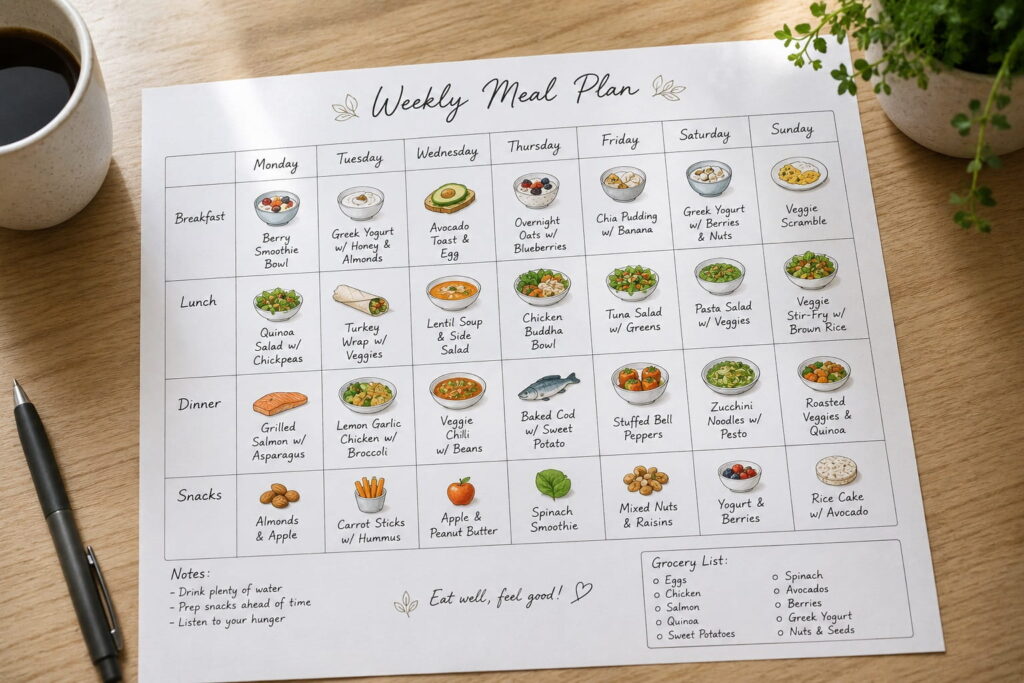
This sample plan illustrates a balanced weekly pattern. Adjust portions based on your individual energy needs, and consult a dietitian for a personalized version if you have specific health conditions. Approximate calories are per full day; individual needs vary widely by age, sex, and activity level.
| Day | Breakfast | Lunch | Dinner | Snack | Approx. Daily Calories | Prep Time | Difficulty |
|---|---|---|---|---|---|---|---|
| Monday | Oats with berries and nuts | Grilled chicken salad with olive oil dressing | Baked fish, brown rice, steamed broccoli | Greek yogurt | ~1,800–2,000 | 40 min total | Easy |
| Tuesday | Scrambled eggs with spinach and whole wheat toast | Lentil soup with side salad | Stir-fried tofu with mixed vegetables and quinoa | Apple with almond butter | ~1,800–2,000 | 45 min total | Easy |
| Wednesday | Smoothie with spinach, banana, and yogurt | Whole grain wrap with turkey and vegetables | Grilled chicken, sweet potato, green beans | Handful of mixed nuts | ~1,900–2,100 | 35 min total | Easy |
| Thursday | Whole grain toast with avocado and egg | Quinoa bowl with chickpeas and roasted vegetables | Baked salmon, brown rice, asparagus | Carrot sticks with hummus | ~1,900–2,100 | 50 min total | Moderate |
| Friday | Greek yogurt with granola and fruit | Grilled fish tacos with cabbage slaw | Vegetable curry with lentils and brown rice | Orange or seasonal fruit | ~1,800–2,000 | 45 min total | Moderate |
| Saturday | Vegetable omelet with whole wheat toast | Chicken and vegetable stir-fry with rice | Bean chili with side salad | Berries with yogurt | ~1,900–2,100 | 55 min total | Moderate |
| Sunday | Overnight oats with chia seeds and fruit | Grilled vegetable and chicken wrap | Roast chicken, roasted vegetables, quinoa | Small handful of nuts | ~1,900–2,100 | 60 min total (batch-friendly) | Moderate |
Shopping notes:
Buy proteins (chicken, fish, tofu, legumes) and grains in bulk at the start of the week. Fresh vegetables are best purchased twice — once early in the week, once mid-week — to maintain freshness. Frozen vegetables work well as backups for any day.
Protein and fiber:
Each day in this plan provides roughly 80–100g of protein and 30g+ of fiber when portions follow the plate method above — both important for satiety and blood sugar stability.
This plan is also available as part of our downloadable resource set, including a printable weekly meal planner, grocery checklist, portion guide, and healthy snack planner.
Healthy Eating on a Budget
Eating well doesn’t require a large grocery budget. These strategies help stretch food dollars without sacrificing nutrition.
- Buy whole ingredients over pre-packaged options. Dried beans, rice, and oats cost less per serving than processed alternatives.
- Plan meals around what’s on sale. Flexibility with recipes saves money week to week.
- Buy frozen fruits and vegetables. They’re often cheaper than fresh and just as nutritious.
- Cook in batches. Preparing larger quantities and freezing portions reduces cost per meal and saves time.
- Use canned beans and legumes. They’re affordable, shelf-stable, and high in protein and fiber.
- Reduce meat portions rather than eliminating meat. Bulking meals with legumes cuts cost while maintaining protein intake.
- Grow simple herbs or vegetables if possible. Even a small windowsill herb garden reduces recurring costs.
- Check community and food assistance programs. Many regions offer nutrition assistance or subsidized produce programs worth researching locally.
Food Safety Basics
Even the healthiest ingredients can cause harm if handled poorly. A few basics protect the nutritional value and safety of your meals.
- Wash produce thoroughly, including fruits and vegetables you plan to peel, since bacteria can transfer from the skin during cutting.
- Store perishables properly — keep meat, fish, and dairy refrigerated, and use a fridge thermometer if possible to confirm safe temperatures.
- Avoid cross-contamination by using separate cutting boards for raw meat and fresh produce, and washing hands and surfaces between tasks.
- Check expiry and “use by” dates, particularly for dairy, eggs, and meat, and don’t rely on smell alone to judge safety.
- Reheat leftovers thoroughly and avoid leaving cooked food at room temperature for more than about two hours.
These habits matter as much as food choice itself — a nutritious meal handled unsafely can still cause illness.
Nutrition and Physical Activity
Healthy eating and physical activity work together, not separately. Combining nutritious eating with regular movement provides greater health benefits than either approach alone — better weight regulation, stronger cardiovascular health, and improved mood and energy.
You don’t need an intense exercise routine to see benefits. Most guidelines recommend at least 150 minutes of moderate activity per week — roughly 20–30 minutes most days — which can include walking, cycling, gardening, or household activity. Pairing this with balanced meals, rather than treating diet and exercise as separate projects, tends to produce more consistent, lasting results.
Myth vs. Fact
Misconceptions are one of the biggest barriers to healthy eating. Here are the ones we hear most often in clinic.

| Myth | Fact |
|---|---|
| Healthy food is expensive | Planning meals and buying whole ingredients (beans, oats, seasonal vegetables) usually reduces grocery costs |
| Carbs are unhealthy | Whole grains and starchy vegetables are an important energy source; refined, sugary carbs are the concern, not carbs generally |
| Skipping meals helps with weight loss | Skipping meals often increases hunger and overeating later in the day |
| You need supplements to eat healthy | Most nutrients are better absorbed from whole foods; supplements are only needed for specific, identified deficiencies |
| Fat-free products are always healthier | Many fat-free products replace fat with added sugar, which isn’t necessarily a better choice |
| Eating healthy means eating bland food | Herbs, spices, and simple techniques like roasting or grilling add flavor without needing excess salt, oil, or sugar |
How to Start Today
You don’t need to change everything at once. Pick two or three of these and try them this week.
Start Today
- Drink one extra glass of water
- Add a vegetable to lunch that isn’t usually there
- Replace one sugary drink with water or unsweetened tea
- Take a short walk after dinner
- Prepare tomorrow’s breakfast tonight
- Swap one refined-grain meal for a whole-grain version
- Check the sugar content on one packaged food you eat regularly
This is the same approach we use with patients at NFH Clinic: one or two changes, sustained consistently, beat a complete overhaul that’s abandoned within two weeks.
Common Mistakes
Even well-intentioned eating plans go wrong in predictable ways. Watch for these:
- Cutting entire food groups without medical reason — this often leads to nutrient deficiencies and isn’t necessary for most people.
- Skipping meals to “save calories” — this typically backfires with overeating later.
- Relying on willpower instead of planning — a stocked kitchen with healthy options removes the need for daily willpower battles.
- Treating healthy eating as all-or-nothing — one unbalanced meal doesn’t undo a week of good habits.
- Ignoring hydration — dehydration is often mistaken for hunger, leading to unnecessary snacking.
- Following extreme or fad diets — most aren’t sustainable and can be nutritionally unbalanced.
- Not adjusting the plan to real life — a plan that ignores your schedule, culture, or budget won’t last.
If weight management is part of your goal, our guide on sustainable weight management covers how to avoid these same pitfalls in more depth.
When to See a Doctor
This guide is intended for general education, not diagnosis or treatment. Speak with a doctor or registered dietitian if you experience:
- Unexplained or unintentional weight loss
- Persistent digestive problems (ongoing pain, bloating, or changes in bowel habits)
- A diagnosis of diabetes, or symptoms suggesting it (excessive thirst, frequent urination, unexplained fatigue)
- Kidney disease or other conditions requiring specific dietary restrictions
- Pregnancy, particularly before making significant dietary changes
- Signs of an eating disorder, including extreme restriction, bingeing, or an intense preoccupation with food and body image
If any of these apply to you, professional guidance is more appropriate than a general guide like this one, since your needs may differ significantly from general recommendations.
Healthy Eating Programs FAQs
What is the healthiest way to start eating better?
Start small. Add one vegetable to a meal, swap a sugary drink for water, or plan just three meals ahead each week. Small, consistent changes outlast dramatic overhauls.
How many meals should I eat per day?
There’s no universal number. Three balanced meals works well for most people, though some find smaller, more frequent meals help manage energy and hunger better.
Are healthy eating programs suitable for weight loss?
Yes, many are designed with weight management in mind, though the primary goal is usually building sustainable habits rather than rapid weight loss.
Do I need to count calories to eat healthy?
No. Many people eat well by focusing on food quality, portion awareness, and balance rather than tracking every calorie.
What’s the difference between a diet and a healthy eating program?
A diet is usually temporary and restrictive. A healthy eating program is designed to be a long-term, sustainable pattern of eating.
Can children follow the same healthy eating program as adults?
Not exactly. Children have different calorie, protein, and micronutrient needs based on age and growth stage, so programs should be adjusted accordingly.
How much water should I drink daily?
General guidance is around 6–8 glasses daily, though needs increase with activity, heat, or pregnancy.
Is a balanced diet the same for everyone?
No. Balance looks different based on age, sex, activity level, health conditions, and cultural food practices. General guidelines are a starting point, not a fixed rule.
Can healthy eating help manage chronic conditions?
Yes, for many conditions like type 2 diabetes and high blood pressure, dietary changes are a core part of management, usually alongside medical care.
What foods should I limit, not eliminate?
Added sugar, refined carbohydrates, processed meats, and excess sodium are worth limiting for most people, though complete elimination usually isn’t necessary.
How do I stay consistent with healthy eating?
Meal planning, keeping healthy staples on hand, and setting realistic goals are the most reliable ways to build consistency.
Are workplace wellness programs effective for improving eating habits?
Evidence suggests they can be, particularly when they combine education with actual environmental changes like healthier food availability.
Is it necessary to see a dietitian to eat healthy?
Not always, but a dietitian is helpful for personalized guidance, especially with existing health conditions, pregnancy, or specific dietary needs.
How can I eat healthy while eating out often?
Choose grilled over fried options, ask for dressings and sauces on the side, and prioritize dishes with vegetables and lean protein.
What’s the biggest factor in long-term healthy eating success?
Sustainability. A plan you can realistically maintain long-term beats a perfect plan you abandon after two weeks.
Conclusion
Healthy eating programs work because they replace guesswork with structure. Instead of relying on daily willpower, you’re following a plan built on food groups, portions, and habits that are proven to support long-term health.
Start with what’s realistic for you: pick one section of this guide — the 7-day plan, the grocery list, or a single new habit — and put it into practice this week. Small, consistent steps build the kind of eating pattern that lasts for years, not weeks.
If you have specific health conditions, are pregnant, or need a plan tailored to your needs, consider speaking with a registered dietitian or your healthcare provider. This guide is intended for general education and is not a substitute for personalized medical advice.
Glossary of Key Terms
- Nutrient density — how many vitamins, minerals, and other beneficial nutrients a food provides relative to its calorie content.
- Antioxidants — compounds found in many plant foods that help protect cells from damage.
- Whole grains — grains that retain the bran, germ, and endosperm, providing more fiber and nutrients than refined grains.
- Processed foods — foods that have been altered from their natural state, ranging from minimally processed (frozen vegetables) to ultra-processed (packaged snacks with additives).
- Macronutrients — the three nutrients the body needs in large amounts: protein, carbohydrates, and fat.
- Micronutrients — vitamins and minerals the body needs in smaller amounts, such as iron, calcium, and vitamin D.
- Fiber — a type of carbohydrate the body can’t fully digest, important for digestive health and blood sugar control.
- Plate method — a visual approach to portioning meals by dividing a plate into sections for vegetables, protein, and grains.
References
This guide draws on publicly available dietary guidance from the following organizations. For the most current recommendations, consult these sources directly:
- World Health Organization — Healthy Diet fact sheet
- NHS (UK) — Eatwell Guide
- CDC — Nutrition resources
- USDA — MyPlate
- Academy of Nutrition and Dietetics
- FAO — Food-Based Dietary Guidelines
Related Articles: