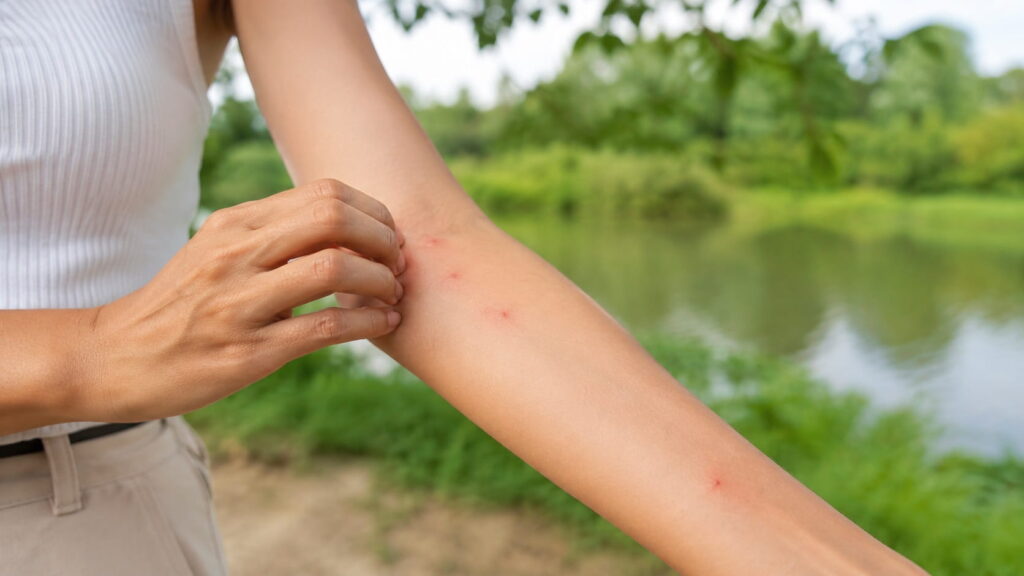
I am McLee Tembo, a Health Consultant and the Founder of NFH Clinic. At the clinic, mosquito bites are one of the most common things people ask us about, usually with the same question: “How do I make this stop itching?”
Below is a straight answer, followed by the detail behind it, so you know not just what to do but why it works.
Quick Answer: What Stops a Mosquito Bite Itching Fastest
- Cool the bite. Hold a cold, damp cloth or a wrapped ice pack on it for a few minutes.
- Don’t scratch. It feels good for a second and makes everything worse after that.
- Apply 1% hydrocortisone cream if it’s suitable for you, or use calamine lotion if you prefer something gentler.
- Consider an oral antihistamine if the itching is widespread or intense. Ask a pharmacist if you are unsure whether it suits you.
- Watch how it changes over the next few days. Most bites calm down within that time. If it doesn’t, keep reading below for what that might mean.
Cold and pressure can ease the itch within seconds, but the bite itself usually takes a few days to fully settle. Keep that distinction in mind as you read on, since a lot of advice online blurs the two.
In this article:
- Why Do Mosquito Bites Itch?
- What Is the Best Treatment for Mosquito Bites?
- Can You Stop Mosquito Bites From Itching in Seconds?
- Home Remedies for Mosquito Bites: What's Actually Worth Trying
- What to Put on Mosquito Bites: Over-the-Counter Options
- How to Stop Mosquito Bites Itching Naturally
- How to Treat Mosquito Bites on Legs
- How to Get Rid of Mosquito Bites Overnight
- Mosquito Bites and Swelling: How to Bring It Down
- Skeeter Syndrome: When a Bite Is More Than Just Annoying
- How Long Do Mosquito Bites Last?
- How Many Mosquito Bites Is Dangerous?
- Can a Mosquito Bite Make You Sick?
- When to Worry About a Mosquito Bite
- How to Stop Insect Bites From Itching in General
- Preventing Mosquito Bites in the First Place
- Frequently Asked Questions
- Final Thoughts from NFH Clinic
Why Do Mosquito Bites Itch?
The itch comes from your immune system, not the mosquito itself. When a female mosquito bites you, she injects a small amount of saliva that stops your blood from clotting while she feeds. Your body treats that saliva as a foreign substance and releases histamine to deal with it.
Histamine increases blood flow to the area and irritates nearby nerve endings, which is what you feel as itching, along with the small raised bump known as a wheal. People react differently to the same bite because immune sensitivity to mosquito saliva varies from person to person. That is also why the itch tends to fade with repeated exposure over a season, as your body becomes somewhat used to it.
What Is the Best Treatment for Mosquito Bites?
There is no single “best” treatment for everyone, since it depends on how strong the reaction is. What matters is using the right tool for the situation instead of layering on everything at once.
| What you’re dealing with | What to try first |
|---|---|
| Mild, occasional itch | Cold compress |
| Persistent itch that keeps drawing your hand back | 1% hydrocortisone cream |
| Several bites at once | Cool oatmeal bath or calamine over the area |
| Itching that disrupts sleep or daily activity | Oral antihistamine, in addition to a topical |
| Noticeable swelling | Cold compress plus elevation if it’s on a limb |
| Pus, spreading redness, or worsening pain | Medical evaluation, not home treatment |
| Trouble breathing or throat swelling | Emergency care, immediately |
Cold compresses and gentle pressure remain the fastest first step because they act on the nerve signal directly. Hydrocortisone and antihistamines work more slowly but address the underlying histamine response, so they hold the itch down for longer.
Can You Stop Mosquito Bites From Itching in Seconds?
Somewhat, yes. Pressing your fingernail firmly into an X shape over the bite, or holding something cold against it, can interrupt the itch sensation almost immediately for many people. That relief is real, but it is temporary. It buys you comfort while the actual inflammation underneath gradually settles over the following days. Be wary of anything promising to make the bite disappear that fast. It won’t.
Home Remedies for Mosquito Bites: What’s Actually Worth Trying
Not every remedy people repeat online holds up equally well, and some can irritate the skin more than they help. Here is how I’d sort them.
Reasonably well supported:
- Cold compress or ice, wrapped in cloth, applied for a few minutes at a time
- Colloidal oatmeal, either as a paste on a single bite or a lukewarm bath if you have several
- Baking soda paste, one part baking soda to two parts water, left to dry before rinsing off
- Aloe vera gel, which cools the skin and can help if scratching has broken it
Use with more caution:
- Apple cider vinegar and lemon juice. These are widely recommended online, but there isn’t good evidence they specifically relieve mosquito-bite itching, and the acidity can irritate skin that is already inflamed. I would skip these rather than risk making things worse.
- Undiluted essential oils, including tea tree oil. Applied directly, these can cause their own skin reaction. If you want to try tea tree oil, dilute it properly in a carrier oil first, and patch test elsewhere on your skin.
- Raw honey. It has some antibacterial properties, but I wouldn’t rely on it to prevent infection from scratching. Keeping the area clean and not scratching does far more.
Natural does not automatically mean gentle. If something stings or burns when you apply it, that is your skin telling you to stop, not a sign it is working.
What to Put on Mosquito Bites: Over-the-Counter Options
If home remedies are not enough, these are the options I recommend most often at the clinic, roughly in order of how I’d reach for them:
- 1% hydrocortisone cream. A solid all-around choice for reducing both itch and inflammation.
- Calamine lotion. Gentler, good for larger areas or sensitive skin.
- Oral antihistamines, such as cetirizine or loratadine. Useful when the itching is widespread or intense, since they work through the histamine reaction directly rather than just numbing the surface. Check the packaging or ask a pharmacist if you’re pregnant, on other medication, or treating a child.
- Topical anesthetics with lidocaine or pramoxine. These numb the area for a few hours, which is handy before bed.
Apply one product at a time to clean, dry skin. Stacking several products together tends to irritate the skin rather than speed up relief.
How to Stop Mosquito Bites Itching Naturally
If you’d rather avoid medicated creams altogether, stick to the gentler end of the natural options above: cold compresses, oatmeal, aloe vera, and a light baking soda paste. These give real relief without the irritation risk that comes with vinegar, citrus, or undiluted oils. For a stronger natural approach to multiple bites, a cool bath with colloidal oatmeal covers more ground than treating each bite one at a time.
How to Treat Mosquito Bites on Legs
Leg bites tend to linger longer simply because of friction from walking, socks, and trousers rubbing against them all day. A few adjustments help:
- Let the area breathe when you can, or wear loose, soft fabric over it rather than anything tight.
- Cool the bite before you dress for the day, since swelling reduces the amount of rubbing against fabric later.
- If you have several bites clustered on one leg, treat the whole area with calamine or an oatmeal soak rather than dabbing each bite separately.
- Hold off on tight shoes until swelling around the ankle or foot has settled.
How to Get Rid of Mosquito Bites Overnight
Here’s the honest version of this answer: you can meaningfully reduce the itch and some of the swelling by morning, but you should not expect the bite to be gone entirely. Full healing for an ordinary bite still takes a few days regardless of what you apply before bed.
That said, this routine gives you the best shot at waking up noticeably better:
- Wash the area gently with soap and water, particularly if you’ve scratched it.
- Apply hydrocortisone cream or an antihistamine gel.
- Take an oral antihistamine before bed if you have several bites or one that is especially itchy, so it’s working while you sleep.
- Cover the bite loosely with a breathable bandage if you tend to scratch in your sleep.
- Keep the room cool. Heat and sweat both tend to make itching worse overnight.
Mosquito Bites and Swelling: How to Bring It Down
Swelling is the visible part of your body’s inflammatory response, so tackling it uses the same tools as tackling the itch:
- Elevate the limb if the bite is on an arm or leg, to reduce blood pooling in the area.
- Apply a cold compress for ten to fifteen minutes at a time, a few times a day.
- Take an oral antihistamine if the swelling is significant, since it addresses the histamine response causing both the itch and the puffiness.
If the swelling keeps spreading well beyond the bite itself, or hasn’t started improving after a few days, that’s worth having looked at rather than waiting out.
Skeeter Syndrome: When a Bite Is More Than Just Annoying
Skeeter syndrome is a stronger, allergic-type reaction to mosquito saliva. Instead of a small itchy bump, you get an area of significant swelling that may feel warm, tender, or bruised. It’s more common in children, but it can happen to anyone.
Here’s how it compares to a typical bite:
| Normal bite | Skeeter syndrome |
|---|---|
| Small, itchy bump | Larger area of swelling |
| Mild redness | Noticeable redness |
| Manageable at home | May be warm or tender to touch |
| Settles over a few days | Can take several days to over a week |
| No fever or systemic symptoms | Occasionally mild fever |
Skeeter syndrome can look alarming, but it usually isn’t dangerous on its own. The tricky part is that it closely resembles a skin infection called cellulitis, and telling the two apart isn’t always straightforward without an examination. If a reaction is unusually large, warm, or getting worse rather than better, have it checked rather than assuming it’s just a strong bite.
How Long Do Mosquito Bites Last?
For most people, a bite peaks in itch and swelling within a day or two, then gradually fades over three to seven days. Scratching, heat, and sweat can all stretch that timeline out. If a bite looks the same or worse after a week, it’s worth getting it examined rather than continuing to wait.
How Many Mosquito Bites Is Dangerous?
There is no specific number that applies to everyone. The risk depends far more on the mosquito species and diseases present in your area, your own health, and how your body reacts, than it does on a bite count.
A few situations do warrant more caution regardless of number:
- A large number of bites in a short period, particularly for young children or older adults, can occasionally cause a stronger reaction with fever or fatigue.
- Bites in regions where mosquito-borne diseases are common carry a real risk even from a single bite, since it only takes one infected mosquito to transmit illness.
- A severe reaction from just one or two bites is more concerning than a normal reaction to a dozen bites.
If you’re unsure, it’s always better to get checked than to guess.
Can a Mosquito Bite Make You Sick?
Yes, in some circumstances. Beyond the local itching and swelling, mosquitoes can transmit diseases such as malaria, dengue, and West Nile virus, depending on the species and where you were bitten. This is why fever, headache, body aches, or unusual fatigue appearing after mosquito exposure should never be dismissed as “just a bite,” particularly if you’ve recently travelled to or live in an area where these diseases occur.
When to Worry About a Mosquito Bite
Most bites are harmless and resolve on their own. Here’s how to tell when something needs attention, split by what’s actually going on.
Possible allergic reaction, seek emergency care immediately:
- Difficulty breathing or swallowing
- Swelling of the lips, tongue, or throat
- Widespread hives
- Dizziness or sudden weakness
Possible skin infection, get it checked:
- Increasing redness, warmth, or pain days after the bite
- Pus or fluid draining from the site
- A red streak spreading away from the bite
- Fever alongside the local symptoms
Possible mosquito-borne illness, get it checked, especially after travel:
- Fever, headache, or body aches appearing after mosquito exposure
- Unusual fatigue or weakness with no other explanation
- Any of the above alongside a rash
Keeping these three apart matters, because the treatment for each is completely different, and mistaking one for another delays getting the right help.
How to Stop Insect Bites From Itching in General
Most of what’s covered here applies to other insect bites too, not just mosquitoes. Washing the area if it’s been scratched, cooling it, using an appropriate antihistamine, and leaving it alone will calm the itch from midge bites, flea bites, and most other common bug bites. The exception is always a bite showing signs of a severe allergic reaction or infection, which needs professional evaluation no matter what caused it.
Preventing Mosquito Bites in the First Place
The best treatment is avoiding the bite entirely. A few habits make a real difference:
- Use an EPA-registered repellent containing DEET, picaridin, or oil of lemon eucalyptus.
- Wear long sleeves and trousers during dawn and dusk, when mosquitoes are most active.
- Clear standing water around your home, since it’s where mosquitoes breed.
- Use mosquito nets or window screens if you’re in an area with a high mosquito population.
Frequently Asked Questions
What stops mosquito bites from itching immediately?
Cold and firm pressure give the fastest relief, usually within seconds, though the underlying reaction takes longer to fully settle.
Should I put ice directly on a mosquito bite?
Wrap it in a cloth first. Ice applied directly to skin for too long can cause its own irritation.
Is toothpaste good for mosquito bites?
It’s a common home tip, but it isn’t a reliable treatment and can irritate sensitive skin. Stick to hydrocortisone, calamine, or a cold compress instead.
Should I use hydrocortisone or calamine?
Hydrocortisone tends to work better for persistent itch, while calamine is gentler and suits larger or more sensitive areas. Either is a reasonable first choice.
Can mosquito bites become infected?
Yes, usually from scratching that breaks the skin. Watch for increasing redness, warmth, pus, or spreading discoloration.
When should I see a doctor for a mosquito bite?
If it’s unusually large, painful, warm, not improving after a week, or accompanied by fever or other symptoms beyond the skin itself.
Final Thoughts from NFH Clinic
Most mosquito bites are a short-lived nuisance. Cold, the right cream, and a bit of patience will usually sort it out within a few days. Still, pay attention to how your body reacts. If a bite behaves differently than the ones you’re used to, especially with spreading redness, fever, or swelling well beyond the bite itself, don’t wait it out.
If you’re dealing with a bite that isn’t settling the way it should, or you’re just not sure what you’re looking at, reach out to us at newfasthealth.com and we’ll help you figure out the next step.
Related Articles: