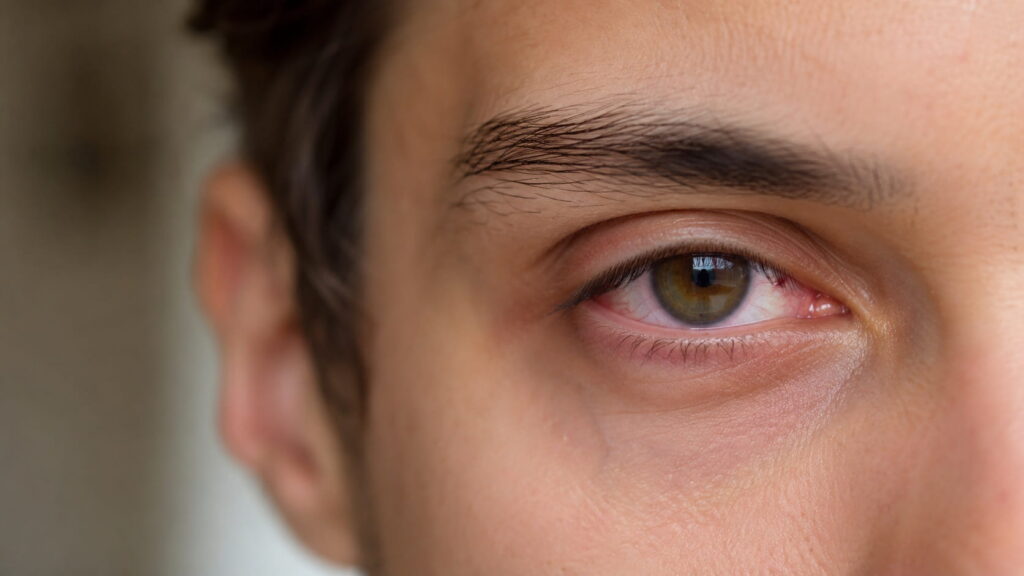
Most mild red eyes improve once you address what’s causing them. For temporary irritation, dryness, or swelling, a cool compress and preservative-free artificial tears usually bring relief within minutes to a day. But red eyes with pain, vision changes, light sensitivity, heavy discharge, an injury, or discomfort while wearing contact lenses need medical attention, not more home remedies.
This guide walks through what actually works, what to avoid, and how to tell the difference between redness that will pass on its own and redness that’s a warning sign.
Overview
Red eyes happen when the small blood vessels on the surface of the eye, the conjunctival vessels, widen in response to irritation, dryness, allergens, or infection. It’s one of the most common reasons people search for eye advice, and in the large majority of cases it’s harmless and short-lived. The redness itself isn’t the condition, it’s a signal, and the right response depends entirely on what’s behind it. Most cases respond well to a compress, artificial tears, and a bit of rest. A smaller number point to something that needs a same-day or urgent evaluation, and knowing which category you’re in is the most useful thing this guide can offer.
Quick Facts
| Most common cause | Dry eye and digital eye strain |
| Usually contagious? | No, except viral and bacterial conjunctivitis |
| Typical duration (mild cases) | A few hours to 2 to 3 days |
| Typical duration (infection or hemorrhage) | Up to 1 to 2 weeks |
| Fastest home relief | Cool compress, 5 to 10 minutes |
| First-line treatment | Preservative-free artificial tears |
| When it’s urgent | Pain, vision changes, light sensitivity, heavy discharge, or a red painful eye with contact lenses |
Key Takeaways
- Most red eyes are caused by dryness, allergies, fatigue, or mild irritation, and they clear up with simple home care.
- A cool compress and preservative-free artificial tears are the safest, fastest first steps for the majority of cases.
- Decongestant “redness reliever” drops mask the symptom rather than treat the cause, and overuse can cause rebound redness.
- A red, painful eye in a contact lens wearer needs same-day care, not a wait-and-see approach.
- Pain, vision changes, light sensitivity, or discharge that’s yellow or green are signs to stop self-treating and get evaluated.
In this Guide:
- Can You Really Get Rid of Red Eyes in 5 Minutes?
- What's Actually Causing Your Red Eyes?
- How to Get Rid of Red Eyes Fast
- How to Get Rid of Red Eyes Without Eye Drops
- How to Get Red Eyes to Clear Naturally
- The 20-20-20 Rule for Screen-Related Redness
- How to Get Rid of Red Eyes in the Morning
- How to Get Rid of Red Eyes From Crying
- How to Get Rid of Red Eyes in Photos
- Red Veins That Won't Go Away
- What If One Part of My Eye Looks Bright Red?
- If You Wear Contact Lenses, Read This
- What If a Chemical Gets in Your Eye?
- Are Red Eyes Contagious?
- What About a Red Bump on the Eyelid?
- Safe Home Remedies vs Remedies to Avoid
- When Red Eyes Need Medical Attention
- How Doctors Find the Cause
- Preventing Red Eyes From Coming Back
- Frequently Asked Questions
- A Final Word
Can You Really Get Rid of Red Eyes in 5 Minutes?
Sometimes, yes, mild redness can look noticeably better within five to ten minutes. No, there’s no guaranteed cure that fast for every cause. What a quick fix can do is calm surface irritation and swelling. It can’t reverse an infection or a genuine eye condition in minutes, no matter what the bottle promises.
If you need your eyes to look less red quickly:
- Remove contact lenses if you’re wearing them
- Don’t rub your eyes, rubbing prolongs the swelling
- Close your eyes and hold a cool, clean compress over them for 5 to 10 minutes
- If dryness seems likely, add preservative-free artificial tears
- Step away from screens, smoke, or other irritants for a few minutes
- If there’s pain, light sensitivity, vision change, or heavy discharge, stop trying to hide the redness and get medical attention instead
This covers most of what people mean by “fast,” “in 5 minutes,” or “quick cures,” and it’s honest about the limit of what a compress can actually do.
What’s Actually Causing Your Red Eyes?
Redness itself is a symptom, not a diagnosis. Whether it’s in one eye or both is a useful early clue: allergies and dry eye usually affect both eyes at once, while an infection, a scratch, a stye, or a subconjunctival hemorrhage more often shows up in just one. The table below is a starting point, not a replacement for an exam if something feels off.
| What it looks or feels like | Likely cause | What helps |
|---|---|---|
| Red, itchy, watery, both eyes | Allergic conjunctivitis | Avoid the trigger, cool compress, antihistamine drops |
| Red, dry, gritty, worse by end of day | Dry eye | Artificial tears, screen breaks, blinking more |
| Red with yellow or green discharge | Bacterial conjunctivitis | Needs medical assessment, likely antibiotic drops |
| Red with watery discharge, recent cold | Viral conjunctivitis | Usually clears on its own; hygiene matters, it’s contagious |
| Red, crusty eyelid edges | Blepharitis | Warm compress, eyelid hygiene |
| A sharply defined bright-red patch, little or no pain | Subconjunctival hemorrhage | Usually just observation, see below |
| Red, painful, light-sensitive | Possible corneal or intraocular inflammation | Same-day or urgent eye care |
| Red and painful while wearing contacts | Possible microbial keratitis | Remove lenses, same-day eye care, don’t wait it out |
| Red with severe headache, nausea, halos around lights | Possible acute angle-closure glaucoma | Emergency care |
How to Get Rid of Red Eyes Fast
Once you have a sense of the likely cause, these are the standard first-line options, in order of how quickly they typically help.
Cool compress. A cool, damp cloth pressed gently over closed eyes for 5 to 10 minutes can temporarily reduce swelling and calm irritation. It won’t cure an infection, but for mild redness from dryness, fatigue, or minor irritation, it’s usually the fastest thing you can do.
Preservative-free artificial tears. These rinse away irritants and rehydrate the eye’s surface. They’re considered a first-line option for general redness and dryness, and using them three to four times a day tends to bring noticeable relief within a day or two.
Warm compress. More appropriate when crusting, burning, or gritty eyelids point to blepharitis or clogged oil glands rather than plain irritation. A warm, damp cloth for 10 minutes helps loosen the glands along the lash line.
Antihistamine eye drops. If itching and watering suggest allergies, these usually help within 24 to 48 hours, faster if you also avoid the trigger.
Antibiotic eye drops, only when prescribed. Reserved for confirmed bacterial infection. Don’t use leftover drops or someone else’s prescription. The wrong medication for the wrong cause can make things worse or delay a proper diagnosis.
Redness relief drops aren’t the same as treating the cause
Decongestant “redness reliever” drops (like the ones marketed for whitening your eyes) shrink surface blood vessels so the eye looks less red, but they don’t treat whatever caused the redness in the first place. Used for more than a few days in a row, most of these can cause rebound redness, where your eyes end up redder once the drops wear off than they were before you started, a pattern the American Academy of Ophthalmology specifically warns against.
A newer decongestant ingredient, brimonidine, is formulated to reduce redness without the same rebound effect, though it isn’t right for everyone (children and anyone allergic to brimonidine should avoid it), so it’s worth a quick conversation with a pharmacist or eye doctor before switching to it. If you’re reaching for redness drops often, that’s a sign to figure out the actual cause instead of masking it.
How to Get Rid of Red Eyes Without Eye Drops
Not everyone has drops on hand, and not every case needs them. These measures work well for mild, occasional redness, though they’re not a substitute for treatment if the cause turns out to be infection or an underlying eye condition:
- Cool or warm compress, depending on the likely cause (cool for irritation and swelling, warm for crusting or clogged glands)
- Blink deliberately and more often, especially after screen time, since a reduced blink rate is a major driver of dryness
- Rinse eyelids gently with clean, cool water to flush out dust, pollen, or smoke residue
- Step outside for fresh air if the redness is coming from a stuffy, dry, or smoky room
- Stay hydrated, mild dehydration reduces tear production
- Skip contact lenses and eye makeup until the redness clears. Both can trap irritants against the eye and slow recovery, and hypoallergenic makeup is a better choice once you’re back to wearing it
- Prioritize sleep, your eyes recover more overnight than most people realize
How to Get Red Eyes to Clear Naturally
If redness keeps coming back, the more lasting fix is usually removing what’s triggering it rather than treating each flare-up as it happens:
- Keep indoor humidity moderate, since very dry or very humid air both aggravate the eyes
- Wash pillowcases and towels regularly if allergies are a recurring pattern
- Identify and avoid your specific triggers, pollen, pet dander, dust, or smoke, rather than just treating the reaction after it starts
- Give your eyes a genuine break from screens rather than pushing through discomfort
This approach takes longer than a compress, but it addresses the pattern instead of just the flare-up.
The 20-20-20 Rule for Screen-Related Redness
Digital eye strain is one of the more common drivers of red eyes today, especially for anyone working from a screen most of the day. Every 20 minutes, look at something 20 feet away for 20 seconds. It’s a small habit, but it lets your eyes refocus and blink normally, which noticeably reduces strain and redness over time.
How to Get Rid of Red Eyes in the Morning
Morning redness usually traces back to sleeping in contacts, dry indoor air overnight, allergens on bedding, or simply not enough sleep. To address it:
- Use lubricating drops right after waking to rehydrate the surface
- Apply a cool compress for a few minutes while getting ready
- Switch out pillowcases regularly if allergies are a factor
- Avoid sleeping in contact lenses, this is one of the most preventable causes of morning irritation
How to Get Rid of Red Eyes From Crying
Crying causes temporary redness through increased blood flow and swelling around the eyes, and rubbing them afterward usually makes it worse. A cool compress, or two chilled spoons held gently over closed eyes for a few minutes, is the fastest way to calm it down. Splashing cool water on your face and resting your eyes for 10 to 15 minutes typically resolves it. How long it lasts varies by person, but the swelling usually settles within 20 to 30 minutes once you stop rubbing.
How to Get Rid of Red Eyes in Photos
This one splits into two different questions, so it’s worth answering both.
If you mean your actual eyes before a photo: a cool compress about 10 minutes beforehand is the same trick photographers and makeup artists rely on. Staying hydrated the day before and skipping alcohol or heavy screen time the night before also helps.
If you mean red-eye already in a photograph: that’s a flash reflection off the retina, not eye redness at all, and it’s fixed with your phone’s or photo editor’s red-eye correction tool rather than anything you’d do to your eyes.
Red Veins That Won’t Go Away
Persistent visible veins that don’t fade with rest or drops after a week or more are worth having looked at. They can point to chronic dry eye, ongoing contact lens strain, or an allergy trigger you haven’t identified. Note that ordinary visible red veins aren’t a reliable way to gauge blood pressure on their own, though high blood pressure can raise the risk of a subconjunctival hemorrhage, which looks different and is covered below.
What If One Part of My Eye Looks Bright Red?
A sharply defined, solid red patch on the white of the eye is usually a subconjunctival hemorrhage, a small blood vessel breaking beneath the conjunctiva. It often looks alarming but typically doesn’t hurt much, if at all. It can happen after coughing, sneezing, straining, rubbing, or a minor bump, and as Healthline notes, it generally clears on its own within about two weeks without treatment as the blood reabsorbs.
See a doctor if it’s accompanied by pain, vision changes, keeps recurring, or followed an injury.
If You Wear Contact Lenses, Read This
A red, painful eye in a contact lens wearer is a different risk category than ordinary irritation. Extended lens wear reduces oxygen to the cornea, and a painful red eye can signal microbial keratitis, an infection that can threaten vision if it isn’t treated quickly.
If your eye is red and painful while wearing contacts: remove the lenses right away and get seen the same day. Don’t keep using artificial tears and wait several days to see whether it improves on its own.
What If a Chemical Gets in Your Eye?
Start rinsing immediately with clean running water or saline, and keep rinsing for at least 15 to 20 minutes. Remove contact lenses if they come out easily while you’re rinsing. Don’t wait to see whether the redness settles before getting urgent care, chemical exposure needs immediate irrigation and prompt evaluation regardless of how it looks afterward.
Are Red Eyes Contagious?
It depends on the cause. Allergies, dry eye, fatigue, and general irritation aren’t contagious. Viral and bacterial conjunctivitis are, and they spread easily.
If an infection seems likely:
- Wash your hands often, and avoid touching or rubbing your eyes
- Don’t share towels, pillowcases, or eye makeup
- Don’t share eye drops
- Clean frequently touched surfaces, especially if someone else in the house is affected
What About a Red Bump on the Eyelid?
A stye is a small, tender, red bump near the edge of the eyelid, usually caused by a blocked oil gland that gets infected. A chalazion looks similar but sits further back on the eyelid and isn’t caused by bacteria, just a blocked gland. Both usually respond to the same approach: a warm compress held over the closed eyelid for 5 to 10 minutes, three to four times a day, until it drains and heals on its own, typically within a week or two. Never squeeze or pop a stye or chalazion, that can spread the infection or push it deeper into the lid.
See a doctor if it doesn’t improve after a week or two, keeps recurring, or affects your vision.
Safe Home Remedies vs Remedies to Avoid
Safe and generally accepted:
- Cool compress
- Warm compress, when appropriate
- Preservative-free artificial tears
- Adequate rest and hydration
Don’t put these in or near your eyes:
- Honey
- Milk
- Aloe vera applied directly
- Castor oil
- Herbal pastes or homemade eyewashes
These aren’t sterile, and using them in the eye carries a real risk of infection or irritation, even when the intention is to be gentle and natural. If something isn’t specifically formulated and sterilized for eye use, it doesn’t belong in your eye.
When Red Eyes Need Medical Attention
Not every red eye is equally urgent. Here’s a rough way to sort it.
Get emergency care now:
- Sudden vision loss
- Severe eye pain
- Severe headache with red eye
- Eye pain with nausea or vomiting
- Chemical exposure
- A serious eye injury
- Severe pain with halos around lights
Get same-day eye care:
- A red, painful eye while wearing contact lenses
- New light sensitivity
- Blurred vision
- Heavy discharge
- Redness that’s rapidly getting worse
- A foreign body that won’t come out
- Redness or pain after recent eye surgery
Arrange an eye exam soon, not an emergency:
- Redness that keeps coming back
- Redness that persists despite a week of home care
- Symptoms that linger without improving
- Recurrent, unexplained redness
Painful redness with significant light sensitivity in particular can point to conditions like uveitis or corneal inflammation, not just surface irritation, and it’s worth being assessed rather than waiting it out. Cleveland Clinic advises contacting an eye care provider if redness lasts a week or more, keeps getting worse, or comes with tenderness, vision changes, or light sensitivity.
How Doctors Find the Cause
Depending on your symptoms, an eye care professional may:
- Check your visual acuity
- Examine the cornea and conjunctiva directly
- Use a slit lamp for a closer look at the eye’s surface
- Check eye pressure, when indicated
- Use fluorescein dye to check for corneal scratches or ulcers
- Assess your tear film or eyelids if dry eye or blepharitis is suspected
Not every visit includes every test, it depends on what your symptoms suggest.
Preventing Red Eyes From Coming Back
Most of what prevents red eyes is consistency rather than any single trick:
- Build the 20-20-20 rule into your workday instead of waiting for strain to start
- Replace contact lenses and solution on schedule, and never sleep in them, even ones labeled for extended wear
- Keep artificial tears on hand before allergy season starts, not after symptoms show up
- Wash pillowcases weekly if allergies or blepharitis are a recurring issue for you
- Get a comprehensive eye exam periodically, even without symptoms, since some causes of redness build up gradually before you notice them
Frequently Asked Questions
What’s the best solution for red eyes?
For most mild cases, a cool compress paired with preservative-free artificial tears is the safest starting point. If allergies are the cause, antihistamine drops usually work faster.
How long do red eyes usually last?
It depends on the cause. Mild irritation can improve within hours to a couple of days. Allergies, conjunctivitis, blepharitis, and subconjunctival hemorrhage can take longer, sometimes a week or two. Redness that persists or worsens beyond that should be evaluated.
Can lack of sleep cause red eyes?
Yes. Sleep deprivation reduces tear production and increases dryness, a common contributor to morning redness.
Do eye drops actually get rid of redness?
Artificial tears are safe for regular use. Redness-reliever (decongestant) drops work by shrinking blood vessels rather than treating the cause, and using them for more than a few days can trigger rebound redness.
Is a homemade remedy for red eyes safe?
Only if it’s genuinely sterile, like a clean compress. Anything not formulated for eye use, honey and milk included, carries a real infection risk if applied directly.
Are red eyes contagious?
Sometimes. Viral and bacterial conjunctivitis spread easily; allergy- or dryness-related redness doesn’t.
What’s the difference between a stye and pink eye?
A stye is a localized, tender bump on the eyelid from a blocked gland, usually in one spot. Pink eye (conjunctivitis) affects the whole eye surface, often with discharge, and can be contagious. A warm compress helps both, but pink eye may need a specific diagnosis if it doesn’t improve.
Why is only one of my eyes red?
One-eye redness often points to something localized, an infection, a scratch, a stye, or a subconjunctival hemorrhage, rather than allergies or dry eye, which usually affect both eyes at once. If it’s painful or affecting your vision, it’s worth having looked at.
When should I see an eye doctor?
Promptly if redness comes with pain, vision changes, light sensitivity, or discharge that’s yellow or green, and same-day if you wear contacts and your eye is red and painful.
A Final Word
Most red eyes are harmless and settle with rest, a compress, and the right drops. But your eyes don’t give you many early warning signs before something more serious develops, so pain, vision changes, or redness that hasn’t improved after a week deserves a proper look rather than another home remedy.
If you’re not sure which category your symptoms fall into, that’s exactly the kind of question our team at NFH Clinic can help you work through.
Related Articles: