Quick Answer
Breakbone fever is another name for dengue fever, a viral infection spread mainly by infected Aedes mosquitoes. It gets its nickname from the intense muscle, joint, and bone pain it can cause. Most cases are mild and clear up within a week to ten days with rest, fluids, and paracetamol. In a small share of cases, dengue turns into severe dengue, which can become life-threatening within hours and needs emergency care. Warning signs often show up after the fever drops, not while it is at its worst, which is the single most important thing to understand about this illness.
Key Takeaways
- Breakbone fever and dengue fever are the same illness; the nickname refers to the severe muscle, joint, and bone pain it can cause.
- Most infections are mild or symptom-free. Severe dengue develops in roughly 1 in 20 symptomatic cases.
- The most dangerous window is often when the fever starts to drop, not while it’s at its highest, so don’t mistake a lower temperature for recovery.
- Watch for the 7 warning signs: severe abdominal pain, persistent vomiting, bleeding, difficulty breathing, extreme weakness or restlessness, and signs of poor circulation.
- There’s no specific cure. Treatment is hydration, rest, and paracetamol; avoid aspirin and NSAIDs.
- With prompt medical care, deaths from severe dengue are largely preventable.
- Prevention comes down to avoiding mosquito bites and eliminating standing water, day and night, not just at dusk.
- A vaccine (Qdenga) exists but eligibility varies by country and age; it isn’t currently available in the U.S.

Quick Facts: Breakbone Fever (Dengue Fever)
| Fact | Detail |
|---|---|
| Also known as | Dengue fever, breakbone fever |
| Cause | Dengue virus (DENV-1 to DENV-4) |
| Spread by | Bite of infected Aedes aegypti or Aedes albopictus mosquitoes |
| Contagious person-to-person? | No, not through casual contact |
| Incubation period | 4–10 days after the bite (commonly 5–7 days) |
| Typical illness length | 2–7 days acute fever, full recovery in 1–2 weeks |
| Most serious complication | Severe dengue (plasma leakage, bleeding, or organ impairment) |
| Who develops severe dengue | Roughly 1 in 20 symptomatic cases |
| Mortality with prompt care | Well under 1% |
| Specific cure | None; treatment is supportive |
| Vaccine | Qdenga, WHO-recommended for ages 6–16 in high-transmission settings |
| ICD-10-CM codes | A90 (dengue fever), A91 (dengue haemorrhagic fever) |
🚨 When to Seek Urgent Care
If someone with suspected dengue develops any of the following, especially as the fever is coming down, get medical attention right away rather than waiting to see if it passes:
- Severe or worsening abdominal pain
- Persistent vomiting
- Bleeding from the gums or nose, or blood in vomit or stool
- Difficulty breathing
- Cold, clammy skin or unusual restlessness, confusion, or drowsiness
In this Article:
- What Is Breakbone Fever?
- Dengue Fever Symptoms
- 7 Warning Signs of Dengue Fever
- Is Dengue Fever Dangerous? Can It Kill You?
- Dengue Fever Timeline: Incubation to Recovery
- What Are the 4 Stages of Dengue Fever?
- Post-Dengue Recovery: What to Expect
- What Causes Dengue Fever?
- Can You Get Dengue Twice?
- Who Is Most at Risk?
- Dengue Fever Treatment
- How Is Dengue Diagnosed?
- Dengue vs Malaria and Other Fevers
- Dengue Fever With Warning Signs vs Severe Dengue
- Dengue Fever Vaccine
- How to Prevent Dengue
- Dengue Fever in Africa
- Dengue Fever Around the World
- Dengue Fever ICD-10 Code
- Frequently Asked Questions
- Final Word From NFH Clinic
What Is Breakbone Fever?
If you’ve been seeing “breakbone fever” in the news lately, that’s because it has been driving renewed CDC travel guidance and outbreak coverage across parts of Latin America, the Caribbean, Asia, and the Pacific through 2026. But the name itself isn’t new. American physician Benjamin Rush coined “breakbone fever” back in 1789, describing an outbreak in Philadelphia, because of the deep, aching pain in the joints, muscles, and bones that many patients still describe today. The word “dengue” itself has a disputed origin, one theory traces it to the Swahili phrase “Ka-dinga pepo,” describing a sudden illness caused by an evil spirit, later shaped by the Spanish word “dengue,” meaning fastidious or careful, a nod to the stiff, careful gait of someone in pain.
Dengue is caused by a virus spread through mosquito bites and is one of the most common mosquito-borne illnesses in the world. WHO estimates 100 to 400 million dengue infections occur worldwide each year, and reported cases have been climbing, with over 14 million cases reported globally in 2024 alone, a record high. Roughly a quarter of dengue infections cause any noticeable symptoms at all, with the rest passing unnoticed. Of the people who do get sick, only about 1 in 20 goes on to develop severe dengue, but that small group is exactly why the disease deserves to be taken seriously rather than dismissed as “just a bad fever.”
At NFH Clinic, my goal with this guide is to give you the complete, medically accurate picture, not just the alarming headlines, so you know what to watch for and when to act.
Dengue Fever Symptoms
Dengue symptoms usually appear 4 to 10 days after an infected mosquito bite (an incubation period most commonly around 5 to 7 days), and the illness typically comes on suddenly.
Early Symptoms of Dengue Fever
- Sudden high fever, often 39 to 41°C (102 to 106°F)
- Severe headache, particularly pain behind the eyes
- Muscle, joint, and bone pain
- Fatigue and weakness
- Nausea or reduced appetite
- Swollen glands
A pattern many patients describe is feeling completely fine one moment, then developing a sharp fever and body aches within hours. That rapid onset is one of dengue’s more recognizable features.
Mild Dengue Symptoms
A large share of symptomatic infections stay mild: a short fever, some fatigue, and light body aches that resolve within a few days. Many of these cases are never formally diagnosed as dengue at all.
Dengue Fever Symptoms in Adults
Adults commonly report the classic combination of high fever, severe headache with pain behind the eyes, joint and muscle pain, nausea, and a rash appearing a few days into the illness. Older adults, and anyone with an underlying condition such as diabetes or heart disease, should be monitored a little more closely, since they carry a higher risk of complications.
What Does the Dengue Fever Rash Look Like?
A rash typically appears two to five days after the fever begins. It’s often flushed and red, sometimes described as looking like measles, and can be itchy. A second, fainter rash sometimes shows up during recovery. Because it resembles other viral rashes, it isn’t diagnostic on its own, but combined with fever and body pain after mosquito exposure or travel, it’s worth mentioning to a doctor.
7 Warning Signs of Dengue Fever
There isn’t one single “official” numbered list universally repeated word for word, but the CDC’s dengue warning signs, used to identify patients who need close monitoring, are:
- Severe abdominal pain or tenderness
- Persistent or repeated vomiting
- Bleeding from the gums or nose
- Blood in vomit or stool
- Rapid or difficult breathing
- Extreme weakness, unusual sleepiness, or restlessness
- Signs of fluid buildup or poor circulation, such as marked swelling, or pale, cold skin
These map onto CDC’s clinical warning-sign criteria, which also include liver enlargement as a finding a doctor would check on examination. The seven above are the ones a patient or caregiver can actually notice at home. They typically appear in the late febrile stage or during the critical phase, generally around days 3 to 7 of illness, and often as the fever is dropping. Anyone with any of these warning signs needs prompt medical evaluation, since they’re the group most likely to progress toward severe dengue.
Is Dengue Fever Dangerous? Can It Kill You?
Yes, dengue can be dangerous, and in its severe form, it can be fatal. That’s the honest answer, and one I give patients directly rather than softening. But the fuller picture matters just as much.
Most people who contract dengue either have no symptoms or recover fully within a week or two of rest and supportive care. Severe dengue develops in roughly 1 in 20 symptomatic cases. When it’s recognized early and managed with proper IV fluids and hospital monitoring, deaths from severe dengue can be reduced to well under 1%, some clinical data puts it below 0.5% with prompt intensive supportive therapy. Older reports describe substantially higher mortality when severe dengue went unrecognized or untreated, but those historical figures shouldn’t be read as the expected risk for someone receiving timely, modern medical care today.
So while dengue absolutely can kill, most deaths are preventable with timely care, which is exactly why recognizing warning signs matters so much more than the fever number on a thermometer.
Dengue Fever Timeline: Incubation to Recovery
Medically, symptomatic dengue follows a three-phase clinical course, sitting after an incubation period that has no symptoms at all.
| Period | Typical timing | What happens | What to do |
|---|---|---|---|
| Incubation | 4–10 days after the bite | Virus multiplies; no symptoms | Nothing to monitor yet |
| Febrile phase | Days 1–3 of illness | Sudden high fever, headache, body aches | Hydrate, rest, paracetamol |
| Critical phase | Around days 3–7, starting as fever drops | Highest risk of warning signs and severe dengue | Watch closely, seek care if warning signs appear |
| Recovery phase | Following the critical phase, over days to weeks | Gradual improvement; fatigue may linger | Continue rest and fluids |
What Are the 4 Stages of Dengue Fever?
Many people search for the “4 stages of dengue,” and it’s a fair way to think about the illness, even though the clinical literature (WHO and CDC) technically describes symptomatic dengue as three phases: febrile, critical, and recovery. The fourth “stage” people are usually referring to is the incubation period beforehand, when the virus is developing in the body with no visible symptoms yet. Grouped together, that gives you the four practical stages most patients experience: incubation, febrile, critical, and recovery, as shown in the table above.
The stage that catches people off guard is the critical phase. A dropping fever usually signals recovery with most illnesses. With dengue, it can mean the opposite: this is when warning signs and, in a minority of cases, severe dengue are most likely to appear.
Post-Dengue Recovery: What to Expect
Getting past the critical phase doesn’t always mean feeling back to normal right away. A meaningful share of people report lingering fatigue, muscle or joint aches, low mood, or trouble concentrating for weeks after the fever clears, sometimes referred to as post-dengue fatigue syndrome. Hair thinning a few weeks after the illness has also been documented, similar to the hair shedding that can follow other significant fevers or infections, and it typically grows back on its own.
There’s no specific treatment for this lingering fatigue beyond time, rest, steady hydration, and a gradual return to normal activity rather than pushing straight back into a full schedule. If fatigue or other symptoms are still significantly affecting daily life after several weeks, or if new symptoms develop, it’s worth going back to your doctor rather than assuming it will simply pass, since it’s still worth ruling out other causes.
What Causes Dengue Fever?
Dengue is caused by the dengue virus, a flavivirus with four distinct serotypes: DENV-1, DENV-2, DENV-3, and DENV-4. It spreads through the bite of an infected female Aedes aegypti or Aedes albopictus mosquito.
Transmission cycle:
- A mosquito bites a person who currently has the virus circulating in their blood.
- The virus multiplies inside the mosquito over several days.
- That mosquito then passes the virus to the next person it bites.
Dengue is not spread by casual contact, coughing, or touch. In rare cases, it has been transmitted through blood transfusion, organ transplantation, and from a pregnant mother to her baby.
If you currently have dengue, it’s worth protecting yourself from further mosquito bites during the first few days of illness. Mosquitoes can pick up the virus from your blood during this window and pass it on to others in your household or community.
Breakbone Fever Mosquitoes: Why Dengue Spreads So Easily
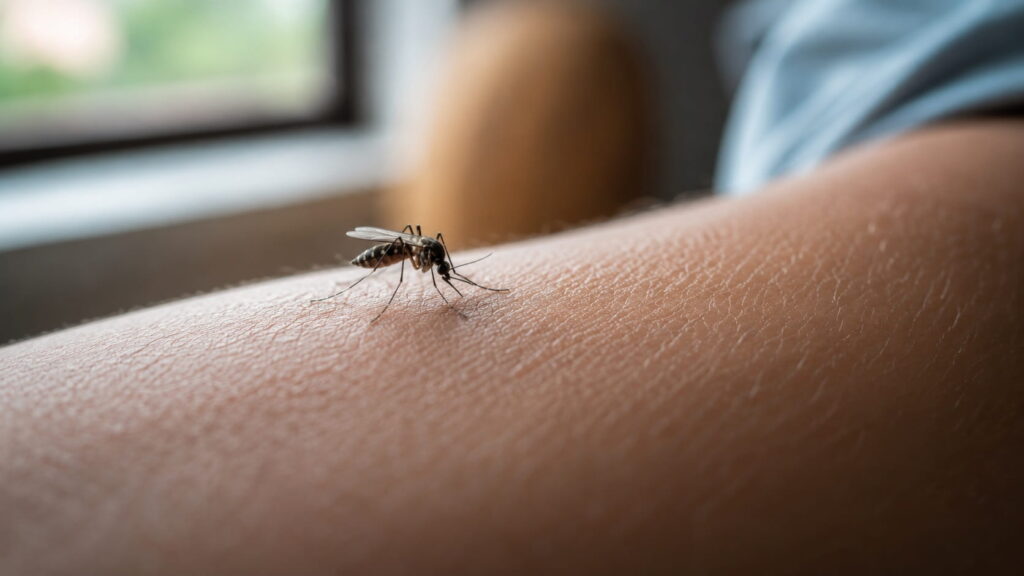
Aedes mosquitoes bite mainly during daylight hours, with peak activity in the early morning and late afternoon, though they can also bite at night, so protection shouldn’t stop once the sun goes down. They strongly prefer human blood, thrive in urban and densely populated areas, and breed in small amounts of clean, standing water rather than filth. A single uncovered bucket, flowerpot tray, or blocked gutter can support hundreds of larvae within days, even in an otherwise spotless home.
Can You Get Dengue Twice?
Yes, and this matters more than people realize. Because there are four dengue serotypes, an infection with one gives long-term protection against that particular serotype, but not the other three. A second infection with a different serotype actually raises the risk of severe dengue, a phenomenon called antibody-dependent enhancement. This is why a “mild case last time” doesn’t guarantee a mild case the next time.
Who Is Most at Risk?
Higher exposure risk:
- Living in or traveling to tropical or subtropical regions
- Areas with inconsistent water storage or waste management
- Spending long stretches outdoors during daylight hours
Higher risk of severe illness once infected:
- A previous dengue infection with a different serotype
- Young children
- Older adults
- Pregnant women
- People with chronic conditions such as diabetes, hypertension, or heart disease
- Anyone whose medical care is delayed after warning signs appear
Dengue Fever in Children
Children, especially infants and toddlers, can’t always describe symptoms like adults can. Instead of complaining of abdominal pain or headache, a child with dengue may just seem unusually fussy, refuse to eat or drink, or become unusually sleepy. Because young children have less physiological reserve, dehydration and warning signs can escalate faster in them than in adults, so a lower threshold for medical review is reasonable if a child has a persistent fever in a dengue-affected area. As with adults, avoid aspirin and NSAIDs, and keep them hydrated with small, frequent sips of fluid if they’re struggling to drink normally.
Dengue Fever in Pregnancy
Pregnant women who develop dengue need prompt medical attention rather than home management, since dengue during pregnancy can affect both mother and baby and requires closer monitoring than a typical case. If you’re pregnant and develop a sudden fever after mosquito exposure or travel to a dengue-affected area, contact your obstetric provider the same day rather than waiting to see how symptoms develop.
Dengue Fever Treatment
There is currently no specific antiviral medicine that cures dengue. Care focuses on supportive treatment, symptom relief, and close monitoring, whether the case stays mild or needs hospital care.
If dengue is suspected and symptoms are mild:
- Contact a healthcare provider for guidance and testing
- Hydrate steadily with water, oral rehydration solutions, soups, or diluted juices
- Rest as much as possible
- Use paracetamol (acetaminophen) for fever and pain
Medicines to avoid: Aspirin, ibuprofen, diclofenac, and other NSAIDs, unless specifically prescribed, because they raise bleeding risk.
Once the fever drops: Don’t assume that means recovery. Watch closely for warning signs over the following 24 to 48 hours, this is the critical phase.
If any warning sign appears: Seek urgent medical assessment rather than waiting.
What Happens in Hospital?
Hospital care for dengue with warning signs or severe dengue typically involves intravenous fluids to maintain circulation, close monitoring of vital signs, and regular blood tests tracking platelet counts and hematocrit. This is largely preventive care, aimed at catching a downward turn before it becomes an emergency, not a sign that something has already gone catastrophically wrong. With this kind of monitoring, the large majority of patients, even those with severe dengue, recover fully.
Does a Low Platelet Count Mean Severe Dengue?
Not by itself. Thrombocytopenia (a low platelet count) is common in dengue and is one of several lab findings clinicians track, but severe dengue is defined by specific clinical criteria: significant plasma leakage causing shock or fluid buildup with breathing difficulty, serious bleeding, or serious organ impairment. A low platelet count on its own, without these features, doesn’t mean the illness has turned severe. It’s one data point among several that your doctor will weigh together, alongside your symptoms and hematocrit trend.
How Is Dengue Diagnosed?
Diagnosis combines your symptoms and recent travel or exposure history with blood testing.
| Test | What it detects | When it’s most useful |
|---|---|---|
| NS1 antigen | Viral protein | First few days of fever |
| PCR (NAAT) | Viral genetic material | First few days of fever |
| IgM antibody | Immune response | Later in the illness |
| IgG antibody | Past or recent exposure | Interpreted alongside IgM and timing |
A negative test taken very early in the illness doesn’t always rule dengue out, which is why your doctor may recommend retesting or basing initial management on symptoms and exposure history.
Dengue vs Malaria and Other Fevers
Dengue shares symptoms, fever, headache, body aches, fatigue, with several other illnesses common in the same regions, including malaria, chikungunya, Zika, and typhoid. Symptoms alone can’t reliably tell them apart, which is exactly why testing matters rather than guessing at home.
| Feature | Dengue | Malaria | Chikungunya |
|---|---|---|---|
| Cause | Dengue virus | Malaria parasite | Chikungunya virus |
| Main vector | Aedes mosquitoes | Anopheles mosquitoes | Aedes mosquitoes |
| Fever | Common | Common | Common |
| Severe headache | Common | Possible | Possible |
| Muscle/joint pain | Common | Possible | Often prominent, especially joints |
| Rash | Can occur | Uncommon | Can occur |
| Bleeding risk | Possible, mainly in severe disease | Possible in severe malaria | Uncommon |
| Confirmed by | Blood testing (NS1, PCR, antibody) | Blood testing (blood film/RDT) | Blood testing (PCR, antibody) |
If you develop a sudden fever after travel or in a region where several of these illnesses circulate, mention your travel history and any known mosquito exposure to your doctor so testing can be directed appropriately, including malaria testing where relevant.
Dengue Fever With Warning Signs vs Severe Dengue
“Dengue hemorrhagic fever” and “dengue shock syndrome” are older terms still seen online and in some clinical settings. Current WHO and CDC classification instead groups symptomatic dengue into three categories: dengue without warning signs, dengue with warning signs, and severe dengue.
Dengue with warning signs means a patient has developed one or more of the seven warning signs covered earlier and needs close observation, often in a hospital setting, because they’re more likely to progress further. Severe dengue is the more serious outcome that this closer watching is meant to catch early, defined by significant plasma leakage (leading to shock or fluid buildup with breathing difficulty), serious bleeding, or serious organ impairment.
In short: warning signs flag who needs closer watching, while severe dengue is what that closer watching is meant to catch before it becomes life-threatening.
Dengue Fever Vaccine
Vaccine availability and eligibility vary a lot by country, so it’s worth understanding the current landscape rather than assuming one rule applies everywhere.
Qdenga (TAK-003, Takeda) is the newer of the two available vaccines. WHO’s Strategic Advisory Group of Experts (SAGE) recommends it for children aged 6 to 16 in settings with high dengue transmission, given as two doses three months apart, without requiring a pre-vaccination blood test. It’s now licensed in more than 40 countries, including across the EU, the UK, and, as of July 2026, India, though individual national regulators sometimes approve broader age ranges than the WHO recommendation covers. Qdenga is not currently approved for use in the United States.
Dengvaxia (Sanofi) was the first dengue vaccine approved by the FDA, in 2019, but it’s recommended only for people aged 9 to 16 with laboratory-confirmed prior dengue infection, because it can worsen outcomes in people who’ve never had dengue before. Sanofi has discontinued production, and remaining doses are set to expire in 2026.
Because eligibility depends on your age, prior infection status, and country, the most reliable next step is checking with a travel medicine clinic or your doctor about what’s actually available and appropriate where you live or plan to travel.
How to Prevent Dengue
Since there’s no cure, prevention is where you have the most control, and it works on two levels: protecting yourself, and reducing mosquito breeding sites nearby.
Personal protection:
- Use insect repellent containing DEET, picaridin, or IR3535
- Wear long sleeves and pants, especially during early morning and late afternoon
- Use window and door screens
- Favor air-conditioned or well-screened spaces in high-risk areas
- Keep repellent use consistent through the day, not just at dusk, since these mosquitoes bite day and night
Environmental control (the most effective long-term measure):
- Empty and scrub water containers regularly
- Keep water storage tanks covered
- Clear blocked gutters
- Dispose of old tires and containers that collect rainwater
- Keep your surroundings free of standing water
Community measures, clean-up campaigns, proper waste collection, and local vector control programs remain the most effective way to reduce dengue transmission at a population level.
If you’re traveling to a dengue-affected region, apply repellent consistently, check the CDC’s current destination-specific travel health notices before you go, since affected areas shift over time, and continue precautions for at least the first couple of weeks after returning home.
Dengue Fever in Africa
Dengue is under-recognized across much of Africa, partly because its symptoms overlap heavily with malaria and other common febrile illnesses, and surveillance in some areas is limited. If you live in or are traveling within Africa and develop a sudden high fever with headache, pain behind the eyes, body aches, nausea, or rash, dengue is worth considering alongside malaria, particularly with recent travel or known mosquito exposure. Testing for both is the safest path rather than assuming one or the other.
Dengue Fever Around the World
Dengue is endemic in more than 100 countries, with the largest burden across Southeast Asia, Latin America, and parts of Africa. Countries like the Philippines see dengue as a persistent, year-round concern, with case numbers rising sharply during the rainy season each year and the Department of Health regularly issuing local alerts.
2026 update: CDC has maintained an active global travel notice for dengue through 2026, reflecting higher-than-usual case activity in a number of destinations popular with international travelers. Because the list of affected countries and the notice level change over time, check the CDC’s current dengue travel health notice, or WHO’s global dengue surveillance dashboard, for up-to-date, destination-specific maps and guidance before you travel, rather than relying on any single article to stay current.
Dengue Fever ICD-10 Code
In ICD-10-CM, A90 is used for dengue fever (classical dengue), and A91 for dengue haemorrhagic fever. This coding split shouldn’t be confused with the modern clinical classification of dengue without warning signs, dengue with warning signs, and severe dengue, they’re different systems serving different purposes. Exact coding can also differ slightly by country and by how a case is clinically classified, so documentation should follow whichever system applies in your setting.
Frequently Asked Questions
What is breakbone fever?
Another name for dengue fever, a mosquito-borne viral illness named for the intense muscle, joint, and bone pain it can cause.
How long does dengue fever last?
The acute febrile phase usually lasts 2 to 7 days, with full recovery, including fatigue, taking another one to two weeks. Warning signs, when they happen, typically show up as the fever is dropping, around days 3 to 7.
What are the 7 warning signs of dengue fever?
Severe abdominal pain, persistent vomiting, bleeding from the gums or nose, blood in vomit or stool, difficulty breathing, extreme weakness or restlessness, and signs of fluid buildup or poor circulation.
What are the 4 stages of dengue fever?
Incubation, febrile phase, critical phase, and recovery phase. Clinically, the symptomatic illness itself is described as three phases (febrile, critical, recovery), with incubation happening beforehand.
Can dengue fever kill you? Is it deadly?
It can, in its severe form, but most deaths are preventable with timely care. With prompt hospital treatment, mortality from severe dengue can be reduced to well under 1%.
Is dengue fever contagious?
Not through casual contact. It spreads through mosquito bites, with rare exceptions like blood transfusion or transmission from mother to baby.
Can you get dengue twice?
Yes. Infection with one of the four serotypes doesn’t protect you against the other three, and a second infection can carry a higher risk of severe disease.
Is there a dengue fever vaccine?
Yes. Qdenga is WHO-recommended for children aged 6 to 16 in high-transmission settings and is licensed in over 40 countries, though not currently in the U.S. Dengvaxia is being phased out and is only appropriate for ages 9 to 16 with confirmed prior infection.
Does a low platelet count mean I have severe dengue?
Not on its own. It’s a common finding in dengue and one factor doctors track, but severe dengue is defined by specific criteria like plasma leakage, serious bleeding, or organ impairment.
Can dengue be treated at home?
Mild cases often can be, with hydration, paracetamol, and rest, while avoiding aspirin and NSAIDs. Any warning sign means it’s time to see a doctor.
How can dengue fever be prevented?
Use insect repellent day and night, wear protective clothing, eliminate standing water around your home, use screens, and support community mosquito control.
Where does the name “breakbone fever” come from?
American physician Benjamin Rush coined it in 1789 while describing a Philadelphia outbreak, referring to the severe joint, muscle, and bone pain dengue causes. “Dengue” itself likely comes from a Swahili phrase for a sudden illness, later shaped by a Spanish word meaning fastidious or careful.
Why do I still feel tired weeks after dengue?
Lingering fatigue, muscle aches, or low mood for several weeks after the fever clears is common and sometimes called post-dengue fatigue syndrome. It usually resolves with rest and time, but see your doctor if it persists for many weeks or significantly limits daily life.
Final Word From NFH Clinic
Dengue fever, or breakbone fever, isn’t something to panic over, but it is something to take seriously. Most people recover fully with rest, fluids, and basic care. The real danger lies in missing the warning signs during the critical phase, particularly in the day or two right after the fever starts to break. If you or someone in your household develops a sudden fever with severe body aches after mosquito exposure or travel to a high-risk area, keep watching closely even as symptoms seem to ease, and don’t hesitate to seek care if anything feels off.
At NFH Clinic, our focus stays on early detection, patient education, and practical prevention. Understanding how dengue actually behaves, not just its scariest headlines, is what keeps people and families safe during outbreak season.
Sources:
- World Health Organization: Dengue and severe dengue fact sheet
- CDC: Clinical Features of Dengue
- CDC: Guidelines for Classifying Dengue
- PAHO/WHO: Dengue, Symptoms, Prevention and Treatments
- WHO: Vaccines and Immunization – Dengue
- CDC Emerging Infectious Diseases: Burden of Postinfectious Symptoms after Acute Dengue
Related Articles: