

Overview
If a blood test just showed your uric acid is high, here’s the short version. Cut back on alcohol, sugary drinks and purine-heavy meat and seafood. Stay hydrated. Lose excess weight gradually if you carry it. Manage any underlying condition, like diabetes or kidney disease. If diet and lifestyle aren’t enough, medication does the heavy lifting, not a food or a drink. Nothing flushes years of high uric acid out of your body in a day. Not even lemon water.
This guide covers why uric acid rises, what actually lowers it, and how a lab number, a gout attack and a kidney stone differ. People often search for them as if they’re the same thing. They’re not.
Quick Facts
| What it is | A waste product made when your body breaks down purines |
| Normal range | About 3.5–7.2 mg/dL for men, 2.5–6.0 mg/dL for women (ranges vary slightly by lab) |
| Crystal formation point | Around 6.8 mg/dL, where uric acid can start turning into crystals |
| Common gout treatment target | Below 6 mg/dL, sometimes lower for severe or frequent flares |
| Main causes | Diet, alcohol, obesity, genetics, certain conditions and medications |
| Possible complications | Gout, gout flares, uric acid kidney stones |
| Does it always cause symptoms? | No, it’s often found on a routine blood test with no symptoms at all |
| Can it be cured? | Often managed long-term rather than permanently cured; some cases improve significantly if the cause is reversible |
| How it’s treated | Diet and lifestyle changes, and prescription medication when needed |
Key Takeaways
- High uric acid (hyperuricemia) is a lab finding, not the same thing as gout, and it often causes no symptoms on its own.
- Diet and lifestyle changes, less alcohol and sugar, more hydration, gradual weight loss, genuinely help lower uric acid, especially for mild to moderate elevations.
- Purine-rich vegetables and plant proteins like beans and lentils don’t raise gout risk the way red meat, organ meats and certain seafood do.
- Nothing flushes uric acid out “instantly.” Fast relief during a flare and long-term lowering of your baseline level are two different goals.
- Not everyone with high uric acid needs medication. Many people are simply monitored.
- When medication is needed, urate-lowering drugs (like allopurinol) and flare medications (like NSAIDs or colchicine) do different jobs and aren’t interchangeable.
In this article:
- High Uric Acid Isn't the Same as Gout
- What Is Uric Acid?
- Does High Uric Acid Cause Symptoms?
- How Is High Uric Acid Diagnosed?
- What Causes High Uric Acid Levels
- Diet and Foods That Help Lower Uric Acid
- Lifestyle Changes That Help
- Uric Acid Treatment: What Medicine Actually Does
- What Is the Fastest Way to Reduce Uric Acid?
- How Long Does It Take to Lower Uric Acid?
- Can You Cure High Uric Acid Permanently?
- How Does Uric Acid Leave the Body, and Why Kidney Function Matters
- What Not to Do
- When to See a Doctor
- Frequently Asked Questions
- Bottom Line
- Related Reading
- Medical Sources and Guidelines
High Uric Acid Isn’t the Same as Gout
This distinction matters more than most articles let on.
High uric acid (hyperuricemia) is a lab finding. Your blood has more urate than it should, and on its own, it often causes no symptoms at all.
Gout happens when urate crystals form in a joint and trigger inflammation.
A gout flare is the acute attack itself, the sudden pain, swelling and redness.
Uric acid kidney stones form when urate crystallizes in the urinary tract instead of a joint.
You can have high uric acid for years without developing gout or stones. Plenty of people only find out their levels are high after a routine blood panel. No pain. No warning sign. Nothing.
For a deeper look at how these four conditions relate, see our guide on gout vs. hyperuricemia.
What Is Uric Acid?
Uric acid is a waste product your body makes when it breaks down purines. Purines occur naturally in your cells, and they’re also found in certain foods and drinks. Normally, uric acid dissolves in your blood, passes through your kidneys, and leaves your body in urine.
Problems start when your body makes too much uric acid, or your kidneys can’t clear it fast enough. Normal ranges differ by sex: roughly 3.5–7.2 mg/dL for men and 2.5–6.0 mg/dL for women, though exact cutoffs vary slightly between labs. Women’s levels are usually lower before menopause, since estrogen helps the kidneys clear urate, and they tend to rise afterward. Around 6.8 mg/dL is the point where uric acid can stop dissolving in blood and start forming crystals, which is why that number gets mentioned so often. If you already have gout, your doctor will usually aim to bring your level below 6 mg/dL through treatment, sometimes lower if you have frequent flares or visible urate deposits. Your own target should come from your doctor, not a general number online.
Who Is Most at Risk?
Men are affected more often than women, roughly four times as likely to develop gout, partly because men naturally run higher uric acid levels throughout adulthood. Women’s risk climbs after menopause, as falling estrogen reduces how efficiently the kidneys clear urate, narrowing the gap between the sexes later in life. Risk also rises with age, obesity, a family history of gout, and any of the underlying conditions listed below.
Does High Uric Acid Cause Symptoms?
Not on its own, and this trips a lot of people up. You can’t tell your uric acid is high just by how you feel. A blood test is the only reliable way to know.
Symptoms usually show up once complications develop.
Gout symptoms typically include:
- Sudden, intense pain in a joint, often the big toe
- Redness, swelling and warmth around the joint
- Stiffness and limited movement
- Skin so tender that even a bedsheet feels painful
Kidney stone symptoms typically include:
- Sharp pain in the lower back or side
- Nausea or vomiting
- Blood in the urine
- Pain or difficulty urinating
- Cloudy or foul-smelling urine
If either set of symptoms shows up, get it checked rather than waiting.
How Is High Uric Acid Diagnosed?
A simple blood test measures the urate in your blood. One high reading doesn’t automatically mean you have gout. Levels can even dip during an actual gout attack. That’s why doctors sometimes retest later, or check joint fluid directly if the diagnosis isn’t clear. If you’re being monitored for gout, expect repeat blood tests over time to track whether treatment is working.
What Causes High Uric Acid Levels
Usually it’s a combination of factors rather than one single cause.
- Diet: Regular red meat, organ meats and certain seafood add to your body’s uric acid load.
- Alcohol and sugary drinks: Both raise uric acid production. Both make it harder for your kidneys to clear it.
- Obesity: Extra weight raises uric acid production and lowers how well your kidneys excrete it.
- Genetics: A family history of gout or hyperuricemia raises your own risk.
- Underlying conditions: Diabetes, high blood pressure, kidney disease, metabolic syndrome and hypothyroidism are all linked to higher uric acid. The relationship often runs both ways, high uric acid can also make some of these conditions harder to manage, which is one reason doctors pay attention to it beyond just gout risk.
- Certain medications: Some drugs change how your body processes or excretes uric acid.
- Dehydration: Less fluid means less capacity to flush uric acid out through urine.
Medications That Can Raise Uric Acid
If your levels are high, review your medication list with your doctor. Don’t assume any of these are a problem for you on their own. Common ones include:
- Low-dose aspirin
- Diuretics (water pills)
- Niacin (vitamin B-3) supplements
- Immunosuppressants like cyclosporine and tacrolimus
- Pyrazinamide, used for tuberculosis
- Levodopa, used for Parkinson’s disease
- Beta-blockers and some other blood pressure medications
Never stop a prescribed medication on your own. Ask your doctor whether an alternative exists that won’t affect your uric acid.
Diet and Foods That Help Lower Uric Acid
Diet and lifestyle genuinely move the needle, especially for mild to moderate elevations. Here’s what actually has evidence behind it.
Foods That Help Lower Uric Acid
| Choose more often | Why it helps |
|---|---|
| Water | Supports normal kidney excretion of urate |
| Low-fat dairy and plain yogurt | Linked to lower uric acid levels in studies |
| Vegetables | Low in animal-based purines, high in fiber |
| Whole grains (oats, barley) | Fiber may support lower uric acid |
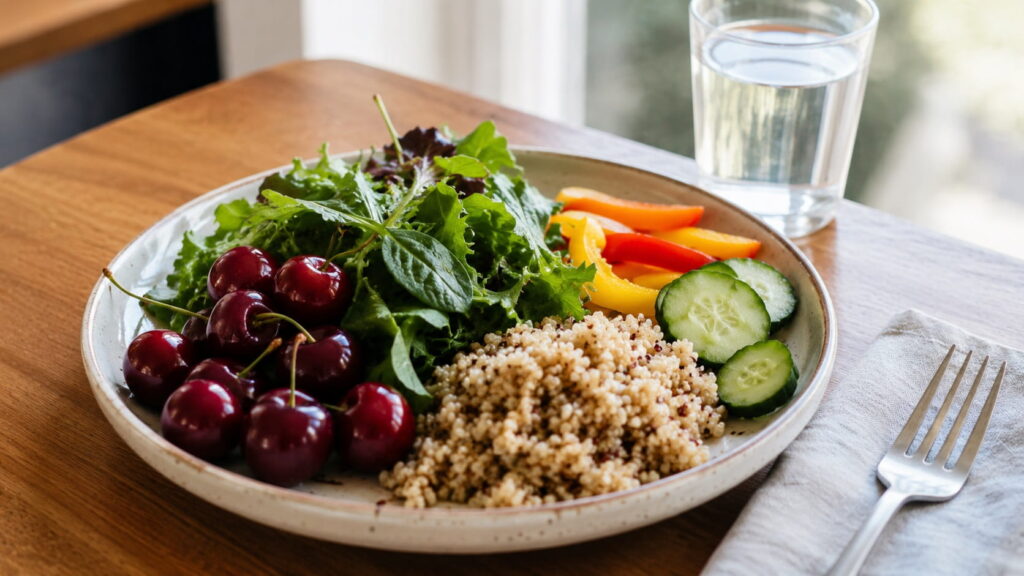
| Fruit, especially cherries and citrus | Cherries linked to fewer gout flares; citrus provides vitamin C |
| Eggs and tofu | Protein sources that don’t carry the purine load of red meat |
| Beans and lentils | Contain purines, but plant-based purines don’t appear to raise gout risk the way animal sources do |
| Nuts and olive oil | Healthy fats, useful red-meat substitute |
Foods and Drinks to Limit
| Limit or avoid | Why |
|---|---|
| Organ meats (liver, kidney) | Very high in purines |
| Red meat | High purine load, especially in large portions |
| Sardines, anchovies, mussels, shellfish | Purine-dense, best kept occasional |
| Beer and spirits | Raise purine breakdown and reduce uric acid excretion |
| Sugary drinks and high-fructose foods | Fructose directly increases uric acid production |
| Processed and packaged foods | Often high in both sugar and sodium |
Poultry and moderate fish like salmon sit in between. You don’t need to cut them out, just watch portion size.
Want a practical starting point? See our 7-day low-purine meal plan for breakfast, lunch and dinner ideas.
A Quick Note on “Purine-Rich” Vegetables and Beans
You’ll see spinach, asparagus, peas, beans and lentils listed as purine sources in some places. That makes people avoid them for no good reason. Studies haven’t found that purine-rich vegetables or plant proteins raise gout risk the way meat and seafood do. There’s no need to cut these out of your diet.
Stay Hydrated, Within Reason
Water helps your kidneys excrete uric acid. Staying hydrated is one of the simplest, most reliable habits you can build. A general guide is eight to ten glasses a day, but this isn’t a fixed rule for everyone. If you have kidney disease, heart failure, or another condition that affects fluid balance, ask your doctor how much you should actually be drinking. More water isn’t automatically better for every person.
What About Lemon or Lime Water?
Lime and lemon juice contain vitamin C. Some research links higher vitamin C intake to modestly lower uric acid. But lemon or lime water isn’t a proven treatment for hyperuricemia on its own. Its real benefit is simple: it’s an easy, sugar-free way to hit your hydration goal. Treat it as a helpful habit, not a fix.
Vitamin C From Food
Citrus fruits, bell peppers, strawberries and guava are good natural sources of vitamin C. Getting enough through food is a reasonable part of a gout-friendly diet. If you’re considering a supplement specifically to lower uric acid, talk to your doctor first rather than dosing yourself. It isn’t a substitute for prescribed treatment when medication is actually needed.
Coffee
If you already drink coffee, there’s reasonably consistent research suggesting it may modestly lower uric acid. One theory is that it competes with the enzyme that breaks down purines. The evidence isn’t strong enough to start drinking coffee just for this reason. But if you’re already a regular drinker, it’s a nice bonus to keep in mind.
Cherries
Cherries and tart cherry juice show up repeatedly in gout research, with several studies linking them to fewer flares. A handful as a snack, or a small glass of unsweetened cherry juice, is a reasonable addition.
A Note on Apple Cider Vinegar
You’ll see apple cider vinegar recommended often for uric acid. There isn’t good clinical evidence that it lowers uric acid or prevents gout, so it shouldn’t replace anything your doctor has actually prescribed. If you enjoy it, it’s unlikely to cause harm in small amounts, but don’t rely on it as treatment.
Lifestyle Changes That Help
Lose Weight Gradually, Not Fast
Extra body fat raises uric acid production and makes it harder for your kidneys to clear it. So gradual weight loss genuinely helps. Crash diets and aggressive fasting can backfire, though. Rapid weight loss can temporarily raise uric acid through increased ketone production. Slow and steady wins here.
Exercise Regularly
Thirty minutes of moderate activity most days, walking, swimming or cycling, supports both healthy weight and better metabolic function.
Cut Back on Alcohol
Beer and spirits are particularly linked to flares. Cutting back, especially during a flare, makes a real difference.
Protect Your Sleep
Poor sleep is tied to weight gain and insulin resistance, both of which indirectly push uric acid higher.
Uric Acid Treatment: What Medicine Actually Does
Diet and lifestyle help. But for many people, especially those who’ve already had gout, they aren’t enough on their own. Medications for uric acid do two different jobs, and it helps to know which is which.
Medications That Lower Uric Acid Itself
- Allopurinol is usually the first medication doctors try. It reduces how much uric acid your body produces.
- Febuxostat works the same way. It’s sometimes used if allopurinol isn’t tolerated.
- Probenecid helps your kidneys excrete more uric acid. It isn’t right for everyone, especially people with kidney problems or a history of uric acid stones.
Medications That Treat a Gout Attack
NSAIDs, colchicine and corticosteroids reduce pain and inflammation during a flare. They don’t lower your underlying uric acid level. They just calm the attack.
One thing worth knowing: starting urate-lowering medication can sometimes trigger a flare in the first few weeks. Shifting urate levels can destabilize existing crystals. This doesn’t mean the medication is failing. Doctors often add a short course of anti-inflammatory treatment during this period to manage it. If this happens to you, don’t stop the medication on your own. Talk to your doctor instead.
Does Everyone With High Uric Acid Need Medication?
No. If your levels are high but you haven’t had gout, kidney stones or other complications, your doctor may simply monitor you instead of prescribing anything. The decision depends on how high your levels are, your symptoms, kidney function and other risk factors. It’s an individual conversation, not a one-size-fits-all rule.
What Is the Fastest Way to Reduce Uric Acid?
It depends on what you’re actually trying to fix.
If you’re in the middle of a gout flare: rest and elevate the joint. Apply a cold compress. Take a doctor-approved NSAID. Avoid alcohol and heavy meals until it settles.
If you’re trying to lower your baseline level: nothing works faster than prescription urate-lowering medication. Diet and hydration help over weeks and months. But they generally can’t match what medication does for someone who actually needs it.
How Long Does It Take to Lower Uric Acid?
This varies by person and by approach. Hydration and dietary changes tend to show gradual improvement over weeks, not days. Weight loss works on a similar timeline. Urate-lowering medication usually produces a measurable drop within a few weeks, with your doctor adjusting the dose based on follow-up blood tests until you reach your target.
Can You Cure High Uric Acid Permanently?
There’s no guaranteed permanent home cure for chronically high uric acid. It’s worth being upfront about that. Sometimes the cause is reversible, like heavy drinking, dehydration, or a medication that’s since been changed. Fixing that can bring levels down and keep them there. Other times the cause is genetic, or tied to how your kidneys handle urate. In that case, you’re looking at long-term management, not a one-time fix. That usually means an ongoing mix of diet, weight and sometimes medication. Many people go years without a flare once they find a routine that works. Long-term management doesn’t have to mean constant symptoms. It just means the work doesn’t fully stop.
How Does Uric Acid Leave the Body, and Why Kidney Function Matters
Your kidneys filter urate out of your blood and pass it into urine, which is the main route uric acid takes out of your body. A smaller amount leaves through the gut. When kidney function drops, whether from chronic kidney disease, dehydration, or certain medications, uric acid has fewer ways out and tends to build up in the blood.
This is also why “reducing uric acid in the kidneys” isn’t really a separate process from lowering it in your blood. The same steps apply: stay hydrated, cut back on alcohol and fructose, and take uricosuric medication if your doctor prescribes it to help your kidneys excrete more urate. If you already have reduced kidney function, some medications aren’t suitable, so this is a conversation to have directly with your doctor rather than something to self-manage with supplements.
What Not to Do
- Don’t try to flush uric acid out with excessive water intake.
- Don’t stop prescribed medication without talking to your doctor first, even if you think it’s causing more flares.
- Don’t rely on lemon or lime water as a treatment rather than a hydration habit.
- Don’t treat apple cider vinegar as a proven cure.
- Don’t crash diet or fast aggressively to lose weight quickly.
- Don’t cut out beans, lentils or vegetables out of fear of their purine content.
- Don’t assume one high blood test result means you automatically have gout.
When to See a Doctor
Book an appointment for sudden joint pain and swelling, symptoms of a kidney stone, or if you have a family history of gout and haven’t had your uric acid checked.
Seek urgent care if you have severe joint pain with fever or chills, you’re unable to urinate, kidney stone pain is severe or persistent, there’s visible blood in your urine, or you’re vomiting and can’t keep fluids down.
Frequently Asked Questions
What Is Uric Acid?
A waste product formed when your body breaks down purines from food and normal cell turnover. It’s normally filtered by the kidneys and passed in urine.
What Causes High Uric Acid?
A mix of diet, alcohol, genetics, obesity, certain medical conditions and some medications.
What Are the Symptoms of High Uric Acid?
High uric acid itself often causes no symptoms. Gout can cause sudden joint pain, swelling, redness and warmth. Kidney stones can cause back pain, blood in urine and painful urination.
How Can I Lower Uric Acid Naturally?
Limit alcohol, sugary drinks and purine-heavy meat and seafood, stay hydrated, maintain a healthy weight, and exercise regularly.
What Kills Uric Acid Fastest?
Nothing “kills” uric acid instantly. Your kidneys remove it continuously, and prescription medication can reduce production or increase excretion when treatment is actually needed.
What Is the Fastest Way to Cure Uric Acid?
Prescription urate-lowering medication works fastest for the underlying level, but it requires a doctor’s guidance and ongoing monitoring.
How Do You Reduce Uric Acid Immediately?
During a flare: rest, ice, hydration and a doctor-approved anti-inflammatory. There’s no way to instantly reduce your baseline level.
Can Uric Acid Be Cured Permanently?
It can often be managed long-term through diet, lifestyle and medication where needed, though levels can rise again if those habits stop.
What Foods Should I Avoid With High Uric Acid?
Red meat, organ meats, certain seafood like sardines and shellfish, beer and spirits, and foods high in added sugar.
Does Lime Juice Help Reduce Uric Acid?
It isn’t proven to rapidly lower uric acid. Its main benefit is helping you stay hydrated in a sugar-free way, plus a modest vitamin C boost.
How Often Should I Check My Uric Acid Levels?
Your doctor will set the schedule based on your history, but regular blood tests are standard if you’ve had gout, kidney stones or persistently high readings.
Does Everyone With High Uric Acid Need Treatment?
No. Many people with mildly elevated levels and no symptoms are simply monitored rather than medicated.
Bottom Line
Reducing uric acid comes down to steady, sustainable changes rather than a single fix. Cut back on alcohol, sugary drinks and purine-heavy meat and seafood, stay hydrated, lose weight gradually if needed, and stay active. If diet and lifestyle alone aren’t bringing your levels down, that’s what urate-lowering medication is for, not a failure on your part. Work with your doctor, track your levels, and give the plan time to work.
Related Reading
Medical Sources and Guidelines
This article was written and checked against publicly available clinical guidance and patient-education resources from major medical institutions, including Mayo Clinic, Cleveland Clinic and the National Kidney Foundation, alongside peer-reviewed research on diet, hydration, vitamin C and coffee intake in relation to serum urate. It does not replace personalized medical advice. Speak with your doctor about your own uric acid levels and treatment options.
Related Articles: