For most people, parsley sits on the edge of the plate and never gets eaten. That is a shame. This small, bright green herb carries more nutritional weight than almost anything else in your spice rack. At NFH Clinic, I talk to patients every week who want simple, food-based ways to support their heart, kidneys, and immune system. Parsley comes up more often than you would expect.
I am McLee Tembo, Health Consultant and Founder of NFH Clinic (newfasthealth.com). In this guide, I’ll walk you through what parsley actually does inside your body. You’ll learn how much is safe to eat and how to use it, so it becomes part of your routine rather than a garnish you scrape off your plate.
Overview
Parsley is a low-calorie, nutrient-dense herb best known for its very high vitamin K content. It also carries meaningful amounts of vitamin C, vitamin A, folate, iron, and antioxidant flavonoids like apigenin and luteolin. Eaten regularly, it may support heart, bone, kidney, digestive, eye, and skin health. Most of what we know comes from lab, animal, and observational research rather than large human trials, so it’s best treated as a supportive habit rather than a treatment. Parsley is generally safe for most healthy adults. Pregnant women and people on blood thinners or diuretics should stick to normal food amounts (see “Who Should Avoid Parsley” below).
Quick Facts
| Latin name | Petroselinum crispum |
| Common forms | Fresh (flat-leaf or curly), dried |
| Calories | About 36 kcal per 100g fresh |
| Standout nutrients | Vitamin K, vitamin C, vitamin A, folate, iron |
| Key plant compounds | Apigenin, luteolin (flavonoids) |
| Typical safe daily amount | 1–2 tbsp fresh, or 1–2 tsp dried |
| Main uses | Culinary garnish, salads, tea, juice, pesto |
| Who should be cautious | Pregnant women, people on blood thinners or diuretics, those with kidney disease |
Nutrient values are approximate and based on USDA FoodData Central figures for raw parsley.
Key Takeaways
- Parsley is very low in calories but unusually rich in vitamin K, vitamin C, vitamin A, and antioxidant flavonoids.
- It may support heart, bone, kidney, digestive, eye, and skin health as part of a regular diet.
- A tablespoon or two of fresh parsley a day is enough for most healthy adults to see the benefit.
- Most human evidence still comes from lab, animal, and small observational studies, not large clinical trials.
- Pregnant women and people on blood thinners, diuretics, or kidney disease should stick to food amounts and check with a doctor before using concentrated forms like extracts or strong teas.
💬 This article is for general educational purposes and isn’t a substitute for professional medical advice. Always consult a qualified healthcare provider before making significant dietary changes.
In this article:
- What Makes Parsley So Nutritious?
- 1. Parsley Is Loaded With Antioxidants
- 2. It Supports a Healthy Heart and Blood Pressure
- 3. Parsley Strengthens Bones
- 4. It Eases Digestion and Bloating (Parsley Benefits for Stomach)
- 5. Parsley May Support Normal Urinary and Kidney Function
- 6. It Supports Eye Health
- 7. Parsley Has Anti-Inflammatory Properties
- 8. It May Offer Some Protection Against Cell Damage Linked to Cancer
- 9. Parsley Freshens Breath and Supports Oral Health
- 10. It Supports Healthy Skin
- 11. Parsley Benefits for Women
- 12. Parsley Benefits for Men
- Parsley Tea Benefits
- Parsley Juice Benefits
- Parsley Water Benefits
- Fresh vs. Dried Parsley: Which Is Healthier?
- Does Parsley Help You Lose Weight?
- Who Should Avoid Parsley or Speak to a Doctor First?
- Parsley Side Effects and Precautions
- Storage, Freezing, and Prep Tips
- Simple Ways to Use Parsley
- Frequently Asked Questions
- The Bottom Line
- Sources
What Makes Parsley So Nutritious?
Parsley (Petroselinum crispum) is a Mediterranean herb that comes in two common forms: curly-leaf and flat-leaf, also called Italian parsley.
What stands out about parsley is how much it delivers for so few calories. A two-tablespoon serving of fresh parsley contains barely any calories, yet it provides a meaningful share of your daily vitamin K, vitamin C, and vitamin A. It also carries folate, iron, potassium, and flavonoids such as apigenin and luteolin, the plant compounds behind most of its antioxidant effects.
One practical detail worth knowing: the iron in parsley is a plant-based (non-heme) form. Your body absorbs it better when you eat it alongside vitamin C. Pairing chopped parsley with tomatoes, citrus, or peppers in a salad helps you get more out of it.
Because the health benefits of parsley leaves come mostly from these vitamins and plant compounds, eating it regularly, even in small amounts, adds up over time.
Parsley Nutrition Facts (Per 100g, Raw)
| Nutrient | Amount | % Daily Value* |
|---|---|---|
| Calories | 36 kcal | — |
| Protein | 3.0 g | — |
| Fiber | 3.3 g | 12% |
| Vitamin K | 1,640 mcg | 1,367% |
| Vitamin C | 133 mg | 148% |
| Vitamin A | 421 mcg RAE | 47% |
| Folate | 152 mcg | 38% |
| Iron | 6.2 mg | 34% |
| Potassium | 554 mg | 12% |
| Calcium | 138 mg | 11% |
Based on general adult Daily Values; your personal needs may vary. Figures are drawn from the USDA FoodData Central entry for raw parsley and rounded for readability.
Because a 100g serving is more than most people eat in one sitting, even a small daily handful still delivers a real dose of vitamin K and vitamin C.
Flat-Leaf vs. Curly Parsley
| Flat-Leaf (Italian) | Curly-Leaf | |
|---|---|---|
| Flavor | Stronger, slightly peppery | Milder |
| Best use | Cooking, sauces, dressings | Garnish, decoration |
| Texture | Softer, easier to chop | Firmer, more decorative |
| Nutrition | Very similar to curly | Very similar to flat-leaf |
Both types offer close to the same nutritional value, so pick whichever suits the dish. Flat-leaf tends to work better when it’s actually being eaten rather than used purely as decoration.
How to Choose Fresh Parsley
At the store, look for deep green, unwilted leaves and firm stems that snap rather than bend. Avoid bunches with yellowing tips, dark spots, or a slimy stem end, since these are signs it’s past its best. A fresh, grassy smell is a good sign; a musty or sour one means it’s aging.
1. Parsley Is Loaded With Antioxidants
Free radicals are unstable molecules that build up in the body from everyday stress, pollution, and normal metabolism. Left unchecked, they contribute to cell damage and are linked to chronic conditions such as heart disease and certain cancers.
Parsley’s flavonoids, particularly apigenin and luteolin, help neutralize these free radicals. Even dried parsley holds onto meaningful antioxidant activity, so it’s still worth using when fresh isn’t on hand (more on that in the fresh-versus-dried comparison below).
Practical tip: Add fresh parsley toward the end of cooking, or use it raw in salads, so heat doesn’t break down its antioxidant compounds.
2. It Supports a Healthy Heart and Blood Pressure
Heart health is where parsley quietly does some of its best work. It contains folate, a B vitamin that helps keep homocysteine levels in check. When homocysteine builds up in the blood, it’s associated with a higher risk of cardiovascular disease, so keeping it in a normal range matters.
Parsley also supplies potassium, a mineral that helps offset sodium’s effect on blood pressure. Combined with its vitamin C and antioxidant content, parsley may support healthy blood pressure as part of a balanced diet. It works best alongside other heart-healthy habits, not as a stand-alone fix.
3. Parsley Strengthens Bones
If there is one nutrient parsley is famous for, it’s vitamin K. Just a couple of tablespoons of fresh parsley can cover well over half of your daily vitamin K needs, and some preparations provide far more than that.
Vitamin K plays a direct role in bone mineralization and helps activate proteins that improve bone density. Diets consistently low in vitamin K have been linked to a higher risk of fractures. A herb this concentrated in it deserves a regular place on your plate, especially as you get older.
4. It Eases Digestion and Bloating (Parsley Benefits for Stomach)
Parsley has a long history as a digestive aid, and it’s one of the reasons people chew on a sprig after a heavy meal. It contains compounds that act as a mild carminative, meaning they help move trapped gas along and ease bloating.
Its fiber content also supports regular bowel movements, and its natural oils are thought to stimulate digestive enzymes. For anyone dealing with occasional bloating, sluggish digestion, or general stomach discomfort after eating, this is a simple, low-risk place to start. Add parsley to meals, or chew a few raw leaves afterward.
5. Parsley May Support Normal Urinary and Kidney Function
Parsley is known for its mild natural diuretic effect, and research suggests this reputation has some scientific support. Studies indicate it may increase urine output while helping to reduce urinary calcium levels, one of the factors involved in kidney stone formation.
Some research on parsley leaf tea specifically shows improvements in urinary composition, which is why parsley tea comes up so often in conversations about kidney support. A 2024 PMC review on parsley’s renal effects found that animal studies show less oxidative stress and better kidney function. Human studies are more limited, showing only modest changes in urine composition (Renal health benefits and therapeutic effects of parsley: a review). Put simply, parsley may support normal urinary function in healthy people, but it doesn’t treat any kidney condition. If you already have kidney disease or a history of oxalate-related kidney stones, be cautious with parsley due to its oxalate content. Check with a healthcare provider before using it therapeutically.
6. It Supports Eye Health
Vitamin A and beta-carotene, both present in meaningful amounts in parsley, play a direct role in protecting the surface of the eye and supporting night vision. Beta-carotene also acts as an antioxidant in eye tissue, helping guard against the kind of oxidative damage linked to age-related macular degeneration.
It won’t replace an annual eye exam, but as part of a nutrient-dense diet, parsley contributes meaningfully to long-term eye health.
7. Parsley Has Anti-Inflammatory Properties
Chronic, low-grade inflammation sits underneath conditions like arthritis, type 2 diabetes, and heart disease. Parsley’s apigenin and luteolin content has been studied in lab and animal research for its ability to calm inflammatory pathways. A PMC review on flavonoids found that compounds like these help regulate the body’s inflammatory signaling (Flavonoids as Potential Anti-Inflammatory Molecules: A Review). That’s why people managing joint pain or inflammatory conditions often ask about adding more herbs like this to their diet. Human trials on parsley specifically are still limited, so treat it as a supportive habit rather than a treatment.
8. It May Offer Some Protection Against Cell Damage Linked to Cancer
This is an area where research is still developing, but early findings are worth mentioning. Parsley’s flavonoids, especially apigenin, have shown protective effects in laboratory studies, including against colon and breast cancer cells. Diets higher in flavonoid-rich foods have also been associated with lower cancer risk in population studies.
It’s important to be clear here: parsley is not a treatment or a cure. Most of this evidence comes from lab and observational research rather than clinical trials in people. What it supports is that flavonoid-rich foods, parsley included, can be a sensible part of a cancer-conscious diet.
9. Parsley Freshens Breath and Supports Oral Health
Parsley’s chlorophyll content gives it natural deodorizing properties, which is why it has been used as a breath freshener for centuries, long before mints and gum existed. It also has mild antibacterial qualities that may help reduce the bacteria responsible for bad breath and some gum irritation.
10. It Supports Healthy Skin
Vitamin C is essential for collagen production, and parsley provides a reasonable amount of it. Collagen keeps skin firm and helps wounds heal properly. Combined with its antioxidant content, which helps protect skin cells from everyday environmental stress, parsley contributes to skin health from the inside rather than through a topical product.
11. Parsley Benefits for Women
Parsley has traditionally been used to support menstrual regularity, largely because of its effect on smooth muscle. More accurately, parsley provides nutrients, including iron and folate, that support normal reproductive health and overall nutrition rather than acting on hormones directly. These nutrients matter for women managing monthly blood loss or planning a pregnancy.
That said, more is not always better here. In concentrated, medicinal amounts, parsley has historically been used to bring on menstruation. Pregnant women should stick to normal food amounts. Skip parsley supplements, strong teas, or parsley oil unless a doctor has approved it (see “Who Should Avoid Parsley” below for the full list).
12. Parsley Benefits for Men
Men benefit from many of the same core effects, particularly around heart health. Its potassium and antioxidant content support healthy blood pressure. Early laboratory studies suggest possible prostate-supportive effects from compounds in parsley. Human evidence remains limited, so this is an area worth watching rather than an established benefit.
Parsley Tea Benefits
Parsley tea is simply parsley leaves steeped in hot water, and it concentrates many of the herb’s benefits into an easy, low-calorie drink. People turn to it mainly for three things: mild diuretic support for reducing water retention, digestive comfort after meals, and a gentle antioxidant boost.
To make it, steep a small handful of fresh parsley, or one to two teaspoons of dried parsley, in hot water for about ten minutes, then strain. One or two cups a day is a reasonable amount for most healthy adults.
Parsley Juice Benefits
Juicing parsley usually means blending it with other vegetables like cucumber, celery, or apple to balance its strong flavor. It’s a popular way to get a concentrated dose of vitamins A, C, and K in one glass. Because juicing removes most of the fiber, the nutrients are absorbed quickly, which is why parsley juice is often used as part of short-term detox routines.
That said, eating parsley whole is generally the better everyday choice. Keeping the fiber supports digestion, helps steady blood sugar, and keeps you fuller for longer, benefits you lose when you juice. Parsley juice is also far more concentrated than the herb itself, so a small glass two or three times a week is plenty rather than a daily habit.
Parsley Water Benefits
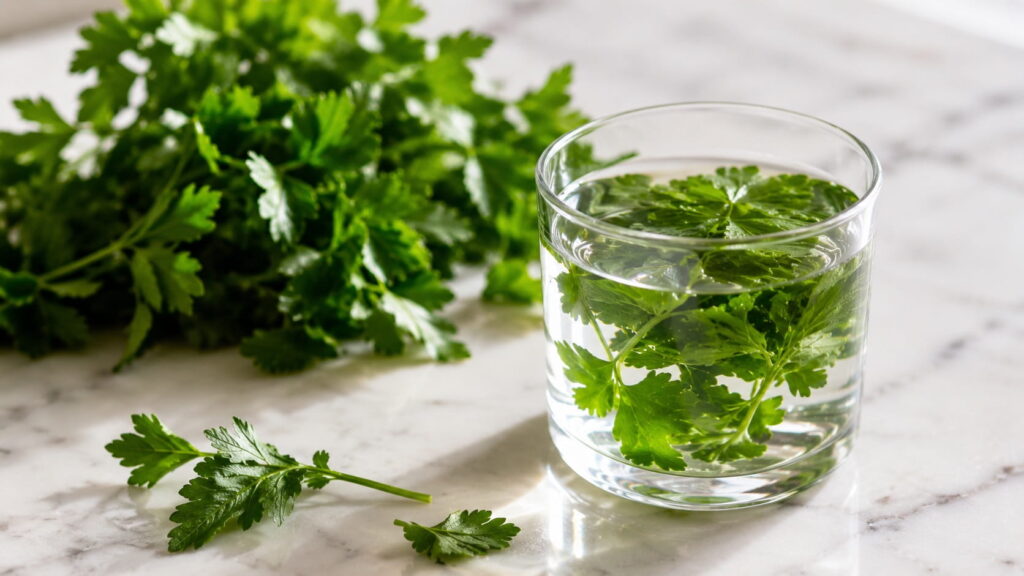
Parsley water, made by steeping fresh parsley in cold or room-temperature water for a few hours, is a gentler alternative to tea or juice. It carries a lighter dose of parsley’s antioxidants and mild diuretic compounds, along with the general benefit of staying hydrated, which supports kidney function on its own. Many people use it as a refreshing, low-effort way to sip on something more nutritious than plain water throughout the day.
Fresh vs. Dried Parsley: Which Is Healthier?
Not much separates them nutritionally. Drying concentrates parsley’s antioxidants because water is removed, so gram for gram, dried parsley often shows a higher antioxidant reading than fresh. However, dried parsley is used in much smaller amounts, a teaspoon instead of a tablespoon or more of fresh. The real-world difference in what you actually consume tends to even out. Both forms deliver genuine benefits, so choose whichever fits your cooking style.
Cooking has more impact than the fresh-versus-dried question. Long cooking times reduce parsley’s vitamin C content, while its vitamin K stays relatively stable under heat. For the most nutritional value, add fresh parsley near the end of cooking rather than at the start.
Does Parsley Help You Lose Weight?
Not directly, and it’s worth being upfront about that. Parsley has no fat-burning properties. What it does offer is a low-calorie way to add real flavor to meals. That can help you cut back on salt, heavy sauces, or high-calorie toppings without your food tasting bland. Used this way, parsley can support healthy eating habits, but it isn’t a weight-loss remedy on its own.
Who Should Avoid Parsley or Speak to a Doctor First?
For most healthy adults, parsley eaten as food carries very little risk. A few groups should be more careful, especially with concentrated amounts like extracts, strong teas, or juice:
- Pregnant women, due to parsley’s traditional use in stimulating uterine contractions at high doses
- People taking warfarin or other blood thinners, since parsley’s vitamin K content can affect how these medications work
- People taking diuretics (“water pills”), because parsley has its own mild diuretic effect
- People with chronic kidney disease or a history of oxalate-related kidney stones
- Anyone with a known allergy to parsley, celery, or carrots, which belong to the same plant family
If you fall into one of these groups, normal culinary use is usually fine. It’s concentrated or medicinal-strength amounts that warrant a conversation with your doctor first.
Parsley Side Effects and Precautions
Beyond the groups above, side effects from parsley are uncommon and mostly tied to overdoing it. Very large amounts can cause mild stomach cramps or nausea, and rare allergic reactions can occur, particularly in people already sensitive to other plants in the carrot family. Parsley seed oil applied to the skin can also increase sun sensitivity, so it’s best avoided topically without guidance.
Storage, Freezing, and Prep Tips
Fresh parsley keeps for about a week in the fridge, wrapped loosely in a damp paper towel. For longer storage, it freezes well. Chop it, portion it into ice cube trays with a little water or olive oil, and freeze for easy additions to soups and sauces later on.
Whether or not it’s labeled organic, wash parsley thoroughly before use. Leafy herbs sit close to the soil and can hold onto dirt and residue regardless of how they were grown.
Simple Ways to Use Parsley
- Stir chopped fresh parsley into salads for texture and flavor
- Blend a handful into a green smoothie
- Whisk it into a homemade pesto with olive oil, garlic, and nuts
- Sprinkle it over soups, stews, or roasted vegetables just before serving
- Brew it as a tea or steep it into parsley water
- Add it to marinades for meat or fish
- Mix it into yogurt-based dips and dressings
- Freeze chopped portions in olive oil for quick use later
Frequently Asked Questions
Is parsley good for you?
Yes. Parsley is low in calories and rich in vitamins A, C, and K. Its antioxidant compounds support heart, bone, and digestive health when eaten regularly as part of a normal diet.
Can you eat parsley every day?
Yes. Most healthy adults can safely enjoy parsley daily as part of meals. One to two tablespoons of fresh parsley provides useful nutrients without approaching medicinal doses.
How much parsley is safe to eat daily?
Around one to two tablespoons of fresh parsley, or one to two teaspoons dried, works well for most healthy adults without approaching medicinal amounts.
Is parsley tea healthy?
Yes, in moderate amounts. Parsley tea offers antioxidants, mild diuretic support, and digestive comfort. One to two cups a day is reasonable for most healthy adults.
Does parsley detox the body?
Not in the medical sense of removing toxins, but its mild diuretic effect can help reduce water retention, and its antioxidants support the liver’s normal detoxification processes.
Can parsley lower blood pressure?
It may help as part of a broader diet, largely through its potassium content, which balances sodium, and its antioxidant effects on blood vessels.
Does parsley lower blood sugar?
Some animal studies suggest a modest effect, but human evidence is limited. It’s reasonable to include parsley as part of a blood-sugar-conscious diet rather than rely on it alone.
Can parsley help with bad breath?
Yes. Its chlorophyll content has natural deodorizing properties, and its mild antibacterial qualities can help reduce odor-causing bacteria in the mouth.
Is parsley anti-inflammatory?
Yes. Compounds like apigenin and luteolin have shown anti-inflammatory effects in laboratory and animal studies, though more human research is needed to confirm the extent of the effect.
Can parsley cause kidney stones?
Not typically at normal food amounts. In fact, research points the other way, suggesting parsley may help reduce certain kidney stone risk factors. People with existing oxalate-related stones should still moderate intake.
Can parsley improve fertility?
There isn’t strong evidence that parsley directly improves fertility. It does provide folate and iron, both important nutrients for reproductive health, as part of an overall nutritious diet.
Can parsley reduce water retention?
Yes, mildly. Its natural diuretic effect can help the body release excess water, which is why it’s often included in teas and juices aimed at reducing bloating.
Is parsley the same as cilantro?
No. They look similar, but they taste very different and belong to related, distinct plants. Parsley has a mild, slightly peppery flavor, while cilantro is more citrusy and, for some people, soapy-tasting. They aren’t interchangeable in recipes, though both offer comparable vitamin A and antioxidant content.
Where to Go From Here
If parsley’s benefits for your heart, kidneys, or digestion caught your attention, it pairs naturally with other food-based habits. Explore kidney-friendly foods, vitamin K-rich foods, anti-inflammatory foods, and a heart-healthy blood pressure diet. Building these habits together tends to work better than focusing on any single herb.
The Bottom Line
Parsley has earned its reputation as more than a garnish. It brings vitamin K for bone health, folate and potassium for the heart, a mild diuretic effect for the kidneys, and antioxidants for general cell protection. This small herb delivers an impressive range of nutrients for very little cost.
At NFH Clinic, my approach is always the same: start with food-based changes that are easy to sustain, and build from there. Adding a spoonful of fresh parsley to your daily meals is about as low-risk and high-reward as dietary changes get. If you have a medical condition or take medications, consult your healthcare provider before substantially increasing your intake. For most people, though, this is one habit you can start today.
Sources
- U.S. Department of Agriculture, FoodData Central. Parsley, fresh: nutrient profile.
- National Library of Medicine, PMC. Renal health benefits and therapeutic effects of parsley (Petroselinum crispum): a review.
- National Library of Medicine, PMC. Flavonoids as Potential Anti-Inflammatory Molecules: A Review.
Related Articles: