
You’re eating reasonably well. You’re still hitting the gym a few times a week. And yet that stubborn roll around your midsection just won’t budge, no matter what you try.
If this sounds familiar, you’re not imagining things, and you’re definitely not alone. At NFH Clinic, this is one of the most common concerns we hear from patients, especially those juggling demanding jobs, poor sleep, and constant background stress. The internet calls it “cortisol belly,” and while the term gets thrown around loosely, there’s real science behind why chronic stress can reshape where your body stores fat.
In this guide, we’ll break down what cortisol belly actually is, how it’s diagnosed, what raises and lowers it, and most importantly, how to get rid of cortisol belly fat naturally and keep it off. No gimmicks, no fad cleanses. Just practical, evidence-backed steps you can start today.
In this article:
- Key Takeaways
- How to Lose Cortisol Belly Fat Fast: The Short Answer
- What Is Cortisol Belly Fat, Really?
- What Does Cortisol Belly Fat Look Like?
- Is It Really Cortisol, or Something Else?
- How Is High Cortisol Diagnosed?
- Can Cortisol Cause Weight Gain Without Overeating?
- What Foods and Habits Raise Cortisol?
- How to Get Rid of Cortisol Belly Fat Naturally
- Cortisol Belly Fat Exercise: What Actually Works
- Supplements to Reduce Cortisol and Belly Fat
- Can Menopause Cause Cortisol Belly?
- What to Drink to Lose Belly Fat in 1 Week
- How to Lose Belly Fat Naturally in 1 Week: A Realistic Starting Plan
- How to Get Rid of Cortisol Belly Fat in Men
- Can Cortisol Belly Go Away?
- Cortisol Belly Fat: Myth vs. Reality
- Do Weight-Loss Medications Help With Cortisol Belly?
- When to See a Doctor
- Frequently Asked Questions
- The Bottom Line
Key Takeaways
- Cortisol belly is linked to chronic stress, not just overeating.
- Sleep and stress management are the biggest drivers of improvement.
- Walking and strength training outperform excessive cardio for many people.
- No supplement replaces healthy habits — it can only support them.
- Meaningful changes usually take two to three months, not one week.
How to Lose Cortisol Belly Fat Fast: The Short Answer
If you just want the quick version, here it is. There’s no overnight fix, but you can start moving the needle within days by tackling the highest-impact habits first, in roughly this order:
- Sleep 7–9 hours a night — the single fastest lever for lowering cortisol
- Cut alcohol and sugary drinks, which quietly keep cortisol elevated
- Walk 20–30 minutes daily, ideally outdoors
- Add strength training two to four times a week
- Eat protein-forward meals and stop skipping meals
- Spend 5–10 minutes a day on stress relief — breathing, stretching, or a short walk
Stay consistent with these for two to four weeks and most people notice early changes in energy and cravings. Visible reduction in cortisol belly fat typically takes two to three months, since visceral fat responds more slowly than water weight or bloating. The rest of this guide walks through the “why” behind each step, plus the details — foods, supplements, exercise, and what’s different for men and women — that make these changes stick.
What Is Cortisol Belly Fat, Really?
Cortisol belly refers to abdominal fat associated with chronic stress and prolonged elevations in cortisol. It isn’t an official medical diagnosis, but long-term stress can genuinely contribute to increased visceral fat around the abdomen, alongside diet, sleep, and hormonal factors.
Cortisol is your body’s main stress hormone, produced by the adrenal glands as part of the hypothalamic-pituitary-adrenal (HPA) axis, the communication loop between your brain and adrenal glands that governs your stress response. In short bursts, cortisol is incredibly useful. It sharpens focus, raises blood glucose for quick energy, and helps you power through a tough moment.
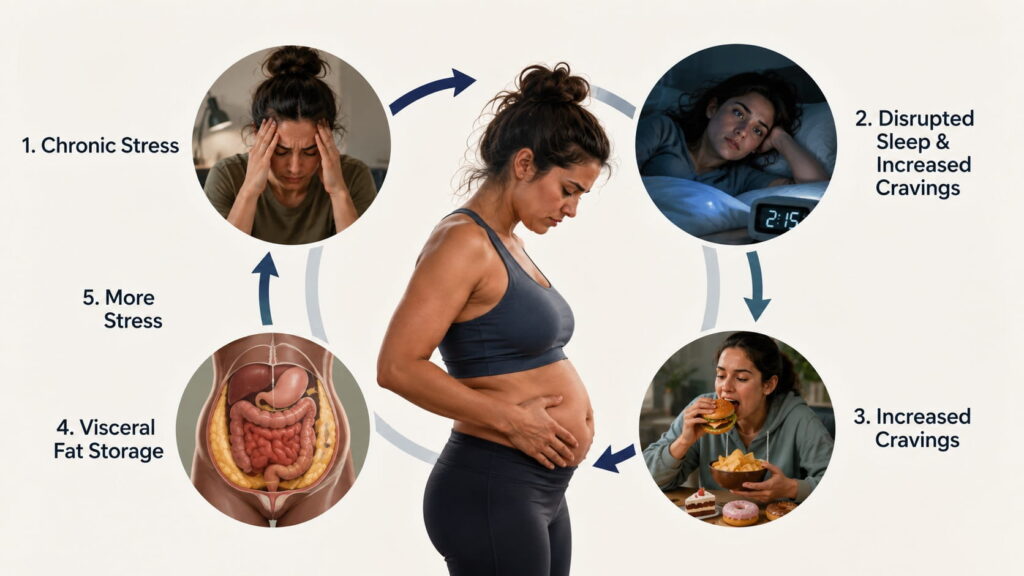
The problem starts when stress becomes constant rather than occasional. When cortisol stays elevated for weeks or months, your body shifts into a kind of survival mode. It favors fat storage, particularly around the abdomen, and encourages visceral adipose tissue, the fat that wraps around your organs rather than sitting just under the skin. Visceral fat is metabolically active tissue that can worsen insulin resistance, disrupt blood glucose, and drive low-grade inflammation throughout the body. So while “cortisol belly” isn’t a clinical term, the mechanism behind stress weight gain is real and worth taking seriously.
Understanding Your Body’s Natural Cortisol Rhythm
Cortisol isn’t meant to stay flat all day, it follows a daily rhythm. Levels naturally peak within the first 30 to 45 minutes after waking (known as the cortisol awakening response), then gradually taper off through the day, reaching their lowest point around midnight.
This rhythm is why the same habit can have a different effect depending on timing: caffeine first thing in the morning stacks on top of your natural cortisol peak, while poor sleep or late-night stress blunts the overnight dip that your body relies on to recover.
Understanding this rhythm is also why cortisol testing (covered below) depends heavily on the time of day a sample is taken — a single number means little without knowing when it was measured.
What Does Cortisol Belly Fat Look Like?
Cortisol belly fat looks like ordinary abdominal fat, there’s no visual marker that sets it apart from fat gained any other way. What differs is the pattern of symptoms that tend to travel alongside it.
Cortisol belly symptoms often include:
- Weight gain concentrated at the midsection, even while the rest of your body stays relatively lean
- Persistent fatigue, despite getting what should be enough sleep
- Sugar and salt cravings that feel hard to control
- Trouble falling or staying asleep, even when you’re exhausted
- Increased irritability or anxiety
- Puffiness in the face, sometimes called “cortisol face” or “moon face” in more pronounced cases
Does Cortisol Belly Feel Hard or Soft?
Visceral fat sits deeper in the abdominal cavity, so it can make the belly feel firmer or more taut than the soft, pinchable subcutaneous fat found elsewhere on the body. That said, firmness alone can’t confirm that cortisol is the cause, it’s simply one more clue to weigh alongside the symptoms above, not a diagnosis in itself.
If several of these signs show up together, cortisol may well be playing a role, and it’s worth discussing with a doctor rather than guessing.
Is It Really Cortisol, or Something Else?
It’s worth pausing here, because this is where a lot of online advice oversimplifies things. Some endocrinologists caution against treating cortisol as the sole villain behind stubborn belly fat, since diet, activity levels, sleep, genetics, insulin resistance, and other hormones like estrogen all play a role in stress-related weight gain too.
In rarer cases, unusually high cortisol points to a genuine medical condition called Cushing syndrome, which develops when the body is exposed to too much cortisol for a long stretch of time, sometimes from a tumor and sometimes from long-term steroid medication use. Cushing syndrome typically comes with additional red flags beyond belly fat, including a rounded, puffy face, a fatty pad between the shoulders, pink or purple stretch marks, easy bruising, muscle weakness, and high blood pressure.
The honest, medically responsible takeaway: lowering everyday stress-related cortisol can genuinely help with abdominal fat, but if your symptoms are severe or came on suddenly, it’s worth ruling out an underlying hormonal condition with your doctor before starting any weight-loss plan.
How Is High Cortisol Diagnosed?
Cortisol testing isn’t something most people need for garden-variety stress-related belly fat — it’s typically reserved for cases where a doctor suspects an underlying adrenal or pituitary condition. If you’re otherwise healthy and simply dealing with chronic stress, lifestyle changes usually matter more than a lab number.
When a cortisol test is warranted, doctors typically rely on one or more of the following, according to the National Institute of Diabetes and Digestive and Kidney Diseases:
- Blood test — measures cortisol at a specific time of day, since levels naturally rise in the morning and fall at night as part of the daily cortisol rhythm
- Saliva test — checks late-night cortisol, which should normally be low; in conditions like Cushing syndrome, it stays elevated
- 24-hour urine test — captures total cortisol output across a full day, giving a fuller picture than a single blood draw
No single test is considered perfect on its own, which is why doctors often combine two methods to confirm a diagnosis. This is also why symptoms matter more than chasing a single test result — a pattern of fatigue, midsection weight gain, sleep trouble, and cravings tells a more complete story than one cortisol number in isolation.
Should you get your cortisol tested? If your symptoms are mild and match everyday stress, testing usually isn’t necessary. If they’re severe, sudden, or paired with red flags like bruising or stretch marks, it’s a conversation worth having with your doctor.
Can Cortisol Cause Weight Gain Without Overeating?
Yes — this is one of the more surprising and frustrating aspects of cortisol weight gain. Elevated cortisol can drive weight gain through several pathways that have nothing to do with how much you’re eating:
- Increased appetite and cravings, particularly for high-fat, high-sugar comfort foods
- Insulin resistance, which pushes the body to store more fat and makes blood glucose harder to regulate
- Sleep disruption, which independently raises hunger hormones and lowers the hormone that signals fullness
- Reduced physical activity, since fatigue and low motivation often accompany chronic stress
- Muscle loss, since prolonged high cortisol can break down muscle tissue, and less muscle means a slower resting metabolism
Put together, it’s entirely possible to gain abdominal fat while eating roughly the same amount you always have — because cortisol is quietly changing how your body processes and stores what you eat.
What Foods and Habits Raise Cortisol?
You probably already know that sugar and excess caffeine aren’t helping. But the list of everyday cortisol triggers goes further than most people realize:
- Energy drinks, which combine high caffeine with sugar and stimulants
- Excessive alcohol, which disrupts sleep and burdens the liver, both of which raise cortisol indirectly
- Ultra-processed foods, linked to inflammation and blood sugar swings that keep cortisol elevated
- Very low-calorie diets, which your body can interpret as a threat to survival, triggering a stress response
- Prolonged fasting, especially when combined with high stress or poor sleep
Does Coffee Raise Cortisol?
Coffee does cause a temporary cortisol bump, particularly in people who are caffeine-sensitive or who drink it on an empty stomach first thing in the morning, right when the natural cortisol awakening response is already at its daily peak. For most people, moderate intake — roughly one to three cups spread through the day, with food — is generally fine. If you’re already dealing with high stress, poor sleep, or anxiety, cutting back or shifting your first cup a bit later in the morning can make a noticeable difference.
Is Fasting Good for Cortisol Belly?
It depends on the person. Intermittent fasting works well for some people and can support healthy blood sugar and weight management. But for others, especially those already under chronic stress or getting poor sleep, prolonged fasting can push cortisol higher rather than lower, since an empty stomach for extended stretches is itself a physical stressor. If you’re dealing with symptoms of cortisol belly, easing into shorter fasting windows (or skipping fasting altogether until stress is better managed) is usually the smarter starting point.
How to Get Rid of Cortisol Belly Fat Naturally
Let’s set expectations honestly. There’s no legitimate way to melt cortisol belly fat overnight, and any product promising that should raise a red flag. What you can do is stack several small, high-leverage habits that lower cortisol and support fat loss at the same time. Done consistently, most people notice a difference within two to four weeks, with more visible changes over two to three months.
1. Prioritize Sleep Like It’s Non-Negotiable
Poor sleep is one of the fastest ways to spike cortisol. According to Harvard Health, even short-term sleep disruption can throw off the body’s stress response and appetite-regulating hormones, feeding next-day cravings for sugary, high-calorie food. Aim for seven to nine hours, keep a consistent wake time, and dim screens an hour before bed. This single change often does more for belly fat than any workout tweak.
2. Manage Stress With Daily, Not Occasional, Practices
The goal isn’t to eliminate stress, that’s not realistic. It’s to give your nervous system regular off-ramps. Ten minutes of deep breathing, a short walk outdoors, journaling, or simple stretching each day helps blunt the constant cortisol drip that comes from chronic low-grade stress. Consistency beats intensity here.
3. Eat to Stabilize Blood Sugar
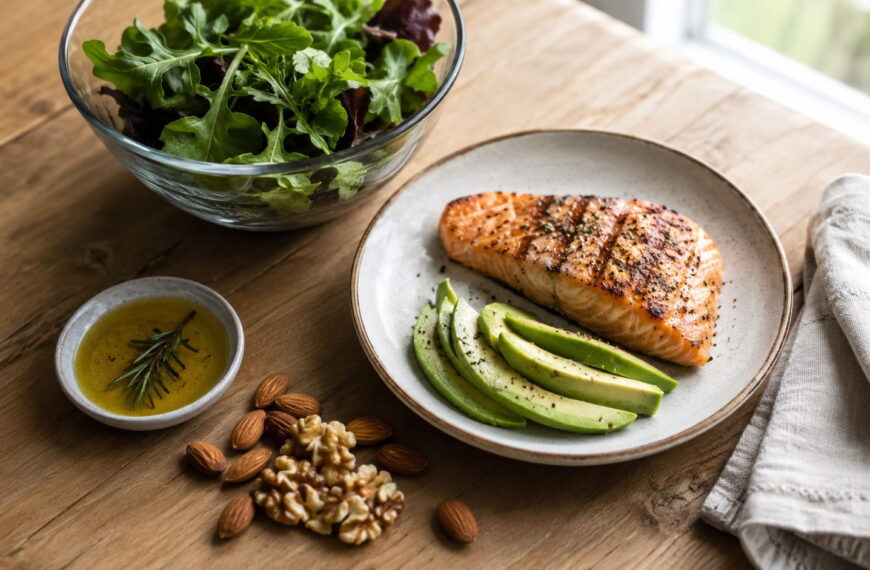
Blood sugar crashes trigger cortisol release, so steady meals matter more than any single “fat-burning” food. Build meals around protein, fiber, and healthy fats, and avoid skipping meals or going long stretches without eating. Some of the best foods to lower cortisol and support steady blood sugar include:
- Leafy greens and colorful vegetables
- Fatty fish like salmon (omega-3s have been linked to modest cortisol reduction)
- Nuts, seeds, and olive oil
- Fermented foods like yogurt and kefir for gut health
- Dark chocolate in moderation, and green or chamomile tea instead of excess caffeine
Meanwhile, minimize refined sugar, excessive caffeine, and alcohol, all of which can push cortisol higher.
Best Breakfast for Cortisol Belly
Starting the day with steady blood sugar helps keep morning cortisol — which is naturally at its daily peak — from spiking further. A solid template includes:
- Eggs for protein
- Oats for slow-releasing fiber and carbohydrates
- Greek yogurt for protein and gut-friendly probiotics
- Berries for antioxidants without a sugar crash
- A handful of nuts for healthy fat and staying power
Pair a few of these together rather than reaching for a sugary pastry or skipping breakfast entirely.
4. Support Your Gut
There’s a well-established connection between the gut and the brain, often called the gut-brain axis, and it runs in both directions with stress hormones. That said, it’s worth being precise about the evidence here: while the gut-brain relationship itself is well documented, research on directly changing the gut microbiome to lower cortisol and reduce belly fat specifically is still developing. Fiber-rich foods, fermented foods, and adequate hydration are reasonable, low-risk ways to support gut health while the science continues to mature, just don’t expect a probiotic alone to erase stress belly.
Cortisol Belly Fat Exercise: What Actually Works
The best exercise for cortisol belly fat is a mix of strength training, daily walking, and low-intensity movement like yoga, not endless cardio. Movement is one of the most reliable ways to lower cortisol over time, but the type and intensity matter more than most people expect.
Here’s a realistic weekly framework:
- Strength training, 2–4 sessions a week. Building muscle improves insulin sensitivity and helps your body handle blood sugar more efficiently, which indirectly supports healthier cortisol regulation.
- Walking, daily if possible. A brisk 20–30 minute walk, especially outdoors, is one of the gentlest and most effective ways to lower cortisol without adding physical stress.
- Yoga or mobility work, 1–3 times a week. These activate the parasympathetic (rest-and-digest) nervous system, which directly counteracts the fight-or-flight state that keeps cortisol elevated.
- Moderate cardio, in shorter sessions. Twenty to thirty minutes of steady-state cardio a few times a week is plenty; there’s no need to chase exhausting, hour-long sessions.
What to avoid: stacking high-intensity interval training or long endurance sessions on top of poor sleep and high stress. Intense exercise is itself a physical stressor, and without enough recovery, it can raise cortisol rather than lower it, one reason some people train hard for months without seeing their midsection change. If you’re already running on empty, scaling back intensity and adding more walking and strength work is usually the faster path to results.
Supplements to Reduce Cortisol and Belly Fat
Supplements aren’t a substitute for sleep, stress management, or diet — but a few do have real clinical evidence behind them for how to lower cortisol levels naturally. Always check with your doctor before starting anything new, particularly if you’re on other medications.
- Ashwagandha has the strongest evidence of any cortisol-related supplement. Multiple clinical trials and systematic reviews have found that standardized extracts, typically taken at doses in the 300–600 mg per day range for eight weeks or longer, meaningfully lower cortisol along with markers of stress and anxiety. Some studies report reductions in the range of 20–30%.
- Magnesium is commonly depleted by chronic stress, and correcting a deficiency can support healthier cortisol regulation, even if it doesn’t lower cortisol directly.
- Omega-3 fatty acids, found in fish oil, have shown modest cortisol-lowering effects in some trials.
- L-theanine, an amino acid found in green tea, may help promote calm without sedation and can support better sleep.
- Phosphatidylserine has some evidence for blunting cortisol spikes triggered by intense exercise or acute stress.
- Rhodiola and magnolia bark are traditional adaptogens with promising but less robust research.
Supplements to Reduce Cortisol and Belly Fat for Women
Women navigating perimenopause or hormonal shifts often find that cortisol and estrogen fluctuations compound each other, making lower-belly fat especially stubborn. Alongside the supplements above, some women find added benefit from magnolia bark combined with isoflavones for menopause-related symptoms, though this should always be discussed with a physician familiar with your hormonal history, since the interplay between cortisol and reproductive hormones is genuinely complex.
Can Menopause Cause Cortisol Belly?
Yes, and this deserves its own explanation because the mechanism is different from everyday stress alone. Estrogen normally helps moderate the body’s cortisol response. As estrogen declines during perimenopause and menopause, that moderating effect weakens, which means cortisol can run higher even without any change in a woman’s stress levels or routine.
This helps explain why many women suddenly notice new abdominal weight gain during midlife despite eating and exercising exactly as they always have. It’s not a failure of willpower, it’s a genuine hormonal shift. The same foundational strategies (sleep, strength training, blood sugar stability, stress management) still apply, but women in this stage may also benefit from discussing hormonal support options with their doctor, since cortisol isn’t operating in isolation during this transition.
What to Drink to Lose Belly Fat in 1 Week
No drink burns fat on its own, but the right beverages can support lower cortisol and better digestion, which helps the process along:
- Water first thing in the morning to support metabolism and reduce dehydration-related stress on the body
- Green tea, which combines a modest metabolism boost with L-theanine’s calming effect
- Chamomile or ashwagandha tea in the evening to support sleep and wind-down
- Warm lemon water as a gentle, low-calorie alternative to sugary morning drinks
- Kefir or a probiotic drink to support gut health
Swapping sugary sodas, sweetened coffee drinks, and alcohol for these options over a week won’t produce dramatic fat loss, but it removes several cortisol-spiking habits at once, and that adds up.
How to Lose Belly Fat Naturally in 1 Week: A Realistic Starting Plan
A week isn’t enough time for significant fat loss, and anyone promising otherwise is selling something. What a focused week can do is reset the habits that keep cortisol elevated:
- Fix your sleep window and stick to it every night
- Cut added sugar and alcohol
- Add a 20–30 minute walk daily
- Replace one high-intensity workout with strength training or yoga
- Build every meal around protein and vegetables
- Practice five to ten minutes of daily breathing or stretching
Think of this week as laying the groundwork rather than expecting the scale to move dramatically. Genuine belly fat reduction, especially the visceral kind linked to cortisol, is a two-to-three-month project, not a seven-day one.
How to Get Rid of Cortisol Belly Fat in Men
Men tend to store cortisol-related fat visibly around the waist and upper abdomen, sometimes alongside reduced testosterone from chronic stress, which can make fat loss feel even harder. The core strategy — sleep, the exercise mix outlined above, and steady blood sugar — doesn’t differ much by gender, but a few things matter more for men specifically:
- Prioritize resistance training, since maintaining muscle mass helps offset stress-related metabolic slowdown
- Watch alcohol intake closely, as it affects both cortisol and testosterone
- Address sleep apnea or poor sleep quality, which is more common in men and strongly linked to elevated cortisol
- Manage work-related stress deliberately, since men are statistically less likely to seek support for chronic stress until it shows up physically
Can Cortisol Belly Go Away?
Yes. Cortisol-related belly fat can improve once chronic stress is reduced and healthy habits become consistent. Most people begin noticing changes after several weeks, while more significant reductions in visceral fat typically take two to three months of sustained effort across sleep, movement, nutrition, and stress management. There’s no verified “before and after” timeline that applies to everyone — genetics, hormone status, and how long the stress has been chronic all affect the pace of change — but the direction is consistently the same: less chronic stress means less visceral fat over time.
Cortisol Belly Fat: Myth vs. Reality
There’s a lot of noise on this topic, so here’s a quick reality check on some of the most common claims:
| Myth | Reality |
|---|---|
| Cortisol belly has a unique shape or appearance | No — appearance alone cannot identify it. It looks like any other abdominal fat. |
| One drink or tea burns belly fat | No. Certain drinks support long-term habits, but none burn fat directly. |
| Supplements can replace healthy habits | No. Sleep, nutrition, and exercise remain the foundation; supplements only support them. |
| More intense exercise is always better | Not necessarily. Too much high-intensity exercise without recovery can raise cortisol instead of lowering it. |
| Cortisol belly always means a hormonal disorder | No. Most cases reflect everyday chronic stress; true disorders like Cushing syndrome are rare. |
| Fat loss should be visible within a week | No. Meaningful visceral fat reduction typically takes two to three months of consistent habits. |
Do Weight-Loss Medications Help With Cortisol Belly?
It’s a fair question, given how much attention GLP-1 medications have gotten recently. Medications such as GLP-1 receptor agonists (for example, semaglutide or tirzepatide) can reduce overall body fat in appropriate patients, but they do not specifically target cortisol-related belly fat — they work on appetite and blood sugar regulation rather than the stress-hormone pathway described in this article. They should only be considered under medical supervision, as part of a broader treatment plan that still includes sleep, stress management, and movement. They’re not a shortcut around the root cause of cortisol belly, which remains chronic stress.
When to See a Doctor
If your belly fat came on suddenly, is accompanied by symptoms like unexplained bruising, muscle weakness, high blood pressure, or stretch marks, or simply isn’t responding to consistent lifestyle changes after a few months, it’s time to get proper testing rather than continuing to guess. At NFH Clinic, we can evaluate cortisol levels, rule out underlying hormonal conditions, and build a personalized plan based on your actual bloodwork rather than generic advice.
You may also find these related NFH Clinic resources helpful as you work through this:
- Stress Management Techniques That Actually Work
- Sleep Hygiene: A Practical Guide to Better Rest
- Healthy, Sustainable Weight Loss Explained
- Best Foods for Gut Health
- Magnesium Benefits and Deficiency Signs
- Recognizing Anxiety Symptoms
- Walking for Weight Loss: How Much Is Enough?
- Understanding Cortisol Blood Tests
Frequently Asked Questions
Is cortisol belly real?
The term itself isn’t an official medical diagnosis, but the underlying science is real. Chronic stress and prolonged high cortisol can genuinely encourage the body to store more visceral fat around the abdomen.
Can cortisol belly disappear?
Yes. With consistent improvements to sleep, stress management, nutrition, and exercise, cortisol-related belly fat can shrink over time, typically within two to three months of sustained effort.
What lowers cortisol fastest?
Sleep and daily stress-management practices tend to produce the fastest noticeable shifts, often within a couple of weeks, though meaningful fat loss still takes longer.
Can walking reduce cortisol?
Yes. Daily walking, especially outdoors, is one of the gentlest and most effective forms of cortisol belly fat exercise, lowering stress hormones without adding physical strain the way intense workouts can.
Does magnesium lower cortisol?
Magnesium doesn’t lower cortisol as directly as ashwagandha does, but correcting a magnesium deficiency — common under chronic stress — supports healthier overall cortisol regulation.
Does coffee increase cortisol?
Coffee causes a temporary cortisol increase, particularly on an empty stomach or in caffeine-sensitive individuals. Moderate intake with food is generally fine for most people.
Can cortisol make it difficult to lose weight?
Yes. High cortisol can increase appetite, promote insulin resistance, disrupt sleep, and encourage muscle loss — all of which make weight loss harder even with a good diet and exercise routine.
What exercise is best for cortisol belly?
A mix of strength training, daily walking, and lower-intensity activities like yoga tends to work better than excessive high-intensity cardio, which can raise cortisol further if recovery is poor.
Should I get my cortisol tested?
Testing is generally reserved for cases with severe or sudden symptoms suggestive of an underlying condition like Cushing syndrome. For typical stress-related belly fat, lifestyle changes matter more than a lab number.
How long does cortisol belly take to go away?
Most people notice early changes within two to four weeks of consistent habits, with more meaningful reductions in visceral fat over two to three months.
The Bottom Line
Cortisol belly fat isn’t just a buzzword — it reflects a real, well-documented relationship between chronic stress and where your body chooses to store fat. The good news is that the fix doesn’t require extreme diets or punishing workouts. It requires consistency: better sleep, smarter training, steadier blood sugar, and daily stress management, supported where appropriate by supplements with real evidence behind them.
Give your body two to three months of these changes before judging the results, and don’t hesitate to loop in a doctor if something feels off. Sustainable change beats a quick fix every time — and your midsection, energy levels, and stress resilience will all benefit together.
References
- National Institute of Diabetes and Digestive and Kidney Diseases. Cushing’s Syndrome
- Mayo Clinic. Cushing Syndrome: Symptoms and Causes
- Harvard Health Publishing. Understanding the Stress Response
Related Articles: