Important: Magnesium taurate is a dietary supplement, not a medicine. It should not replace prescribed treatment for heart disease, anxiety, insomnia, or high blood pressure. Speak with a healthcare provider before starting it if you have a chronic health condition, take prescription medication, or are pregnant or breastfeeding.
Magnesium taurate is one of the most talked-about magnesium supplements for heart health, calm, and sleep, but most articles about it blur the line between what’s actually been studied in humans and what’s simply plausible in theory. This guide separates the two, walks through the real research on magnesium and taurine (together and apart), and gives you practical, safety-first guidance on dosage, side effects, and how magnesium taurate compares with other forms.
You’ll notice a recurring theme: magnesium has a large, high-quality evidence base. Taurine has a smaller but growing one. The combination, magnesium taurate as a specific compound, has almost no dedicated human clinical trials. Where that’s true, this guide says so plainly, rather than implying that magnesium’s evidence automatically transfers to the combined salt.
Magnesium Taurate Benefits at a Glance
Quick answer: Magnesium taurate is a gentle, well-absorbed form of magnesium that’s most associated with heart rhythm and blood pressure support, a calming effect, and general muscle and nerve function, though most of that evidence comes from magnesium research broadly, not the taurate compound specifically.
- May support normal heart rhythm and blood pressure, working alongside, not in place of, prescribed cardiac care
- Associated with modest, inconsistent improvements in sleep quality in some studies of magnesium generally
- May promote a sense of calm, with a plausible (though not fully proven) link to mild GABA activity from taurine
- Supports normal nerve and muscle function, including relaxation and reduced cramping
- Generally gentler on the stomach than magnesium citrate or oxide, making it a reasonable option for people who are sensitive to other forms
- Usually well tolerated at typical doses, with side effects that are mild and dose-related for most people
- Not a proven treatment for any diagnosed condition, it’s a supplement, not a substitute for medication
Table of Contents
- What Is Magnesium Taurate?
- How Magnesium Taurate Works
- Evidence-Based Benefits of Magnesium Taurate
- Who Should Take Magnesium Taurate (and Who Shouldn't)?
- How Long Does Magnesium Taurate Take to Work?
- Myth vs. Fact
- Magnesium Taurate Benefits for Men
- Magnesium Taurate Benefits for Women
- Magnesium Taurate vs Other Magnesium Forms
- Magnesium Taurate Side Effects
- Magnesium Taurate Dosage Guide
- Magnesium Taurate Risks and Safety
- Signs You May Be Magnesium Deficient
- Best Food Sources of Magnesium (and Can You Get Enough From Food Alone?)
- How to Choose a Magnesium Taurate Supplement
- Lifestyle Tips
- Key Takeaways
- Bottom Line
- Frequently Asked Questions
- References
What Is Magnesium Taurate?
Magnesium taurate is a chelated magnesium supplement made by binding elemental magnesium to taurine, an amino acid your body makes naturally and also gets from meat, fish, and dairy. “Chelated” simply means the mineral is attached to an organic molecule (in this case, an amino acid) rather than an inorganic salt like oxide or chloride, a format generally associated with better gut tolerance and steadier absorption.
Quick summary box
| Attribute | Detail |
|---|---|
| Form | Magnesium bound to taurine (amino acid chelate) |
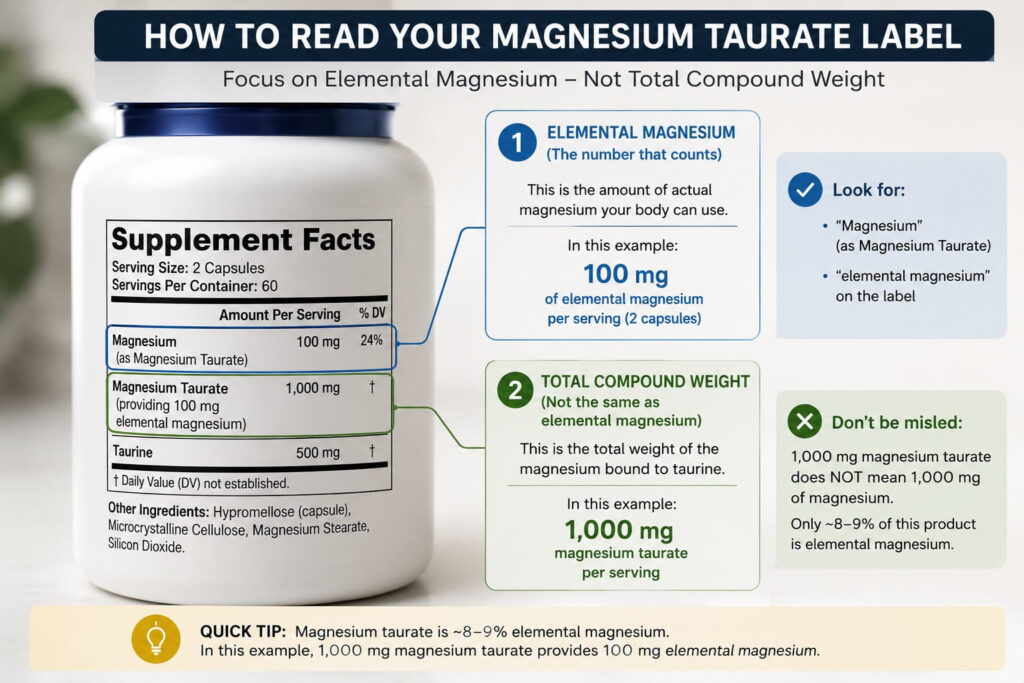
| Elemental magnesium content | Roughly 8–9% of total compound weight |
| Typical capsule size | 500 mg magnesium taurate ≈ 40–45 mg elemental magnesium (check your label — this varies by brand) |
| Main marketed uses | Heart rhythm, blood pressure, calm/anxiety, sleep support |
| Evidence strength | Strong for magnesium generally; limited and mostly preclinical for the taurate combination specifically |
| Prescription alternative? | No — it’s a dietary supplement, not an FDA-approved drug |
Because magnesium taurate is only about 8–9% elemental magnesium by weight, a 1,000 mg magnesium taurate capsule provides roughly 85–90 mg of actual usable magnesium, far less than the total number on the label suggests. This is the single most misunderstood fact about the supplement, and it matters for every dosage decision later in this guide. Always check the “elemental magnesium” line on the Supplement Facts panel, not just the compound weight.
Did you know?
A bottle that says “1,000 mg magnesium taurate” is not giving you 1,000 mg of usable magnesium. Most of that weight is the taurine molecule it’s bound to. Look for the line that says “elemental magnesium”, that’s the number that actually counts toward your daily intake.
Magnesium taurate was first proposed as a combined supplement in the 1990s by researcher Mark F. McCarty, who published a series of hypothesis papers in the journal Medical Hypotheses suggesting that magnesium and taurine might work through complementary pathways to protect the cardiovascular system. It’s worth noting these were hypothesis papers, not clinical trials, an important distinction that gets lost in a lot of marketing copy. The idea was scientifically reasonable and sparked interest, but it took decades before more rigorous research on magnesium (and, separately, taurine) started to catch up.
How Magnesium Taurate Works
To understand magnesium taurate, it helps to think of it as two ingredients doing two related jobs.

Magnesium
Magnesium is a cofactor for more than 300 enzyme systems in the body, involved in energy production, protein synthesis, DNA repair, nerve signaling, muscle contraction and relaxation, and blood pressure regulation. It acts partly as a natural calcium channel blocker, helping cells let go of excess calcium, which is one reason it’s linked to muscle relaxation, vascular tone, and heart rhythm stability.
Taurine
Taurine is a sulfur-containing amino acid found in high concentrations in the heart, brain, retina, and skeletal muscle. It plays roles in cell volume regulation, calcium handling inside cells, antioxidant defense, and bile acid formation. Taurine also appears to have mild GABA-receptor-modulating activity, which is part of why it’s associated with a calming effect.
Why pair them? Both magnesium and taurine influence calcium movement in and out of cells, and both concentrate in cardiac tissue. The theoretical rationale, laid out in McCarty’s original hypothesis papers, is that combining them could produce complementary, rather than redundant, cardiovascular support. That rationale is biologically plausible and has been explored in animal studies and small mechanistic studies in humans (for example, research on endothelial progenitor cells), but it has not yet been confirmed in large, dedicated human clinical trials of magnesium taurate as a combined compound.
In short: the ingredients are well-studied individually. The combination is a logical pairing with encouraging early signals, not a proven synergistic therapy.

Key Statistics
| Statistic | Value |
|---|---|
| Enzyme systems requiring magnesium | 300+ |
| U.S. adults estimated to fall short of the magnesium RDA | ~50% |
| Elemental magnesium in magnesium taurate (by compound weight) | ~8–9% |
| Adult RDA (all sources, men over 30) | 420 mg/day |
| Adult RDA (all sources, women over 30) | 320 mg/day |
| NIH Tolerable Upper Intake Level (supplements only) | 350 mg/day |
Key research behind the magnesium-taurate concept
| Study / Source | Type | What it found |
|---|---|---|
| McCarty MF, Medical Hypotheses, 1996[3] | Hypothesis paper | Proposed that magnesium and taurine act on complementary vascular pathways, the original rationale for pairing them, not a clinical trial |
| McCarty MF, Medical Hypotheses, 1996 (pre-eclampsia)[3] | Hypothesis paper | Proposed a theoretical role for magnesium taurate in pre-eclampsia prevention; never tested in a dedicated clinical trial |
| Katakawa M et al., Hypertension Research, 2016[4] | Small human + animal mechanistic study | Found that combined taurine and magnesium supplementation improved markers of endothelial progenitor cell function in healthy men and hypertensive rats — an early, mechanistic signal, not a large outcomes trial |
| Systematic review, 2024[6] | Systematic review of supplemental magnesium (general, not taurate-specific) | Most included studies showed some improvement in self-reported sleep and/or anxiety outcomes, though results were inconsistent across studies |
Notice the pattern: the foundational papers are hypotheses, the human data is small and mechanistic, and the highest-quality review evidence (the 2024 systematic review) is about magnesium supplementation broadly, not the taurate compound specifically. That’s not a criticism of magnesium taurate; it simply reflects where the science currently stands.
Evidence-Based Benefits of Magnesium Taurate
Each section below states what the research shows, how strong that evidence is, who’s most likely to benefit, and what to actually do with the information. Where a benefit is driven by magnesium in general rather than magnesium taurate specifically, that’s noted explicitly.
Evidence strength at a glance
| Benefit | Human Evidence | Confidence |
|---|---|---|
| Muscle function | ★★★★★ | Strong (for magnesium generally) |
| Blood pressure | ★★★★☆ | Moderate |
| Heart health / rhythm | ★★★☆☆ | Moderate for magnesium; limited for taurate specifically |
| Blood sugar / insulin sensitivity | ★★★☆☆ | Moderate |
| Sleep | ★★★☆☆ | Moderate, inconsistent |
| Migraine prevention | ★★★☆☆ | Moderate for magnesium; theoretical for taurate |
| Exercise recovery | ★★☆☆☆ | Limited, mainly in deficient athletes |
| Anxiety | ★★☆☆☆ | Emerging |
| Nervous system support | ★★☆☆☆ | Mechanistic/foundational |
| Cognitive health | ★☆☆☆☆ | Very limited for taurate; stronger evidence exists for other forms |
This table reflects the strength of human evidence for each benefit area , mostly drawn from research on magnesium supplementation in general, since dedicated trials on magnesium taurate specifically are limited across the board. It’s a guide to confidence, not a guarantee of individual results.
Heart Health
What research shows: Low magnesium status has been linked in observational studies to a higher risk of arrhythmias (including atrial fibrillation), coronary artery calcification, and cardiovascular events. Magnesium is essential for the electrical stability of heart muscle, and clinicians have long used intravenous magnesium in hospital settings for certain arrhythmias and eclampsia-related complications. Taurine, independently, concentrates heavily in heart tissue and has been studied for its role in cardiac contractility and cell protection during stress.
Strength of evidence: Moderate for magnesium’s role in heart rhythm and blood pressure generally (supported by observational data, meta-analyses, and mechanistic studies); low/preclinical for magnesium taurate specifically, which has mainly been tested in animal models and small mechanistic human studies rather than large randomized controlled trials in cardiac patients.
Who may benefit: People with confirmed or suspected magnesium insufficiency, and those working with a cardiologist on rhythm or blood pressure management as part of a broader treatment plan, never as a replacement for prescribed heart medication.
Practical takeaway: If you have any diagnosed heart condition, arrhythmia, or take heart medication, talk to your cardiologist before adding magnesium taurate. It should be viewed as a possible adjunct to, never a substitute for, medical cardiac care.
Blood Pressure
What research shows: Meta-analyses of magnesium supplementation (not taurate specifically) have found modest reductions in blood pressure, generally in the range of a few points systolic and diastolic, particularly in people with insufficient magnesium intake or existing hypertension. The FDA allows a qualified health claim linking magnesium intake to reduced hypertension risk — “qualified” meaning the evidence is suggestive but not conclusive.
Strength of evidence: Moderate for magnesium generally; not separately established for the taurate form.
Who may benefit: Adults with borderline-high blood pressure and low dietary magnesium intake.
Practical takeaway: Magnesium supplementation can be a reasonable complementary strategy alongside diet, exercise, and sodium reduction, but it should not replace prescribed antihypertensive medication. Effects, when present, are modest and typically take 8–12 weeks to become apparent.
Anxiety
What research shows: A 2024 systematic review of supplemental magnesium found that most included studies reported some improvement in self-reported anxiety, though results were mixed and study quality varied considerably, five of the seven studies measuring anxiety-related outcomes reported improvements in self-reported anxiety.[6] Taurine has separately shown neuroprotective and calming properties in preclinical research, thought to be related to mild GABA-receptor activity.
Strength of evidence: Emerging/moderate for magnesium and anxiety; theoretical for the specific magnesium-taurine combination, since dedicated trials on magnesium taurate for anxiety are lacking.
Who may benefit: People with mild, situational stress or subclinical anxiety symptoms, particularly if they also have low magnesium intake.
Practical takeaway: Magnesium taurate is not a treatment for diagnosed anxiety disorders. If anxiety is significant or persistent, it warrants evaluation by a healthcare provider, magnesium can be a supportive addition to, not a replacement for, therapy or prescribed treatment.
Sleep
What research shows: The same 2024 systematic review found that five of eight sleep-related studies reported improvements in sleep parameters, while two reported no improvement and one reported mixed results.[6] Magnesium’s role in nervous system relaxation and melatonin regulation provides a plausible mechanism.
Strength of evidence: Moderate but inconsistent for magnesium and sleep generally; not specifically studied for the taurate form.
Who may benefit: People whose sleep difficulty may be linked to stress, muscle tension, or low magnesium status, less clearly helpful for sleep-onset insomnia unrelated to magnesium status.
Practical takeaway: Many people take magnesium taurate in the evening. If you try it for sleep, give it 3–4 weeks of consistent use before judging whether it’s helping, and treat it as one piece of a broader sleep-hygiene approach rather than a stand-alone solution.
Muscle Function
What research shows: Magnesium is directly involved in muscle contraction and relaxation, and low magnesium status is associated with cramping and neuromuscular irritability. This is one of the best-established roles of magnesium in the body.
Strength of evidence: Strong for magnesium generally; not tested specifically for magnesium taurate versus other forms for this purpose.
Who may benefit: Athletes, people with frequent nighttime leg cramps, and those with diagnosed or suspected magnesium deficiency.
Practical takeaway: For pure muscle-cramp relief, evidence doesn’t clearly favor taurate over other well-absorbed forms like glycinate or citrate, the deciding factor is usually gut tolerance and personal preference.
Nervous System
What research shows: Magnesium is required for normal neurotransmitter signaling and nerve conduction. Taurine plays a role in neuronal development and has antioxidant properties in nerve tissue, demonstrated mostly in animal and cell-based research.
Strength of evidence: Foundational/mechanistic; magnesium’s role in nerve function is well established, but claims about magnesium taurate specifically calming the nervous system rest largely on extrapolation from these underlying mechanisms rather than dedicated human trials.
Who may benefit: General population, particularly people with suboptimal dietary magnesium intake.
Practical takeaway: Think of this as foundational nutritional support rather than a targeted nervous-system therapy.
Migraine Prevention
What research shows: Magnesium supplementation has some of the more consistent supplement evidence for migraine prevention, and several headache specialty organizations list it as a reasonable option for migraine prophylaxis. The original taurate-specific hypothesis for migraine prevention (paired with fish oil) came from a 1996 Medical Hypotheses paper and has not been confirmed in later controlled trials specific to the taurate compound.
Strength of evidence: Moderate for magnesium generally in migraine prevention; theoretical for taurate specifically.
Who may benefit: People with frequent migraines, especially those with aura, who have not achieved control through first-line preventive strategies.
Practical takeaway: Discuss magnesium supplementation for migraine prevention with a neurologist or primary care provider, since effective preventive dosing for migraine is often at the higher end of the typical range and should be individualized.
Blood Sugar
What research shows: Observational studies associate higher magnesium intake with better insulin sensitivity and lower risk of type 2 diabetes. Some randomized trials of magnesium supplementation in people with insulin resistance or diabetes have shown modest improvements in fasting glucose and insulin sensitivity markers.
Strength of evidence: Moderate for magnesium and glycemic control; not evaluated separately for the taurate form.
Who may benefit: People with insulin resistance, prediabetes, or magnesium deficiency (which is common in poorly controlled diabetes due to increased urinary losses).
Practical takeaway: Magnesium supplementation should complement, not replace, standard diabetes management, diet, and prescribed medication. Talk to your provider before adding a supplement if you take glucose-lowering medications.
Exercise Recovery
What research shows: Magnesium supports energy metabolism (ATP production), electrolyte balance, and muscle relaxation post-exercise. Some small studies suggest magnesium supplementation may reduce exercise-induced muscle soreness or improve certain performance markers in magnesium-insufficient athletes, though results are inconsistent.
Strength of evidence: Moderate for magnesium generally in athletes with low status; no dedicated studies on magnesium taurate for exercise recovery specifically.
Who may benefit: Athletes with heavy sweat losses, restrictive diets, or confirmed low magnesium status.
Practical takeaway: If your diet already meets magnesium needs, supplementation is unlikely to provide a measurable performance edge; it’s more useful for correcting a genuine shortfall.
Cognitive Health
What research shows: Adequate magnesium status supports normal neuronal signaling and has been associated in some observational research with better cognitive outcomes with aging. Taurine has documented neuroprotective properties in preclinical models, with human research still developing. Notably, a different magnesium compound — magnesium L-threonate — is the form specifically studied and marketed for crossing the blood-brain barrier and supporting cognition; this hasn’t been demonstrated for magnesium taurate.
Strength of evidence: Weak/preliminary for magnesium taurate and cognition specifically; stronger and more targeted evidence exists for other magnesium forms (notably L-threonate).
Who may benefit: General population as part of adequate overall magnesium intake; those specifically seeking cognitive support may want to research magnesium L-threonate instead and discuss it with a healthcare provider.
Practical takeaway: Don’t choose magnesium taurate specifically for “brain benefits”, the cognitive evidence base is stronger for other forms.
Who Should Take Magnesium Taurate (and Who Shouldn’t)?
Who May Benefit Most
- Adults with low dietary magnesium intake (roughly half of U.S. adults fall short of the RDA)
- Older adults, who are more prone to magnesium insufficiency
- People under high everyday stress looking for a gentle, well-tolerated magnesium form
- People who’ve tried other magnesium forms and found them too laxative
- Adults seeking general cardiovascular support alongside — not instead of — standard risk-factor management
- People who want a calming evening supplement as part of a broader sleep routine
Who Should Avoid Magnesium Taurate (Without Medical Supervision)
- Anyone with moderate-to-severe kidney disease or an eGFR below 60 (eGFR, or estimated glomerular filtration rate, is the blood test your doctor uses to measure how well your kidneys are filtering waste, most lab results include it automatically)
- Anyone with a diagnosed heart rhythm disorder
- Pregnant or breastfeeding individuals, without OB/GYN clearance
- Anyone on multiple interacting medications, without checking with a pharmacist first
- Children, without pediatric guidance
Medical Note: Magnesium taurate should not replace prescribed treatment for hypertension, arrhythmias, anxiety disorders, or insomnia. If you have any diagnosed condition, treat this supplement as a possible complement to your care plan, never a substitute for it.
How Long Does Magnesium Taurate Take to Work?
There’s no single answer, because “working” means something different depending on the goal, and because magnesium taurate itself hasn’t been the subject of dedicated timing studies. The estimates below are drawn from general magnesium research and typical clinical practice.
| Goal | Typical timeframe to notice an effect |
|---|---|
| Sleep | 2–4 weeks of consistent evening use |
| Anxiety / stress | 4–8 weeks |
| Muscle cramps | 1–3 weeks |
| Blood pressure | 8–12 weeks of consistent daily use |
| Heart rhythm support | Should be evaluated by a cardiologist, not judged by self-monitoring alone |
Magnesium works by gradually replenishing intracellular stores, not through an immediate pharmacological effect, so it’s normal not to feel anything after a day or two. If you’ve used it consistently at an appropriate dose for the timeframes above with no noticeable change, it’s reasonable to reassess with your healthcare provider rather than continuing to increase the dose on your own.
Myth vs. Fact
| Myth | Fact |
|---|---|
| “Magnesium taurate can cure anxiety or arrhythmias.” | It may offer modest supportive benefits alongside — never in place of — medical treatment. It is not a cure for any diagnosed condition. |
| “More magnesium taurate is always better for your heart.” | Excess magnesium, especially in people with reduced kidney function, can itself cause dangerous heart rhythm problems. More is not automatically safer. |
| “Natural supplements can’t interact with medications.” | Magnesium interacts meaningfully with several medication classes, including antibiotics and diuretics. |
| “All magnesium supplements are basically the same.” | Elemental magnesium content and absorption vary significantly by form, the compound matters. |
| “Magnesium taurate will make you gain weight.” | There’s no established mechanism or evidence linking magnesium taurate to weight gain; any bloating some people report is usually mild and transient. |
Magnesium Taurate Benefits for Men
Men have somewhat higher magnesium needs than women (420 mg/day RDA for men over 30 vs. 320 mg/day for women), and several of the general benefits above have particular relevance for men’s health priorities:
- Cardiovascular health: Men have a statistically higher risk of early cardiovascular events, making adequate magnesium intake, from food first, supplements if needed, a reasonable part of a heart-healthy routine, alongside standard risk-factor management (blood pressure, cholesterol, activity, smoking cessation).
- Exercise recovery and muscle function: Physically active men, particularly those training intensely or losing significant magnesium through sweat, may be more likely to have suboptimal magnesium status.
- Stress and sleep: The calming, GABA-related mechanisms discussed above apply equally regardless of sex.
- Fertility: Some preliminary research links magnesium status to markers of sperm quality and testosterone metabolism, but this research is limited, largely observational, and not specific to magnesium taurate. It should be considered a theoretical, not established, benefit. Men with fertility concerns should be evaluated by a specialist rather than relying on a supplement.
Magnesium Taurate Benefits for Women
- PMS symptoms: Some randomized trials suggest magnesium supplementation (often combined with vitamin B6) may modestly reduce PMS-related mood symptoms and bloating, though study quality varies and results aren’t universally positive.
- Menopause: Magnesium is sometimes suggested to help with menopause-related sleep disruption, mood changes, and bone health (working alongside calcium and vitamin D), though direct trial evidence in menopausal women specifically taking magnesium taurate is lacking.
- Sleep: As above, magnesium’s general sleep-supportive evidence applies, with the caveat that results across studies are mixed.
- Stress: Same mechanistic rationale as described in the anxiety section.
- Heart health: Cardiovascular risk rises notably after menopause, making adequate magnesium status a reasonable piece of a broader heart-health strategy, not a stand-alone protective measure.
Pregnancy note: Magnesium requirements increase modestly during pregnancy (around 350–360 mg/day from all sources), and magnesium is generally considered safe in pregnancy at RDA-appropriate levels. However, magnesium taurate specifically has not been well studied in pregnant women, and taurine metabolism in pregnancy is an active but still-developing area of research. Do not start any new magnesium supplement, including magnesium taurate, during pregnancy or while breastfeeding without your OB/GYN’s guidance.
Magnesium Taurate vs Other Magnesium Forms
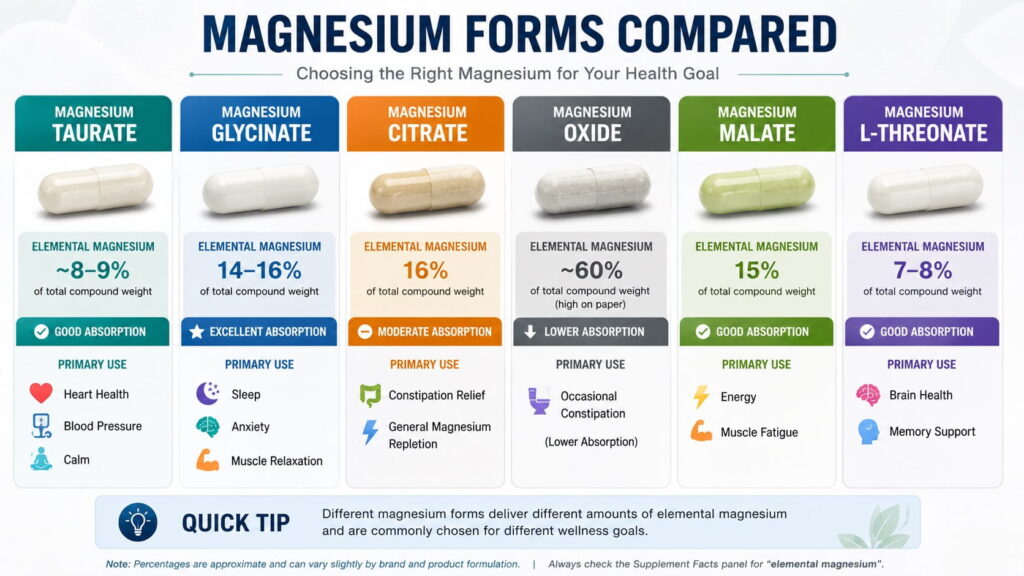
Every magnesium compound provides the same mineral — magnesium — but differs in how much elemental magnesium it delivers, how well it’s absorbed, and how it affects digestion. There is no single “best” form; the right choice depends on your goal and your gut tolerance.
Magnesium Taurate vs Magnesium Glycinate
| Factor | Magnesium Taurate | Magnesium Glycinate |
|---|---|---|
| Elemental magnesium | ~8–9% | ~14–16% |
| Absorption | Good; chelated amino acid form | Good; chelated amino acid form, often considered the gentlest |
| GI tolerance | Generally well tolerated | Excellent — least likely to cause loose stools |
| Best associated with | Heart rhythm, blood pressure support, calm | Sleep, general relaxation, anxiety, muscle cramps |
| Typical use case | Cardiovascular-focused supplementation | First-choice general magnesium supplement, especially for sleep |
Magnesium Taurate vs Magnesium Citrate
| Factor | Magnesium Taurate | Magnesium Citrate |
|---|---|---|
| Elemental magnesium | ~8–9% | ~16% |
| Absorption | Good | Good, well absorbed |
| GI tolerance | Generally gentle | More likely to cause loose stools/laxative effect at higher doses |
| Best associated with | Heart, calm | Constipation relief, general repletion |
| Typical use case | Cardiovascular support without GI upset | When mild laxative effect is acceptable or desired |
Magnesium Taurate vs Magnesium Oxide
| Factor | Magnesium Taurate | Magnesium Oxide |
|---|---|---|
| Elemental magnesium | ~8–9% | ~60% (high on paper) |
| Absorption | Good | Poor — often cited around 4% fractional absorption |
| GI tolerance | Generally gentle | Frequently causes diarrhea; commonly used as a laxative |
| Best associated with | Heart, calm | Occasional constipation relief; not ideal for correcting deficiency |
| Typical use case | Targeted, better-absorbed supplementation | Short-term digestive use, not long-term repletion |
Magnesium Taurate vs Magnesium Malate
| Factor | Magnesium Taurate | Magnesium Malate |
|---|---|---|
| Elemental magnesium | ~8–9% | ~15% |
| Absorption | Good | Good |
| GI tolerance | Generally gentle | Generally gentle |
| Best associated with | Heart, calm | Energy production, muscle fatigue, fibromyalgia-related fatigue (preliminary evidence) |
| Typical use case | Cardiovascular-focused users | People targeting fatigue or muscle pain |
Magnesium Taurate vs Magnesium L-Threonate
| Factor | Magnesium Taurate | Magnesium L-Threonate |
|---|---|---|
| Elemental magnesium | ~8–9% | Low (~7–8%), but formulated for CNS delivery |
| Absorption | Good, primarily systemic | Specifically studied for crossing into brain tissue |
| GI tolerance | Generally gentle | Generally gentle |
| Best associated with | Heart, calm | Cognitive function, memory (based on early clinical research) |
| Typical use case | Cardiovascular-focused users | People specifically targeting cognitive/memory support |
| Cost | Moderate | Typically the most expensive form |
Bottom line: If your primary goal is cardiovascular support or a calming effect without digestive upset, magnesium taurate is a reasonable choice. If your primary goal is sleep or general relaxation, glycinate has a broader and more consistent evidence base and higher elemental content per dose. If your goal is cognitive support specifically, L-threonate is the more targeted, better-studied option. If you need a laxative effect, citrate or oxide are more appropriate than taurate.
Quick comparison cards
Best for sleep Glycinate ★★★★★ · Taurate ★★★☆☆ · Citrate ★★☆☆☆
Best for heart health support Taurate ★★★★☆ · Glycinate ★★★☆☆ · Malate ★★☆☆☆
Best for constipation relief Citrate ★★★★★ · Oxide ★★★★☆ · Taurate ★☆☆☆☆
Best for cognitive/memory support L-Threonate ★★★★★ · Taurate ★★☆☆☆ · Glycinate ★★☆☆☆
Gentlest on digestion Glycinate ★★★★★ · Taurate ★★★★☆ · Citrate ★★★☆☆
(These ratings reflect general consensus among clinicians and the relative strength of available evidence for each use case — not a precise clinical scoring system.)
Magnesium Taurate Side Effects
Magnesium taurate is generally well tolerated, and its chelated, amino-acid-bound structure makes it less likely than inorganic forms (like oxide or chloride) to cause gastrointestinal upset. Still, side effects can occur, especially at higher doses.
Common side effects (usually mild, dose-related):
- Nausea
- Mild stomach discomfort
- Loose stools (less common than with citrate or oxide, but possible at higher doses)
- Headache (uncommon)
Rare side effects:
- Excessive urination
- Fatigue
- Low blood pressure (more likely if combined with blood pressure medication)
Overdose symptoms (hypermagnesemia) — requires much higher intakes, typically from supplements/medications rather than food, and is far more likely in people with impaired kidney function:
- Nausea and vomiting
- Facial flushing
- Muscle weakness
- Irregular heartbeat
- Very low blood pressure
- In severe cases: difficulty breathing, cardiac arrest (a medical emergency)
Drug interactions to be aware of:
| Medication | Interaction | Recommendation |
|---|---|---|
| Tetracycline and fluoroquinolone antibiotics | Magnesium can bind to these drugs and reduce their absorption | Separate dosing by at least 2–4 hours |
| Bisphosphonates (osteoporosis medications) | Similarly reduced absorption when taken together | Separate dosing; follow your prescriber’s timing instructions |
| Loop and thiazide diuretics | Increase magnesium loss through urine | May increase magnesium needs — discuss with your doctor |
| Potassium-sparing diuretics | Can increase magnesium retention | Raises toxicity risk if combined with magnesium supplements — needs medical oversight |
| Blood pressure medications | Magnesium may have an additive blood-pressure-lowering effect | Monitor blood pressure; discuss dosing with your prescriber |
| Muscle relaxants and certain heart medications | Magnesium can potentiate their effects | Always disclose supplement use to your prescriber |
Special populations:
| Group | Guidance |
|---|---|
| Kidney disease | Magnesium is cleared by the kidneys. Reduced kidney function significantly raises the risk of magnesium accumulation and toxicity. Anyone with an eGFR below 60 or diagnosed kidney disease should not take magnesium supplements without medical supervision. |
| Pregnancy | Not well studied specifically as magnesium taurate; general magnesium is considered appropriate at RDA levels, but new supplementation should be cleared with an OB/GYN. |
| Breastfeeding | Similarly under-researched as a specific compound; consult your provider. |
| Children | Magnesium needs and safe upper limits are lower and age-specific; magnesium taurate is not typically recommended for children without pediatric guidance. |
| Elderly adults | Often have reduced kidney function even without a formal diagnosis, so caution and lower starting doses are appropriate; also more likely to be on interacting medications. |
Magnesium Taurate Dosage Guide
There is no dedicated, universally agreed clinical dosing protocol for “magnesium taurate” as a compound — dosing recommendations are extrapolated from general magnesium research (measured in elemental magnesium) and manufacturer guidance. Always check your product’s label for elemental magnesium content, since this varies by brand.

Quick-reference table (elemental magnesium, from all supplemental sources combined)
| Purpose | Typical elemental magnesium range | Notes |
|---|---|---|
| General adult maintenance | 310–420 mg/day total (food + supplements), per NIH RDA | Men need slightly more than women |
| General supplementation on top of diet | 100–200 mg/day | Reasonable starting point |
| Sleep support | 200–400 mg/day, taken in the evening | Give it several weeks before judging effect |
| Anxiety/stress support | 200–400 mg/day, split or evening dosing | Not a substitute for therapy or prescribed treatment |
| Heart health/blood pressure support | 200–400 mg/day, discussed with a physician | Especially important to loop in a cardiologist if you have a diagnosed condition |
| Arrhythmia-related use | Physician-supervised only | Should never be self-directed; IV magnesium for arrhythmias is a clinical intervention, not a supplement decision |
| Supplemental upper limit (UL) | 350 mg/day from supplements/medications | Set by the NIH Office of Dietary Supplements; this is the ceiling for supplement-derived magnesium, not food |
Timing: Many people take magnesium taurate in the evening for its calming, sleep-supportive reputation, generally with food to improve absorption and reduce the (already low) likelihood of stomach upset. Doses above roughly 200 mg elemental are often split into two smaller doses to improve tolerance.
When to consult a doctor before starting:
- You take any prescription medication, especially heart, blood pressure, diuretic, or antibiotic medications
- You have kidney disease or reduced kidney function
- You are pregnant or breastfeeding
- You have a diagnosed heart rhythm disorder
- You are considering doses above the supplemental UL of 350 mg elemental magnesium/day
Because supplement dosage needs vary by age, health status, diet, and medication use, this guide is educational, not a personalized prescription. Always confirm your specific dose with a healthcare provider, particularly if you fall into any of the categories above.
Magnesium Taurate Risks and Safety
For who should avoid magnesium taurate or check with a doctor first, see Who Should Take Magnesium Taurate (and Who Shouldn’t)? above. A few additional groups deserve a closer look before starting:
Who should speak with a healthcare provider before starting:
- Anyone with a chronic health condition
- Anyone currently taking prescription medication
- Older adults, due to higher likelihood of reduced kidney function and polypharmacy
- Anyone planning to exceed the 350 mg/day supplemental upper limit
Seek immediate medical attention if you experience:
- Chest pain
- Severe or irregular heartbeat
- Difficulty breathing
- Severe muscle weakness
- Persistent vomiting after taking magnesium
- Signs of an allergic reaction (rash, swelling, difficulty breathing)
These can be signs of magnesium toxicity or an unrelated medical emergency — either way, they warrant urgent evaluation rather than waiting to see if symptoms pass, especially in people with kidney impairment.
Medical Note: If you have kidney disease, a heart rhythm disorder, or take medication that interacts with magnesium, don’t start magnesium taurate on your own, loop in your doctor or pharmacist first so they can check it against your specific medications and labs.
Signs You May Be Magnesium Deficient
Mild magnesium insufficiency is common and easy to miss, since the symptoms overlap with everyday tiredness and stress. Signs that may point to low magnesium status include:
- Muscle twitching or cramps, especially in the calves at night
- Fatigue or low energy
- Constipation
- Poor or restless sleep
- Headaches
- Irregular heartbeat or noticeable palpitations
- Numbness or tingling in the hands or feet
- Increased anxiety or irritability
These signs are nonspecific, they can point to many other conditions besides low magnesium, so they’re a reason to talk to your doctor and consider testing, not a basis for self-diagnosis. Standard serum magnesium blood tests only capture a small fraction of the body’s total magnesium (most is stored in bone and soft tissue), so a “normal” blood level doesn’t always rule out insufficiency; your provider can advise whether further testing is worthwhile.
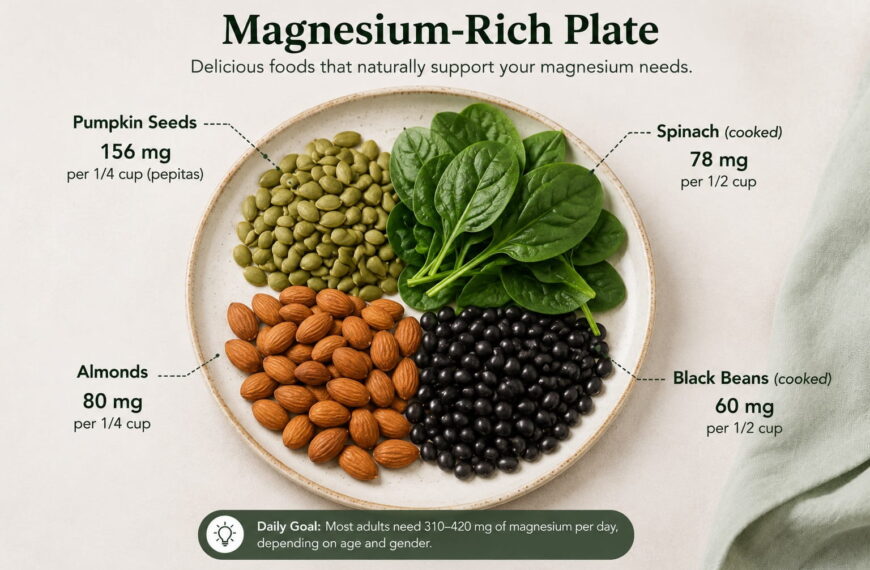
Best Food Sources of Magnesium (and Can You Get Enough From Food Alone?)

Food-based magnesium doesn’t carry the same upper-limit concerns as supplements, since healthy kidneys efficiently clear excess dietary magnesium. Building a magnesium-rich diet is a reasonable first step before — or alongside — supplementation.
| Food | Approximate Magnesium (per typical serving) |
|---|---|
| Pumpkin seeds (1 oz) | ~150 mg |
| Almonds (1 oz) | ~80 mg |
| Spinach, cooked (1/2 cup) | ~78 mg |
| Cashews (1 oz) | ~74 mg |
| Black beans, cooked (1/2 cup) | ~60 mg |
| Edamame, cooked (1/2 cup) | ~50 mg |
| Peanut butter (2 tbsp) | ~49 mg |
| Whole wheat bread (2 slices) | ~46 mg |
| Avocado (1 medium) | ~58 mg |
| Salmon, cooked (3 oz) | ~26 mg |
| Milk, low-fat (1 cup) | ~24–27 mg |
| Dark chocolate, 70–85% (1 oz) | ~64 mg |
(Values are approximate and can vary by brand, preparation, and soil mineral content.)
Can you get enough magnesium from food alone? For many people, yes — a diet built around leafy greens, nuts, seeds, legumes, and whole grains can meet or come close to the RDA without any supplement. In practice, though, national surveys suggest roughly half of adults in the U.S. fall short of their magnesium needs from diet alone, often due to reliance on refined grains and processed foods, which lose much of their magnesium during processing. If your diet regularly includes the foods in the table above, you may need little or no supplemental magnesium; if it doesn’t, a modest supplement can help close the gap. A registered dietitian can help you estimate your actual dietary intake if you’re unsure.
How to Choose a Magnesium Taurate Supplement
Not all magnesium taurate products are created equal. A few practical checks can help you choose a higher-quality one, this section explains what to look for, not which brand to buy.
- Elemental magnesium content: Check the Supplement Facts panel for the elemental magnesium amount, not just the total “magnesium taurate” weight. This is the number that actually matters for dosing.
- Third-party testing: Look for products tested by an independent lab — certifications like USP Verified or testing through organizations like NSF or ConsumerLab indicate the product has been checked for purity, potency, and contaminants beyond what the manufacturer claims.
- GMP manufacturing: A “Good Manufacturing Practices” (GMP) claim, ideally from a certified facility, is a reasonable baseline quality signal.
- Minimal, transparent ingredient list: Fewer unnecessary fillers, artificial colors, or proprietary blends make it easier to know exactly what you’re taking and at what dose.
- Vegan/allergen labeling: If you follow a vegan diet or have specific allergies, check the capsule material (some use gelatin) and allergen statements.
- Realistic marketing claims: Be cautious of products claiming to “cure,” “reverse,” or “eliminate” a diagnosed condition — legitimate supplement marketing describes support, not treatment.
Lifestyle Tips
Magnesium taurate works best as one piece of a broader health strategy, not a stand-alone fix:
- Exercise: Regular physical activity supports cardiovascular health and magnesium utilization, but intense training also increases magnesium losses through sweat, active people should pay closer attention to intake.
- Hydration: Adequate fluid intake supports normal kidney clearance of excess magnesium and reduces the risk of GI side effects from supplements.
- Sleep: Good sleep hygiene (consistent bedtime, limited screens before bed, cool dark room) amplifies any calming benefit magnesium may offer, supplementation isn’t a substitute for these basics.
- Diet: Prioritizing magnesium-rich whole foods (see table above) reduces reliance on high-dose supplementation and supports overall nutrient balance.
- Stress management: Techniques like breathing exercises, mindfulness, and regular movement address the root causes of stress and anxiety more directly than any single supplement.
Key Takeaways
- Magnesium taurate combines magnesium with taurine, an amino acid that concentrates in heart and nerve tissue.
- Evidence is strongest for magnesium itself — blood pressure, muscle function, and (to a lesser extent) sleep and anxiety.
- Human clinical trials on the magnesium taurate compound specifically remain limited; much of what’s written about it extrapolates from magnesium and taurine research separately.
- It’s generally well tolerated and gentler on digestion than citrate or oxide.
- It may support heart health, calm, and sleep, but it isn’t a treatment for any diagnosed condition.
- Speak with a healthcare provider before starting if you have kidney disease, a heart rhythm disorder, are pregnant or breastfeeding, or take interacting medications.
Bottom Line
Magnesium taurate is a promising, generally well-tolerated magnesium form that pairs an essential mineral with an amino acid that plays its own supportive role in heart and nerve tissue. The evidence for magnesium’s benefits, for blood pressure, muscle function, and nervous system health, is well established. The evidence for the taurate compound specifically is thinner, resting mainly on early hypothesis papers and small mechanistic studies rather than large randomized trials. That doesn’t make it a bad choice; it makes it a reasonable, moderately-evidenced option for people who want a gentle magnesium supplement with a plausible cardiovascular angle, ideally used alongside — not instead of — a healthy diet, regular activity, and medical guidance where relevant.
Frequently Asked Questions
Is magnesium taurate good for your heart?
Magnesium plays a well-established role in normal heart rhythm and blood pressure regulation, and taurine independently supports cardiac tissue function. The combined compound has a plausible mechanism and encouraging preclinical data, but large human clinical trials specific to magnesium taurate are limited. Talk to a cardiologist before using it to manage a diagnosed heart condition.
What is the best time to take magnesium taurate?
Many people take it in the evening, often citing its calming reputation, generally with food to support absorption and reduce the (already low) chance of stomach upset. There’s no strict clinical rule requiring evening dosing — consistency matters more than exact timing.
How much magnesium taurate should I take for anxiety?
There’s no dedicated clinical dose established for magnesium taurate and anxiety specifically. General magnesium research supports roughly 200–400 mg of elemental magnesium daily, but this should stay within the 350 mg/day supplemental upper limit unless a healthcare provider advises otherwise.
Can magnesium taurate help with sleep?
Possibly, for some people — a 2024 systematic review found that most included studies on supplemental magnesium and sleep reported some improvement, though results were inconsistent across studies. It’s reasonable to try, but it’s not a guaranteed or universal fix for insomnia.
Is magnesium taurate better than magnesium glycinate?
Neither is universally “better.” Magnesium taurate is more associated with cardiovascular and calming use; magnesium glycinate has a broader evidence base for sleep and is generally the gentlest on digestion with higher elemental magnesium content per dose. The right choice depends on your primary goal.
Is magnesium taurate better than magnesium citrate?
They serve different purposes. Citrate has a mild laxative effect and higher elemental content, making it useful for constipation or general repletion. Taurate is gentler on the gut and more associated with cardiovascular and calming applications.
What are the side effects of magnesium taurate?
Most people tolerate it well. Possible mild side effects include nausea, stomach discomfort, and, less commonly, loose stools. Higher doses raise the likelihood of side effects, and people with kidney disease face a meaningfully higher risk of magnesium accumulation.
Can I take magnesium taurate every day?
Many people take it daily as part of routine supplementation, staying within the 350 mg/day elemental magnesium supplemental upper limit (unless a healthcare provider directs otherwise). Long-term daily use should ideally be discussed with a healthcare provider, particularly for anyone with existing health conditions.
Is magnesium taurate safe during pregnancy?
Magnesium taurate specifically hasn’t been well studied in pregnant women. While magnesium in general is considered appropriate at RDA levels during pregnancy, you should not start magnesium taurate — or any new supplement — during pregnancy without your OB/GYN’s guidance.
Who should not take magnesium taurate?
People with moderate-to-severe kidney disease, those with certain heart rhythm disorders, and anyone on interacting medications should not take it without medical supervision. Pregnant or breastfeeding individuals should get clearance from their provider first.
Does magnesium taurate lower blood pressure?
Magnesium supplementation generally has been associated with modest blood pressure reductions in meta-analyses, particularly in people with insufficient magnesium intake. This effect isn’t established separately for the taurate form specifically, and magnesium should never replace prescribed blood pressure medication.
What’s the difference between magnesium taurate and taurine supplements?
Taurine supplements provide the amino acid alone, often in gram-level doses used in sports nutrition and energy drink research. Magnesium taurate provides a much smaller amount of taurine, bound to magnesium, primarily as a delivery form for the mineral — the two products serve different purposes and aren’t interchangeable.
Can magnesium taurate cause diarrhea?
It’s less likely to than forms like citrate or oxide, due to its chelated amino-acid structure, but loose stools can still occur, especially at higher doses.
What is the maximum safe dose of magnesium taurate?
The relevant ceiling is 350 mg/day of elemental magnesium from supplements and medications combined (the NIH’s Tolerable Upper Intake Level), not the total compound weight of magnesium taurate. Check your label’s elemental magnesium content to calculate this accurately, and don’t exceed it without medical guidance.
Does magnesium taurate interact with medications?
Yes. It can interact with certain antibiotics, bisphosphonates, diuretics, and blood pressure medications. Always tell your doctor or pharmacist about any supplements you’re taking.
Is magnesium taurate available in the UK, and is it regulated the same way?
Yes, magnesium taurate supplements are widely available in the UK. In the UK, supplements are regulated as food products by the Food Standards Agency rather than as medicines, similar to the FDA’s oversight of supplements in the US — meaning products aren’t required to prove efficacy before sale, so third-party testing and reputable brands matter.
Can magnesium taurate cause weight gain?
There’s no known mechanism or evidence linking magnesium taurate to weight gain. Some people notice mild, temporary bloating when starting any magnesium supplement, but this isn’t the same as fat gain and typically resolves on its own.
Is magnesium taurate safe for the kidneys?
In people with healthy kidney function, magnesium taurate is generally considered safe at recommended doses, since the kidneys efficiently clear excess magnesium. In people with reduced kidney function or kidney disease, magnesium clearance is impaired, which raises the risk of magnesium accumulation and toxicity — this group should not take magnesium supplements without medical supervision.
Does magnesium taurate help with heart palpitations?
Magnesium plays a role in normal heart rhythm, and low magnesium status has been linked to a higher likelihood of palpitations and arrhythmias in some studies. Magnesium taurate is often used with this in mind, but if you’re experiencing palpitations, they should be evaluated by a doctor before you rely on any supplement — palpitations can have many causes, some of which need direct medical treatment.
Magnesium taurate dangers: what should you actually watch for?
For most healthy adults, the main risks are mild — nausea or loose stools at higher doses. The more serious dangers show up in specific situations: people with kidney disease can’t clear excess magnesium efficiently, which raises the risk of dangerous magnesium buildup; people on certain heart, blood pressure, or antibiotic medications can experience interactions; and very high doses (well above the supplemental upper limit) can, in rare cases, cause severe symptoms like an irregular heartbeat or difficulty breathing. These dangers are largely avoidable by staying within recommended doses and checking with a healthcare provider if you’re in a higher-risk group.
What’s the best magnesium taurate supplement to buy?
Rather than one “best” brand, look for a product that clearly lists elemental magnesium content (not just total compound weight), has been third-party tested (look for USP Verified, NSF, or ConsumerLab certification), is made in a GMP-certified facility, and avoids unnecessary fillers or proprietary blends. A reputable pharmacy, registered dietitian, or your doctor can also point you toward specific products they trust.
References
- National Institutes of Health, Office of Dietary Supplements. Magnesium Fact Sheet for Health Professionals.
- National Institutes of Health, Office of Dietary Supplements. Magnesium Fact Sheet for Consumers.
- McCarty MF. Complementary vascular-protective actions of magnesium and taurine: a rationale for magnesium taurate. Medical Hypotheses. 1996;46(2):89-100.
- Katakawa M, Fukuda N, Tsunemi A, et al. Taurine and magnesium supplementation enhances the function of endothelial progenitor cells through antioxidation in healthy men and spontaneously hypertensive rats. Hypertension Research. 2016;39(12):848-856.
- U.S. Food and Drug Administration. Qualified health claim for magnesium and reduced risk of high blood pressure (hypertension).
- Systematic review of supplemental magnesium and self-reported anxiety and sleep quality. PMC, 2024.
- Harvard T.H. Chan School of Public Health, The Nutrition Source. Magnesium.
Related Articles: