
Magnesium bisglycinate has become one of the most recommended supplements on the internet — for sleep, anxiety, muscle recovery, and everything in between. Some of that reputation is earned. Some of it is oversold.
This guide separates the two. We looked at how magnesium bisglycinate works, what clinical trials actually found (including a large 2025 placebo-controlled trial on sleep), how it compares to other magnesium forms, and who should — and shouldn’t — take it.

Quick answer: Magnesium bisglycinate (magnesium bound to two molecules of the amino acid glycine) is a well-absorbed, gut-friendly form of magnesium. Research supports modest benefits for sleep quality, muscle relaxation, and correcting magnesium deficiency, with less digestive upset than magnesium oxide or citrate. It is not a proven treatment for anxiety, insomnia, or heart disease, and it works best in people who are actually low in magnesium.
Magnesium Bisglycinate at a Glance
| Question | Short Answer |
|---|---|
| Best for | Sleep support, muscle relaxation, correcting magnesium deficiency |
| Who benefits most | People with low magnesium intake, poor sleep, or a confirmed deficiency |
| Evidence strength | Strong for deficiency correction; moderate for sleep; limited for anxiety |
| Typical dose | 100–200 mg elemental magnesium daily (varies by individual; see dosage section) |
| Best time to take | Evening or with a meal, though timing is flexible |
| Main side effect | Mild digestive upset or loose stools, mainly at higher doses |
Table of Contents
- What Is Magnesium Bisglycinate?
- How Magnesium Bisglycinate Works in the Body
- Magnesium Bisglycinate vs. Magnesium Glycinate
- Magnesium Bisglycinate Benefits
- Magnesium Bisglycinate Benefits for Women
- Magnesium Bisglycinate Benefits for Men
- Magnesium Bisglycinate Benefits for Athletes and Bodybuilders
- Who Is Most Likely to Benefit from Magnesium Bisglycinate?
- How Long Does Magnesium Bisglycinate Take to Work?
- Magnesium Deficiency Symptoms
- Magnesium Food Sources vs. Supplements
- Best Foods to Pair With Magnesium Bisglycinate
- Recommended Magnesium Bisglycinate Dosage for Adults
- Magnesium Bisglycinate 375 mg Benefits
- Best Time to Take Magnesium Bisglycinate
- Can You Take Magnesium Bisglycinate Every Day?
- Taking Magnesium Bisglycinate With Vitamin D, Calcium, Zinc & Iron
- Who Should Take Magnesium Bisglycinate
- Who Should Avoid Magnesium Bisglycinate
- Potential Side Effects of Magnesium Bisglycinate
- Symptoms of Too Much Magnesium
- How to Tell If Magnesium Bisglycinate is Working
- Magnesium Bisglycinate Drug Interactions
- How to Choose a Magnesium Bisglycinate Supplement
- Storage of Magnesium Bisglycinate
- What Medical Guidelines Say About Magnesium Bisglycinate
- Common Magnesium Bisglycinate Mistakes
- Expert Tips for Taking Magnesium Bisglycinate
- Final Verdict
- Magnesium Bisglycinate FAQs
What Is Magnesium Bisglycinate?
Magnesium bisglycinate is a chelated mineral supplement: one magnesium ion bonded to two molecules of glycine, an amino acid that also acts as a calming neurotransmitter in the brain. “Chelated” simply means the mineral is wrapped inside an organic molecule instead of floating as a raw salt, which changes how it’s absorbed and tolerated.
This is different from magnesium oxide (a magnesium salt with poor absorption) or magnesium citrate (bound to citric acid, often used for constipation). Because glycine is a relatively gentle carrier, magnesium bisglycinate tends to cause less diarrhea than these other forms, which is the main reason it has become popular for daily, long-term use rather than short-term digestive relief.
You may also see it called magnesium glycinate. In practice, most supplement labels use the two names interchangeably — more on that distinction below.
How Magnesium Bisglycinate Works in the Body
Magnesium is involved in more than 300 enzymatic reactions, according to the National Institutes of Health Office of Dietary Supplements. Understanding magnesium bisglycinate absorption starts with knowing what the mineral actually does once it’s in your system. It plays a role in:
- ATP production — magnesium is required to activate ATP, the molecule cells use for energy
- Nervous system regulation — it helps regulate neurotransmitters, including GABA, the brain’s primary calming signal
- Muscle contraction and relaxation — magnesium works opposite calcium at the cellular level, helping muscles relax after they contract
- Blood sugar and blood pressure regulation
- Bone structure — roughly 50–60% of the body’s magnesium is stored in bone
- Heart rhythm — magnesium helps regulate the electrical signals that keep a heartbeat steady
Glycine adds a second layer. It’s an inhibitory neurotransmitter in its own right, and small studies suggest it may support sleep onset independent of magnesium. When you take magnesium bisglycinate, you’re technically getting two ingredients that both interact with the nervous system, which is the theoretical basis for its popularity as a sleep and relaxation aid, even though direct head-to-head trials confirming this dual effect are still limited.
In plain terms: magnesium doesn’t sedate you. It removes some of the physiological “friction” — like muscle tension or an overactive nervous system — that can get in the way of sleeping and recovering well, particularly if you’re deficient to begin with.
Magnesium Bisglycinate vs. Magnesium Glycinate
This is one of the most common points of confusion, and the honest answer is: for consumers, there is usually no meaningful difference.
- Chemically, “glycinate” technically refers to magnesium bound to one glycine molecule, while “bisglycinate” refers to magnesium bound to two. Most commercial “magnesium glycinate” supplements are actually the bisglycinate form — manufacturers just use the shorter, more familiar name.
- Both are chelated, both are better tolerated than magnesium oxide, and both are absorbed similarly.
- The only way to know which one you’re actually getting is to check the supplement facts panel or contact the manufacturer, since label terminology isn’t standardized.
Featured snippet answer: Magnesium bisglycinate and magnesium glycinate are, in almost all commercial products, the same ingredient. “Glycinate” is a shortened, commonly used label name for what is chemically magnesium bisglycinate. There is no meaningful difference in absorption or benefits between the two names.
Comparison Table: Magnesium Bisglycinate vs. Magnesium Glycinate
| Feature | Magnesium Bisglycinate | Magnesium “Glycinate” (label term) |
|---|---|---|
| Chemical structure | Magnesium + 2 glycine molecules | Usually identical to bisglycinate |
| Absorption | Good, gentle on the gut | Same in practice |
| GI side effects | Low | Low |
| Label prevalence | Common on clinical/professional brands | Common on consumer brands |
| Practical difference | None for most buyers | None for most buyers |
Comparison Table: Common Magnesium Forms
| Form | Elemental Mg (approx.) | Absorption | Common Use | GI Tolerance |
|---|---|---|---|---|
| Magnesium bisglycinate | ~14% | Good | Sleep, relaxation, daily repletion | High |
| Magnesium citrate | ~16% | Good | Constipation, general supplementation | Moderate (laxative at higher doses) |
| Magnesium oxide | ~60% (poorly absorbed) | Low | Antacid, occasional constipation relief | Low (common diarrhea) |
| Magnesium malate | ~15% | Good | General use, sometimes fatigue support | High |
| Magnesium L-threonate | ~8% | Crosses blood-brain barrier well | Cognitive-focused formulas | High |
| Magnesium chloride | ~12% | Good | Topical/oral use | Moderate |
Magnesium Bisglycinate Benefits
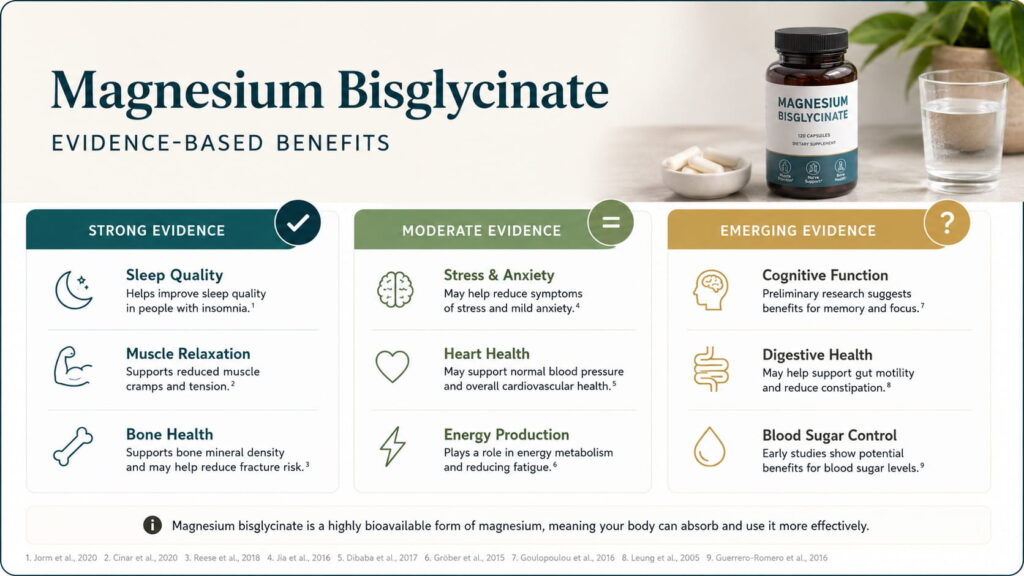
Below are the benefits with meaningful research behind them. We’ve labeled the strength of evidence for each so you can calibrate expectations, this is a supplement with real, but modest, effects, not a cure-all.
1. Sleep quality — does magnesium bisglycinate help you sleep? (moderate evidence, effect is small)
A 2025 randomized, double-blind, placebo-controlled trial in 155 adults with self-reported poor sleep found that participants taking magnesium bisglycinate showed a significantly greater reduction in Insomnia Severity Index scores compared with placebo over four weeks. However, the effect size was small, and improvements were most pronounced in people with lower baseline magnesium intake most of the improvement occurred within the first 14 days. Broader systematic reviews of magnesium and sleep describe the evidence as suggestive but still limited by small, inconsistent trials.
2. Muscle relaxation and cramps — magnesium bisglycinate for muscle cramps (moderate evidence)
Magnesium’s role in regulating muscle contraction is well established mechanistically, and it’s commonly used for nighttime leg cramps and post-exercise muscle tightness. Evidence for magnesium supplementation specifically improving cramps is mixed and depends heavily on whether a person is deficient to begin with.
3. Stress and anxiety support (limited evidence, biologically plausible)
Magnesium interacts with GABA receptors and the HPA axis (the body’s stress-response system), which is why researchers think it could help with stress. Scientists understand how it could work, but stronger clinical studies are still needed. Systematic reviews describe the clinical evidence as suggestive but inconclusive, several trials report reduced subjective anxiety, particularly in people with low magnesium status, but study quality is generally rated low, and no major clinical guideline currently recommends magnesium as an anxiety treatment.
4. Correcting magnesium deficiency (strong evidence)
This is the benefit with the clearest evidence. If you are genuinely magnesium-deficient, supplementation reliably raises magnesium status and resolves deficiency-related symptoms like fatigue, muscle cramps, and irritability. This is also why “responders” tend to be people with lower baseline intake, magnesium works best when your body actually needs more of it, rather than acting as a universal enhancer for everyone.
5. Bone health (supportive, long-term/dietary evidence)
Roughly half the body’s magnesium is stored in bone, and observational research links adequate magnesium intake to higher bone mineral density and lower fracture risk. This evidence is strongest for overall dietary magnesium intake over years, not short-term supplementation, think of it as one supporting piece of a bone-health strategy alongside calcium, vitamin D, and weight-bearing exercise.
6. Blood pressure and heart rhythm (modest effect, varies by person)
Magnesium plays a direct role in the electrical signaling that keeps a heartbeat regular, and population studies associate low magnesium status with hypertension risk. Supplementation trials show small blood pressure reductions, generally in people who start with lower magnesium levels, not a substitute for prescribed blood pressure management.
7. Exercise performance and recovery (emerging evidence)
Magnesium supports ATP production and electrolyte balance during exertion. Some studies in athletes and physically active adults suggest supplementation may modestly support recovery and reduce exercise-induced muscle damage markers, especially in those with suboptimal intake, though results across studies are inconsistent.
8. Migraine prevention (moderate evidence, mostly studied with other forms)
This is a genuinely well-supported use of magnesium that’s often overlooked. The American Academy of Neurology and American Headache Society rate magnesium as “probably effective” (Level B) for migraine prevention, based on trials showing fewer migraine days with regular use. One important caveat: most of this research used magnesium oxide at higher doses (400–600 mg/day), not magnesium bisglycinate specifically, so the exact dose and form equivalence for bisglycinate isn’t as well established. Still, given magnesium’s role in nerve signaling and blood vessel function, many headache specialists consider any well-tolerated magnesium form, including bisglycinate, a reasonable option to discuss for migraine prevention.
Myths vs. Facts
| Myth | Fact |
|---|---|
| “Magnesium bisglycinate will knock you out like a sedative.” | It supports relaxation; it isn’t sedating in the way sleep medications are. |
| “More magnesium always means better sleep and less anxiety.” | Benefits are strongest in people who are actually deficient; more isn’t better once you’re replete. |
| “All magnesium supplements work the same way.” | Absorption and GI tolerance vary significantly by form. |
| “Magnesium can cure anxiety or insomnia.” | No major clinical guideline supports this claim; it may modestly help some symptoms. |
| “You need a supplement — food isn’t enough.” | Many people can meet magnesium needs through diet; supplements fill a gap, not replace food. |
Evidence Summary: How Strong Is the Research?
| Claimed Benefit | Evidence Level | Confidence |
|---|---|---|
| Corrects magnesium deficiency | Strong | ★★★★★ |
| Sleep quality | Moderate | ★★★★☆ |
| Muscle relaxation / cramps | Moderate | ★★★★☆ |
| Blood pressure | Moderate | ★★★☆☆ |
| Bone health | Moderate (long-term dietary evidence) | ★★★☆☆ |
| Exercise performance / recovery | Emerging | ★★☆☆☆ |
| Migraine prevention | Moderate (mostly studied with other forms) | ★★★☆☆ |
| Anxiety / stress | Limited | ★★☆☆☆ |
| Restless legs | Limited and mixed | ★★☆☆☆ |
Star ratings reflect the overall consistency and quality of clinical evidence, not the size of the effect — even a “strong evidence” benefit like deficiency correction only helps people who are actually low in magnesium to begin with.
Magnesium Bisglycinate Benefits for Women
Magnesium needs and use-cases shift across a woman’s life stages:
- Menstrual cycle: Some research links magnesium supplementation to modest reductions in PMS-related mood symptoms and cramping, particularly when combined with adequate B6 intake.
- Pregnancy: Magnesium requirements increase during pregnancy, and deficiency has been associated with leg cramps. Any supplementation during pregnancy should be guided by an OB-GYN, since dosing needs and safety monitoring differ from general adult use.
- Menopause: Declining estrogen affects bone density and sleep quality — two areas where magnesium’s supportive (not curative) role is most relevant. Magnesium is one part of a broader bone-health approach that should include calcium, vitamin D, and weight-bearing exercise.
- Everyday stress and sleep: Many women use magnesium bisglycinate as part of an evening wind-down routine alongside consistent sleep timing and reduced screen exposure.
Practical scenario: A 38-year-old with a demanding job, disrupted sleep, and monthly PMS-related tension is a reasonable candidate to discuss magnesium bisglycinate with her doctor — not because it will fix all three issues, but because it addresses a nutrient that’s commonly under-consumed and plays into all three symptom areas.
Magnesium Bisglycinate Benefits for Men
For men, the most common use-cases are exercise recovery, sleep, and general nutrient adequacy:
- Training recovery: Active men with high sweat losses (through intense training or heat exposure) may have higher magnesium turnover, making adequate intake more relevant.
- Sleep and stress: Men are statistically less likely to report sleep problems to a doctor but are just as susceptible to the same modest sleep benefits described above.
- Cardiovascular support: Given magnesium’s role in blood pressure and heart rhythm regulation, adequate intake is part of a broader heart-healthy pattern, not a replacement for standard cardiovascular care.
- Testosterone claims: You may see claims that magnesium “boosts testosterone.” The evidence here is weak and largely limited to small studies in magnesium-deficient or older populations; it is not established as a testosterone-boosting supplement for the general population.
Magnesium Bisglycinate Benefits for Athletes and Bodybuilders
Athletes and bodybuilders are drawn to magnesium bisglycinate for three main reasons: muscle cramping, recovery, and sleep quality (which itself affects recovery and performance).
- ATP and energy metabolism: Because magnesium is a cofactor in ATP production, adequate status supports normal energy metabolism during training, though supplementing beyond adequate levels hasn’t been shown to enhance performance in magnesium-replete athletes.
- Cramping and DOMS (delayed onset muscle soreness): Some research suggests magnesium may modestly reduce exercise-induced muscle damage markers, particularly in athletes with lower baseline magnesium status.
- Sleep for recovery: Since recovery happens largely during sleep, the modest sleep benefits described earlier may compound over a training block, even if each individual night’s improvement is small.
- Electrolyte balance: High-volume training and heavy sweating increase magnesium losses, making dietary adequacy more important for endurance and strength athletes than for sedentary adults.
Practical example: A bodybuilder in a high-volume training block who trains twice daily, sweats heavily, and struggles to wind down at night is a more plausible “responder” to supplementation than a recreational gym-goer with a magnesium-rich diet and good sleep already.
Comparison Table: Athletes vs. General Adults
| Factor | Athletes / Highly Active Adults | General Adults |
|---|---|---|
| Magnesium turnover | Higher (sweat, training stress) | Standard |
| Likely benefit from supplementation | Higher if intake is inadequate | Moderate, deficiency-dependent |
| Primary use-case | Cramping, recovery, sleep | General deficiency correction, sleep |
| Dosing considerations | May need higher dietary focus, not necessarily higher supplement dose | Standard RDA-based approach |
Who Is Most Likely to Benefit from Magnesium Bisglycinate?
The honest answer to “will this work for me?” is: it depends on whether you’re actually low in magnesium or under conditions that increase your needs. According to the NIH Office of Dietary Supplements, certain groups are more likely to fall short, either because they take in less or lose more than average:
- Older adults — older adults tend to have lower dietary magnesium intake than younger adults, and absorption can decline with age.
- People with gastrointestinal conditions — the chronic diarrhea and fat malabsorption seen in Crohn’s disease, celiac disease, and regional enteritis can gradually deplete magnesium.
- People with type 2 diabetes — insulin resistance and type 2 diabetes are linked to magnesium deficits and increased urinary magnesium loss.
- People with chronic alcohol use — magnesium deficiency is common in people with chronic alcoholism</cite>, often alongside poor overall nutrition.
- People on long-term PPIs (acid reflux medication) — the FDA has flagged an association between extended PPI use and low magnesium levels.
- Athletes and highly active people — heavy, regular sweating increases magnesium losses over time.
- People under chronic stress or with consistently poor diets — low intake of magnesium-rich foods (leafy greens, nuts, seeds, whole grains) is common and adds to other risk factors.
- Vegans and vegetarians — plant-forward diets can be magnesium-rich, but this depends heavily on actually eating enough legumes, nuts, seeds, and whole grains rather than processed substitutes.
Who’s less likely to notice a difference? Someone who already eats a varied, magnesium-rich diet, sleeps reasonably well, and has no GI or metabolic conditions is less likely to feel a dramatic change — because there’s less of a gap to fill.
How Long Does Magnesium Bisglycinate Take to Work?
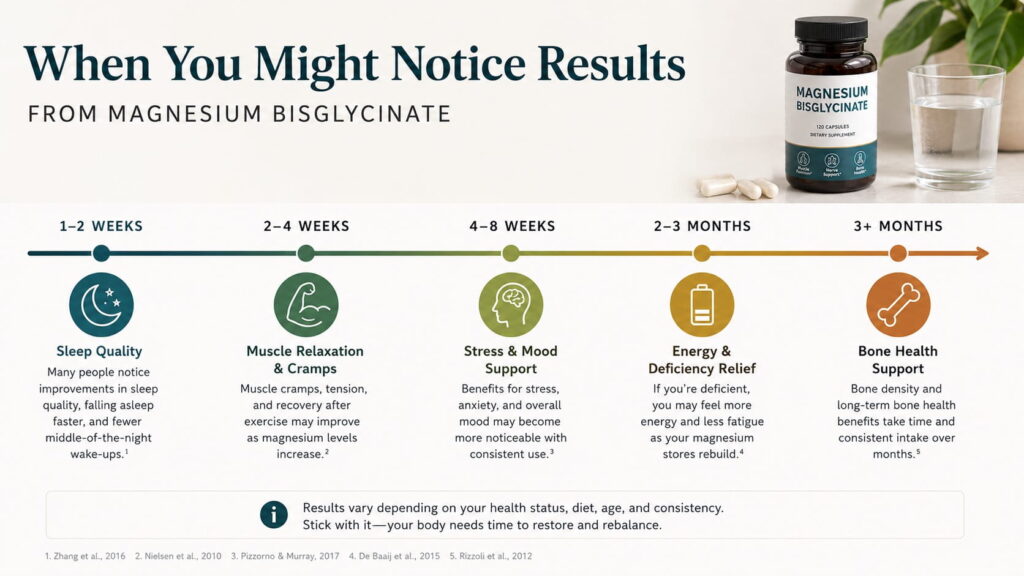
This depends heavily on what you’re using it for:
| Goal | Typical Timeline |
|---|---|
| Sleep quality | Several days to 2 weeks; most benefit in the 2025 clinical trial appeared within the first 14 days |
| Correcting a diagnosed deficiency | Several weeks, alongside dietary changes |
| Muscle cramps or twitching | Varies widely; some people notice change within 1–2 weeks, others see little change |
| Stress or mood-related symptoms | Unclear; if present, effects likely build gradually over weeks, not days |
| Long-term bone health | Months to years, as part of an overall diet and lifestyle pattern — not a short-term effect |
Featured snippet answer: Magnesium bisglycinate typically takes a few days to two weeks to show noticeable effects on sleep, and several weeks to fully correct a diagnosed deficiency. Bone-health benefits build over months as part of a broader diet and lifestyle pattern, not from short-term use.
Magnesium Deficiency Symptoms
According to the NIH Office of Dietary Supplements, early signs of magnesium deficiency include loss of appetite, nausea, vomiting, fatigue, and weakness. As deficiency worsens, numbness, tingling, muscle contractions and cramps, seizures, personality changes, abnormal heart rhythms, and coronary spasms can occur.
Importantly, symptomatic magnesium deficiency from low dietary intake alone is uncommon in otherwise-healthy people because the kidneys limit how much magnesium is excreted in urine. Deficiency is more likely to develop from chronic alcohol use, certain gastrointestinal conditions, some medications (see interactions below), or long-standing low intake combined with another risk factor.
Quick self-check — possible signs of low magnesium:
- Frequent muscle cramps or twitches
- Persistent fatigue not explained by sleep or workload
- Irritability or heightened stress reactivity
- Poor sleep quality
- Irregular heartbeat sensations (seek medical evaluation promptly)
If you notice several of these, the right next step is a conversation with your doctor, possibly including a blood test, rather than self-diagnosing and self-treating.
Should You Get Tested First?
You don’t need a lab test before trying a typical, low-to-moderate dose of magnesium, but it’s worth understanding what testing can and can’t tell you.
- Standard serum (blood) magnesium tests have real limitations. Only about 1% of the body’s magnesium is in the blood; the rest is stored inside cells and in bone. That means a “normal” blood test doesn’t rule out a cellular-level shortfall, and mild deficiency can be missed.
- Testing is most useful when a doctor suspects deficiency or a related condition — for example, in someone with unexplained muscle cramps, an irregular heartbeat, malabsorption issues, or risk factors like chronic alcohol use or long-term PPI use.
- Testing isn’t required just to try a general-health dose. For most healthy adults considering a standard supplemental amount, a conversation with your doctor about your diet, symptoms, and medications is usually more useful than a routine blood draw.
Magnesium Food Sources vs. Supplements
For most healthy adults, food should be the first strategy. Supplements are for filling genuine gaps.
Magnesium-Rich Foods
| Food | Approx. Magnesium per Serving |
|---|---|
| Pumpkin seeds (1 oz) | ~150 mg |
| Almonds (1 oz) | ~80 mg |
| Spinach, cooked (1/2 cup) | ~78 mg |
| Black beans, cooked (1 cup) | ~120 mg |
| Cashews (1 oz) | ~74 mg |
| Dark chocolate (70–85%, 1 oz) | ~65 mg |
| Avocado (1 medium) | ~58 mg |
| Salmon (3 oz) | ~26 mg |
| Whole wheat bread (2 slices) | ~46 mg |
Comparison Table: Food vs. Supplement
| Factor | Food Sources | Supplements |
|---|---|---|
| Absorption | Good, comes with fiber/nutrients | Good, form-dependent |
| Risk of excess | Very low (kidneys regulate) | Possible at high doses |
| Convenience | Requires dietary planning | High |
| Best for | General population, prevention | Confirmed or likely deficiency |
| Cost | Often lower long-term | Ongoing cost |

Best Foods to Pair With Magnesium Bisglycinate
Magnesium bisglycinate is gentle enough to take on an empty stomach for many people, but pairing it with food can make the experience even smoother:
- Dinner or a light evening meal — reduces the mild nausea some people notice when taking any supplement on an empty stomach
- Yogurt or dairy — a common, easy pairing, though large amounts of calcium at the exact same time may modestly compete for absorption (see the section below)
- Nuts, seeds, or a handful of whole grains — a practical way to add complementary magnesium from food alongside your supplement
- Water, not coffee or alcohol — caffeine and alcohol both increase magnesium loss through urine, so taking your supplement well away from your morning coffee or an evening drink is a reasonable habit
If you notice stomach upset on an empty stomach, simply moving your dose to alongside a meal is usually enough to resolve it — no need to stop taking it altogether.
Recommended Magnesium Bisglycinate Dosage for Adults
The NIH’s Recommended Dietary Allowances (RDA) for total magnesium (from all sources, food plus supplements) are:
| Group | RDA (approx.) |
|---|---|
| Adult men, 19–30 | 400 mg/day |
| Adult men, 31+ | 420 mg/day |
| Adult women, 19–30 | 310 mg/day |
| Adult women, 31+ | 320 mg/day |
| Pregnant women | 350–360 mg/day |
| Breastfeeding women | 310–320 mg/day |
For supplemental (elemental) magnesium specifically, many over-the-counter magnesium bisglycinate products provide 100–200 mg of elemental magnesium per serving, with total daily supplemental intake commonly ranging from 200–350 mg, depending on the product and individual need. There is also a Tolerable Upper Intake Level (UL) of 350 mg/day for supplemental magnesium in adults, set specifically because higher supplemental doses are more likely to cause diarrhea.
Important: this 350 mg limit applies only to magnesium from supplements and medications — not to magnesium from food. There is no upper limit on dietary magnesium intake, because healthy kidneys are very effective at filtering out any excess that comes from food. In other words, you don’t need to add up your supplement dose and your dietary intake and stay under 350 mg total; the cap is specifically about what you take in pill or powder form.
This is general information, not a personal recommendation. The right dose depends on your diet, health status, medications, and kidney function — talk to a healthcare provider before starting, especially at higher doses.
Magnesium Bisglycinate 375 mg Benefits
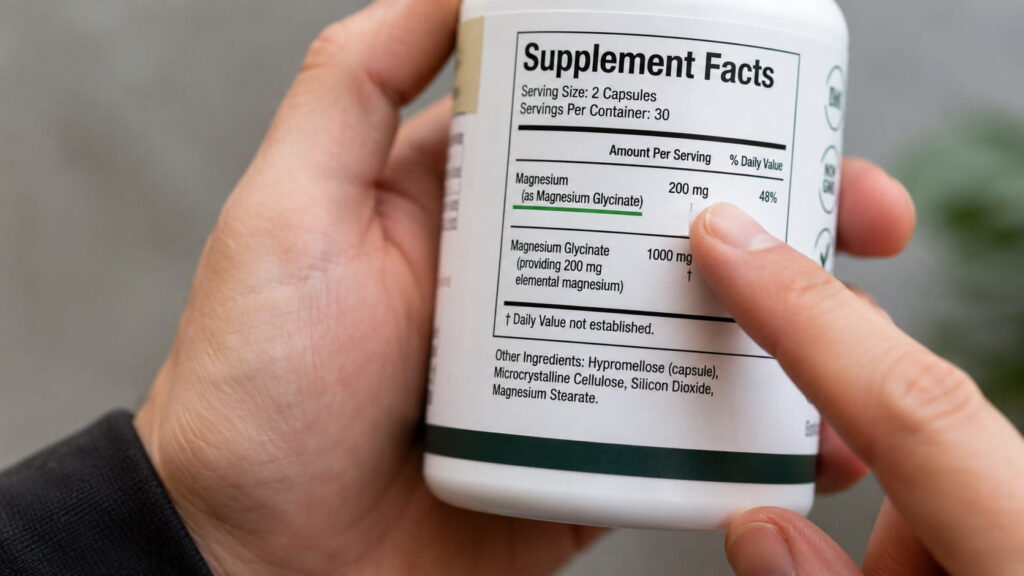
You’ll frequently see magnesium bisglycinate products labeled “375 mg.” This number is important to interpret correctly: it typically refers to the total weight of the magnesium bisglycinate compound, not the amount of elemental magnesium your body actually absorbs and uses.
Because magnesium makes up only about 14% of the bisglycinate compound by weight, a “375 mg magnesium bisglycinate” capsule generally provides somewhere in the range of 40–50 mg of elemental magnesium — unless the label specifically states the elemental amount separately.
Featured snippet answer: A “375 mg” magnesium bisglycinate supplement usually refers to the total compound weight, not elemental magnesium. The actual usable magnesium is typically lower — often 40–50 mg — so always check the supplement facts panel for the “elemental magnesium” figure, not just the front-of-bottle number.
Practical tip: Always check the Supplement Facts panel for a line that says “Magnesium (as magnesium bisglycinate) … X mg.” That X is what counts toward your daily intake and the 350 mg supplemental upper limit.
Best Time to Take Magnesium Bisglycinate
There’s no strict medical rule about timing — magnesium doesn’t need to be taken at a specific hour to be absorbed. That said, practical patterns have emerged:
- Evening/before bed: The most common choice, especially when using it to support wind-down and sleep. Taking it 30–60 minutes before bed allows time for absorption without requiring a middle-of-the-night bathroom trip for most people.
- With food: Taking magnesium with a meal can reduce the mild stomach upset some people experience on an empty stomach.
- Split dosing: For higher total doses, splitting the amount between morning and evening can reduce the chance of GI discomfort compared with one large dose.
- Consistency matters more than the exact hour: Since magnesium’s effects (where they exist) build over days to weeks, a consistent daily habit outperforms sporadic use timed “perfectly.”
Comparison Table: Morning vs. Evening
| Factor | Morning | Evening |
|---|---|---|
| Common use-case | General nutrient support, energy metabolism | Sleep, relaxation, muscle wind-down |
| Reported experience | Neutral; no stimulant effect | Often paired with wind-down routines |
| GI tolerance | Best with breakfast | Best with dinner or light snack |
| Evidence for “better” timing | Limited | Limited |
Sample evening routine: Dinner with magnesium-rich vegetables → magnesium bisglycinate supplement with a light snack around 9:00 PM → screens off by 10:00 PM → consistent bedtime.
Can You Take Magnesium Bisglycinate Every Day?
Featured snippet answer: Yes, most healthy adults can take magnesium bisglycinate daily, as long as they stay within the recommended dosage and the 350 mg/day supplemental upper limit. People with kidney disease, chronic health conditions, or those taking regular medications should confirm long-term daily use with a healthcare provider first.
Daily use is how magnesium bisglycinate is typically studied and used in practice — the 2025 sleep trial, for example, used a consistent daily dose over four weeks. A few practical notes on long-term daily use:
- Stick to the labeled elemental magnesium amount rather than increasing the dose on your own
- Periodically reassess whether you still need it, especially if your diet or health status changes
- If you have a chronic condition or take regular prescription medication, loop in your doctor or pharmacist before committing to ongoing daily use
Taking Magnesium Bisglycinate With Vitamin D, Calcium, Zinc & Iron
Magnesium is often taken alongside other common supplements, and the interactions are generally manageable rather than dangerous:
- Vitamin D: Magnesium is actually required to help activate vitamin D in the body, so the two are frequently paired and generally support each other rather than compete.
- Calcium: Very high doses of calcium and magnesium taken at the exact same time may modestly compete for absorption. In typical supplement doses this isn’t usually a significant problem, but if you’re taking large doses of both, spacing them a few hours apart is a reasonable precaution.
- Zinc: High-dose zinc supplementation (well above typical multivitamin amounts) can reduce magnesium absorption over time. This mainly matters for people taking separate, high-dose zinc supplements, not standard multivitamins.
- Iron: Iron and magnesium can compete for the same absorption pathways when taken together in large amounts. If you take an iron supplement for anemia, spacing it a couple of hours from your magnesium dose is a sensible habit.
Practical takeaway: occasional, typical-dose combinations (like a daily multivitamin plus magnesium bisglycinate) are not a significant concern for most people. High-dose, standalone supplements of calcium, zinc, or iron are where spacing them out from magnesium becomes more worthwhile.
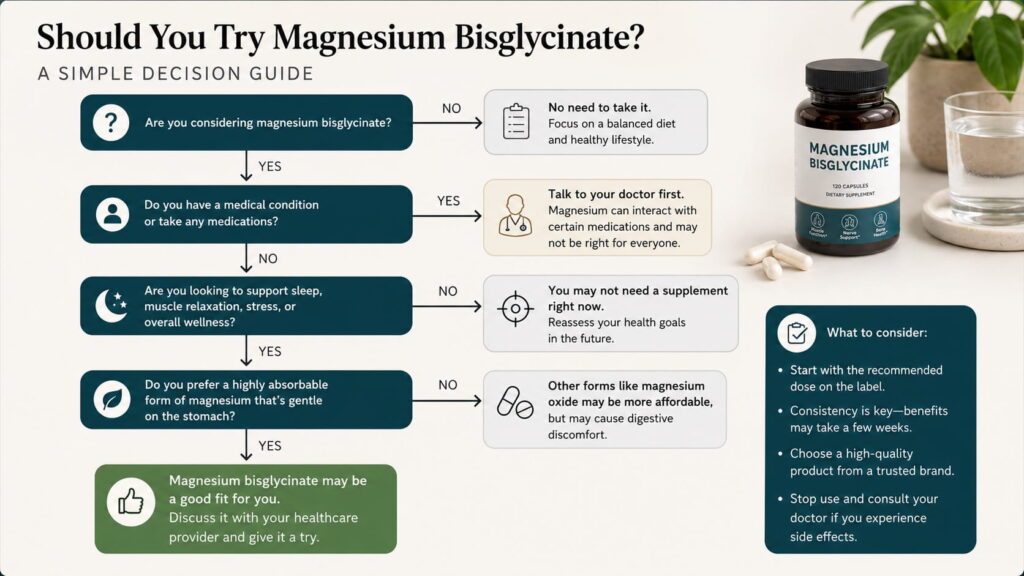
Who Should Take Magnesium Bisglycinate
Magnesium bisglycinate may be worth discussing with a healthcare provider if you:
- Have a diagnosed or suspected magnesium deficiency
- Have a diet consistently low in magnesium-rich foods
- Experience frequent muscle cramps with no other identified cause
- Have poor sleep quality and want to address a nutrient gap as one part of a broader sleep strategy
- Are an athlete with high training volume and heavy sweat losses
- Are managing PMS-related symptoms, under medical guidance
Who Should Avoid Magnesium Bisglycinate
Certain groups should not take magnesium bisglycinate without direct medical supervision:
- People with kidney disease or reduced kidney function — the kidneys are what prevent magnesium from building up to dangerous levels; impaired kidney function raises the risk of magnesium toxicity.
- People on certain heart medications or diuretics — magnesium can interact with how these medications work.
- People taking specific antibiotics or osteoporosis medications — see interactions below; timing separation is required.
- Anyone with unexplained irregular heartbeat, fainting, or severe fatigue — see a doctor for evaluation rather than self-treating with a supplement.
- Pregnant or breastfeeding women without provider guidance, given shifting nutrient needs and monitoring considerations.
Potential Side Effects of Magnesium Bisglycinate
Magnesium bisglycinate is generally well tolerated, which is a major reason for its popularity over other forms. Still, possible side effects include:
- Mild stomach upset or nausea, especially on an empty stomach
- Loose stools at higher doses (though less common than with magnesium oxide or citrate)
- Drowsiness in some individuals, particularly at higher evening doses
- Rarely, at very high supplemental intakes: low blood pressure, irregular heartbeat, or more serious symptoms — magnesium toxicity is rare in people with normal kidney function but becomes more likely with impaired kidney function or very high supplemental doses.
Featured snippet answer: Magnesium bisglycinate is generally well tolerated. The most common side effects are mild digestive upset or loose stools, usually at higher doses. Serious side effects are rare in people with normal kidney function but more likely with kidney impairment or excessive supplemental intake.
Symptoms of Too Much Magnesium
Taking in too much magnesium, usually from combining multiple magnesium-containing products (supplements, laxatives, and antacids together) or from impaired kidney function, can lead to a condition called hypermagnesemia. This is uncommon in people with normal kidney function, since the kidneys are very effective at filtering out the excess, but it’s worth knowing the warning signs.
Early symptoms of excess magnesium:
- Diarrhea, nausea, or vomiting
- Flushing or a feeling of warmth
- Muscle weakness
- Low blood pressure
More serious symptoms that need prompt medical attention:
- Confusion or extreme drowsiness
- Loss of normal reflexes
- Irregular or slowed heartbeat
- Difficulty breathing
When to seek emergency care: If you experience an irregular heartbeat, significant confusion, or breathing difficulty after taking magnesium products, seek medical attention right away rather than waiting to see if symptoms pass.
The safest way to avoid this is simple: stick to one magnesium-containing product at a time, follow labeled dosing, and let your doctor know if you have kidney disease before starting any magnesium supplement.
How to Tell If Magnesium Bisglycinate is Working
Because magnesium bisglycinate’s effects are generally modest and build gradually, it helps to know what a realistic “it’s working” looks like rather than expecting a dramatic before-and-after.
After 2–4 consistent weeks, some people notice:
- Fewer nighttime muscle cramps or twitches
- More continuous, less interrupted sleep (rather than necessarily falling asleep faster)
- Somewhat lower day-to-day fatigue, if that fatigue was related to a genuine deficiency
- Better digestive tolerance compared with other magnesium forms they may have tried before
- A subjective sense of feeling slightly less “wound up” in the evenings
If you notice nothing after 4 weeks and your diet is already reasonably magnesium-rich, that’s a meaningful data point — it may simply mean you weren’t deficient to begin with, and the supplement isn’t likely to add much for you.
Magnesium Bisglycinate Drug Interactions
Magnesium supplements can interact with several common medication classes. According to the NIH Office of Dietary Supplements:
- Bisphosphonates (e.g., alendronate, used for osteoporosis): magnesium-rich supplements can decrease absorption of oral bisphosphonates; use should be separated by at least 2 hours.
- Tetracycline and quinolone antibiotics (e.g., doxycycline, ciprofloxacin, levofloxacin): magnesium can form insoluble complexes with these antibiotics, so they should be taken at least 2 hours before or 4–6 hours after a magnesium-containing supplement.
- Proton pump inhibitors (PPIs): Long-term PPI use has been associated with low magnesium levels; the FDA has advised clinicians to consider monitoring magnesium levels in patients on long-term PPI therapy.
- Diuretics and certain heart medications: May affect how the body handles magnesium; requires medical supervision.
Always tell your doctor or pharmacist about any supplements you’re taking, including magnesium, since they can review your specific medication list for relevant interactions.
Common Drug Interactions at a Glance
| Medication Type | Recommendation |
|---|---|
| Bisphosphonates (e.g., alendronate) | Separate doses by at least 2 hours |
| Tetracycline/quinolone antibiotics (e.g., doxycycline, ciprofloxacin) | Take antibiotic 2 hours before or 4–6 hours after magnesium |
| Proton pump inhibitors (long-term use) | Ask your doctor about periodic magnesium level monitoring |
| Diuretics / heart medications | Use only under medical supervision |
| Other magnesium-containing products (laxatives, antacids) | Avoid combining without medical guidance to prevent excess intake |
How to Choose a Magnesium Bisglycinate Supplement
Not all bottles labeled “magnesium bisglycinate” are equal. Look for:
- Elemental magnesium amount clearly listed — not just the compound weight
- Third-party testing (USP, NSF, or Informed Sport/Choice seals) for purity and label accuracy
- Minimal filler ingredients — especially if you have sensitivities
- Reputable manufacturer with transparent sourcing
- Capsule vs. powder based on your preference for dosing flexibility
- Avoid proprietary blends that obscure the actual magnesium dose
Red flags: Vague labeling that doesn’t distinguish elemental magnesium, unsupported claims like “cures anxiety” or “melts fat,” and prices that seem too low for third-party-tested products.
Quick Buying Checklist
- Clearly lists elemental magnesium (not just total compound weight)
- Third-party tested (USP, NSF, or Informed Sport/Choice seal)
- No unnecessary proprietary blends
- Elemental dose appropriate for your goal (see dosage section)
- Transparent, minimal ingredient list
- Reputable, established manufacturer
Storage of Magnesium Bisglycinate
Magnesium bisglycinate is generally stable, but a few basics help preserve potency:
- Store in a cool, dry place, away from direct sunlight and humidity
- Keep the container’s lid tightly closed between uses
- Avoid storing in the bathroom, where heat and moisture from showers can degrade capsules over time
- Keep out of reach of children, and check the expiration date periodically
What Medical Guidelines Say About Magnesium Bisglycinate
It’s worth putting supplement marketing aside and looking at what major health organizations actually say about magnesium and magnesium glycinate/bisglycinate specifically.
| Organization | Position |
|---|---|
| NIH Office of Dietary Supplements | Treats magnesium as an essential nutrient with established RDAs; frames supplementation as most relevant for people at risk of inadequacy (older adults, people with GI disorders, type 2 diabetes, chronic alcohol use, or certain medications) rather than as a universal recommendation. |
| Mayo Clinic | Describes magnesium glycinate as generally well tolerated and gentler on digestion than other forms, useful for people with low dietary intake. Explicitly notes that relaxation, sleep, and mood claims are widely marketed but “hasn’t been proven in human studies,” and advises talking to a healthcare team first if you have kidney disease, are pregnant, or take other medications. |
| Cleveland Clinic | Dietitians there commonly recommend magnesium glycinate specifically for sleep, stress, and muscle relaxation due to its absorption and tolerability. At the same time, its own physicians caution that the research on magnesium for sleep is “thin” and based on small studies, recommending against exceeding labeled doses and emphasizing third-party-tested, USP-verified products. |
The consistent theme across these sources: magnesium bisglycinate is considered safe and reasonable for most healthy adults at recommended doses, most useful for correcting an actual gap, and not a substitute for medical treatment of diagnosed conditions like insomnia, anxiety disorders, or osteoporosis. Even sources that recommend the glycinate/bisglycinate form specifically are careful to describe the sleep and mood evidence as preliminary rather than settled.
Common Magnesium Bisglycinate Mistakes
- Confusing compound weight with elemental magnesium — leads to under- or over-dosing without realizing it
- Expecting dramatic, immediate effects — benefits, where present, tend to build gradually over 2–4 weeks
- Taking it at random times without consistency
- Ignoring interactions with antibiotics or bone medications
- Assuming more is always better — exceeding the supplemental upper limit mainly increases GI side effects, not benefits
- Skipping the conversation with a doctor if you have kidney issues, take multiple medications, or are pregnant
Expert Tips for Taking Magnesium Bisglycinate
- Start with a lower dose (around 100–150 mg elemental magnesium) and assess tolerance before increasing.
- Pair supplementation with a consistent sleep and stress-management routine rather than expecting it to work in isolation.
- Reassess after 3–4 weeks — this mirrors the timeline used in the 2025 clinical trial that showed the clearest benefit window.
- If you’re not seeing any difference after a month and your diet is already magnesium-adequate, it’s reasonable to stop and redirect that effort toward other lifestyle factors.
- Keep a simple symptom log (sleep, cramping, stress) for two weeks before and after starting, so your impression isn’t just placebo-driven guesswork.
Final Verdict
Magnesium bisglycinate is a well-tolerated, well-absorbed form of magnesium with genuine — though modest — evidence for supporting sleep quality, muscle relaxation, and correcting deficiency. It is not a proven cure for anxiety, insomnia, or chronic disease, and its biggest benefits show up in people who are actually low in magnesium to begin with.
For most healthy adults, it’s a reasonable, low-risk addition to a broader routine — not a replacement for a magnesium-rich diet, good sleep habits, or medical care when symptoms are significant. As always, check with a healthcare professional before starting, particularly if you take other medications or have kidney concerns.
Magnesium Bisglycinate FAQs
What is magnesium bisglycinate?
It’s a chelated form of magnesium bound to two molecules of the amino acid glycine, known for good absorption and gentle digestive tolerance compared with other magnesium forms.
What are the main benefits of magnesium bisglycinate?
The best-supported benefits are correcting magnesium deficiency, supporting muscle relaxation, and modestly improving sleep quality — particularly in people with low baseline magnesium intake. Evidence for anxiety relief, blood pressure, and bone health is supportive but less definitive.
Is magnesium bisglycinate better than magnesium glycinate?
In almost all commercial products, these are the same ingredient. “Glycinate” is a common shorthand label term for magnesium bisglycinate, with no meaningful practical difference.
When should I take magnesium bisglycinate?
Most people take it in the evening, 30–60 minutes before bed, often with a light snack. Consistency matters more than the exact time of day.
Who should avoid magnesium bisglycinate?
People with kidney disease, those on certain heart medications or diuretics, and anyone with an irregular heartbeat should consult a doctor before use. It should also be timed apart from certain antibiotics and osteoporosis medications.
How much magnesium bisglycinate should I take?
There’s no universal dose, it depends on your diet and health status. The supplemental upper limit for magnesium is 350 mg/day (elemental), separate from magnesium obtained through food. Check your product’s elemental magnesium content and consult a healthcare provider.
Can magnesium bisglycinate help with anxiety?
Research is suggestive but inconclusive. Some studies show reduced subjective anxiety, especially in people with low magnesium status, but evidence quality is generally low and no major guideline recommends it as an anxiety treatment.
Does magnesium bisglycinate cause side effects?
It’s generally well tolerated. The most common side effects are mild stomach upset or loose stools, typically at higher doses.
Can magnesium bisglycinate make you sleepy?
No, it isn’t sedating the way a sleeping pill is. It supports relaxation and may modestly improve sleep quality, but it doesn’t act as a direct trigger for drowsiness in most people.
Can you take magnesium bisglycinate in the morning?
Yes. There’s no strict rule requiring evening use, morning dosing is fine for general nutrient support. Evening use is simply more common among people specifically targeting sleep or wind-down.
Can magnesium bisglycinate cause constipation?
It’s unlikely to. Unlike magnesium oxide or citrate, which are sometimes used specifically as laxatives, magnesium bisglycinate isn’t typically used for constipation relief and doesn’t have a meaningful constipating or laxative effect for most people.
Can magnesium bisglycinate cause diarrhea?
It’s possible, but less likely than with magnesium oxide or citrate. Loose stools are more common at higher doses; lowering the dose or taking it with food usually resolves this.
Can children take magnesium bisglycinate?
Some pediatric formulations exist, but dosing needs differ significantly from adults. Children should only take magnesium supplements under a pediatrician’s guidance, based on their age, weight, and specific health needs.
Can you take magnesium bisglycinate on an empty stomach?
Many people tolerate it fine on an empty stomach since it’s gentler than other forms. If you notice mild nausea, simply taking it with a meal or light snack usually resolves it.
Is magnesium bisglycinate vegan?
The mineral compound itself is vegan, but check the capsule, some use gelatin (animal-derived), while others use a vegetarian/vegan capsule shell. Look for “vegan” or “vegetarian capsule” on the label to confirm.
Can magnesium bisglycinate help with restless legs?
Evidence here is limited and mixed, similar to anxiety. Some people report symptom relief, but it isn’t an established or guideline-recommended treatment for restless legs syndrome, talk to a doctor if symptoms are significant, since other treatable causes (like iron deficiency) are worth ruling out.
Can magnesium bisglycinate help with migraines?
Possibly. Magnesium is rated “probably effective” for migraine prevention by major neurology and headache societies, though most of the supporting research used magnesium oxide rather than bisglycinate specifically. If you get frequent migraines, it’s worth discussing magnesium supplementation as one option with your doctor.
Can you take magnesium bisglycinate with melatonin?
There’s no significant known interaction, and the two are commonly used together as part of an evening routine. As with any combination, it’s reasonable to introduce one at a time so you know what’s actually helping, and to check with a doctor if you take other sleep medications.
Related Articles: