
Key Takeaways
- Castor oil’s strongest, best-supported uses are as a short-term laxative and a topical skin moisturizer.
- It conditions hair and reduces breakage, but there’s no solid evidence it speeds up new hair growth.
- Always dilute it for topical use and patch test first, since ricinoleic acid can trigger allergic contact dermatitis in some people.
- Avoid oral use during pregnancy unless a healthcare provider directs it, and don’t use it as a laxative for more than a week.
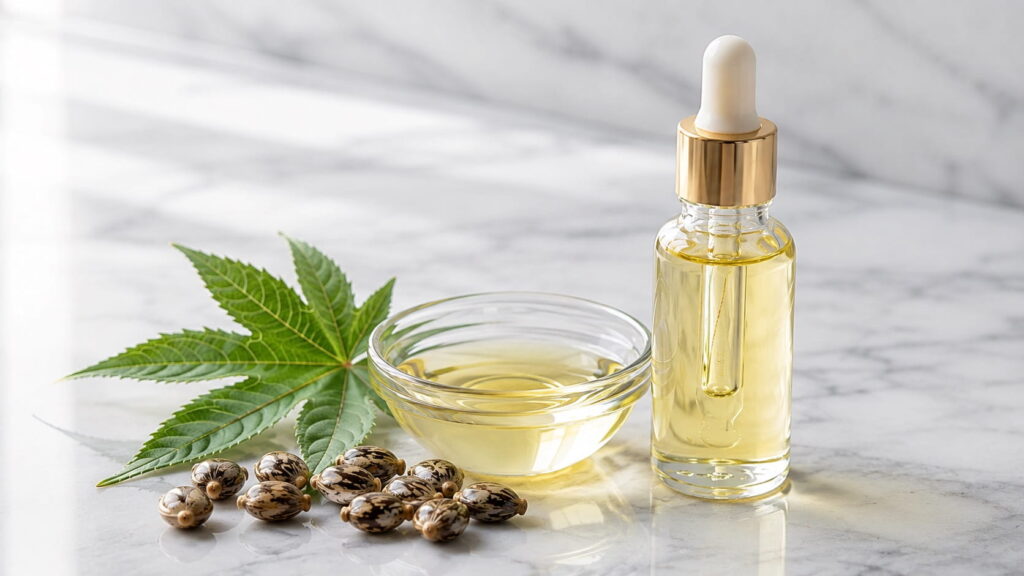
Castor oil sits in a lot of medicine cabinets, and for good reason. This thick, pale yellow oil comes from the seeds of the Ricinus communis plant. People have leaned on it for skin care, hair care, and digestive relief for thousands of years, and the castor oil benefits behind that reputation are worth understanding properly.
Not every claim holds up, though. Some benefits are well documented. Others are closer to folklore than fact. Patients ask me about castor oil more than almost any other natural remedy, so let’s walk through what actually works, what the research says, and how to use it without hurting yourself.
Castor Oil Quick Facts
| Botanical source | Seeds of Ricinus communis (castor bean plant) |
| Also known as | Castor oil; “Arandi ka Tel” in Urdu and Hindi |
| Main active compound | Ricinoleic acid (roughly 90% of the oil) |
| FDA status | Approved over-the-counter stimulant laxative |
| Common topical uses | Skin and lip moisturizer, hair and scalp conditioning |
| Common oral use | Short-term relief of occasional constipation |
| Typical shelf life | 1 to 2 years, stored in a cool, dark place |
| Common types | Cold-pressed, Jamaican black, organic hexane-free, hydrogenated |
Castor Oil Benefits at a Glance
| Castor Oil Use | Evidence Strength | What It May Actually Do |
|---|---|---|
| Occasional constipation | Strong | Stimulates bowel contractions |
| Dry skin | Strong | Locks existing moisture into skin |
| Chapped lips | Moderate | Seals in moisture, protects the lip barrier |
| Hair breakage and frizz | Moderate | Conditions hair, reduces dryness and breakage |
| Denture and oral antimicrobial support | Moderate | May reduce fungal buildup on dentures |
| Joint or muscle discomfort | Limited | May provide mild topical comfort |
| Under-eye dark circles | Limited | Early, small-scale trial evidence only |
| Hair growth | Weak | No strong proof of increased new growth |
| Belly button “detox” | None | No proven detox effect |
In this article:
- What Is Castor Oil, and Why Does It Behave Differently From Other Oils?
- Types of Castor Oil
- Castor Oil vs. Other Oils
- Castor Oil Benefits for Skin
- Castor Oil Benefits for Hair
- Castor Oil Packs
- Castor Oil Benefits for Stomach and Digestion
- Castor Oil Benefits in the Belly Button
- Anti-Inflammatory Properties of Castor Oil
- Castor Oil Benefits for Women
- Castor Oil Benefits for Men
- Castor Oil for Denture and Oral Care
- Castor Oil Uses: How to Use It Safely
- Side Effects and Who Should Avoid Castor Oil
- Frequently Asked Questions
- Expert Advice from NFH Clinic
- Conclusion
What Is Castor Oil, and Why Does It Behave Differently From Other Oils?
Castor oil is pressed from castor seeds, then heated to remove ricin, the toxic compound naturally present in the raw bean. This matters because a lot of confusion online blends “castor beans” with “castor oil.” Properly processed castor oil does not contain the dangerous levels of ricin found in raw castor beans. Pharmaceutical-grade castor oil is used in some approved oral products, but oral use still carries real risks and should follow the product label or a healthcare provider’s guidance.
What makes the oil unusual is its fatty acid profile. Castor oil contains roughly 90% ricinoleic acid, a concentration you won’t find in almost any other plant oil. That fatty acid contributes to many of the oil’s distinctive properties, including its thick texture, its moisturizing effect, and its action as a stimulant laxative. Small amounts of vitamin E and other fatty acids round out the profile.
One more mechanism worth understanding: castor oil doesn’t hydrate skin the way water or a humectant does. It’s an occlusive, so it sits on the surface and seals moisture in rather than adding moisture itself. That’s why it works best applied to slightly damp skin, right after a shower or a wash, rather than on completely dry skin.
Types of Castor Oil
| Type | Best For |
|---|---|
| Cold-pressed | Skin and general use |
| Jamaican black castor oil | Hair and scalp (traditional use) |
| Organic, hexane-free | Sensitive skin, face use |
| Hydrogenated | Cosmetic formulations, not for direct skin use |
Cold-pressed is the standard choice for most skin and hair applications. Jamaican black castor oil is traditionally made by roasting the seeds before pressing, which gives it a darker color, a stronger smell, and a slightly different chemical profile from conventional castor oil. There isn’t strong clinical evidence that it promotes more hair growth than regular castor oil.
Castor Oil vs. Other Oils
If you’re deciding what to reach for, here’s how castor oil compares to other common oils people use for skin and hair.
| Oil | Best Known Use |
|---|---|
| Castor oil | Occlusive moisture seal and short-term laxative use |
| Coconut oil | Hair conditioning, penetrates the hair shaft |
| Jojoba oil | Lightweight facial moisturizer, close to skin’s natural sebum |
| Olive oil | General skin moisturizing and cooking |
| Argan oil | Hair and skin conditioning, lighter texture than castor oil |
Castor oil’s advantage is its thickness and strong occlusive seal, which makes it especially useful for very dry skin or as a laxative. For lighter daily use on the face, an oil like jojoba may feel more comfortable.
Castor Oil Benefits for Skin
Castor Oil as a Skin Moisturizer
Castor oil’s occlusive property makes it a genuinely useful moisturizer for dry patches, rough elbows, and cracked heels. Applied to damp skin, it holds hydration in place longer than most water-based lotions manage on their own.
It also helps keep surrounding skin moisturized, but it shouldn’t be treated as a wound-healing medicine. For open cuts or scrapes, follow standard wound-care guidance rather than relying on castor oil alone.
Castor Oil Benefits on the Face
On the face, castor oil is best used diluted and sparingly. Laboratory studies show ricinoleic acid has antimicrobial activity, but clinical evidence that it treats acne in real skin is still limited. If you’re prone to breakouts, patch test first, since the oil is thick enough to clog pores if overused.
Some brands market castor oil for collagen support and anti-aging. Be cautious here. It may help skin look better simply by reducing moisture loss, but direct evidence that it increases collagen production in humans remains limited.
A note on patch testing: ricinoleic acid can trigger allergic contact dermatitis in people who are sensitive to it. That’s the actual reason behind the “always patch test” advice you’ll see everywhere. Apply a small amount to your inner arm and wait 24 hours before using it on your face or in larger areas.
Castor Oil for Chapped Lips
The American Academy of Dermatology lists castor seed oil as an ingredient worth looking for in lip products for dry, chapped lips. Its occlusive, thick texture seals in moisture and forms a protective layer, which is exactly what cracked lips need. A small dab on its own, or a balm that lists it as an ingredient, works well here.
Castor Oil for Dark Circles Under the Eyes
Some people use castor oil under the eyes to address dark circles. A small 2023 clinical trial involving 22 participants found creams containing castor oil showed promise for infraorbital hyperpigmentation, though the researchers themselves noted more research is needed before drawing firm conclusions. If you try this, use it well away from the eye itself and stop if you notice any irritation.
Castor Oil Benefits for Hair
Castor oil coats and seals the hair shaft. That reduces breakage, cuts down on split ends, and adds shine, which is why hair often looks and feels thicker after regular use. It isn’t that new hair is growing faster. It’s that existing strands are breaking less and reflecting more light.
Does Castor Oil Promote Hair Growth?
Massaging the oil into your scalp may temporarily increase local circulation, but this hasn’t been shown to significantly increase hair growth in controlled research. Treat castor oil as a conditioning and breakage-prevention tool, not a growth accelerant.
Its mild antifungal activity may help with dandruff linked to Malassezia yeast, though evidence here is limited too, and a medicated shampoo is the better first choice for persistent dandruff.
One risk worth knowing: repeatedly applying pure, undiluted castor oil to long hair has, in rare cases, been linked to acute hair felting, a condition where strands twist and mat so badly they need to be cut out. It’s uncommon, but it’s a real reason to dilute the oil and avoid overusing it, especially on long or fine hair.
A smaller, more common annoyance: if you sleep with castor oil in your hair, it can transfer onto your pillowcase and end up on your face overnight, which may contribute to breakouts. Covering your pillow with an old towel or a scarf during overnight treatments avoids this easily.
Castor Oil Packs
A castor oil pack is a cloth soaked in castor oil, placed against the skin (usually the abdomen), sometimes with a heat source layered on top. They’re a popular home remedy for menstrual cramps, general “detox,” and digestive comfort.
What the evidence actually shows is limited. Most of the reported benefit likely comes from the heat and the gentle pressure of the pack itself, not from anything the castor oil is absorbing into the body. That doesn’t make packs harmful for most healthy adults, but it does mean claims about organ detoxification or breaking up internal masses aren’t supported by real research.
Skip castor oil packs if you’re pregnant, have an open wound or skin infection in the area, or have a diagnosed abdominal condition, unless your provider tells you otherwise.
Castor Oil Benefits for Stomach and Digestion
Natural Laxative Castor Oil: How It Works
This is castor oil’s most solid, evidence-backed use. As a natural laxative, it’s an FDA-approved stimulant laxative that triggers muscle contractions in the intestinal wall, which speeds up bowel movement. Per the FDA Drug Facts label for over-the-counter castor oil, it generally produces a bowel movement within 6 to 12 hours.
Standard OTC dosing, per the FDA label:
| Age | Typical Single Daily Dose |
|---|---|
| Adults and children 12 and older | 15 to 60 mL |
| Children 2 to under 12 | 5 to 15 mL |
| Children under 2 | Consult a doctor before use |
Always check your specific product’s label, since formulations vary. The label also warns against use for longer than one week unless a doctor directs otherwise, since frequent or prolonged use can lead to laxative dependence.
Castor oil isn’t the go-to laxative it once was. Newer options like sennosides tend to work with fewer side effects, which is part of why many clinicians now reach for other laxatives first and reserve castor oil for specific situations, including some bowel-prep protocols before certain procedures.
Overuse causes cramping, diarrhea, and dehydration, and can paradoxically worsen constipation over time as your gut adjusts to relying on it.
If you take other oral medications, keep in mind that a strong laxative effect can move things through your gut faster than usual, which may affect how well those medications are absorbed. Ask your doctor or pharmacist how to time your doses if you’re using castor oil alongside any prescription drug.
Castor Oil Benefits in the Belly Button
You may have seen the trend of massaging a drop of castor oil into the belly button for digestive or detox benefits. There’s no clinical evidence behind this specific practice, and no anatomical basis for the belly button absorbing anything differently than the surrounding skin.
The idea likely persists for a few reasons: it echoes older Ayurvedic practices involving the navel as an energy point, and it’s the kind of simple, visual ritual that spreads easily on social media. If you enjoy it as a moisturizing habit, it’s low risk for most people. Just don’t expect it to detox anything.
Anti-Inflammatory Properties of Castor Oil
Castor oil benefits for inflammation come largely from ricinoleic acid, which has documented anti-inflammatory activity. That’s why castor oil shows up in home remedies for joint pain, muscle soreness, and mild arthritis discomfort. Rubbing diluted castor oil into a sore knee or an aching shoulder may take the edge off minor inflammation for some people, particularly combined with gentle heat.
Think of this as a supportive measure, not a treatment for diagnosed inflammatory conditions like rheumatoid arthritis. It can sit alongside your care plan. It shouldn’t replace it.
Castor Oil Benefits for Women
Women ask about castor oil more than any other group, usually for skin and hair care, menstrual comfort, and labor induction.
For menstrual cramps, a warm castor oil pack on the lower abdomen may offer some comfort through heat and gentle massage. This comes from anecdotal use rather than strong clinical trials.
Labor induction deserves a direct answer. Some studies do link castor oil to the onset of labor in full-term pregnancies. But it also triggers strong intestinal contractions alongside uterine activity. It should never be used for this purpose without a healthcare provider’s direct supervision. Outside that specific, supervised context, pregnant women at any stage should avoid taking castor oil orally.
Castor Oil Benefits for Men
There’s nothing gender-exclusive about castor oil, but men commonly use it for beard and scalp conditioning, and for joint or muscle relief after exercise. Massaged into the beard or scalp, it reduces dryness and flyaways the same way it does on scalp hair. For post-workout soreness, its anti-inflammatory properties make it a reasonable addition to a topical routine, applied diluted.
Castor Oil for Denture and Oral Care
Dentures can harbor bacteria and fungi such as Candida, which may contribute to denture stomatitis, a sore, inflamed mouth condition. Some research suggests cleaning dentures with castor oil may help reduce fungal buildup, thanks to its antimicrobial action. Use it as a supplementary step alongside the daily denture cleaning routine your dentist recommends, not as a replacement for it.
Castor Oil Uses: How to Use It Safely
Patch test before your first use, and again if you switch brands or types. Dilute it with a lighter oil like coconut, almond, or jojoba for topical use, especially on the face, to lower the risk of clogged pores or irritation. Apply to slightly damp skin so it seals in moisture rather than sitting on completely dry skin. Results vary from person to person: moisturizing effects can be noticeable almost immediately, while changes in hair appearance depend on how often you use it and the condition of your hair to start with. For constipation relief timing, follow the guidance on the product label. Choose cold-pressed, hexane-free oil where possible, since it skips unnecessary processing chemicals.
Storage: keep castor oil in a cool, dark place, tightly sealed, away from direct sunlight and heat. Properly stored, it typically lasts one to two years. If it starts smelling sour, rancid, or noticeably different from when you bought it, discard it.
Side Effects and Who Should Avoid Castor Oil
Most people tolerate castor oil well when it’s used correctly, but it isn’t risk-free.
- Skin reactions: redness, itching, or allergic contact dermatitis, particularly with undiluted oil.
- Digestive upset: cramping, diarrhea, nausea, vomiting, and bloating with oral overuse.
- Electrolyte imbalance: significant fluid loss from overuse can affect electrolyte levels, which may cause confusion or unusual sleepiness in rare cases.
- Drug interactions: possible interference with absorption of other oral medications, plus caution needed alongside blood thinners and diuretics.
- Pregnancy: avoid oral use unless a healthcare provider is directing you to use it for labor induction at term.
- Existing gastrointestinal conditions: avoid if you have appendicitis, bowel obstruction, or inflammatory bowel disease.
- Eyes: never apply directly. It can cause irritation, blurred vision, and in rare cases, chemical injury.
- Children: the FDA label lists a dose for children 2 and older, but check with a pediatrician first, and don’t give castor oil to a child under 2 without medical guidance.
If anything feels off after using castor oil, stop and speak with a healthcare provider rather than pushing through it.
Signs of a Severe Allergic Reaction
Rarely, castor oil can trigger a more serious allergic reaction, including anaphylaxis. This is more likely with lip or skin products containing castor oil in people who are already sensitive to it. Seek emergency care immediately if you notice:
- Hives or sudden swelling of the face, lips, or mouth
- Wheezing or fast, shallow breathing
- A fast heart rate or clammy skin
- Dizziness, vomiting, or fainting
If someone has an epinephrine auto-injector and these symptoms appear, use it and call emergency services right away rather than waiting to see if symptoms pass.
Frequently Asked Questions
What is castor oil good for?
It’s most reliably used as a short-term laxative for occasional constipation and as a topical moisturizer for dry skin. It’s also used, with less clinical backing, for hair conditioning, scalp health, mild inflammation, and denture care.
What are the castor oil benefits for hair?
It coats and seals the hair shaft, reducing breakage and adding shine. That’s why hair often looks thicker, not because new growth is being stimulated.
What are the castor oil benefits for skin?
It locks existing hydration into the skin and has mild antimicrobial and anti-inflammatory effects some people use for irritated or acne-prone skin. It’s a moisturizer, not a wound-healing treatment.
Is castor oil a natural laxative?
Yes. It’s an FDA-approved stimulant laxative. Use it occasionally, at the labeled or provider-recommended dose, not as a daily habit.
Does castor oil have anti-inflammatory properties?
Yes, largely thanks to ricinoleic acid. Applied topically, it may ease minor joint or muscle discomfort, though it isn’t a treatment for chronic inflammatory disease.
Are there benefits to castor oil in the belly button?
No solid evidence supports this as a detox method. Any benefit is the same mild moisturizing effect castor oil has on skin anywhere else on the body.
What are the castor oil benefits for women?
Skin, hair, and mild menstrual cramp relief are the common uses. It’s also historically linked to labor induction at term, but that should only happen under a healthcare provider’s supervision.
What are the castor oil benefits for men?
Beard and scalp conditioning, plus topical relief for muscle soreness after exercise.
Does castor oil actually help with hair growth?
It supports healthier-looking hair through reduced breakage and added shine. Evidence that it directly stimulates new hair growth is still weak.
Does castor oil clog pores?
It can, since it’s thick and occlusive. Use it diluted and sparingly on the face, and patch test first.
Can you leave castor oil on overnight?
Yes, for hair especially, an overnight treatment is common and generally safe. Wash it out thoroughly in the morning.
Can castor oil expire?
Yes. Properly stored, it lasts one to two years. Discard it if the smell or color changes noticeably.
Is Jamaican black castor oil better than regular castor oil?
It’s not proven to be more effective. It’s traditionally roasted before pressing, which changes its color, scent, and pH, but there’s no strong clinical evidence it outperforms regular castor oil for hair or scalp use.
Can you mix castor oil with coconut oil?
Yes, and it’s a common way to dilute castor oil’s thickness while adding coconut oil’s own moisturizing properties.
Can castor oil help eyebrows or eyelashes?
It’s a popular home remedy for both, working through the same conditioning mechanism as scalp hair. Evidence for it stimulating actual new growth is limited, and eye contact should be avoided.
Can castor oil remove scars or dark spots?
It may help skin look smoother by keeping it moisturized, but there’s no strong evidence it fades scars or dark spots on its own.
Does castor oil help with dark circles under the eyes?
Early, small-scale research is promising but limited. One small clinical trial found some benefit for under-eye pigmentation, though researchers said more study is needed. Use it well away from the eye itself.
Is castor oil good for chapped lips?
Yes. Its thick, occlusive texture seals moisture into the lips, and it’s a commonly recommended ingredient in lip balms for dry or cracked lips.
Can diabetics use castor oil?
Topical use is generally fine for most people. Oral use as a laxative should be discussed with a healthcare provider first, particularly if other medications are involved.
Castor Oil Benefits in Urdu: What Is Arandi Ka Tel Good For?
Castor oil, known as “Arandi ka Tel” in Urdu and Hindi, has a long history of use across South Asia for hair conditioning, joint discomfort, and as a traditional laxative. The benefits and precautions in this guide apply regardless of language or region.
Expert Advice from NFH Clinic
“Castor oil isn’t a cure-all, and it isn’t useless either,” says McLee Tembo of NFH Clinic. “It’s a genuinely helpful tool once you understand exactly what it can and can’t do. Quality, dilution, and moderation are what separate a useful remedy from a disappointing one.”
At NFH Clinic, we recommend starting slowly, patch testing, and speaking with a healthcare professional before using castor oil for any medicinal purpose, particularly during pregnancy or nursing, or before giving it to a child.
Conclusion
Used correctly, castor oil can be a genuinely useful part of a skin, hair, or digestive care routine. It’s most effective when you rely on its proven uses, deep moisturizing and short-term constipation relief, rather than internet myths about detoxing or dramatic hair regrowth. Match the remedy to the evidence, use it in moderation, and it earns its place as one of the more dependable natural oils you can keep on hand.
Related Articles: