

Quick Answer
Most pregnant women aged 19 and older need 1,000 mg of calcium a day (1,300 mg if you’re 18 or younger). This amount doesn’t actually increase during pregnancy, your body simply gets better at absorbing the calcium you already eat. Food is the best source. If your diet falls short, a calcium supplement, taken a few hours apart from your iron tablet, closes the gap safely.
At a Glance
| Daily calcium (19+) | 1,000 mg |
| Daily calcium (14–18) | 1,300 mg |
| Best food source | Yogurt |
| Best supplement for most women | Calcium carbonate |
| Separate from iron? | Yes — by at least 2 hours |
| Vitamin D needed? | Yes — supports absorption |
| Upper safe limit | 2,500 mg/day (3,000 mg for teens) |
Key Takeaways
✓ Adults (19+) need 1,000 mg/day; teens (14–18) need 1,300 mg/day
✓ The RDA doesn’t rise in pregnancy — absorption efficiency does
✓ Food comes first; supplements fill gaps, not replace meals
✓ Split supplement doses into 500 mg or less at a time for better absorption
✓ Separate calcium and iron supplements by at least 2 hours
✓ Vitamin D is required for calcium to be absorbed effectively
✓ The upper safe limit is 2,500 mg/day (3,000 mg/day for teens)
✓ Talk with your provider before starting a high-dose (WHO-level) regimen
In this article:
- What Is Calcium During Pregnancy and Why Does It Matter?
- Daily Calcium Requirements
- Calcium by Trimester
- Who Needs More Calcium Than Average
- Calcium-Rich Foods List for Pregnancy
- Foods and Habits That Reduce Calcium Absorption
- Smart Food Combinations for Calcium Absorption
- Calcium Supplements
- Calcium and Iron: Timing Matters
- Calcium's Interactions with Vitamin D, Magnesium, and Other Nutrients
- Benefits of Adequate Calcium
- Calcium Supplement During Pregnancy Myth vs. Fact
- Signs You May Not Be Getting Enough Calcium
- Calcium Deficiency
- Too Much Calcium During Pregnancy
- Calcium Oxalate Crystals in Urine
- What to Do If You Miss a Calcium Dose
- 7 Common Calcium Mistakes During Pregnancy
- Practical Calcium Tips and Recipes for Pregnancy
- Sample 7-Day Calcium Meal Plan
- FAQ: Calcium Intake During Pregnancy
- References
What Is Calcium During Pregnancy and Why Does It Matter?
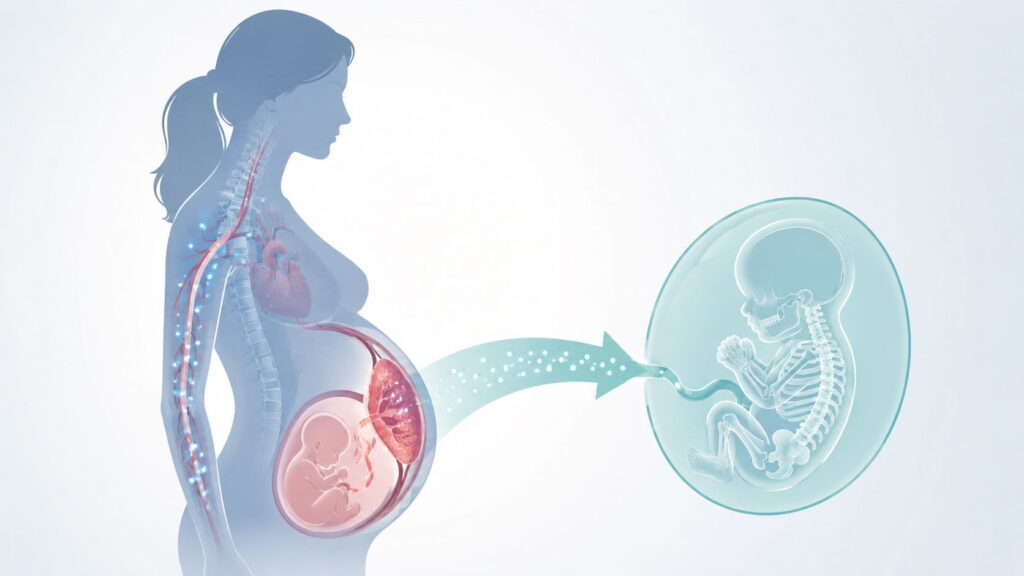
Calcium is the mineral your body uses to build bone, and pregnancy puts new demands on that system. Your baby needs roughly 30 grams of calcium by the time of birth, almost all of it deposited into the skeleton during the third trimester, when bone growth accelerates fastest.
How calcium works: Only about 1% of the calcium in your body circulates in your blood, doing jobs like triggering muscle contractions, helping nerves send signals, and allowing blood to clot. The other 99% sits in your bones and teeth, acting as a mineral reserve.
How pregnancy changes calcium needs: Here’s the part that surprises most people — the RDA for calcium doesn’t go up during pregnancy. Instead, your body adapts. Intestinal calcium absorption roughly doubles by the second trimester, driven by rising estrogen and active vitamin D (calcitriol). This means the same 1,000 mg you needed before pregnancy now gets absorbed far more efficiently, largely covering your baby’s needs without requiring you to eat more calcium overall.
How calcium supports the baby: Skeletal mineralization, tooth bud formation, and early muscle and nerve development all depend on a steady calcium supply crossing the placenta, particularly from week 28 onward.
How calcium protects the mother: If dietary intake is too low, your body pulls calcium from your own bones to protect fetal supply — a process that can lower maternal bone density if it continues unaddressed. Adequate calcium also appears to support healthier blood pressure regulation in pregnancy, which is discussed in the preeclampsia section below.
Daily Calcium Requirements
Understanding your daily calcium intake during pregnancy starts with one number: 1,000 mg. That’s the target most pregnant adults should aim for through food and, if needed, a calcium tablet.
How Much Calcium Do You Need During Pregnancy?
Most pregnant adults need 1,000 mg of calcium daily, while pregnant teens need 1,300 mg. The safe upper limit is 2,500 mg/day for adults and 3,000 mg/day for teens.
What Is the Dose of a Calcium Tablet in Pregnancy?
Most over-the-counter calcium tablets provide 500–600 mg of elemental calcium per tablet. Providers commonly recommend one tablet daily, or one tablet twice daily, to reach the 1,000 mg target — always confirm your specific dose with your provider rather than assuming a standard amount applies to you.
Calcium Requirement by Maternal Age
| Age Group | Daily Requirement | Upper Safe Limit |
|---|---|---|
| 14–18 years | 1,300 mg | 3,000 mg |
| 19–50 years | 1,000 mg | 2,500 mg |
Calcium Guidelines Comparison: NIH, ACOG & WHO
| Organization | Recommended Daily Calcium | Context |
|---|---|---|
| U.S. National Institutes of Health (RDA) | 1,000 mg (19–50 yrs); 1,300 mg (14–18 yrs) | General dietary recommendation for all pregnant women |
| ACOG | 1,000 mg (19+); 1,300 mg (≤18) | Reinforces NIH figures; recommends dietary screening |
| World Health Organization | 1,500–2,000 mg (divided into 3 doses) | Specifically for pregnant women in populations with low calcium intake, to reduce preeclampsia risk |
| Tolerable Upper Intake Level (UL) | 2,500 mg (19–50 yrs); 3,000 mg (14–18 yrs) | Ceiling — not a target |
Why the numbers look different:
The NIH/ACOG figure is a general nutritional requirement meant for well-nourished populations who mostly meet calcium needs through food. The WHO figure is a therapeutic supplementation dose for regions or individuals with chronic low calcium intake (commonly under 500–900 mg/day), where the goal shifts from “meet nutrient needs” to “actively lower preeclampsia risk.” This higher dose is recommended in three divided doses, taken a few hours apart from iron-folic acid supplements. If you’re unsure which target applies to you, your provider can estimate your baseline dietary intake and advise accordingly.
Food vs. supplements:
Whenever possible, aim to meet your calcium needs through food first, and use a calcium supplement during pregnancy only to cover the gap. Food-based calcium arrives with other nutrients your body needs anyway (protein, magnesium, phosphorus), and it’s harder to overshoot the upper limit through diet alone.
Calcium and vitamin D3 together:
Many combination tablets pair 500–600 mg of elemental calcium with 250–500 IU of vitamin D3 per dose. If you’re taking a combination product, add up the vitamin D3 across your prenatal and calcium tablets to make sure you’re landing near the recommended 600 IU/day total, not stacking well past it — check the label or ask your pharmacist to review your full regimen.
Calcium by Trimester
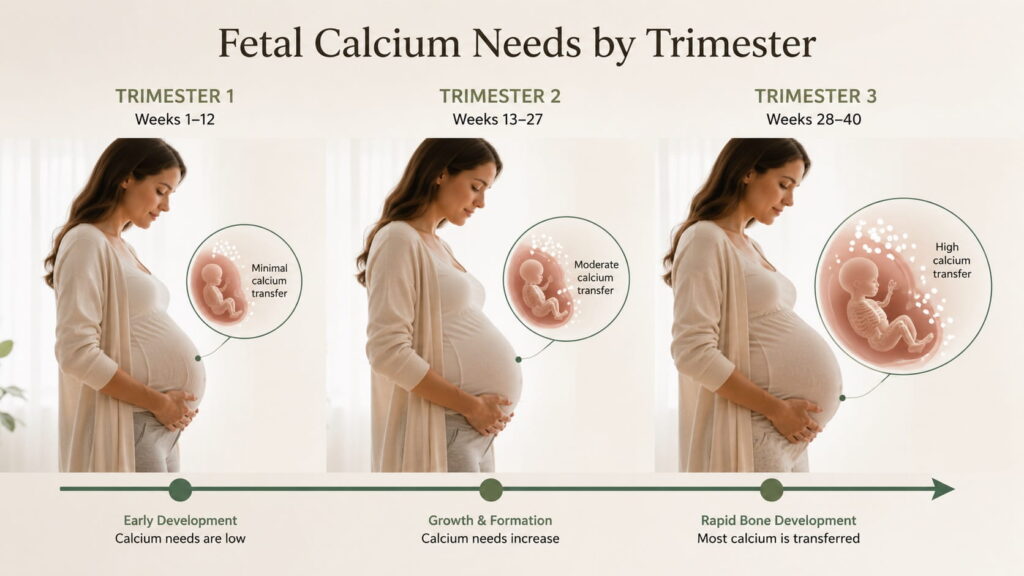
Calcium During Pregnancy 1st Trimester (Weeks 1–12)
Fetal calcium demand is minimal right now — the skeleton hasn’t begun mineralizing yet. This is a good window to build the habit: start a prenatal vitamin, assess your typical calcium intake during pregnancy 1st trimester, and address nausea-related eating changes, since morning sickness can make dairy or leafy greens harder to tolerate. Target: continue meeting the standard 1,000 mg/day.
Calcium During Pregnancy 2nd Trimester (Weeks 13–27)
Calcium absorption efficiency climbs sharply during this period as your body prepares for the fetal growth spurt ahead. Maternal blood volume and bone turnover both increase. This is also when many providers introduce or confirm calcium supplementation if diet alone is falling short — especially if you’re at higher risk for preeclampsia. Target: 1,000 mg/day from food and supplements combined.
Calcium During Pregnancy 3rd Trimester (Weeks 28–40)
This is peak demand. The majority of the baby’s skeletal calcium — up to 250–300 mg per day in late pregnancy — is transferred now, which is why fetal bones firm up so noticeably on late ultrasounds. Maternal calcium absorption is at its highest efficiency to compensate. Prioritize calcium-dense meals and confirm your supplement routine is consistent, since missed doses matter more in this window.
Calcium requirement in pregnancy 3rd trimester: Still 1,000 mg/day for most women (or the higher WHO-guided 1,500–2,000 mg regimen if your provider has specifically recommended it for preeclampsia risk reduction). Calcium supplements in pregnancy third trimester are often taken more consistently during this period since this is when fetal bone mineralization is fastest.
After Delivery: Calcium During Breastfeeding
The calcium RDA stays at 1,000 mg/day (1,300 mg for teens) during breastfeeding too — it doesn’t rise further. Like pregnancy, lactation increases calcium absorption and temporarily draws on maternal bone stores, but bone density typically recovers within months of weaning. Keep a consistent calcium routine through this period rather than stopping supplementation the day you deliver, unless your provider advises otherwise.
Who Needs More Calcium Than Average
Certain pregnancies and health histories call for closer calcium monitoring, sometimes with provider-directed supplementation above the standard RDA. This isn’t a self-directed dosing list — it’s a guide to who should raise the topic proactively at a prenatal visit.
- Carrying twins or multiples: Higher overall fetal calcium demand across more than one baby.
- Adolescent pregnancy (under 19): Still building peak bone mass herself while also supplying a fetus, hence the higher 1,300 mg RDA.
- Vegan pregnancy: Requires deliberate planning around fortified foods and plant sources, since dairy is excluded entirely.
- Lactose intolerance: Can lead to under-consumption of dairy without adequate substitution.
- Inflammatory bowel disease (Crohn’s or ulcerative colitis): Can impair nutrient absorption, including calcium and vitamin D.
- Celiac disease: Damage to the small intestine lining can reduce calcium absorption, even on a gluten-free diet if healing is incomplete.
- History of bariatric surgery: Anatomical changes to the digestive tract often significantly reduce calcium and vitamin D absorption, usually requiring citrate-form supplements and closer monitoring.
- Chronic corticosteroid use: Long-term steroid use can reduce calcium absorption and increase bone loss.
If any of these apply to you, mention it early in pregnancy so your provider can tailor your calcium and vitamin D plan rather than relying on the general population target.
Calcium-Rich Foods List for Pregnancy
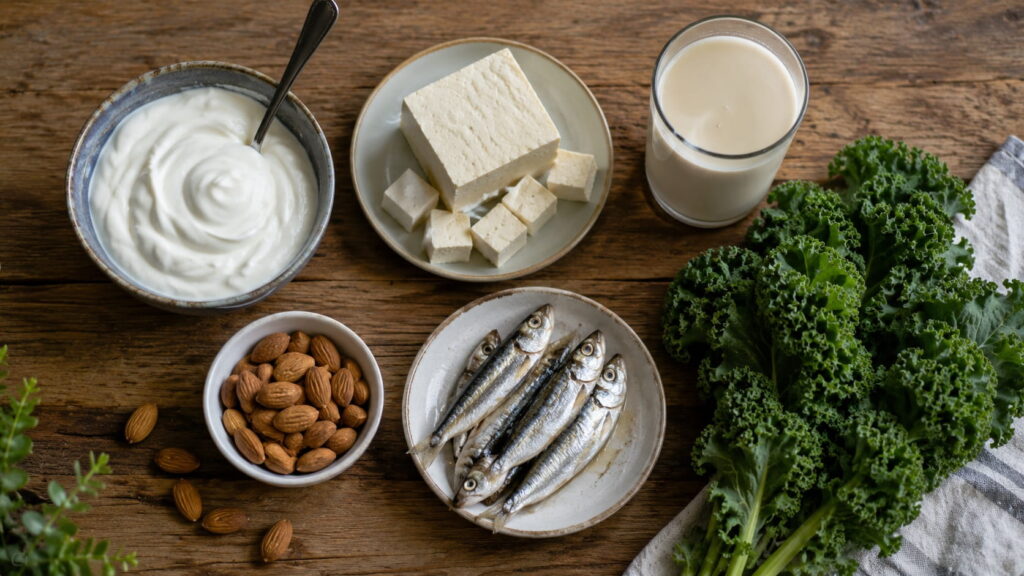
Food remains the foundation of calcium intake. This calcium rich foods list covers dairy, plant-based, and fortified sources so you have real options regardless of diet.
| Food | Serving Size | Calcium (mg) | Additional Benefits |
|---|---|---|---|
| Plain yogurt | 1 cup (245g) | ~415 mg | Protein, probiotics, vitamin B12 |
| Sardines with bones | 3 oz (85g) | ~325 mg | Omega-3s, vitamin D, protein |
| Milk (any type, dairy) | 1 cup (240ml) | ~300 mg | Vitamin D (if fortified), protein |
| Fortified plant milk (soy/oat/almond) | 1 cup (240ml) | ~300 mg | Often fortified with vitamin D, B12 |
| Cheddar cheese | 1.5 oz (42g) | ~305 mg | Protein, vitamin B12 |
| Tofu (calcium-set) | ½ cup (126g) | ~250–430 mg | Plant protein, iron |
| Fortified orange juice | 1 cup (240ml) | ~300 mg | Vitamin C, folate |
| Canned salmon with bones | 3 oz (85g) | ~180 mg | Omega-3s, vitamin D |
| Cooked kale | 1 cup (130g) | ~180 mg | Vitamin K, folate, fiber |
| Almonds | 1 oz (23 almonds) | ~75 mg | Healthy fats, magnesium, vitamin E |
| Cooked broccoli | 1 cup (156g) | ~62 mg | Vitamin C, fiber |
| Sesame seeds (tahini) | 2 tbsp | ~130 mg | Healthy fats, iron |
| White beans, cooked | 1 cup (179g) | ~160 mg | Fiber, plant protein, folate |
| Chia seeds | 1 oz (28g) | ~180 mg | Omega-3s, fiber |
| Figs, dried | 5 figs (40g) | ~68 mg | Fiber, potassium |
Best pregnancy-friendly picks:
Yogurt and fortified plant milk are efficient choices because they combine high calcium with vitamin D and protein in one serving.
Plant sources:
Tofu, white beans, tahini, chia seeds, and cooked leafy greens (kale, bok choy) make it entirely possible to meet calcium needs on a vegetarian or vegan diet — it just takes more intentional meal planning. Vegans in particular should lean on fortified plant milks and calcium-set tofu daily, since these carry the highest calcium density among plant foods.
Dairy sources:
Milk, yogurt, and cheese remain the most calcium-dense, easiest-to-portion options for those who tolerate dairy well. One ounce of cheese is a fairly small, calorie-dense way to add calcium, so it’s a useful “top-up,” but shouldn’t be your only source.
Fortified foods:
Check labels on plant milks, orange juice, and breakfast cereals — fortification levels vary significantly by brand, and this is often the easiest way to close a calcium gap without extra supplements.
See: Pregnancy Nutrition Guide · Healthy Pregnancy Diet
Foods and Habits That Reduce Calcium Absorption
Even a calcium-rich diet can underperform if it’s regularly paired with absorption blockers. None of these need to be eliminated — awareness and spacing are usually enough.
- Excess sodium: High sodium intake increases how much calcium your kidneys excrete in urine.
- Excessive caffeine: Large amounts (multiple cups of coffee daily) modestly reduce calcium absorption and increase urinary loss.
- Oxalates: Found in spinach, beet greens, and rhubarb; oxalates bind calcium in the gut, meaningfully reducing absorption from those specific foods (though the foods still offer other nutrients).
- Phytates: Found in raw whole grains, legumes, and seeds; can modestly reduce calcium absorption, though soaking, sprouting, or cooking these foods lowers phytate content.
- Alcohol: Interferes with vitamin D metabolism and calcium balance; also generally advised against during pregnancy for other reasons.
- Cola beverages: High phosphoric acid content, combined with caffeine, can affect calcium balance with frequent, heavy intake.
- Very high phosphorus intake: Common in heavily processed foods and some sodas; when phosphorus intake far outpaces calcium, it can disrupt the calcium-to-phosphorus ratio needed for healthy bone metabolism.
Smart Food Combinations for Calcium Absorption
Good combinations (support absorption or overall nutrition):
- Yogurt + berries — probiotics, protein, and calcium alongside vitamin C and fiber
- Tofu + broccoli — plant protein and calcium from two complementary sources
- Salmon + kale — vitamin D-rich protein paired with a calcium-rich green
- Fortified oatmeal + almonds — fortified calcium plus a natural plant source in one meal
Combinations to avoid:
- Calcium tablet + iron tablet — competes for absorption; space by 2+ hours
- Calcium supplement + a large coffee — modestly blunts absorption; take at a different time
- Calcium supplement + tea — tannins in tea can reduce absorption; separate by an hour or more
Calcium Supplements
What Is Elemental Calcium?
Elemental calcium is the actual amount of usable calcium in a supplement, as opposed to the total weight of the compound. A 1,250 mg calcium carbonate tablet, for example, provides about 500 mg of elemental calcium. Always check the “elemental calcium” line on the supplement label, not just the compound weight.
Calcium Supplement Types Compared
| Type | Elemental Calcium | Best Absorbed | Common Use | Pros | Cons |
|---|---|---|---|---|---|
| Calcium carbonate | ~40% | With food (needs stomach acid) | Most common OTC prenatal calcium | Cheapest, highest calcium per pill | More likely to cause constipation, nausea, and bloating |
| Calcium citrate | ~21% | With or without food | Preferred if you have low stomach acid, reflux, or take antacids/PPIs | Gentler on digestion, doesn’t need food | More pills needed for the same dose; costs more |
| Calcium gluconate | ~9% | Varies | Mainly used in IV/medical settings (e.g., treating dangerously low calcium or magnesium toxicity) | Well tolerated in small oral doses | Low elemental calcium; impractical as a primary oral source |
Calcium Carbonate vs. Calcium Citrate: Quick Comparison
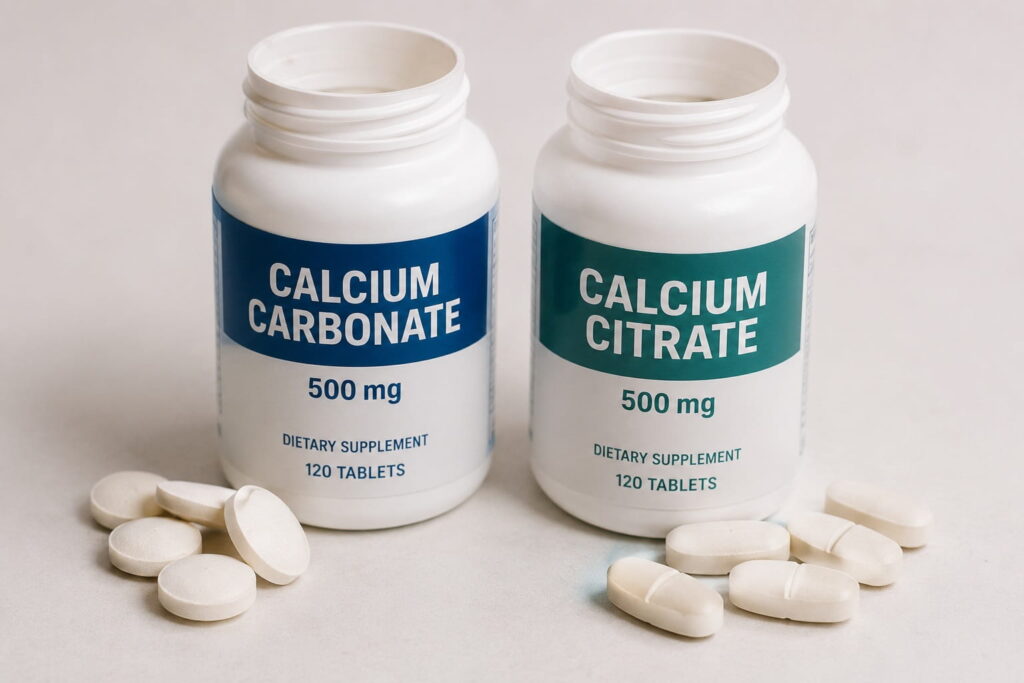
| Feature | Calcium Carbonate | Calcium Citrate |
|---|---|---|
| Take with food | Yes | No |
| Best for reflux/low stomach acid | No | Yes |
| Elemental calcium | Higher | Lower |
| Common side effects | More constipation | Often better tolerated |
What Is Calcium Carbonate?
Calcium carbonate is the most common calcium supplement. It contains about 40% elemental calcium and is best taken with food, since it needs stomach acid to dissolve and absorb properly.
What Is Calcium Citrate?
Calcium citrate contains about 21% elemental calcium but doesn’t require stomach acid for absorption, making it a common choice for people with reflux, low stomach acid, or a history of bariatric surgery.
What Is Calcium Gluconate?
Calcium gluconate is a low-elemental-calcium form (about 9%) mainly used in hospital and IV settings, such as treating severe hypocalcemia or magnesium toxicity — it’s rarely used as a standalone daily oral supplement.
When each is used: Calcium carbonate is the default first choice for most healthy pregnant women because it’s affordable and effective when taken with meals. Calcium citrate is a better option for those with low stomach acid or who are on reflux medication, since it doesn’t require an acidic stomach environment to absorb. Calcium gluconate is rarely used as a standalone oral supplement in pregnancy — you’ll mostly encounter it in a hospital setting, such as during magnesium sulfate treatment for preeclampsia.
So what’s the best calcium supplement for pregnancy? There isn’t one product that outperforms the rest for everyone. For most healthy pregnant women with no digestive issues, a calcium carbonate tablet taken with food is a perfectly good, budget-friendly default. If you have reflux, low stomach acid, or a history of bariatric surgery, calcium citrate is usually the better fit despite the higher cost. The “best” choice is ultimately the one that fits your dose, your digestion, and your budget — and one you’ll actually take consistently.
Which Calcium Supplement Fits Your Situation?
| Situation | Best Choice |
|---|---|
| Most healthy pregnant women | Calcium carbonate |
| Reflux or acid-reducing medication (PPIs, H2 blockers) | Calcium citrate |
| History of bariatric surgery | Calcium citrate |
| Low stomach acid | Calcium citrate |
| Hospital or IV use (e.g., severe hypocalcemia, magnesium toxicity) | Calcium gluconate |
Absorption tip: Doses of 500 mg or less absorb best at one time — taking a single large 1,000 mg dose is less efficient than splitting it into two 500 mg doses across the day.
Interactions to know: Calcium can reduce the absorption of iron, zinc, and certain thyroid medications when taken at the same time. Some acid-reducing medications can also lower calcium carbonate’s effectiveness. Always tell your provider about every supplement and medication you’re taking.
Warning box: Don’t combine calcium carbonate and calcium citrate supplements together, and don’t stack a separate calcium supplement on top of a prenatal vitamin without checking your total daily dose first — it’s easy to accidentally exceed the upper limit.
See: Prenatal Vitamins · Pregnancy Supplements
Calcium and Iron: Timing Matters
Calcium and iron compete for the same absorption pathway in the gut, so taking them together can reduce how much iron your body actually absorbs — a meaningful issue given how common iron-deficiency anemia is in pregnancy.
Iron and calcium tablet dose in pregnancy: A typical regimen pairs a 500–600 mg elemental calcium tablet with a standard prenatal iron dose (commonly 27–30 mg elemental iron from a prenatal vitamin, or higher if a separate iron supplement is prescribed for anemia). The two doses themselves don’t need to change because you’re taking them together — what matters is the timing between them, not lowering either dose.
Ideal timing: Separate the two by at least 2 hours. A common approach: take your iron supplement in the morning on a relatively empty stomach (with vitamin C to boost absorption), and take your calcium supplement with dinner or before bed. If you’re following a WHO-guided high-dose calcium regimen, the recommendation is to divide it into three doses, spaced a few hours apart from your iron-folic acid supplement.
See: Iron During Pregnancy
Calcium’s Interactions with Vitamin D, Magnesium, and Other Nutrients
- Vitamin D: Essential partner nutrient — without enough vitamin D, calcium absorption drops significantly. The standard recommendation is 600 IU/day during pregnancy, though some providers recommend higher doses based on blood testing.
- Magnesium: Works alongside calcium in bone metabolism and muscle function; most prenatal vitamins include a modest amount.
- Phosphorus: Needed for bone mineralization alongside calcium, but excess phosphorus (common in sodas and processed foods) can interfere with calcium balance if calcium intake is already low.
- Coffee and tea: Caffeine and certain tea compounds (tannins) can modestly reduce calcium absorption. This isn’t a reason to eliminate them, but avoid taking your calcium supplement immediately alongside a large coffee.
- High-fiber foods: Very high intakes of fiber, especially from bran, can bind calcium in the gut and reduce absorption slightly. Spacing large fiber-rich meals from your supplement dose can help.
See: Vitamin D During Pregnancy
Benefits of Adequate Calcium
Maternal bone health: Sufficient calcium intake helps protect your bone density from being depleted to supply the fetus, supporting faster bone recovery after delivery and during breastfeeding.
Baby’s skeleton and teeth: Calcium is the primary structural mineral for fetal bone and early tooth bud formation, with mineralization accelerating through the third trimester.
Muscles and nerves: Calcium ions are required for every muscle contraction and nerve impulse in both mother and baby, from your own heartbeat to early fetal movement.
Blood clotting: Calcium is one of the essential clotting factors, relevant to the body’s preparation for the blood loss of delivery.
Preeclampsia and blood pressure
This is one of the more well-studied benefits, particularly in populations with low baseline calcium intake. A Cochrane review of 13 trials involving over 15,000 pregnant women found that calcium supplementation reduced the average risk of preeclampsia significantly compared to placebo, with the strongest benefit seen in women who started with low dietary calcium intake.
More recent large trials have also tested whether a simpler, lower 500 mg daily dose works as well as the traditional 1,500 mg WHO regimen, since the higher dose’s three-times-daily schedule is hard for many women to maintain consistently. Early results from these low-dose trials suggest 500 mg/day may offer comparable benefits for many women while being easier to stick with, though official WHO guidance still reflects the original 1,500–2,000 mg recommendation as of this writing — this is an area where guidance may evolve as more data is reviewed.
The evidence is strongest for women with low dietary calcium; for women who already consume adequate calcium through diet, the added preeclampsia-prevention benefit of supplementation is less clear. This is a good example of where you should discuss your personal risk factors and dietary pattern with your provider rather than self-prescribing a high dose.
Calcium Supplement During Pregnancy Myth vs. Fact
| Myth | Fact |
|---|---|
| “Pregnant women need way more calcium than before pregnancy.” | The RDA stays the same (1,000 mg/day); your body absorbs it more efficiently instead. |
| “More calcium supplements always means a healthier pregnancy.” | Beyond meeting your needs, extra calcium offers no proven added benefit and can cause side effects above the upper limit. |
| “If I don’t eat dairy, I can’t get enough calcium.” | Plant-based and fortified sources can fully meet calcium needs with some planning. |
| “Calcium and iron supplements should be taken together for convenience.” | Taking them together reduces iron absorption — they should be spaced apart. |
Signs You May Not Be Getting Enough Calcium
Rather than waiting for a lab result, these practical, everyday signals can flag a higher risk of low calcium intake worth mentioning to your provider:
- You rarely consume dairy or fortified foods
- You avoid milk or yogurt because of lactose intolerance, without substituting other sources
- You follow a vegan diet without regularly eating fortified foods
- You have repeated muscle cramps, especially in your legs
- Your provider has diagnosed vitamin D deficiency
- You have a personal or family history of osteoporosis
- You’ve had bariatric surgery
- You have inflammatory bowel disease or celiac disease
None of these confirm a deficiency on their own, but two or more together are a good reason to review your dietary intake with your provider.
Calcium Deficiency
Symptoms: Mild deficiency is often silent. When symptoms do appear, they can include muscle cramps (especially leg cramps), tingling in the fingers, fatigue, and brittle nails. Severe, prolonged deficiency can contribute to more serious issues like abnormal heart rhythm, though this is uncommon with mild dietary shortfalls.
Causes: Chronic low dietary intake, lactose intolerance without adequate substitution, very restrictive diets, malabsorption conditions (like celiac disease), and inadequate vitamin D are the most common contributors.
Risks: Ongoing calcium deficiency during pregnancy can increase the mother’s risk of bone density loss and may be linked to higher blood pressure risk in some studies, alongside theoretical effects on fetal bone mineralization if deficiency is severe and sustained.
Diagnosis: Routine pregnancy blood panels don’t always screen calcium directly, since blood calcium levels stay tightly regulated even when bone stores are being depleted. Your provider may assess your dietary intake through questioning, check vitamin D levels, or order specific bone-related labs if you have risk factors or symptoms.
Treatment: Usually starts with increasing dietary calcium and correcting any vitamin D insufficiency, followed by a targeted supplement if needed. This should be guided by your provider rather than self-directed high-dose supplementation.
What Is Hypocalcemia?
Hypocalcemia is the medical term for abnormally low blood calcium levels. It’s different from simple dietary calcium shortfall — hypocalcemia is a lab-confirmed condition, usually requiring medical evaluation and, in more severe cases, treatment.
Too Much Calcium During Pregnancy
Calcium Upper Limit: Quick Answer
The upper safe limit during pregnancy is 2,500 mg/day for adults (3,000 mg/day for teens). Going over this consistently — usually from stacking multiple supplements rather than food — raises the risk of side effects.
Symptoms of too much calcium:
- Constipation
- Nausea and vomiting
- Reduced absorption of zinc and iron
- Increased urination
- Fatigue and muscle weakness
- Confusion (in more significant excess)
- Kidney stones, in susceptible individuals
- In rare, extreme cases: hypercalcemia, which can affect heart rhythm and kidney function
What Is Hypercalcemia?
Hypercalcemia is a lab-confirmed condition of abnormally high blood calcium. It’s uncommon from diet or standard supplement doses alone and is more often linked to combining multiple calcium sources, certain medications, or an underlying medical condition.
Interactions: Combining calcium with certain medications like lithium, thiazide diuretics, or high-dose vitamin D can raise the risk of hypercalcemia, so your provider needs a full list of what you’re taking.
When to seek medical attention: Contact your provider if you experience persistent vomiting, confusion, unusual fatigue, irregular heartbeat, or severe abdominal pain while taking calcium supplements — these can (rarely) signal hypercalcemia and warrant prompt evaluation.
Checklist: Are you at risk of exceeding the upper limit?
✓ Taking a prenatal vitamin and a separate calcium supplement
✓ Regularly using calcium-based antacids (like certain heartburn tablets)
✓ Consuming multiple fortified foods/drinks daily plus supplements
✓ Unsure of the total elemental calcium across everything you take
If you checked more than one box, add up your total daily elemental calcium and review it with your provider.
When to Call Your Healthcare Provider
Contact your provider promptly if you experience:
- Severe or persistent muscle cramps
- Symptoms of kidney stones (sharp back or side pain, painful urination)
- Blood in the urine
- Persistent vomiting while taking supplements
- Confusion or severe weakness
- Signs that could point to preeclampsia, such as a severe headache, vision changes, or sudden swelling
This list is meant to help you recognize when to seek care promptly — it isn’t a reason for alarm about routine calcium intake.
Calcium Oxalate Crystals in Urine
What they are: Calcium oxalate crystals form when calcium binds with oxalate (a compound found in foods like spinach, beets, and nuts) in the urine. They’re a normal, common finding on a routine urinalysis and don’t automatically mean a problem.
Possible causes during pregnancy: Pregnancy changes kidney function and urinary mineral handling, which can increase urinary calcium excretion in many women as blood volume and glomerular filtration rise. This can make crystals more likely to appear on a urine test even in a healthy pregnancy. Dehydration, a high-oxalate diet, and low urine volume can all contribute as well.
When to worry: An occasional finding of crystals on a routine urinalysis, with no symptoms, usually needs no action. It becomes more concerning if it’s accompanied by flank or lower back pain, blood in the urine, painful urination, or recurrent findings — these can point toward a developing kidney stone.
When to seek medical advice: If you notice sharp back or side pain, visible blood in your urine, fever, or difficulty urinating, contact your provider promptly. Otherwise, mention an incidental crystal finding at your next routine visit and stay well hydrated in the meantime.
What to Do If You Miss a Calcium Dose
Missing an occasional calcium supplement dose is common and generally not harmful.
- Don’t double dose. Taking two doses at once to “catch up” increases the risk of digestive side effects and doesn’t meaningfully improve absorption, since your body only absorbs so much calcium at one time.
- Just continue with your next scheduled dose. There’s no need to adjust your regular schedule around a single missed dose.
- Remember food still counts. A missed supplement dose is less concerning on a day when your meals were calcium-rich anyway.
- An occasional missed dose isn’t harmful. Calcium status builds over weeks, not single days — consistency over time matters far more than any one dose.
- If you’re missing doses regularly, that’s worth mentioning to your provider, since it may be a sign the current supplement type or schedule isn’t working for you.
7 Common Calcium Mistakes During Pregnancy
- Taking calcium and iron supplements together — reduces iron absorption; space by 2+ hours.
- Taking a full 1,000 mg dose at once — absorption is better in doses of 500 mg or less.
- Ignoring vitamin D — without it, calcium absorption drops significantly.
- Assuming your prenatal vitamin alone provides enough calcium — most prenatals contain only 200–300 mg, well under the 1,000 mg daily target.
- Drinking excessive cola or heavily caffeinated beverages — can modestly interfere with calcium balance.
- Not reading fortified food labels — calcium content in plant milks and juices varies widely by brand.
- Exceeding the upper limit by stacking supplements — combining a prenatal vitamin, a separate calcium supplement, and calcium antacids can add up quickly without you realizing it.
Practical Calcium Tips and Recipes for Pregnancy
Shopping tips: Check nutrition labels on plant milks and orange juice — calcium fortification varies widely between brands. Buy canned salmon or sardines with bones included; that’s where most of the calcium is.
Easy habits: Pair your calcium supplement with a meal (if it’s carbonate) and keep your iron dose several hours apart. Set a phone reminder if you’re managing multiple supplements.
Hydration: Drinking enough water supports kidney function and may help reduce the concentration of calcium oxalate crystals in urine.
Sunlight: Modest, safe sun exposure supports natural vitamin D production, which in turn supports calcium absorption — though most pregnant women still need a vitamin D source from food or supplements.
Exercise: Regular, pregnancy-appropriate weight-bearing activity (like walking) supports bone health alongside adequate calcium intake — check with your provider on what’s appropriate for you.
Pregnancy-Safe Calcium Recipes
Breakfast — Greek Yogurt Parfait Layer plain Greek yogurt with berries, a spoonful of chia seeds, and a small handful of almonds.
Lunch — Kale and Tofu Salad Toss cubed calcium-set tofu with massaged baby kale, cherry tomatoes, and a light sesame-tahini dressing. Kale is calcium-rich without the oxalate content that limits absorption from spinach.
Dinner — Baked Salmon with Broccoli Bake salmon fillets with lemon and herbs; serve alongside steamed broccoli and a side of white beans.
Snack — Almonds and Fortified Milk A small handful of almonds with a glass of fortified plant milk or dairy milk.
Sample 7-Day Calcium Meal Plan
| Day | Breakfast | Lunch | Dinner | Snack |
|---|---|---|---|---|
| Mon | Greek yogurt + berries | Tofu broccoli stir-fry | Baked salmon + kale | Almonds |
| Tue | Fortified oatmeal + almonds | White bean + kale soup | Chicken + steamed broccoli | Cheese + crackers |
| Wed | Smoothie (fortified milk + kale) | Sardine salad on greens | Tofu curry + rice | Yogurt |
| Thu | Cottage cheese + fruit | Lentil and kale bowl | Salmon + white beans | Fortified orange juice |
| Fri | Greek yogurt + chia seeds | Cheese + veggie wrap | Baked tofu + broccoli | Handful of figs + almonds |
| Sat | Fortified plant milk smoothie | Sardines on toast | Grilled chicken + kale salad | Cheese cubes |
| Sun | Yogurt parfait | Broccoli and white bean salad | Salmon + sesame greens | Almonds |
FAQ: Calcium Intake During Pregnancy
When to start calcium in pregnancy?
There’s no universal start date — many providers introduce calcium supplementation in the first or second trimester if diet alone doesn’t meet the 1,000 mg/day target. Ask your provider to assess your dietary intake first.
When to stop taking calcium tablets during pregnancy?
Most women continue calcium intake (through food, and supplements if needed) throughout pregnancy and often through breastfeeding, since lactation also increases calcium turnover. Your provider will guide any changes postpartum.
What is the dose of calcium tablet in pregnancy?
Most calcium tablets provide 500–600 mg of elemental calcium each, and the overall daily target is 1,000 mg (1,300 mg for teens). Your provider will confirm the exact tablet strength and frequency that’s right for you.
How much calcium do I need daily?
1,000 mg/day if you’re 19 or older; 1,300 mg/day if you’re 18 or younger.
What is the dose of calcium and vitamin D3 tablets during pregnancy?
Combination tablets commonly provide 500–600 mg of elemental calcium with 250–500 IU of vitamin D3 per dose. Total daily vitamin D3 intake, across all supplements, generally targets around 600 IU/day unless your provider has recommended a different amount based on your levels.
Can I take calcium and iron together?
It’s better not to. Space them at least 2 hours apart, since calcium reduces iron absorption when taken at the same time.
What is the iron and calcium tablet dose in pregnancy?
A standard approach pairs a prenatal iron dose (commonly 27–30 mg elemental iron, or higher if prescribed separately for anemia) with a 500–600 mg elemental calcium tablet, taken at least 2 hours apart. Your provider may adjust either dose based on your bloodwork.
What foods have the most calcium?
Dairy products (yogurt, milk, cheese), fortified plant milks, sardines and canned salmon with bones, tofu, and leafy greens like kale are among the richest sources.
Is too much calcium during pregnancy harmful?
Extremely high intake, generally from stacking multiple supplements above the 2,500 mg/day upper limit, can cause maternal side effects like kidney stones, constipation, and reduced absorption of other minerals. There’s no evidence that calcium intake within normal supplemental ranges harms the baby.
What is the best calcium supplement for pregnancy?
There’s no single “best” — calcium carbonate is affordable and effective for most people when taken with food; calcium citrate is gentler and better absorbed if you have low stomach acid or take reflux medication. The best choice is the one you tolerate and take consistently.
Do I need vitamin D?
Yes. Vitamin D is required for your body to absorb calcium effectively; most guidelines recommend 600 IU/day during pregnancy.
Is milk enough to meet my calcium needs?
It can contribute significantly, but one glass of milk (~300 mg) alone won’t meet the full 1,000 mg/day target — you’ll need to combine it with other calcium sources across the day.
What if I’m lactose intolerant?
You can meet calcium needs through lactose-free dairy, fortified plant milks, tofu, canned fish with bones, leafy greens, and a supplement if needed.
Is calcium citrate or calcium carbonate better for pregnancy?
Neither is universally “better” — carbonate offers more calcium per pill at lower cost; citrate absorbs more reliably if you have low stomach acid or reflux.
Can I get too little calcium even while eating dairy?
Yes, if portions are small or infrequent. Track your intake across a full day rather than assuming dairy alone covers your needs.
Does calcium help prevent preeclampsia?
For women with low baseline dietary calcium, supplementation has shown a meaningful reduction in preeclampsia risk in research trials. The benefit is less established for women who already consume adequate dietary calcium.
Can calcium supplements cause constipation?
Yes, particularly calcium carbonate. Taking it with food, staying hydrated, and getting enough fiber can help; switching to calcium citrate is another option if constipation persists.
Is calcium gluconate used during pregnancy?
It’s mostly used in medical settings (such as IV treatment for severe low calcium or magnesium toxicity) rather than as a daily oral supplement, due to its low elemental calcium content.
Can I take a calcium supplement on an empty stomach?
Calcium citrate can be taken with or without food. Calcium carbonate is absorbed best when taken with a meal.
Does caffeine affect calcium absorption?
Modestly. It’s not a reason to avoid caffeine entirely, but avoid taking your calcium supplement at the exact same time as a large coffee.
What’s the difference between the WHO calcium recommendation and my prenatal vitamin?
Most prenatal vitamins contain a smaller calcium amount (often 200–300 mg) as part of a broader nutrient blend. The WHO’s higher 1,500–2,000 mg regimen is a separate, targeted intervention for populations with low dietary calcium, aimed specifically at preeclampsia prevention.
Can low calcium cause leg cramps in pregnancy?
It can contribute, though pregnancy leg cramps have multiple possible causes, including magnesium status and circulation changes. Mention frequent cramps to your provider.
Should I worry about a single mention of calcium oxalate crystals on a urine test?
Not usually, if you have no symptoms. It’s a common incidental finding in pregnancy due to increased urinary calcium excretion. Mention it at your next appointment.
Can calcium cause heartburn?
Calcium itself isn’t a typical heartburn trigger, though calcium carbonate can occasionally cause a mild rebound acid effect in some people. If heartburn is an issue, calcium citrate may be more comfortable.
Can calcium tablets upset my stomach?
Yes — bloating, gas, and constipation are the most common complaints, especially with calcium carbonate. Taking it with food or switching forms often helps.
Is yogurt better than milk for calcium?
Yogurt typically has slightly more calcium per serving than milk and adds probiotics, but both are strong choices — pick whichever fits your diet and tolerance better.
Can I take calcium at night?
Yes. There’s no requirement to take it at a specific time of day; consistency matters more than timing, as long as it’s spaced from your iron dose.
Does calcium help my baby’s teeth?
Yes — tooth bud formation begins in the first trimester and continues developing throughout pregnancy, relying on the same calcium supply that builds fetal bone.
Is cheese alone enough for my calcium needs?
No. Cheese is calcium-dense but calorie-dense too, so relying on it exclusively isn’t practical — it works best as one part of a varied calcium intake across the day.
Should vegans take a calcium supplement?
Not automatically — many vegans meet calcium needs through fortified plant milks, tofu, and greens. A supplement becomes more relevant if fortified foods aren’t eaten consistently. A dietitian consult can help confirm your intake.
Can calcium supplements lower blood pressure during pregnancy?
In women with low dietary calcium intake, supplementation has been linked to a reduced risk of high blood pressure disorders like preeclampsia in research trials — but it isn’t a general blood-pressure treatment, and existing hypertension should still be managed directly with your provider.
Can I take calcium every day?
Yes — daily, consistent intake is exactly the goal, whether it comes from food, a supplement, or both. Calcium status builds over time, so a steady daily habit matters more than any single day’s total.
Can I skip my calcium tablet if I drink milk?
Not necessarily. One glass of milk provides roughly 300 mg of calcium — well short of the 1,000 mg daily target on its own. Whether you still need a supplement depends on your total daily intake from all foods combined, not just milk. Track a typical day’s meals before deciding to skip a supplement.
Can calcium tablets cause nausea?
Yes, particularly on an empty stomach or in larger doses. Taking calcium carbonate with food usually helps; if nausea persists, calcium citrate or a different dosing schedule may be better tolerated.
Can calcium tablets cause kidney stones?
Consistently exceeding the upper limit (2,500 mg/day for adults) — usually from stacking multiple supplements — can raise the risk of kidney stones in susceptible individuals. Calcium from food doesn’t carry the same risk, and normal supplemental doses within the recommended range aren’t typically linked to stone formation. Staying well hydrated also helps reduce risk.
References
- World Health Organization. Calcium supplementation in pregnant women. WHO Guideline.
- U.S. National Institutes of Health, Office of Dietary Supplements. Dietary Supplements and Life Stages: Pregnancy — Health Professional Fact Sheet.
- American College of Obstetricians and Gynecologists (ACOG). Nutrition During Pregnancy — Frequently Asked Questions.
- Cochrane. Calcium supplementation during pregnancy for preventing hypertensive disorders and related problems. Systematic review.
- New England Journal of Medicine. Two Randomized Trials of Low-Dose Calcium Supplementation in Pregnancy.
- Nutrients (MDPI). Calcium Supplementation in Pregnancy: A Systematic Review of Clinical Studies.
- PubMed Central. Calcium: A Nutrient in Pregnancy. Review article.
- U.S. Pharmacist. Pros and Cons of Calcium Supplements.
- GoodRx Health. Calcium Citrate vs. Calcium Carbonate: Which Supplement Is Best?
Related Articles: