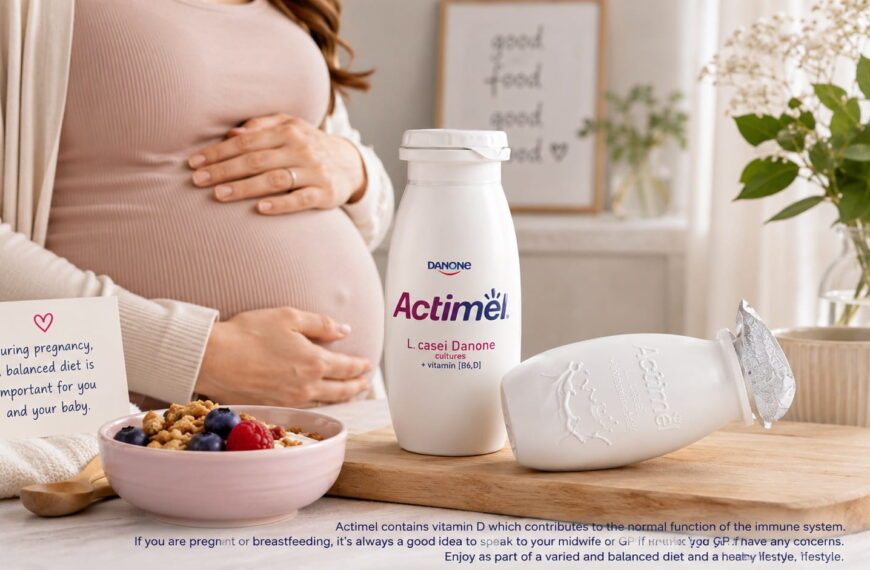
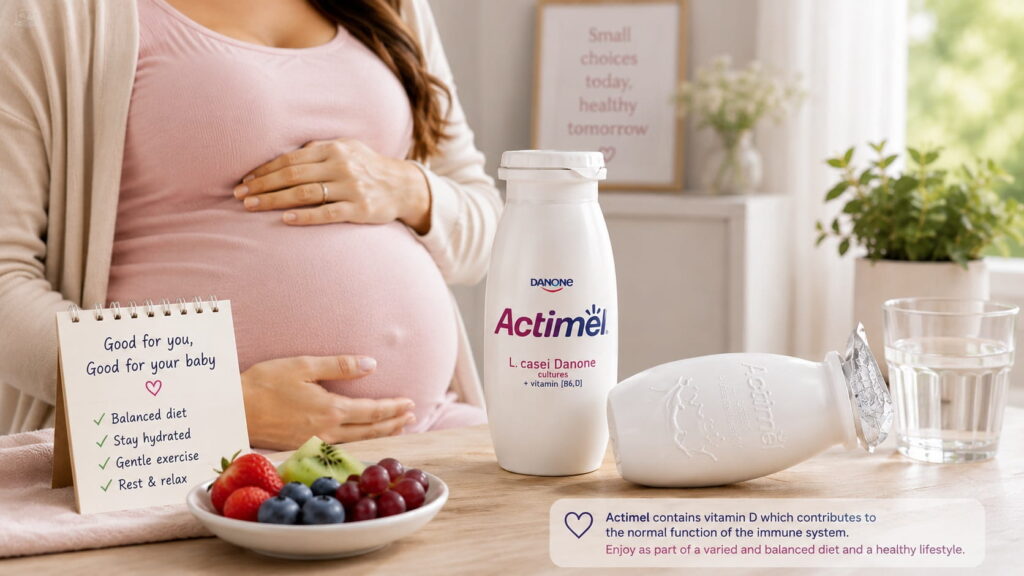
Standing in the dairy aisle with a little bottle of Actimel in your hand, wondering if it’s actually okay for the baby — most pregnant women have been there. “Can pregnant women drink Actimel?” and “is it safe when pregnant?” are two of the most common versions of this question, and they deserve a straight answer. Pregnancy changes how your body handles food, and even a familiar probiotic drink deserves a second look.
Here’s the short version: Actimel is generally safe to drink during pregnancy. It’s made from pasteurised milk, it’s sold in supermarkets everywhere, and health bodies don’t flag it as a risk food. That said, “safe” doesn’t mean “unlimited,” and there are a few things worth knowing before you make it a daily habit.
This guide walks through what Actimel actually contains, what NHS food safety guidance says about it, how it fits into each trimester, and where a plain yoghurt or kefir might serve you better.
Quick answer: Yes. Actimel is generally safe to drink during pregnancy because it’s made with pasteurised milk. One bottle a day can be part of a balanced pregnancy diet and may support digestion. If you have gestational diabetes, a weakened immune system, or another medical condition, check with your midwife or doctor before making it a regular habit.
In this article:
- What Is Actimel, Exactly?
- Actimel in Pregnancy: What NHS Guidance Actually Says
- Actimel in Pregnancy: First Trimester
- Actimel in Pregnancy: Third Trimester
- Benefits of Actimel in Pregnancy
- Are There Any Risks?
- Common Pregnancy Concerns, Answered
- Is Actimel Good for Weight Loss?
- How Much Actimel Is Safe During Pregnancy?
- Best Probiotics While Pregnant: Alternatives to Actimel
- What Do Pregnant Women Say About Actimel? (Reddit and Forums)
- How This Article Was Put Together
- Frequently Asked Questions About Actimel in Pregnancy
- The Bottom Line
What Is Actimel, Exactly?
Actimel is a small-bottle fermented dairy drink made by Danone. It’s built around one specific probiotic strain — Lactobacillus casei — added to pasteurised milk along with yoghurt cultures, sugar (or sweetener, in the no-added-sugar range), and added vitamins B6 and D.
A standard 100ml bottle of the original flavour has around 70–75 calories, roughly 3g of protein, and about 10–11g of sugar. The 0% fat, no-added-sugar versions cut that sugar down to around 3g per bottle, which matters if you’re watching your intake.
A quick naming note: modern genetic testing reclassified this bacterial family in 2020, so you’ll sometimes see the strain listed as Lacticaseibacillus casei in scientific literature. It’s the same organism — manufacturers and most consumer sources still use the older, more familiar Lactobacillus casei.
Actimel Original — Typical Nutrition Per 100ml Bottle
| Nutrient | Approximate Amount |
|---|---|
| Calories | 70–75 kcal |
| Protein | ~3g |
| Sugar | 10–11g |
| Fat | ~1.5g |
| Calcium | Fortified |
| Vitamin D | Fortified |
| Vitamin B6 | Fortified |
| Live cultures | Yes (L. casei) |
Is Actimel Pasteurised?
Yes. Actimel is made from pasteurised milk, both in the UK and across most markets where it’s sold. Pasteurisation heats the milk to kill harmful bacteria before the probiotic cultures are added back in. This is the detail that actually matters for pregnancy safety — not the probiotics themselves, but the base dairy they’re made from.
Actimel in Pregnancy: What NHS Guidance Actually Says
The NHS doesn’t publish an “Actimel-specific” page, but it doesn’t need to. NHS advice on foods to avoid in pregnancy is built around one clear line: pasteurised milk, yoghurt, and dairy drinks are safe; unpasteurised versions are not. Since Actimel is pasteurised and sold chilled through normal retail channels, it falls into the safe category, provided you store it in the fridge and drink it within its use-by date.
NHS dietitian resources on probiotic foods (including named brands like Actimel and Yakult) also describe them as safe for people with a normal, healthy immune system. The caution only applies to people whose immune systems are already compromised — more on that below.
So if you’ve searched “Actimel in pregnancy NHS” hoping for a definitive answer, this is it: no official warning, no restriction, just the same pasteurised-dairy rule that applies to milk, cheese, and regular yoghurt.
Actimel in Pregnancy: First Trimester
Early pregnancy is when nausea, food aversions, and unpredictable digestion tend to hit hardest. Actimel in the first trimester is considered safe, and some women find the mild, slightly tangy flavour easier to tolerate than heavier dairy when morning sickness is in full swing.
There’s no evidence linking Actimel to miscarriage, birth defects, or any first-trimester complication. If anything, a small daily bottle can be a gentle way to get some calcium and vitamin D in during weeks when a full meal feels impossible. Just keep an eye on portion size — one bottle a day is plenty at this stage too.
Actimel in Pregnancy: Third Trimester
By the third trimester, constipation, bloating, and heartburn are common complaints, largely thanks to rising progesterone and a growing uterus pressing on your digestive tract. This is actually where Actimel in the third trimester tends to earn its keep — the live cultures can support more regular bowel movements and ease that heavy, sluggish feeling many women describe in the final weeks.
There’s no need to stop drinking it as you approach your due date, and it carries no known effect on labour onset or delivery. As always, moderation and good hygiene (fridge storage, checking the date) still apply.
The second trimester sits comfortably in between — many women feel their best digestively during these months, and Actimel simply continues as a useful source of calcium and vitamin D as your baby’s bones develop.
Is Actimel Safe in Every Trimester?
| Trimester | Safe? | Notes |
|---|---|---|
| First | ✓ | Safe; may be gentler on nausea-sensitive stomachs than heavier dairy |
| Second | ✓ | Good source of calcium and vitamin D as the baby’s bones develop |
| Third | ✓ | May help ease constipation and bloating |
Benefits of Actimel in Pregnancy
Actimel isn’t a medical treatment, and it won’t replace your prenatal vitamins. But within a balanced pregnancy diet, it may offer a few genuine advantages.
- Easier digestion and less constipation. Constipation affects a large share of pregnant women, mostly because progesterone slows gut motility. Probiotic strains like L. casei can help restore regular bowel movements without medication.
- Support for a resilient gut-immune barrier. Pregnancy naturally shifts immune function, and a healthy gut microbiome plays a role in how your body fends off minor bugs.
- A possible role in vaginal flora balance. Hormonal changes in pregnancy raise the risk of yeast infections and bacterial vaginosis. Probiotic strains that support beneficial bacteria may help keep that balance in check, though Actimel itself hasn’t been studied for this specifically — fermented dairy in general has more evidence here than any single branded drink.
- A useful vitamin D and calcium top-up. Both nutrients matter for your baby’s bone development, and Actimel is fortified with both.
- Interesting (but not conclusive) research on inflammation. A large Norwegian cohort study tracking tens of thousands of pregnant women found that those who regularly drank probiotic milk had a lower rate of pre-eclampsia than those who didn’t. Researchers noted the effect may come down to probiotics calming the body’s inflammatory response early in pregnancy. It’s an observational study, not proof that Actimel prevents pre-eclampsia, but it’s a reasonable piece of the puzzle.
None of this makes Actimel essential. Think of it as a small, pleasant assist rather than a pillar of your pregnancy nutrition.
Are There Any Risks?
For a healthy pregnancy, the risk profile is low. A few things are still worth flagging:
- Sugar. The original and fruit flavours carry 10–12g of sugar per bottle. Drink several a day and it adds up fast, especially if you’re managing gestational diabetes. The 0% fat, no-added-sugar range is the better everyday choice if this concerns you.
- Lactose intolerance. Actimel is a dairy product. If lactose already gives you bloating or discomfort, a probiotic label won’t change that. It’s also worth knowing that some women develop new digestive sensitivity during pregnancy that wasn’t there before. If dairy suddenly causes bloating, diarrhoea, or stomach pain once you’re pregnant, don’t just assume the probiotics are responsible — mention it to your midwife or GP so it can be properly checked.
- Compromised immunity. Women with conditions like HIV, a recent organ transplant, or who are undergoing cancer treatment should check with their doctor before adding any live-culture probiotic to their diet. This is standard advice for probiotics generally, not something unique to Actimel.
- It’s not a substitute for medical care. If you have severe constipation, recurring infections, or any pregnancy complication, see your midwife or GP rather than relying on a yoghurt drink to fix it.
Common Pregnancy Concerns, Answered
A few specific worries come up again and again. Here’s a straight answer to each.
Can Actimel Cause Miscarriage?
No. There’s no evidence that drinking pasteurised Actimel raises the risk of miscarriage. Miscarriage is unfortunately common in early pregnancy and almost always comes down to chromosomal or developmental factors that have nothing to do with diet — Actimel hasn’t been linked to pregnancy loss in any research or safety review.
Can I Drink Actimel If I Have Gestational Diabetes?
You can, but check the label first. If you’ve been diagnosed with gestational diabetes, the no-added-sugar version is the safer everyday pick, since the original and fruit flavours carry 10–12g of sugar per bottle. Ask your midwife or dietitian how a bottle fits into your daily carbohydrate allowance — it’s a small adjustment, not a reason to cut it out entirely.
Can Probiotics Cause Contractions?
No. There’s no mechanism by which probiotic bacteria like L. casei would trigger contractions, and nothing in the research on probiotic dairy suggests a link to early labour. If you’re experiencing contractions, that’s a separate issue worth raising with your midwife regardless of what you’ve been eating.
Can Actimel Reduce Morning Sickness?
There’s no evidence that Actimel treats morning sickness directly. That said, some women find its light, slightly tangy taste easier to keep down than heavier dairy or rich foods, which is likely why it comes up so often in first-trimester conversations.
Can I Drink Actimel While Taking Antibiotics?
Generally, yes — and it may even help. Antibiotics can disrupt your gut bacteria, and probiotic drinks are sometimes suggested to help rebalance things afterward. It’s still worth mentioning to your pharmacist or doctor, since this can depend on the specific antibiotic you’ve been prescribed.
Is Actimel Safe While Breastfeeding?
Yes. The same pasteurised-dairy logic applies after delivery — Actimel is safe to continue drinking while breastfeeding, and there’s no evidence it affects milk supply or passes anything harmful through breast milk.
Can I Drink Expired Actimel During Pregnancy?
No. Don’t drink Actimel — or any dairy product — past its use-by date while pregnant. This isn’t specific to Actimel; pregnancy raises your sensitivity to foodborne bacteria generally, so date-checking chilled dairy matters more than usual.
Is Actimel Good for Weight Loss?
Not really, and it’s worth being honest about this. A single bottle of Actimel Original has around 70–75 calories and roughly 11g of sugar — closer to a light snack than a diet aid. Marketing around “gut health” drinks sometimes implies a weight-loss angle, but there’s no solid evidence that Actimel itself helps you lose weight, in pregnancy or otherwise.
If weight management is a goal, the 0% fat, no-added-sugar version is a lighter option calorie-wise, and better gut health can support digestion and reduce bloating, which some people mistake for actual fat loss. But Actimel should be viewed as a probiotic drink, not a slimming product, especially during pregnancy, when calorie restriction isn’t appropriate anyway.
How Much Actimel Is Safe During Pregnancy?
One 100ml bottle a day is the sensible amount, and it’s genuinely enough to get the intended dose of live cultures and added vitamins. There’s no strong reason to drink more, and doing so mainly adds sugar and calories without extra benefit. Actimel should sit alongside prenatal vitamins, a varied diet, and good hydration — never in place of them.
Best Probiotics While Pregnant: Alternatives to Actimel
Actimel isn’t the only, or necessarily the best, probiotic option in pregnancy. A few alternatives worth considering:
- Natural or Greek yoghurt — higher in protein, lower in sugar, and just as rich in live cultures.
- Kefir — a fermented milk drink with a broader range of probiotic strains than most yoghurt drinks.
- Live, unsweetened yoghurt with added cultures — a good middle ground between plain yoghurt and something like Actimel.
- Probiotic supplements — if recommended by your midwife or doctor, particularly for specific digestive issues.
Natural yoghurt is often the top pick among midwives and dietitians simply because it delivers similar probiotic benefits with less sugar and more protein per serving. Whichever pregnancy-safe probiotic you choose, the same rule applies: fermented dairy in moderation, checked against your fridge’s use-by dates.
What Do Pregnant Women Say About Actimel? (Reddit and Forums)
Search “Actimel in pregnancy Reddit” or scroll through pregnancy forums, and the general tone is reassuring. Most women report drinking it without issue, and a common thread is using it specifically to manage constipation or general digestive discomfort in the second and third trimester. Some mention it being recommended by a midwife for exactly this reason. A smaller number simply don’t enjoy the taste or find the sugar content off-putting, and swap to plain yoghurt instead.
Forums aren’t medical advice, but the pattern lines up with the clinical picture: low risk, moderate benefit, personal preference decides the rest.
How This Article Was Put Together
This guide draws on NHS guidance on foods to avoid in pregnancy, NHS dietitian resources on probiotic foods, and published research on probiotic dairy and pregnancy outcomes, including the Norwegian Mother and Child Cohort Study. Where guidance from bodies like ACOG or RCOG doesn’t specifically address branded probiotic drinks, we’ve applied the same general principles they set out for pasteurised dairy and probiotics in pregnancy. It’s written for general information — always check anything specific to your own pregnancy with your midwife or doctor.
Frequently Asked Questions About Actimel in Pregnancy
Can Actimel harm my baby?
There’s no evidence that Actimel harms a baby in a healthy pregnancy. It’s made from pasteurised milk and follows the same safety profile as regular yoghurt.
Can Actimel help with constipation during pregnancy?
Yes. The live cultures can support more regular bowel movements, which is one of the most commonly reported benefits among pregnant women.
Can I drink Actimel every day while pregnant?
Yes, one bottle a day is a reasonable amount. There’s no benefit to drinking more, and it adds unnecessary sugar.
Is Actimel safe in the first trimester?
Yes. It carries the same safety profile throughout pregnancy, from the first trimester through to the third.
Does Actimel help immunity during pregnancy?
It may offer some support through its effect on gut bacteria, though it shouldn’t be relied on as your main defence against illness.
Is Actimel pasteurised?
Yes, it’s made from pasteurised milk, which is why it’s considered safe under standard pregnancy food guidance.
Is Actimel good for weight loss in pregnancy?
No — it’s not a weight-loss product, and pregnancy isn’t a time for calorie restriction anyway. Treat it as a probiotic drink, not a diet drink.
Can Actimel cause miscarriage?
No. There’s no evidence linking pasteurised Actimel to miscarriage or pregnancy loss.
Is Actimel safe if I have gestational diabetes?
Yes, with a small adjustment — choose the no-added-sugar version and factor it into your daily carbohydrate allowance, ideally with input from your midwife or dietitian.
Can I drink Actimel while breastfeeding?
Yes. It carries the same safety profile after birth as it does during pregnancy.
Is expired Actimel safe during pregnancy?
No. Never drink dairy products past their use-by date while pregnant.
Can I drink Actimel while taking antibiotics?
Generally yes, and it may help rebalance gut bacteria afterward — but check with your pharmacist if you’re unsure about a specific antibiotic.
Which Actimel flavour is healthiest during pregnancy?
The 0% fat, no-added-sugar variety, since it has a fraction of the sugar found in the original and fruit flavours while still delivering the same live cultures and fortified vitamins.
The Bottom Line
Actimel is a safe, pasteurised probiotic drink that fits comfortably into a healthy pregnancy diet, from the first trimester right through to the third. It may ease constipation, offer a small immune boost, and top up your vitamin D and calcium — but it’s a supporting player, not a substitute for prenatal vitamins, a balanced diet, or medical advice. If you’d rather cut the added sugar, natural yoghurt or kefir gets you similar probiotic benefits with less of the sweet stuff.
If you have a specific health condition or any concerns about your pregnancy diet, speak with your midwife or doctor before making changes.
Related Articles: