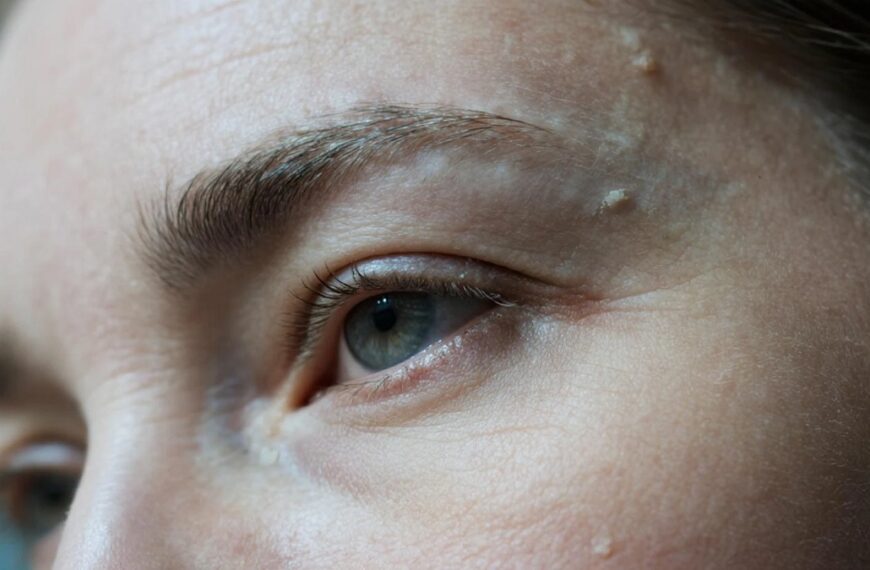
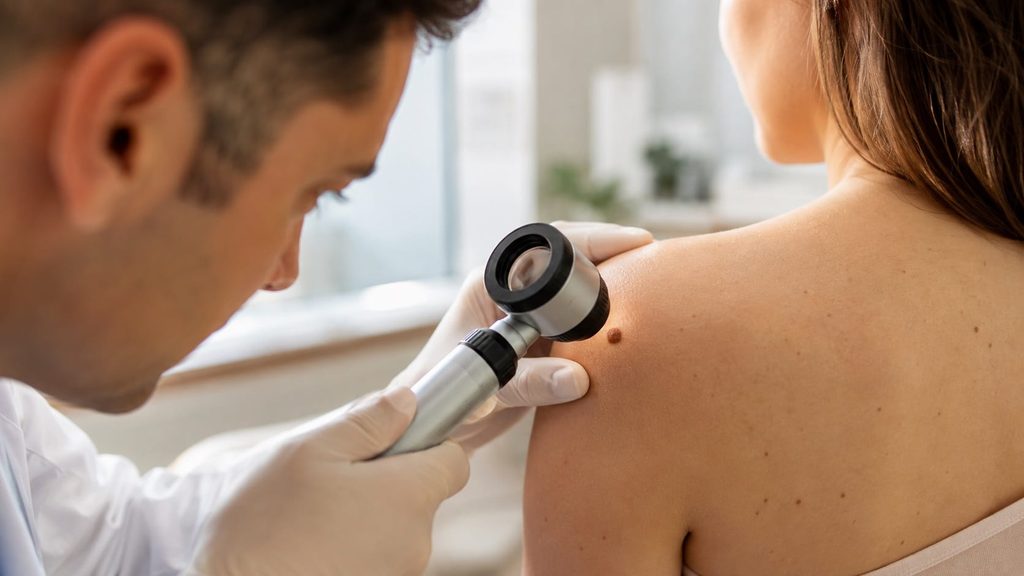
Skin cancer warning signs include a new or changing spot, a sore that doesn’t heal, unexplained bleeding or crusting, a rough or scaly patch, or a mole that looks different from your other spots. Melanoma specifically can also show the ABCDE signs, asymmetry, an irregular border, uneven color, a growing diameter (or an unusually dark shade), and evolving over time.
Skin cancer is the most common cancer in the world, yet it’s also one of the easiest to treat when you catch it early. According to the Skin Cancer Foundation, about 1 in 5 people will develop skin cancer by age 70, and most people never think about their skin until something changes, a new mole, a spot that won’t heal, a scab that keeps coming back in the same place. Those small changes are usually the only warning your body gives you, so knowing what to look for genuinely matters.
This guide walks through the real, visible skin cancer warning signs, including symptoms in women, early-stage changes, facial signs, signs on darker skin, the ABCDE rule, and what happens after diagnosis. Everything here is written to help you recognize a problem early, not to replace a dermatologist’s exam.
Quick Facts
| Topic | Key Point |
|---|---|
| Most common warning sign | A new or changing spot on the skin |
| Melanoma screening tool | The ABCDE rule: Asymmetry, Border, Color, Diameter or Dark, Evolving |
| Most common type | Basal cell carcinoma (slow-growing, rarely spreads) |
| Most dangerous type | Melanoma (most likely to spread to other organs) |
| Early melanoma survival rate | Greater than 99% five-year relative survival when localized |
| Leading cause | UV radiation from sunlight or tanning beds |
| When to see a doctor | Any new, changing, non-healing, or bleeding spot |
In this Article:
- 7 Skin Cancer Warning Signs You Shouldn't Ignore
- The ABCDE Rule for Melanoma
- What Early-Stage Skin Cancer Looks Like
- Skin Cancer Symptoms in Women
- Skin Cancer Warning Signs on the Face
- Skin Cancer Warning Signs on Dark Skin
- Physical and Visible Signs of Skin Cancer
- Skin Cancer Can Look Like Other Skin Conditions
- Random Scabs Appearing on the Body: Should You Worry?
- Types of Skin Cancer and How Each One Presents
- When to See a Dermatologist
- What Causes Skin Cancer
- Is Skin Cancer Deadly?
- How Skin Cancer Is Diagnosed
- What Does "Early Stage" Actually Mean?
- Skin Cancer Treatment: 8 Common Approaches
- How to Prevent Skin Cancer
- How to Do a Monthly Skin Self-Exam
- Frequently Asked Questions
- Key Takeaways
7 Skin Cancer Warning Signs You Shouldn’t Ignore
There isn’t one single, universally standardized “seven signs” list the way there is an ABCDE rule for melanoma specifically. But dermatology sources broadly point to the same handful of changes as the ones most worth paying attention to.
1. A new or unusual growth
A new bump, spot, or growth can have plenty of harmless causes, but one that persists or changes deserves a closer look, especially if it doesn’t resemble anything else on your skin.
2. A mole or spot that changes
Watch for changes in size, shape, color, border, elevation, or texture. A spot that’s shifted in any of these ways is more concerning than one that’s stayed the same for years.
3. A sore that doesn’t heal, or keeps coming back
Normal wounds heal steadily. A spot that lingers, reopens, or keeps scabbing over is one of the clearest red flags for basal cell or squamous cell skin cancer.
4. Unexplained bleeding, crusting, or oozing
This is different from a scrape or pimple, since there’s usually no clear reason for it. Skin cancer lesions can bleed easily because the surface tissue is often fragile.
5. A rough, scaly, or persistent patch
Often mistaken for dry skin or eczema, especially when it doesn’t respond to moisturizer or improve over several weeks.
6. A shiny, pearly, firm, or wart-like growth
This is the classic appearance of basal cell carcinoma, especially on the face, ears, and neck, though squamous cell carcinoma can look rougher and more wart-like.
7. A spot that looks noticeably different from your other moles
Sometimes called the “ugly duckling” sign, explained in more detail below.
None of these signs guarantee cancer on their own. But any one of them is a good enough reason to have a dermatologist take a look, particularly a new or unusual spot that shows up later in adulthood or doesn’t resemble anything else on your skin.
The ABCDE Rule for Melanoma
For checking individual moles specifically for melanoma, dermatologists use a simple five-point system called the ABCDE rule.
- A – Asymmetry: One half of the mole doesn’t match the other.
- B – Border: The edges are ragged, blurred, or poorly defined instead of smooth.
- C – Color: More than one shade appears in the same spot, brown, black, red, white, or blue.
- D – Diameter or Dark: A spot around 6mm or larger, roughly the size of a pencil eraser, deserves attention, but melanoma can be smaller than that. An unusually dark or very different-looking spot is also worth noting, even if it’s small.
- E – Evolving: Any change in size, shape, color, elevation, or new symptoms like bleeding or itching.
Of these five, evolving is the one dermatologists weigh most heavily. A mole that has stayed exactly the same for years is far less concerning than one that’s shifted in any way over the last few months, regardless of its size. The CDC’s guidance on skin cancer symptoms uses this same framework as its core recommendation for spotting melanoma early.
The Ugly Duckling Sign
Most people naturally have several moles that look broadly similar to each other. The “ugly duckling” sign is simply a spot that stands out from that pattern, darker, larger, or just visually different from the rest. It doesn’t need to meet every ABCDE criterion to be worth showing a dermatologist. If one mole looks out of place compared to everything else on your skin, that difference alone is a reasonable enough reason to get it checked.
What Early-Stage Skin Cancer Looks Like
Early-stage skin cancer often causes no pain and no other obvious symptoms at all. That’s exactly why it gets missed. Most people expect a health problem to announce itself with discomfort, so a painless spot doesn’t feel urgent. In reality, the first and sometimes only clue is a new or changing spot that simply looks different from the skin around it. At this stage, skin cancer is also at its most treatable, which is exactly why it’s worth paying attention before any pain shows up.
Early on, it can look like:
- A small, flat, slightly discolored patch
- A tiny bump that seems too minor to mention
- A mole that’s grown just a little since last year
- A rough patch that feels like dry skin but never resolves with lotion
“Early stage” isn’t just about how small or minor a spot looks, either. For melanoma, staging depends on factors like how deep the cells have grown and whether they’ve spread, not simply the size of the visible spot. That’s part of why a professional exam matters more than trying to judge a photo yourself. Basal or squamous cell cancers treated early are often cured with a single minor procedure, and melanoma caught at this stage has one of the highest survival rates of any cancer (more on that below). The window where treatment is simplest is exactly the window where symptoms are easiest to dismiss.
Skin Cancer Symptoms in Women
Skin cancer doesn’t discriminate by sex, but where it tends to show up does differ somewhat. In women, melanoma commonly develops on the legs, though it can appear anywhere on the skin. Other areas worth watching closely include:
- The lower legs and shins, especially spots that have gone unnoticed under clothing
- The scalp, particularly along the part line where sun protection is often skipped
- The chest and décolletage, an area that gets frequent sun exposure but rarely sunscreen
- Nail beds and the soles of the feet, which are easy to overlook during a quick self-check
A mole on the leg that’s darkened slightly or grown since last summer is worth a five-minute conversation with a dermatologist, even if it isn’t painful.
Skin Cancer Warning Signs on the Face
The face carries more cumulative sun exposure than almost anywhere else on the body, which makes it one of the most common sites for basal cell and squamous cell skin cancer. Facial skin cancer early signs typically include:
- A pearly or waxy bump on the nose, forehead, or ear that doesn’t go away
- A patch near the hairline or temple that looks scaly or slightly pink
- A sore near the eye, lip, or ear that scabs over and returns
- Small, visible blood vessels running through a raised, translucent spot
Facial skin cancer doesn’t always look dark. Depending on the type and your skin tone, it can appear pink, red, brown, black, translucent, skin-colored, or even scar-like. Because the face is cosmetically sensitive, catching these signs early also means simpler treatment and less scarring.
Skin Cancer Warning Signs on Dark Skin
Skin cancer can develop in people of every skin tone, and it’s worth stating plainly rather than as an afterthought. In people with darker skin, melanoma is more likely to appear on the palms, soles, or under the fingernails or toenails rather than on sun-exposed areas. It’s often described as a dark streak or band under a nail, or a new, changing spot on the palm or sole. It can also present as pink, red, brown, black, or purple, so the absence of a dark color doesn’t rule anything out. A changing or unusual lesion is worth checking regardless of where it appears or how it’s colored, and sun protection still matters for darker skin, even though the risk profile differs.
Physical and Visible Signs of Skin Cancer
Beyond moles, skin cancer can show up as changes that have nothing to do with pigment at all. Watch for:
- Texture changes: a patch that feels rough, scaly, or crusty compared to the skin around it
- Persistent itching or tenderness in one specific spot, without an obvious cause like a bug bite
- Bleeding with minimal contact, such as a spot that bleeds after light brushing with a towel
- A sore that heals, then reopens in the same location weeks later
- A shiny or translucent bump that looks slightly different from a normal pimple or cyst
Skin Cancer Can Look Like Other Skin Conditions
An unusual-looking spot doesn’t automatically mean cancer. Plenty of harmless conditions can look similar at first glance, including benign moles, freckles, warts, eczema, psoriasis, fungal or bacterial infections, seborrheic keratoses, old scars, and actinic keratoses (a common precancerous patch). The detail that matters most isn’t simply that a spot looks unusual, it’s whether it persists, changes, or keeps recurring despite normal skincare. A pimple or patch of eczema typically improves with time or basic treatment. A spot connected to skin cancer usually doesn’t. Only a professional exam, and sometimes a biopsy, can tell the difference with certainty, so when in doubt, it’s worth having it looked at rather than guessing from appearance alone.
Random Scabs Appearing on the Body: Should You Worry?
This is one of the most common questions people bring to a dermatologist, and for good reason. A normal wound should generally heal steadily and close up within a reasonable amount of time, though exactly how long varies by size, depth, location, and how it’s cared for. A scab connected to basal cell or squamous cell carcinoma tends to behave differently:
- It returns in the exact same location more than once
- It bleeds or crusts without a clear injury behind it
- It doesn’t fully close even after weeks of care
- It sits on a patch of skin that looks slightly raised or discolored underneath
If a scab keeps cycling through healing and reopening in the same spot for more than a few weeks, that pattern is a reasonable enough reason to book a skin check rather than continuing to treat it at home.
Types of Skin Cancer and How Each One Presents
Basal cell carcinoma is the most common form and usually the slowest growing. It typically appears as a pearly bump, a flat scar-like patch, or a sore that keeps returning. It rarely spreads beyond the skin but can grow locally if left untreated.
Squamous cell carcinoma tends to look rougher and more scaly, sometimes resembling a wart or a thick, crusted patch. It grows faster than basal cell carcinoma and carries a higher risk of spreading into deeper tissue, particularly when advanced or left untreated. The American Cancer Society’s overview of basal and squamous cell skin cancer signs breaks down how each type typically presents in more detail.
Melanoma is the least common of the three but the most likely to spread to other parts of the body. It usually shows up as a new or changing mole, though it can also appear as a pink, red, or skin-colored spot that doesn’t fit the typical dark-mole image people expect.
When to See a Dermatologist
If you’ve noticed any of the warning signs covered above, don’t wait to see whether it changes on its own. A spot that’s new, changing, bleeding, or simply different from the rest of your skin is reason enough to book an appointment, even if it doesn’t check every box on a list.
How quickly you should be seen depends on what you’re noticing. A mole that’s rapidly changing, bleeding on its own, or developing an irregular border warrants a prompt appointment, ideally within a few weeks rather than months. A spot that’s stable but still concerning can usually wait for the next routine opening.
A typical dermatology visit for a suspicious spot is quick and low-stress. The dermatologist will ask when you first noticed it and whether it’s changed, examine it closely (often with a dermatoscope), and decide whether to simply monitor it, photograph it for comparison later, or take a biopsy on the spot. Most of these visits take well under half an hour, and many people leave with nothing more than a wait-and-watch plan.
Waiting to see if a spot resolves on its own is one of the most common reasons treatment becomes more complicated later. A quick exam now is almost always simpler than the alternative.
What Causes Skin Cancer
Ultraviolet radiation from sunlight and tanning beds is the leading cause of skin cancer, since it damages the DNA inside skin cells over time. Other contributing factors include:
- A history of blistering sunburns, especially in childhood
- Fair skin, freckling, or light-colored eyes
- A family history of melanoma or other skin cancers
- A weakened immune system, including immunosuppressive medication
- A large number of moles or a history of atypical moles
Is Skin Cancer Deadly?
The risk of dying from skin cancer varies considerably by type and stage. Basal cell carcinoma is rarely life-threatening, since it tends to grow locally rather than spread. Squamous cell carcinoma can become serious if it’s advanced or high-risk, with a greater chance of spreading into deeper tissue. Melanoma is the type most likely to spread to other organs, which is why it carries the higher mortality risk of the three. Even so, melanoma diagnosed while still localized has a five-year relative survival rate above 99 percent in U.S. data, according to the Skin Cancer Foundation. Early diagnosis generally means simpler treatment and better outcomes across all three types.
How Skin Cancer Is Diagnosed
Diagnosis usually starts with a visual exam, sometimes supported by dermoscopy, a magnifying tool that lets a clinician look more closely at a mole’s structure. Not every suspicious spot leads straight to a biopsy. Depending on what it looks like, a dermatologist might examine it, photograph it to track changes over time, or recommend a biopsy right away. A biopsy involves removing a small tissue sample under local anesthesia and sending it to a lab, and it remains the only way to confirm skin cancer with certainty.
What Does “Early Stage” Actually Mean?
“Stage” isn’t the same as size, and it’s worth understanding since the term gets used loosely. For melanoma, staging generally runs from stage 0 (abnormal cells confined to the outer layer of skin, sometimes called melanoma in situ) through stage 4 (spread to distant parts of the body), with the stages in between depending on how deep the tumor has grown and whether it’s reached nearby lymph nodes. Basal and squamous cell carcinomas are assessed a little differently, usually by size, depth, and specific high-risk features rather than the same staging scale used for melanoma.
The practical takeaway is that a small-looking spot isn’t automatically an early stage, and a slightly larger one isn’t automatically advanced. Staging requires a biopsy and, in some cases, additional imaging, not a visual estimate. This is exactly why a professional exam matters more than judging a spot by eye.
Skin Cancer Treatment: 8 Common Approaches
Treatment depends heavily on the type of cancer, its size, location, and how deep it has grown, so these eight approaches aren’t interchangeable options to pick from freely. A dermatologist or oncologist will usually recommend one or a combination based on your specific diagnosis.
1. Surgical excision
The cancer is cut out along with a small margin of healthy tissue. This is the standard first-line treatment for most basal and squamous cell cancers and many early melanomas.
2. Mohs micrographic surgery
Considered the gold standard for cancers on the face, ears, or nose, this technique removes the tumor layer by layer while checking each layer under a microscope, preserving as much healthy tissue as possible.
3. Curettage and electrodesiccation
The lesion is scraped away and the base treated with an electric current to destroy remaining abnormal cells, commonly used for smaller basal cell cancers.
4. Cryotherapy
Liquid nitrogen freezes off precancerous lesions like actinic keratosis, and in some cases very superficial basal cell cancers.
5. Topical treatments
Certain prescription creams can treat select superficial basal cell carcinomas or precancerous patches, though not every lesion is a candidate for this approach.
6. Radiation therapy
Used when surgery isn’t a good option, such as for tumors in difficult-to-reach areas or in patients who can’t undergo surgery, and sometimes after surgery to lower recurrence risk.
7. Immunotherapy
Used for melanoma that has spread, and in some cases for advanced or high-risk squamous cell cancers, these medications train the immune system to recognize and attack cancer cells.
8. Targeted therapy
Used when a tumor carries specific genetic mutations, most often in melanoma, this approach attacks cancer cells more precisely while sparing healthy tissue.
These treatments aren’t interchangeable. A dermatologist or cancer specialist chooses based on the specific type of cancer and the individual situation, not personal preference.
How to Prevent Skin Cancer
Prevention is straightforward, even if it takes consistency to stick with it.
- Use a broad-spectrum SPF 30+ sunscreen on exposed skin whenever you’ll be outdoors, and reapply as directed, especially after swimming, sweating, or toweling off
- Limit direct sun exposure when UV levels are strongest, and check your local UV index when it’s available
- Wear a wide-brimmed hat and protective clothing when possible
- Avoid tanning beds entirely, since they raise melanoma risk substantially, especially before age 35
- Check your skin monthly, and if you have risk factors for skin cancer, ask a healthcare professional how often you should have a professional skin exam
None of these steps eliminate risk completely, but together they lower it meaningfully, and they cost far less than treatment down the line.
How to Do a Monthly Skin Self-Exam
A full check takes about ten minutes and is worth building into a monthly routine.
- Check your face, ears, scalp, and behind your ears, parting your hair to see the skin underneath
- Look over your lips, chest, torso, and underarms
- Examine your arms, hands, between your fingers, and the skin under your nails
- Check your legs, feet, between your toes, and the soles of your feet
- Use a hand mirror for your back, buttocks, genital area, and any other hard-to-see spots
- Take photos of any moles you want to track over time, so changes are easier to spot next month
If you can’t get a clear look at your scalp or back on your own, ask someone you trust to check those areas for you.
Frequently Asked Questions
What are the first signs of skin cancer?
The earliest signs are usually a new growth, a mole that’s changed in size or color, or a sore that won’t heal. Some cases start as a shiny bump or a scaly patch instead of anything resembling a mole.
What does early-stage melanoma look like?
It often looks like an ordinary mole at first glance, but with irregular borders, uneven color, or a size that’s crept up over recent months. Not all melanomas are dark. Some appear pink, red, or close to skin-colored.
Can skin cancer look like a pimple?
Yes, particularly basal cell carcinoma, which can resemble a small, shiny bump. The difference is persistence: a pimple usually clears up within a week or two, while a cancerous spot tends to linger, bleed, or keep returning.
Can skin cancer look like eczema?
It can. Squamous cell carcinoma in particular can show up as a rough, scaly, reddish patch that resembles eczema or dry skin. If a patch doesn’t respond to moisturizer or treatment over several weeks, it’s worth having it examined.
Can a scab be skin cancer?
It can, particularly with basal or squamous cell carcinoma. The pattern matters more than the scab itself, one that keeps returning in the same spot over several weeks is worth having examined. There’s no way to confirm it by looking, though; a dermatologist can usually tell within one visit whether it needs a biopsy or just monitoring.
Can skin cancer appear under a fingernail or toenail?
Yes. A dark streak or band under a nail can be an early sign of melanoma, and it’s often overlooked since people assume it’s from an injury.
Can skin cancer appear on the scalp?
Yes, especially along the part line or other areas that don’t get regular sun protection. It’s an easy spot to miss during a self-exam, which is why parting your hair during a skin check matters.
Can skin cancer be the same color as your skin?
Yes. Basal cell carcinoma in particular can appear skin-colored, pink, or translucent rather than dark, which is why relying only on color to judge a spot can be misleading.
Can skin cancer be itchy?
Yes. Itching, tenderness, or mild irritation can accompany skin cancer, though plenty of cases cause no sensation at all, which is why visual checks matter just as much as how a spot feels.
Is skin cancer painful?
Most early skin cancer causes no pain whatsoever. Pain tends to develop later, once a lesion has grown deeper or become inflamed, so a painless spot should never be assumed harmless.
How fast does melanoma spread?
It varies. Some melanomas grow slowly over months or years, while others progress faster. This unpredictability is exactly why early evaluation matters more than waiting to see what happens.
Can skin cancer go away without treatment?
No. Skin cancer doesn’t resolve on its own, and delaying care allows more time for it to grow or, in the case of melanoma, spread to other parts of the body.
What should I do if I find a suspicious spot?
Avoid picking at it or trying to treat it with random creams, and book an appointment with a dermatologist rather than waiting to see if it changes further. Bring a note of how long it’s been there and whether it’s changed, since that history helps guide the exam.
Key Takeaways
Skin cancer is common, but it’s also one of the most preventable and treatable cancers out there, provided it’s caught early. Watch for new or changing spots, sores that won’t heal, recurring scabs, and anything that simply looks different from the rest of your skin, regardless of your skin tone. When in doubt, a quick dermatologist visit costs far less time and worry than waiting to see what happens next.
Related Articles: