Ear pain has a way of taking over your whole day. It throbs when you lie down. It flares when you swallow. By 2 a.m. you’re standing in the kitchen googling “natural ear infection remedy” while your child (or you) can’t sleep.
I’m McLee Tembo, Health Consultant and founder of NFH Clinic. I’ve sat with hundreds of patients over the years. Parents holding fussy babies. Adults who swear their ear has been “off” for a week. Even a few worried dog owners. They all ask the same question: is there something I can do at home first?
The honest answer is yes, but with limits. Some remedies genuinely calm the pain and support healing. Others are internet myths that can make things worse. This guide walks through both. You’ll know exactly what to try, what to avoid, and when it’s time to call a professional.
Quick Facts: Ear Infection
| Most common cause | Colds, allergies, or sinus congestion blocking the eustachian tube |
| Who’s most affected | Children under 6 (their eustachian tubes are shorter and sit more horizontally), but adults get them too |
| Typical duration | Symptoms often ease in 2–3 days. Full recovery can take up to a week |
| Contagious? | The ear infection itself isn’t. The cold or virus behind it often is |
| Resolves without antibiotics? | Often, yes — especially mild cases in adults and older children |
| When to see a doctor | Fever over 102°F, ear discharge, severe pain, or symptoms past 2–3 days |
Key takeaways:
- Warm compresses, elevation, and OTC pain relief are the safest first steps for almost anyone.
- Garlic oil, olive oil, and diluted apple cider vinegar can help mild cases. Skip all ear drops if the eardrum may be perforated or fluid is draining.
- Hydrogen peroxide softens wax. It doesn’t treat an active infection.
- Most mild infections clear on their own within a few days. Fever, discharge, or pain past 2–3 days needs a doctor.
In this article:
- What's Actually Causing That Ear Pain?
- Before You Try Anything: Know the Red Flags
- 1. Warm Compress: The Simplest, Safest Fix
- 2. Garlic Oil: The Old Favorite Worth Trying
- 3. Olive Oil or Mineral Oil Drops
- 4. Hydrogen Peroxide for Ear Infection: Use With Caution
- 5. Apple Cider Vinegar for Ear Infection
- 6. Steam and Moist Heat
- 7. Elevate the Head While Sleeping
- 8. Saline Nasal Spray
- 9. Stay Hydrated
- 10. Cool-Mist Humidifier
- 11. Over-the-Counter Pain Relief
- Can You Put Oil in an Infected Ear?
- Does Sleeping Position Matter?
- Is It Okay to Swim or Fly With an Ear Infection?
- What to Eat (and Avoid) With an Ear Infection
- Can Stress Cause Ear Infections?
- Remedy Comparison at a Glance
- Home Remedies for Ear Infection in Babies
- Home Remedies for Ear Infection in Kids
- Ear Infection Treatment for Adults
- Amish Remedy for Ear Infection
- Natural Ear Infection Remedies for Dogs
- Can Ear Infections Go Away by Themselves?
- Quick Do's and Don'ts Checklist
- Preventing Future Ear Infections
- When Natural Remedies Aren't Enough
- FAQs: Natural Ear Infection Remedy
What’s Actually Causing That Ear Pain?
Most ear infections start somewhere else. A cold, allergies, or sinus congestion blocks the eustachian tube — the small canal connecting your middle ear to the back of your throat. Fluid builds up behind the eardrum. Bacteria or viruses multiply. Pressure sets in. That pressure is what you feel as pain.
There are three basic types:
- Outer ear infection (swimmer’s ear) — pain when you touch or pull the ear, often after swimming or moisture exposure.
- Middle ear infection (otitis media) — the classic childhood ear infection, usually tied to a cold.
- Inner ear infection — rarer, and often comes with dizziness or balance issues.
Knowing which type you’re dealing with matters. Outer ear infections respond well to home care. Middle and inner ear infections sometimes need medical treatment no matter what remedy you try.
Before You Try Anything: Know the Red Flags
Home remedies can ease mild discomfort while your body fights off a minor infection. But some symptoms mean you need a doctor, not a kitchen cabinet. Seek medical care if you notice:
- Fever above 102°F (39°C)
- Fluid, pus, or blood draining from the ear
- Severe pain that doesn’t ease with over-the-counter pain relief
- Symptoms lasting more than two to three days
- Hearing loss or ringing that won’t go away
- Swelling behind the ear
- Any of the above in a baby under six months old
If any of these apply, don’t wait it out with remedies. At NFH Clinic, we tell patients the same thing every time: natural care is a support, not a substitute, when things look serious.
With that out of the way, here’s what actually helps.
1. Warm Compress: The Simplest, Safest Fix
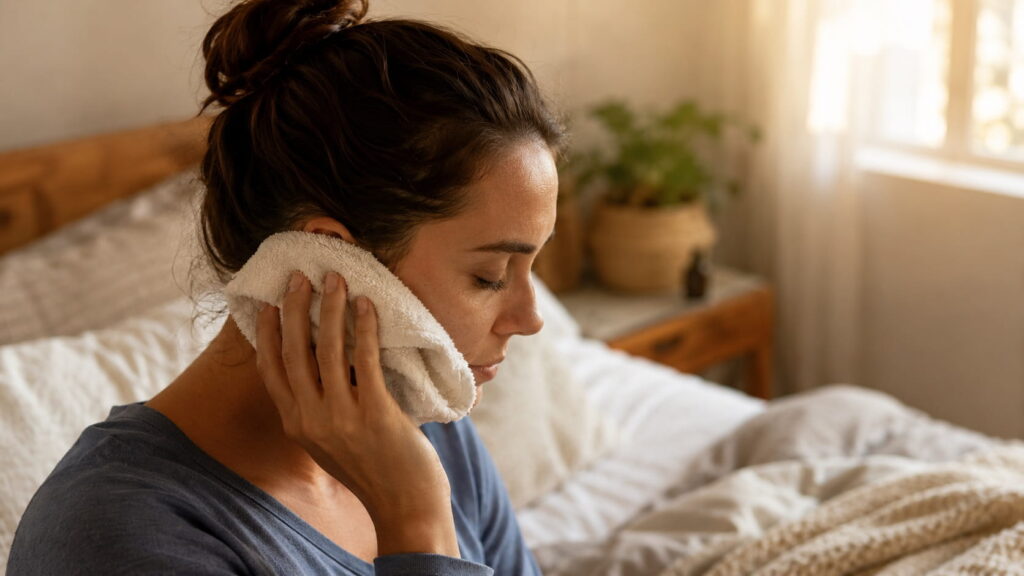
A warm compress is often the fastest way to dull ear pain. It works for babies, kids, and adults alike. Heat relaxes the muscles around the ear and improves blood flow, which eases pressure.
Soak a clean washcloth in warm (not hot) water and wring it out. Hold it against the affected ear for 10 to 15 minutes. Repeat every couple of hours as needed. For babies, test the temperature on your own wrist first. Never leave a compress unattended with a child.
2. Garlic Oil: The Old Favorite Worth Trying
Garlic contains compounds with antibacterial activity shown in lab studies. That’s why it shows up again and again in home remedy lists. High-quality human trials on garlic oil specifically are still limited. So it’s fair to call this a comfort remedy rather than a proven cure, but it’s one of the more reasonable options here.
To make garlic oil, gently warm a crushed garlic clove in two tablespoons of olive or sesame oil for a few minutes. Strain it and let it cool to a comfortable warm temperature. Using a clean dropper, place two to three drops in the affected ear while lying on your side. Stay still for a few minutes before sitting up.
Skip this one entirely if there’s any chance the eardrum is perforated, or if fluid is actively draining from the ear.
3. Olive Oil or Mineral Oil Drops
Plain warm olive oil is gentler than garlic oil. It works well for softening wax buildup that’s adding to the pressure and pain. Warm a small amount and test it on your wrist. Use two drops in the ear, tilting the head for 15 to 20 seconds afterward.
This is one of the safer homemade ear infection remedies. It’s simple, with no added ingredients.
4. Hydrogen Peroxide for Ear Infection: Use With Caution
Hydrogen peroxide comes up constantly in ear-care searches. It does have a legitimate use — softening earwax and clearing debris from the canal. A diluted 3% solution, used sparingly, can help with mild buildup.
That said, this is not a remedy for an active infection. If there’s pain, swelling, or any possibility of a damaged eardrum, hydrogen peroxide can irritate the canal further rather than help it. Frequent or prolonged use can also dry out the canal. Stick to a few drops, occasionally, at most. Think of it as a wax-clearing tool, not an infection treatment. Check with a doctor first if you’re unsure.
5. Apple Cider Vinegar for Ear Infection
Apple cider vinegar is mildly acidic. Some people use it to create an environment less friendly to bacteria and fungus, particularly for swimmer’s ear. Mix equal parts apple cider vinegar and warm water. Apply a few drops with a clean dropper and let it sit briefly before draining.
Never use undiluted vinegar in the ear. The acidity is too strong for the delicate skin of the canal and can cause a burning sensation instead of relief. This remedy works best for outer ear irritation, not deep middle ear infections. Never use it if the ear canal is broken or bleeding.
6. Steam and Moist Heat
Breathing in steam helps open up blocked sinuses and eustachian tubes. This can relieve the pressure feeding the ear pain in the first place. Sit with your face over a bowl of hot (not scalding) water for five to ten minutes. Or take a warm shower and let the steam do the work. This is especially useful when the ear infection followed a cold.
7. Elevate the Head While Sleeping
Lying flat can make ear pressure worse overnight. Propping the head up slightly with an extra pillow helps fluid drain more naturally. It often reduces nighttime throbbing, a small tweak that makes a real difference.
8. Saline Nasal Spray
Most ear infections trace back to blocked eustachian tubes. Treating the congestion at the source often relieves the ear itself. A simple saline nasal spray or rinse thins mucus and helps the eustachian tube drain properly. This takes pressure off the middle ear. It’s especially useful when the ear pain followed a cold or sinus infection.
9. Stay Hydrated
Drinking plenty of fluids keeps mucus thin enough to drain rather than pool and thicken behind the eardrum. Warm fluids help too — broth, herbal tea, or warm water with honey for anyone over one year old. They soothe a scratchy throat that often comes with the same cold causing the ear pain.
10. Cool-Mist Humidifier
Dry indoor air can thicken mucus and worsen congestion. Running a cool-mist humidifier in the bedroom overnight helps keep nasal passages and the eustachian tube clearer. Stick with cool mist rather than warm or steam humidifiers, especially around children. Warm-mist units carry a small burn risk if tipped over.
11. Over-the-Counter Pain Relief
While not a “natural” remedy in the herbal sense, appropriately dosed acetaminophen or ibuprofen remains one of the most effective ways to manage ear pain while the body heals. Pair it with warmth and rest for best results.
Can You Put Oil in an Infected Ear?
Only if you’re confident the eardrum is intact. Warm oil — olive, garlic, or mineral — can ease mild discomfort and soften wax when the ear canal is closed off and dry.
But skip oil drops entirely if there’s any fluid draining, a history of ear tubes, recent ear surgery, or a known perforation. Oil trapped behind a damaged eardrum can worsen the infection. It’s also difficult for a doctor to clear during an exam.
Does Sleeping Position Matter?
Yes. Sleep with the infected ear facing up, propped on an extra pillow. This helps trapped fluid drain toward the throat instead of pooling against the eardrum. Sleeping directly on the sore ear tends to increase pressure and pain. If you can manage it, keep that ear elevated through the night.
Is It Okay to Swim or Fly With an Ear Infection?
Swimming: it’s best to hold off until the infection clears. Moisture trapped in an already inflamed canal feeds bacteria and slows healing. This is exactly how swimmer’s ear starts in the first place.
Flying: cabin pressure changes can make ear pain noticeably worse. A blocked eustachian tube can’t equalize pressure the way it normally would. If you must fly, chewing gum, swallowing, or yawning during takeoff and landing helps. A decongestant beforehand, if appropriate for you, can make the flight more comfortable.
What to Eat (and Avoid) With an Ear Infection
Warm soups and broths help keep mucus thin and soothe a related sore throat. Foods rich in vitamin C, like citrus and berries, support general immune function. So do zinc-rich foods like nuts, seeds, and lean meat.
There’s no need to eliminate dairy or any specific food group, that’s a persistent myth without solid evidence behind it. The main food-related habit that actually helps is simple: stay well hydrated.
Can Stress Cause Ear Infections?
Not directly. Stress doesn’t cause the bacterial or viral triggers behind ear infections. But chronic stress can weaken immune response. That can make it harder for your body to clear a minor infection quickly. Rest and sleep matter more than people realize during recovery.
Remedy Comparison at a Glance
| Remedy | Best For | Avoid If |
|---|---|---|
| Warm compress | General pain relief, all ages | Skin burns if too hot |
| Garlic oil | Mild discomfort, comfort care | Perforated eardrum, active drainage |
| Olive oil drops | Wax-related pressure | Ear drainage or suspected perforation |
| Apple cider vinegar (diluted) | Swimmer’s ear, outer ear irritation | Broken skin, perforation |
| Hydrogen peroxide (3%) | Wax softening/removal | Active infection, perforation |
| Saline nasal spray | Congestion feeding ear pressure | Rarely any — generally safe |
| Steam / cool-mist humidifier | Congestion, dry air | N/A — generally safe |
Home Remedies for Ear Infection in Babies
Babies can’t tell you exactly what hurts. Watch for ear pulling, fussiness, trouble sleeping, or crying that worsens when lying down. For infants, stick to the gentlest options: a warm (never hot) compress held briefly against the ear, extra cuddling in an upright position, and plenty of fluids.
Avoid ear drops of any kind in babies under six months without a doctor’s clearance. Avoid cotton swabs entirely — they push debris deeper rather than removing it. Any baby with a fever, ear discharge, or persistent crying needs medical evaluation. Don’t wait longer to see.
Home Remedies for Ear Infection in Kids
For toddlers and older kids, warm compresses, extra fluids, and rest go a long way. Distraction also helps more than parents expect. Pain feels worse when a child is bored and fixated on it. If your child can swallow safely, warm (not hot) liquids can ease throat and ear pressure at the same time.
How to Stop an Earache Fast in a Child
The fastest combination is usually a warm compress plus an age-appropriate dose of pain reliever. Keep the child upright rather than lying flat. This won’t cure the infection, but it noticeably reduces discomfort within 20 to 30 minutes for most kids.
Ear Infection Treatment for Adults
Adult ear infections often get dismissed as “just annoying,” but they deserve the same attention. Adult ear infection home treatment typically combines warm compresses, garlic or olive oil drops, staying upright when possible, and managing congestion with steam or a saline rinse.
Adults are also more likely to have earwax buildup contributing to symptoms. Gentle oil drops before bed can help more than people expect. If pain lasts beyond three days, or you notice drainage, that’s your cue to see a doctor instead of continuing home care.
Amish Remedy for Ear Infection
One remedy that keeps resurfacing in home-care circles is the traditional Amish approach: warm garlic oil combined with a few drops of onion juice. It’s applied the same way as standard garlic oil drops. The onion is believed to add extra anti-inflammatory support alongside garlic’s antibacterial properties.
There’s no formal clinical research behind the onion-garlic combination specifically. But the individual ingredients do have documented antibacterial and anti-inflammatory qualities. That’s likely why this remedy has been passed down for generations. If you want to try it, treat it exactly like garlic oil. Same precautions, same limits — no use with a perforated eardrum or active drainage.
Natural Ear Infection Remedies for Dogs
Natural ear infection remedies for dogs can provide temporary comfort. But they work best alongside proper veterinary care, not instead of it. Dogs get ear infections often, especially breeds with floppy ears or those that swim regularly.
A gentle at-home first step is a vet-approved ear cleaner. A diluted apple cider vinegar rinse (one part vinegar to two parts water) also works, wiped gently into the outer ear with a cotton ball. Never use a cotton swab, and never pour anything directly into the canal.
Coconut oil, applied sparingly, can soothe outer ear irritation in dogs thanks to its natural antifungal properties. That said, canine ear infections are often caused by yeast, mites, or bacteria — these genuinely need a vet’s diagnosis and prescription drops. If your dog is shaking its head constantly, has a foul odor, or scratches until it bleeds, see a veterinarian rather than relying on home care alone.
Can Ear Infections Go Away by Themselves?
Often, yes — particularly mild middle ear infections in older kids and adults. The immune system frequently clears the infection within a few days to a week, with no antibiotics needed. This is why many doctors now recommend a “watch and wait” approach for mild cases, paired with pain management at home. Some pediatricians even provide a “wait-and-see” prescription. It’s only filled if symptoms haven’t improved within 48 to 72 hours.
However, “can go away on its own” isn’t the same as “will always go away safely.” Infections that worsen, spread, or come with high fever need treatment. Left untreated, they can occasionally lead to complications like hearing changes. Healing an ear infection naturally works best when you’re monitoring progress, not ignoring it.
Quick Do’s and Don’ts Checklist
Do:
- Use warm compresses and keep the head elevated while sleeping
- Try diluted garlic, olive, or oil drops only if the eardrum is intact
- Stay hydrated and manage congestion with saline spray or steam
- Track symptoms for 2–3 days before deciding if you need a doctor
Don’t:
- Put anything in the ear if there’s discharge, bleeding, or known perforation
- Use undiluted vinegar or full-strength hydrogen peroxide
- Insert cotton swabs or other objects into the canal
- Ignore fever, severe pain, or hearing loss hoping it “sorts itself out”
Preventing Future Ear Infections
- Dry ears thoroughly after swimming or bathing
- Avoid inserting cotton swabs or other objects into the ear canal
- Treat colds and allergies promptly, since congestion is the usual root cause
- Avoid smoking around children, as secondhand smoke increases ear infection risk
- Keep vaccinations up to date, since some reduce the bacteria linked to ear infections
- For infants, breastfeed if possible — it passes along antibodies that lower infection risk. Avoid bottle-feeding while lying flat, since milk can pool near the eustachian tube
- Limit prolonged pacifier use past 12 months, since extended use has been linked to slightly higher ear infection rates
When Natural Remedies Aren’t Enough
I say this often at NFH Clinic: home remedies are brilliant for comfort and support, but they aren’t a diagnosis. An ear that looks like simple congestion can sometimes be something else entirely. The only way to know for sure is a proper exam. If pain persists past two to three days, or there’s discharge, fever, or hearing changes, please reach out to a healthcare provider. You can also contact our team at NFH Clinic for guidance. It’s always better to check early than wait through unnecessary pain.
Ear infections rarely show up alone. They often ride in alongside a sinus infection, seasonal allergies, a sore throat, or a stubborn cold. If any of those sound familiar, it’s worth treating the root cause alongside the ear itself. And if wax buildup turns out to be the real issue rather than infection, that’s usually a separate, simpler fix.
At the end of the day, natural treatments for ear infections work best as a first line of comfort, not a replacement for judgment. Trust your body. Watch for the warning signs above. And don’t hesitate to loop in a professional the moment something feels off.
FAQs: Natural Ear Infection Remedy
What is the fastest homemade ear infection remedy?
A warm compress combined with appropriate pain relief tends to bring the fastest comfort, usually within 20 to 30 minutes.
Is apple cider vinegar or hydrogen peroxide better for ear infections?
Apple cider vinegar is generally gentler and better suited to outer ear irritation. Hydrogen peroxide is more of a wax-clearing tool than an infection treatment. Neither should be used with a perforated eardrum.
Do ear infections always need antibiotics?
No. Many mild infections clear on their own within days, especially in adults and older children. Doctors often recommend monitoring before prescribing antibiotics unless symptoms are severe or persistent.
Can I use garlic oil on a baby?
It’s best to avoid ear drops of any kind in infants under six months without medical guidance. A warm compress is the safer first step for babies.
How long do ear infections usually last?
Mild cases often ease within 2 to 3 days. Full recovery can take up to a week or ten days. Anything lingering longer, or getting worse instead of better, warrants a check-up.
Should I keep my ear dry while it heals?
Yes. Keep water out of the ear during showers or baths — a cotton ball coated in petroleum jelly at the ear opening works well. Avoid swimming until symptoms fully clear.
Can I shower normally with an ear infection?
You can shower as usual. Just avoid submerging the ear or letting water run directly into the canal.
Is it better to use heat or cold for ear pain?
Warmth is generally more effective for ear infections. It improves blood flow and eases pressure. Cold packs can occasionally help with acute swelling, but they tend to be less soothing overall.
Why is ear pain often worse at night?
Lying flat increases pressure on the eardrum and reduces natural drainage. That’s why pain frequently spikes once you’re in bed. Elevating your head helps counter this.
Can allergies cause ear infections?
Yes. Allergies cause the same nasal swelling and congestion as a cold. That can block the eustachian tube and lead to fluid buildup in the middle ear.
What color should ear drainage be, and when is it a concern?
Clear or pale yellow discharge can sometimes accompany a resolving infection. Green, foul-smelling, or bloody drainage should always be checked by a doctor — it can signal a more serious infection or a perforated eardrum.
Related Articles: