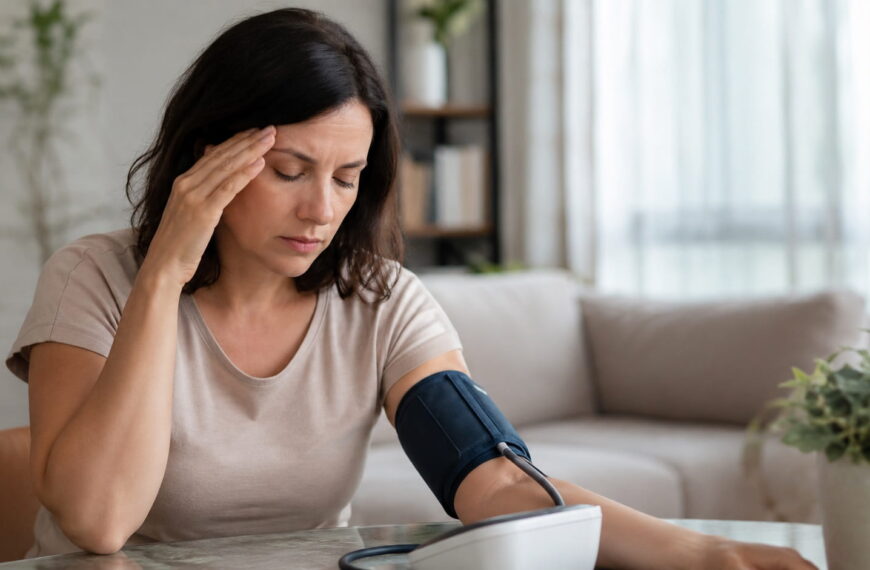
If you’ve ever felt your heart pounding, your head throbbing, or your chest feeling tight and thought, “I wish I had a blood pressure machine right now”, you’re not alone. I get this question almost every week from patients at NFH Clinic, usually from people who are traveling, staying with family, or simply caught without a cuff at home.
Here’s the honest truth I always give my patients first: there is no way to measure blood pressure without equipment and get an exact, medically reliable number. Blood pressure is measured in millimeters of mercury (mmHg), and that figure — say, 120/80 — can only come from a cuff, a stethoscope, or a validated digital monitor. Anyone who tells you they can read your exact numbers from your pulse alone isn’t being fully truthful with you.
What you can do, though, is learn to recognize the warning signs of high or low blood pressure, estimate a rough range using pulse-based techniques, and know when it’s time to get checked properly. That’s exactly what this guide walks you through, step by step, the way I’d explain it to a patient sitting in front of me.
Seek emergency care immediately if you notice:
- Chest pain or pressure
- Sudden weakness or numbness, especially on one side of the body
- Difficulty speaking or slurred speech
- A severe headache with vision changes
- Loss of consciousness or fainting
These can signal a hypertensive crisis or stroke. Don’t try to estimate — call for emergency help.
Quick Answer: No, you cannot accurately measure blood pressure without equipment. You can recognize warning signs or use pulse checks to estimate whether your blood pressure is above certain rough emergency thresholds, but only a validated blood pressure monitor can give you an accurate reading.
In this article:
- Why People Search for Equipment-Free Blood Pressure Checks
- Can You Really Check Blood Pressure Without a Machine?
- Method Comparison: What Actually Gives You a Real Reading
- What About Phones and Smartwatches?
- Myths About Measuring Blood Pressure Without Equipment
- Warning Signs Your Blood Pressure Might Be High
- Warning Signs Your Blood Pressure Might Be Low
- Things That Can Make Your Blood Pressure Feel Off (Without Actually Being High)
- Simple At-Home Checks That Give You Clues (Even Without a Cuff)
- When You Should NOT Try to Estimate Your Own Blood Pressure
- Why Guessing Is Risky
- Why High Blood Pressure Is Called the "Silent Killer"
- What to Do Instead
- A Quick Word From My Own Practice
- Frequently Asked Questions
- Final Thoughts
Why People Search for Equipment-Free Blood Pressure Checks
Most people asking how to check blood pressure without a machine fall into one of a few situations:
- They’re away from home and don’t have access to a monitor
- They want a quick, rough sense of whether something feels “off” before deciding whether to seek care
- They’re curious about traditional or manual methods nurses used before digital devices became common
- They’re managing hypertension or hypotension and want extra ways to stay alert between readings
Whichever reason brought you here, the goal should always be the same: use these methods as an early warning system, not a diagnosis.
Can You Really Check Blood Pressure Without a Machine?
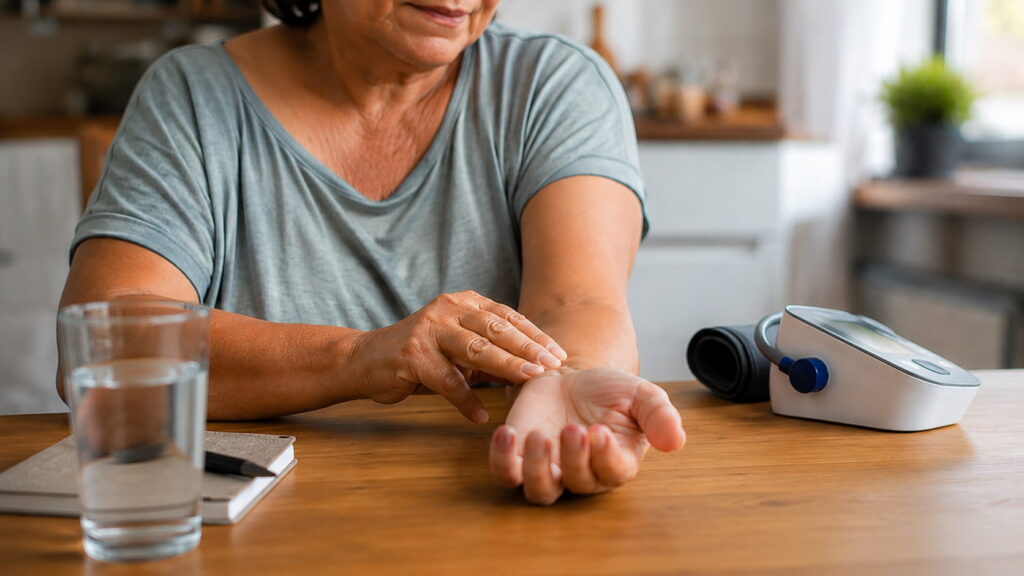
Partially. Trained clinicians can estimate a rough systolic reading using nothing but their fingers and a watch. This is called the radial pulse palpation method, and it’s been used in emergency and field medicine for decades when a cuff isn’t handy.
Healthcare professionals also measure blood pressure manually using a cuff and stethoscope, listening for what are known as Korotkoff sounds. It’s a skill that takes practice to do well, but it’s worth noting even this “manual” approach still requires equipment and training — it isn’t equipment-free, just machine-free.
It’s worth being precise about what this method actually tells you: it cannot give you a blood pressure reading. What it can do is estimate whether your systolic pressure is above a certain emergency threshold, based on which pulse points are still detectable. That’s a meaningful distinction — one that a lot of the guides circulating online tend to blur.
Here’s how it works, and how you can try a simplified version at home.
The Radial Pulse Method (Estimating Systolic Pressure)
- Sit down and rest your arm at heart level, palm facing up.
- Using two fingers (not your thumb, since it has its own pulse), press gently on the inside of your wrist, just below the base of your thumb, until you feel your pulse.
- If you can feel a pulse at the wrist, your systolic blood pressure is likely above roughly 80 mmHg.
- Move to your neck (carotid artery, gently, one side at a time) — if you feel a pulse there, systolic pressure is likely above roughly 60 mmHg.
- If you can feel your femoral pulse (inner thigh, near the groin), it suggests a systolic pressure above roughly 70 mmHg.
This method gives paramedics a fast field estimate when seconds count, but it only produces a rough floor value, not a real reading, and it says nothing at all about your diastolic number (the bottom figure). I’d never rely on it for anyone managing hypertension long-term.
Checking Your Pulse Rate (Not the Same as Blood Pressure)
A lot of the confusion online comes from mixing up pulse rate and blood pressure — they’re related, but they aren’t interchangeable. Still, tracking your pulse gives useful clues:
- Place two fingers on your wrist or neck pulse point.
- Count the beats for 30 seconds and multiply by two, or count for a full 60 seconds for accuracy.
- A healthy resting pulse for most adults sits between 60 and 100 beats per minute.
- A pulse that’s unusually fast, weak, or irregular alongside symptoms like dizziness or chest discomfort can hint at a blood pressure problem, even without giving you the exact number.
Method Comparison: What Actually Gives You a Real Reading
| Method | Gives an Exact Reading? | How Useful Is It? |
|---|---|---|
| Digital arm monitor | Yes | Best option for home use |
| Manual cuff + stethoscope | Yes | Excellent, needs some training |
| Wrist/neck/groin pulse check | No | Rough emergency estimate only |
| Symptom watching | No | Early warning signs only |
| Phone apps (camera/finger-based) | Usually no | Not reliable, avoid relying on these |
| Smartwatch with BP feature | Sometimes, with calibration | Limited, trend tracking at best |
What About Phones and Smartwatches?
This comes up constantly in my consultations, so let’s settle it clearly.
Can your phone measure blood pressure? No, not on its own. A bare smartphone has no sensor capable of measuring blood pressure. Apps that claim to do this using your camera or finger pressed against the lens are not measuring blood pressure at all — they’re guessing based on patterns that haven’t been shown to be reliable.
Can an iPhone measure blood pressure? No. The Apple Watch, as of now, does not directly measure blood pressure — it can flag irregular heart rhythms, but that’s a different thing entirely.
Can Samsung Health measure blood pressure? Certain Samsung Galaxy Watch models offer a blood pressure feature, but only after calibrating against a real cuff, and even then, it’s meant to track trends, not replace a monitor. If you haven’t calibrated it against an actual reading, don’t trust the number it gives you.
The bottom line: treat any phone- or watch-based blood pressure feature as a trend indicator at best, never as a diagnostic tool.
Myths About Measuring Blood Pressure Without Equipment
I hear these constantly, so let’s clear them up one by one:
- Holding your breath doesn’t tell you anything reliable about your blood pressure.
- Looking at your veins — how visible or bulging they appear — isn’t a valid indicator either.
- Facial color or flushing can happen for dozens of reasons unrelated to blood pressure, from heat to emotion.
- Finger squeeze or nail-blanching tests measure capillary refill, not blood pressure.
- Smartphone camera apps that ask you to press your finger on the lens are not validated and shouldn’t guide any health decision.
- Social media “tricks” claiming to reveal your exact numbers in seconds are, without exception, not accurate.
None of these give you real data. At best, they’re distractions; at worst, they give false reassurance when something is actually wrong.
Warning Signs Your Blood Pressure Might Be High
Since you can’t get an exact number without a cuff, learning your body’s signals matters even more. In my consultations, I always tell patients to watch for:
- Persistent headaches, especially at the back of the head
- Blurred or disturbed vision
- Ringing in the ears (tinnitus)
- Flushed or reddened face
- Nosebleeds that occur without an obvious cause
- Shortness of breath during light activity
- Chest tightness or discomfort
The tricky part with high blood pressure is that it’s often called the “silent” condition for good reason — many people feel completely fine even when their numbers are dangerously high. That’s exactly why symptom-watching should never replace an actual reading.
Warning Signs Your Blood Pressure Might Be Low
On the flip side, low blood pressure tends to announce itself more clearly:
- Lightheadedness or dizziness, especially standing up quickly
- Fainting or near-fainting spells
- Blurred vision
- Nausea
- Cold, clammy, or pale skin
- Fatigue that comes on suddenly
- Trouble concentrating
If you notice several of these together, sit or lie down immediately, and get your blood pressure checked as soon as possible — even a pharmacy kiosk reading is better than guessing.
Things That Can Make Your Blood Pressure Feel Off (Without Actually Being High)
A few everyday factors mimic blood pressure symptoms closely enough to cause confusion:
Stress can raise your heart rate and cause a pounding sensation that feels a lot like high blood pressure, even when a real reading would come back normal. Only an actual measurement can confirm which one it is.
Anxiety works the same way — a racing heart, tight chest, and lightheadedness during an anxious moment can temporarily raise blood pressure and closely imitate a hypertensive episode.
Dehydration tends to lower blood pressure and can bring on dizziness and fatigue that overlaps with low blood pressure symptoms.
Caffeine causes a short-lived spike in blood pressure in most people, which is why clinicians usually ask patients to avoid it for 30 minutes before a reading.
Exercise naturally and temporarily raises blood pressure while you’re active; it should settle back down within a few minutes of resting.
This is exactly why resting for five minutes, sitting with your back supported and feet flat on the floor, before any reading, matters so much — home or clinic.
Simple At-Home Checks That Give You Clues (Even Without a Cuff)
Beyond pulse palpation, a few practical habits can help you stay ahead of blood pressure issues between proper readings:
Track your resting heart rate daily. A sudden jump in your normal baseline, even without a cuff, is worth noting and mentioning to your doctor.
Pay attention to how you feel after standing up. A head rush every time you stand could point to orthostatic hypotension — a temporary drop in blood pressure that happens when you stand up too quickly, often causing brief dizziness or lightheadedness.
Check your skin and nail color. Pale, bluish, or unusually flushed skin can sometimes reflect circulation and pressure changes.
Notice swelling in your ankles or fingers. While this has many causes, unexplained swelling paired with fatigue is worth flagging to a healthcare provider.
Keep a symptom diary. Jot down headaches, dizzy spells, or palpitations along with the time of day. Patterns often reveal more than a single reading ever could.
None of these replace an actual measurement, but together, they build a picture that helps you and your doctor make sense of what’s going on.
When You Should NOT Try to Estimate Your Own Blood Pressure
There are situations where guessing simply isn’t safe, and you should go straight to professional care instead:
- Pregnancy — blood pressure changes during pregnancy can escalate quickly and need real monitoring, not estimation.
- Chest pain of any kind.
- Stroke symptoms — facial drooping, slurred speech, sudden weakness.
- A severe or sudden headache, especially the “worst headache of your life.”
- Fainting or loss of consciousness.
- Confusion or difficulty staying alert.
In any of these cases, skip the pulse checks entirely and seek emergency care.
Why Guessing Is Risky
I want to be direct here, because it matters for your health: relying only on symptoms or pulse checks can miss dangerously high blood pressure entirely, since so many people with hypertension feel nothing at all until a stroke or heart event happens. Organizations such as the American Heart Association and international hypertension guidelines consistently recommend diagnosing and monitoring blood pressure with a validated upper-arm monitor — meaning one that’s been independently tested and confirmed to give accurate readings — rather than relying on symptoms or pulse checks alone. If you have a history of high blood pressure, heart disease, diabetes, or kidney issues, please don’t lean on estimation methods as your main strategy.
Why High Blood Pressure Is Called the “Silent Killer”
This phrase comes up a lot, and it’s worth understanding why. Most people with high blood pressure have no symptoms at all — that’s precisely what makes it dangerous. Damage to the arteries, heart, and kidneys can build up silently for years before any warning sign appears, and by the time symptoms do show up, they’re often a sign that damage has already occurred. This is exactly why routine checks matter so much more than symptom-watching: waiting to “feel” something wrong means waiting far too long.
What to Do Instead
- Get a home blood pressure monitor. Validated upper-arm digital monitors now cost less than a pair of running shoes and take the guesswork out completely.
- Use free BP checks at pharmacies, clinics, or health fairs when you’re away from home.
- Book a check-up if you notice several warning signs together, even if you feel “mostly fine.”
- Talk to a professional — at NFH Clinic, we help patients set up simple home monitoring routines that fit real life, not just theory.
A Quick Word From My Own Practice
I’ve had patients come to me convinced they could “feel” their blood pressure was fine because they didn’t have a headache or dizziness that day, only to find out during a routine check that their numbers had climbed into a concerning range. On the other side, I’ve also had anxious patients convinced something was seriously wrong, whose readings turned out completely normal. This is exactly why I built NFH Clinic around accessible, judgment-free consultations — so people don’t have to guess in either direction.
If it’s been a while since your last reading, or you’ve never had one at all, that’s a great place to start.
Frequently Asked Questions
Can you feel high blood pressure?
Usually not. High blood pressure is often called a “silent” condition because most people feel nothing at all, even at dangerously high levels. Occasional symptoms like headaches or a flushed face can appear, but their absence doesn’t mean your numbers are fine.
Is checking your pulse enough to know your blood pressure?
No. Your pulse tells you about your heart rate and rhythm, not the pressure your blood is exerting on your artery walls. You can have a completely normal pulse alongside high or low blood pressure.
Can smartwatches measure blood pressure accurately?
Most consumer smartwatches estimate blood pressure using algorithms rather than direct measurement, and accuracy varies widely between brands. Some require calibration against a real cuff first. They can be a helpful trend tool, but shouldn’t replace a validated cuff, especially for diagnosis or medication decisions.
How can I tell if my blood pressure is high right now without a monitor?
You can’t know your exact numbers without a device, but a pounding headache, flushed face, and blurred vision together are worth taking seriously and getting checked promptly.
Is the wrist pulse method accurate?
It gives a very rough floor estimate of systolic pressure and is mainly used in emergencies when no cuff is available. It isn’t accurate enough for everyday monitoring or medication management.
Can dehydration lower my blood pressure?
Yes, dehydration commonly causes a drop in blood pressure along with dizziness and fatigue, which is why staying hydrated is part of most standard advice for people prone to low readings.
Can a pharmacy check my blood pressure for free?
In many areas, yes — most pharmacies have a blood pressure kiosk or can check it for you at the counter, often at no cost. This is a good option when you’re away from home and need a real reading.
How often should I check my blood pressure?
For most healthy adults, checking every few months is reasonable. If you have hypertension, diabetes, or heart disease, your doctor will likely recommend daily or weekly home monitoring instead.
Can drinking water lower or raise blood pressure?
Drinking water can temporarily raise blood pressure if you’re dehydrated and running low, since dehydration itself tends to lower blood pressure. That said, water isn’t a treatment for hypertension, and staying hydrated is just one small piece of the bigger picture.
What’s a normal blood pressure range?
A generally healthy target is around 120/80 mmHg, though normal ranges vary by age, health history, and individual factors — which is another reason a real reading, interpreted by a professional, matters.
Final Thoughts
Learning how to measure blood pressure without equipment really means learning to read your body’s signals and knowing the limits of what pulse-checking can tell you. It’s a useful skill for emergencies and everyday awareness, but it’s not a substitute for a real reading. If anything in this guide made you realize it’s been too long since your last check, that’s your sign to book one.
At NFH Clinic, we’re here to make that process simple, whether you need guidance on home monitoring, a full consultation, or just answers to questions Google can’t quite settle. Reach out to us and Book Online Consultation whenever you’re ready.
Related Articles: