I’ve recommended Siberian ginseng to hundreds of clients at NFH Clinic over the years. Tired professionals, athletes chasing an edge, women navigating menopause, men wanting steadier stamina. It’s one of the few herbs I keep coming back to, and not because it’s trendy. It’s because it works quietly, without the jitters or crash you get from stimulants.
If you’re researching Siberian ginseng benefits before trying it yourself, this guide covers everything I tell my own clients. That includes how it works, what the research actually says, dosing, side effects, and who should steer clear of it.
How this guide was reviewed This article combines published clinical research with practical observations from my work advising clients at NFH Clinic. Where the evidence is limited, mixed, or based mainly on animal or lab studies, I’ve said so directly. That way, you can make an informed decision rather than take a marketing claim at face value.
Quick takeaways before you dive in:
- Siberian ginseng (eleuthero) is best supported for energy, stress resilience, and mild immune support — the evidence for cognitive, skin, and bone benefits is early-stage.
- Europe’s medicines regulator (EMA) recognizes it only for short-term relief of tiredness and weakness, capped at 4 g of dried root per day for no more than two months at a time.
- It can interact with blood thinners, diabetes medication, and — often overlooked — certain antidepressants. Check with your doctor if you take any of these.
- Not every trial has been positive. I’ve included the mixed and negative results below, not just the flattering ones.
In this article:
- What Are the Benefits of Siberian Ginseng?
- What Is Siberian Ginseng?
- How Siberian Ginseng Works
- 12 Siberian Ginseng Benefits Backed by Research
- How Strong Is the Evidence?
- What Does Siberian Ginseng Feel Like?
- Who Is Most Likely to Benefit From Siberian Ginseng?
- Siberian Ginseng for Specific Concerns
- Siberian Ginseng Benefits for Women
- Siberian Ginseng Benefits for Male Health
- Siberian Ginseng Tea Benefits
- Best Time to Take Siberian Ginseng
- How Long Should You Take Siberian Ginseng?
- Siberian Ginseng Benefits and Side Effects: What to Know Before You Start
- Does Siberian Ginseng Increase Estrogen?
- How to Choose a Quality Siberian Ginseng Supplement
- FAQs About Siberian Ginseng
- A Final Word From McLee Tembo
What Are the Benefits of Siberian Ginseng?
Siberian ginseng may help improve energy, reduce fatigue, support the body’s response to stress, enhance physical endurance, strengthen immune function, and promote mental clarity. Some research also points to benefits for blood sugar regulation, bone health, and skin repair. Evidence is stronger for some of these than others, so I’ll break down exactly where the science stands for each one below.
What Is Siberian Ginseng?
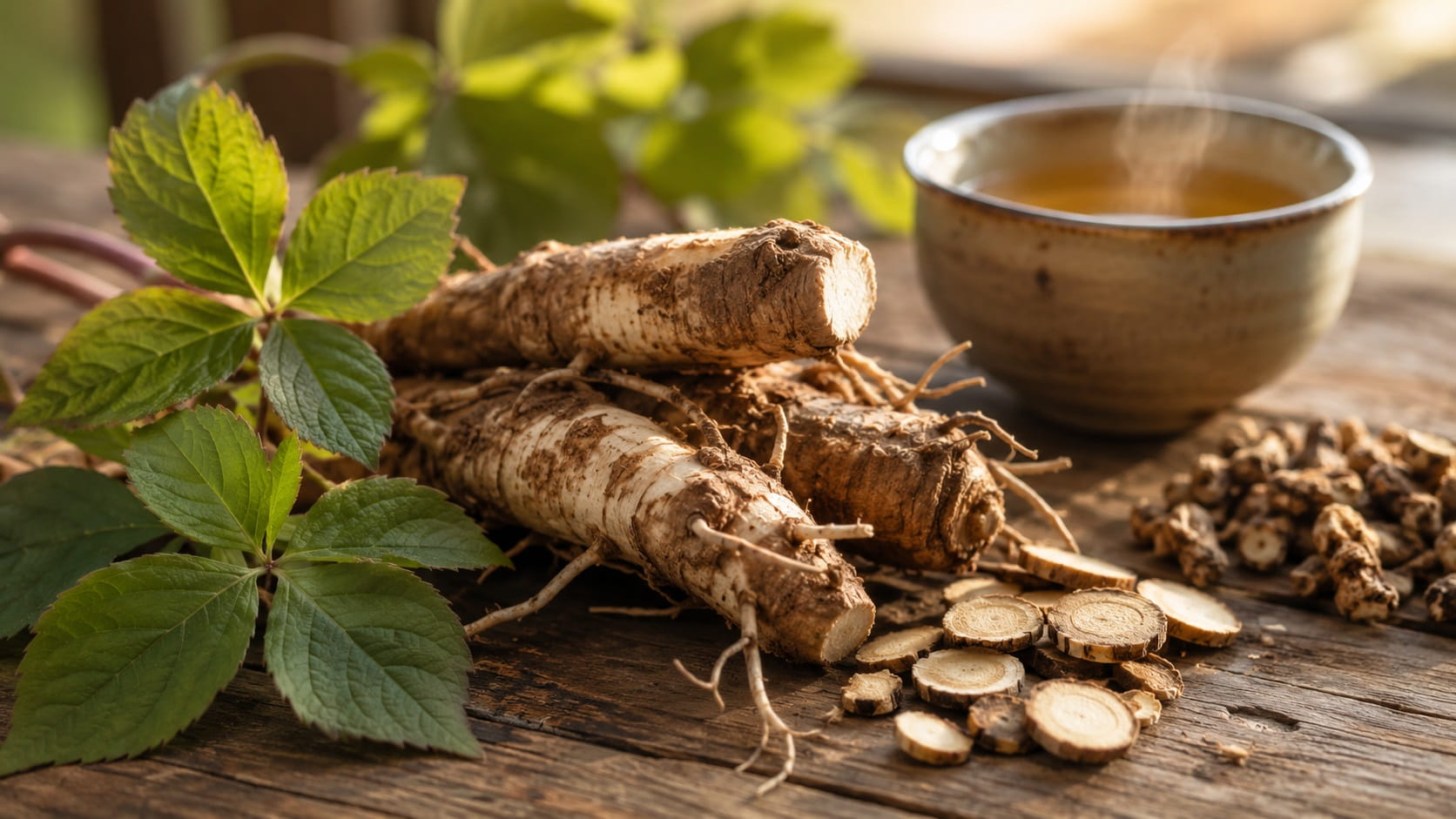
Siberian ginseng (Eleutherococcus senticosus), also called eleuthero, is a woody shrub native to Russia, China, Korea, and Japan. Despite the name, it isn’t true ginseng at all. True ginseng belongs to the Panax genus and contains compounds called ginsenosides. Siberian ginseng belongs to a different genus entirely, getting its effects from compounds called eleutherosides, mainly eleutheroside B and eleutheroside E, the two most studied.
The name mix-up isn’t just casual confusion, either. In 2002, a U.S. farm bill ruled that only herbs in the Panax genus could legally be labeled “ginseng.” That’s why you’ll increasingly see this herb sold simply as “eleuthero” rather than “Siberian ginseng,” even though both names still refer to the same plant.
People have used the root and rhizome medicinally for over 2,000 years, first in traditional Chinese medicine and later in Russian medicine. Soviet athletes and cosmonauts took it to improve stamina under stress.
Siberian Ginseng vs. Panax Ginseng at a Glance
Clients often ask me which one they should take. Here’s how they actually compare:
| Feature | Siberian Ginseng (Eleuthero) | Panax Ginseng |
|---|---|---|
| Scientific name | Eleutherococcus senticosus | Panax ginseng |
| Active compounds | Eleutherosides | Ginsenosides |
| Traditional use | Stress resilience, endurance | Energy, vitality, cognition |
| Stimulant effect | Mild | Moderate to strong |
| Typical daily dose | 300–1,200 mg (EMA cap: 4 g dried root) | 200–400 mg (standardized extract) |
| Cycling needed | Recommended, but well tolerated long-term | More strongly recommended due to stronger stimulant effect |
If you’re sensitive to stimulants or want something you can take daily without much cycling, Siberian ginseng is usually the gentler starting point.
How Siberian Ginseng Works
Botanically, it’s classed as an adaptogen, a category of plants believed to help the body cope with physical, chemical, and biological stress without overstimulating any one system. Rather than directly stimulating the adrenal glands, as it’s often described, current research suggests Siberian ginseng may help regulate the body’s stress response through the hypothalamic-pituitary-adrenal (HPA) axis. That’s the communication pathway between your brain and your adrenal glands, and it governs how you produce and respond to cortisol. This is a more accurate description of the mechanism, and it’s the thread running through most of the benefits below. It’s also worth saying plainly: direct evidence that eleuthero reliably shifts the HPA axis in humans is still limited. Much of the stress-resilience story rests on traditional use and smaller trials rather than large, standardized studies.
12 Siberian Ginseng Benefits Backed by Research
1. Fights Fatigue and Boosts Energy
This is the benefit most people come looking for. Unlike caffeine, which spikes energy and then drops you, Siberian ginseng appears to work through its effect on the HPA axis. Energy tends to come on gradually and hold, rather than spike.
I’ll be straight with you here, because a lot of sites get this one slightly wrong. A controlled trial on endurance athletes (published in the Journal of Strength and Conditioning Research) found eleuthero shifted the testosterone-to-cortisol ratio by 28.7% over six weeks. But the change wasn’t statistically significant, and it was driven mainly by a trend toward higher cortisol, not higher testosterone. Honestly, the hormonal picture here is still unsettled. Where the energy benefit holds up better is in how people actually feel: consistent, non-jittery stamina that doesn’t crash the way caffeine does.
2. Sharpens Mental Clarity and Focus
Some studies suggest Siberian ginseng may support cognitive performance by improving resilience to mental fatigue and stress, although the exact mechanisms remain under investigation. The older claim that it simply “boosts blood flow to the brain” oversimplifies what’s actually a more complex, stress-mediated effect. A review cited in the clinical reference text Botanical Medicine for Women’s Health notes that older adults experienced improvements in mental performance and social functioning after four weeks of use. That effect softened with continued long-term use, which is a good reason to cycle it rather than take it endlessly. More recent animal research has also pointed to eleutheroside B and E supporting learning and memory in aged models, though this hasn’t yet been confirmed in large human trials.
3. Strengthens Immune Defense
Eleutherosides appear to activate T-cells and natural killer cells, both central to your body’s ability to fight off pathogens. A lab study published in Antiviral Research found that eleuthero root extract inhibited replication of human rhinovirus, respiratory syncytial virus, and influenza A in infected cell cultures. Worth noting: this study was done in cell cultures, not in people, so it points to a mechanism rather than proof it’ll shorten your next cold. That’s still a big part of why it’s traditionally taken heading into cold and flu season.
4. Eases Stress by Balancing Cortisol
As an adaptogen, Siberian ginseng appears to moderate HPA axis activity rather than blocking the stress response outright. It doesn’t numb stress. Instead, it seems to help your body recover from it more efficiently. If you’re in a high-pressure job or going through a stretch of chronic stress, this is often the benefit that shows up first, usually within one to two weeks of consistent use.
I want to flag a study that most articles on this topic conveniently leave out. A randomized controlled trial of 144 people with stress-related fatigue compared eleuthero alone, professional stress-management training alone, and the two combined. Nearly everyone improved over time, but eleuthero didn’t add a measurable benefit on top of the stress-management training. That doesn’t mean the herb does nothing. It does mean that if stress is your main issue, addressing it directly (therapy, workload changes, sleep) is likely to matter more than the supplement on its own. I see eleuthero as a support, not a substitute, for that work.
5. Supports Heart Health
By improving circulation and reducing blood viscosity, Siberian ginseng may support healthier blood pressure and better cardiovascular function over time. It also has antioxidant properties that help protect blood vessels from oxidative damage, one of the underlying drivers of heart disease. One caveat worth flagging early: in some people, eleuthero can raise blood pressure rather than lower it. Anyone with hypertension should check with a doctor first; there’s more on this in the side effects section.
6. Improves Physical Performance and Endurance
Multiple studies point to improved cardiorespiratory fitness, better fat utilization during exercise, and enhanced endurance with eleuthero supplementation, though results across trials have been mixed. Some in vivo research from 2020 supports these performance effects, while other trials have found no significant change. In practice, most of my clients who use it before training report they can push longer before hitting a wall. It’s not a dramatic strength boost, but it is a real endurance edge.
7. May Help Regulate Blood Sugar
This one doesn’t get enough attention. A double-blind, placebo-controlled trial published in the International Journal of Clinical Nutrition (2013) gave people with type 2 diabetes 480 mg of a standardized eleuthero extract daily for three months. Fasting and post-meal blood sugar dropped significantly, along with HbA1c, triglycerides, and total cholesterol, compared to placebo. That’s a meaningful result. It’s also exactly why this isn’t a supplement to self-prescribe if you’re on diabetes medication. Talk to your doctor first, since eleuthero can interact with blood-sugar-lowering drugs, covered in the side effects section below.
8. Supports Bone and Joint Health
Worth being precise here: a 2021 study published in the journal Nutrients tested a fermented combination formula, not eleuthero alone. It contained Siberian ginseng alongside two other traditional herbs, and it protected against inflammatory bone loss in a mouse model. Follow-up research on the same combination also showed benefits for joint and cartilage protection in an arthritis model. It’s a promising early signal for eleuthero’s anti-inflammatory role in bone health, but human trials on eleuthero by itself for bone density haven’t been done yet.
9. Aids Skin Health and Wound Repair
Siberian ginseng’s antioxidant content helps neutralize free radicals, which are a major driver of visible skin aging. Improved circulation also means more oxygen and nutrients reaching skin cells. Separately, a lab study published in the Journal of Ethnopharmacology (2020) found that both root and bark extracts shifted macrophages toward an anti-inflammatory, repair-supporting state. Macrophages are the white blood cells that clean up and repair tissue. The researchers specifically pointed to this as a mechanism behind eleuthero’s potential wound-healing effects, which is why you’ll sometimes see it in topical skincare formulations, not just supplements.
10. Eases Menopausal Symptoms
For women going through menopause, Siberian ginseng’s stress-moderating effect can take the edge off hot flashes, mood swings, and fatigue. It doesn’t mimic estrogen; it works by calming the cortisol swings that often make menopausal symptoms feel worse.
11. Supports Male Stamina and Vitality
Men often come to me asking about Siberian ginseng for stamina and performance specifically. The endurance, circulation, and stress-response benefits above carry over directly into physical and sexual performance. I answer the testosterone question specifically in the men’s health section below, since it’s one of the things men ask me most.
12. May Support Weight Management
Siberian ginseng isn’t a fat burner, and I’m always upfront about that with clients. What it does is address two of the biggest indirect drivers of weight gain. Low energy makes workouts harder to sustain, and chronically elevated cortisol is linked to stubborn abdominal fat and stress eating. Used alongside a real diet and training plan, it can make consistency easier.
How Strong Is the Evidence?
Not every benefit above rests on the same quality of research. Here’s an honest breakdown so you know what to expect:
| Benefit | Evidence Strength |
|---|---|
| Fatigue & energy | ⭐⭐⭐⭐☆ |
| Stress resilience | ⭐⭐⭐⭐☆ |
| Immune support | ⭐⭐⭐☆☆ |
| Exercise endurance | ⭐⭐⭐☆☆ |
| Blood sugar regulation | ⭐⭐⭐☆☆ |
| Mental clarity & memory | ⭐⭐☆☆☆ |
| Skin & wound repair | ⭐⭐☆☆☆ |
| Bone & joint health | ⭐⭐☆☆☆ |
| Menopause symptom relief | ⭐⭐☆☆☆ |
| Weight management | ⭐⭐☆☆☆ |
The top of that list is where I’d set your expectations. The bottom is promising but still early: worth trying, not worth expecting dramatic results from.
What Does Siberian Ginseng Feel Like?
This is the question I get most from first-time users, and it’s rarely answered honestly online. Most people don’t get a sudden burst of energy the way they would from coffee. Instead, over the first one to three weeks, people typically describe:
- Feeling mentally clearer, rather than “wired”
- Steadier energy through the afternoon, without the usual 3 p.m. crash
- Recovering faster after exercise or a stressful day
- Handling stressful situations with a bit more composure
- Less of that dragging, low-grade fatigue that coffee doesn’t actually fix
If you’re expecting a jolt, you’ll be disappointed. If you’re looking for your baseline to shift gradually, that’s exactly what most people report.
Who Is Most Likely to Benefit From Siberian Ginseng?
Rather than a generic list of benefits, it helps to think about whether it fits your specific situation. In my clinic, the people who see the clearest results tend to be:
- Office workers with chronic stress: the cortisol-moderating effect tends to show up here first
- Shift workers: for steadier energy without relying on caffeine to push through irregular hours
- Endurance athletes: for the modest but real stamina and recovery edge
- Adults over 50: for cognitive resilience and general vitality support, with medical clearance first
- Women in menopause: for extra stress buffering during hormonal transition (see the women’s health section below)
- Busy parents: for sustained energy without the crash of another coffee
- Students during exam periods: for mental clarity under short-term academic stress
If none of these describe you, Siberian ginseng may still help. It just means going in with realistic expectations rather than a specific outcome in mind.
Siberian Ginseng for Specific Concerns
Siberian Ginseng for Anxiety
Because it moderates the stress response rather than sedating you, some people find it takes the edge off anxious feelings tied to chronic stress. It isn’t a treatment for a diagnosed anxiety disorder, and in a small number of people it can actually feel overstimulating. If you have an anxiety disorder, this is one to discuss with your doctor rather than self-treat.
Siberian Ginseng for Sleep
Siberian ginseng isn’t a sleep aid, and taken at the wrong time it can work against sleep rather than for it. That’s why timing matters more here than with most adaptogens; see the timing guidance below for specifics. Where it may help indirectly is by easing the kind of stress-driven wiredness that keeps some people up at night.
Siberian Ginseng and ADHD
Some traditional and clinical sources mention eleuthero alongside conditions like ADHD, largely due to its effects on focus and mental fatigue. The evidence here is thin, and it’s not a substitute for an evaluated ADHD treatment plan. If you’re managing ADHD, talk to your prescriber before adding any adaptogen.
Siberian Ginseng for Chronic Fatigue
This is one of the traditional uses people ask about most, so it deserves an honest answer rather than a hopeful one. The main clinical trial here (a University of Iowa study of 96 adults with fatigue lasting six months or longer) did not find that eleuthero outperformed placebo across the full group after two months. Where it did show a signal was in a smaller subgroup with less severe, “moderate” fatigue, who improved more than placebo at two months. The researchers themselves were careful to say overall efficacy wasn’t demonstrated, and that the moderate-fatigue result just makes further research worthwhile. I’d frame it this way to clients: it’s not a proven fix for chronic fatigue, but if your fatigue is mild-to-moderate rather than severe, it may be worth a trial alongside, not instead of, a proper medical workup.
Siberian Ginseng for Athletes
This is where the endurance and recovery research is strongest, even with mixed trial results. Athletes typically take it in the weeks leading up to a training block or event rather than as a single pre-workout dose, since the adaptogenic effect builds over time rather than kicking in immediately.
Siberian Ginseng Benefits for Women
Beyond the menopause support above, women in my clinic ask about eleuthero for three things specifically: hormonal balance, energy through the menstrual cycle, and skin. It doesn’t act as a hormone replacement, but by moderating the stress response, it can smooth out some of the mood and energy dips that come with hormonal shifts. Some women also find it eases menstrual fatigue and cramping, though this is based more on clinical observation than large trials, so I’d treat it as a supportive habit rather than a fix.
Siberian Ginseng Benefits for Male Health
For men, the appeal is usually stamina, focus under pressure, and physical endurance, all backed by the research above. It’s a common choice for men in demanding jobs or training blocks who want sustained output without relying on stimulants. Does Siberian ginseng increase testosterone? Not directly: no clinical trial has shown a reliable testosterone boost from eleuthero on its own. What it may do is create more favorable conditions for your body’s own hormone regulation by easing chronic stress.
Siberian Ginseng Tea Benefits
Tea is one of the gentlest ways to take Siberian ginseng, and it’s where I usually start clients who are new to adaptogens. Steep 1–2 grams of dried root in hot water for 10–15 minutes. You get a milder, more gradual effect than capsules, and it’s easier to notice how your body responds before moving to a concentrated extract. The tradeoff is a less standardized dose. If you’re using it for something specific, such as blood sugar or a health condition, capsules or a standardized extract will give you more predictable results.
Best Time to Take Siberian Ginseng
I get asked this constantly, so here’s my general guidance:
- Best time of day: Morning or early afternoon. Because it can be mildly stimulating, taking it too late can interfere with sleep.
- Before or after exercise? Most people take it 30–60 minutes before training to support endurance, though some prefer taking it consistently each morning rather than timing it around workouts specifically.
- Can you take it with coffee? Generally yes, but if you’re sensitive to stimulants, stacking the two can feel like too much at once. Start with one or the other and see how you respond before combining them.
How Long Should You Take Siberian Ginseng?
Many people assume more is better, but adaptogens often work best when used in cycles. A common approach is taking Siberian ginseng daily for six to eight weeks, followed by a two-week break before restarting if needed. This isn’t just tradition. Cycling appears to help prevent the body from adapting to it, which is part of why some of the cognitive benefits mentioned earlier softened with continuous long-term use in clinical observation.
For context, this lines up closely with official guidance: Europe’s medicines regulator, the EMA, recognizes eleutherococcus root only for short-term relief of tiredness and weakness, and specifically advises against continuous use beyond two months at a time, with a maximum of 4 grams of dried root per day. That’s a useful ceiling to keep in mind even if you’re using capsules rather than raw root, since it reflects the most conservative, regulator-reviewed read of the safety data.
If you’re taking it for occasional stress, shorter use may be enough. For ongoing fatigue or endurance support, your healthcare provider can help you settle on a schedule that fits your situation.
Siberian Ginseng Benefits and Side Effects: What to Know Before You Start
Every herb has a flip side, and I’d rather you hear it from me than find out the hard way.
Typical dosage: 300–1,200 mg per day in capsule form, or 2–3 grams of dried root as tea. Start low, around 300 mg, and increase gradually. The EMA’s upper limit is 4 g of dried root per day; more isn’t better here.
Siberian Ginseng Side Effects
Most people tolerate it well, but possible side effects include:
- Insomnia or restlessness, especially if taken late in the day
- Mild increase in heart rate
- Digestive upset
- Headache in sensitive individuals
- Elevated blood pressure at high doses
- Irritability, in less common cases
Possible Drug Interactions
| Medication type | Possible interaction |
|---|---|
| Blood thinners (e.g., warfarin) | May increase bleeding risk |
| Insulin or diabetes medication | May lower blood sugar further |
| Digoxin | May affect heart rhythm and monitoring |
| Sedatives / CNS depressants | May increase drowsiness |
| Antidepressants (SSRIs such as paroxetine, sertraline, duloxetine) | Case data has linked combined use to bleeding-related events |
| Antidepressants (agomelatine) | Case data has linked combined use to irritability, agitation, headache, and dizziness |
| Lithium | May raise lithium levels in the body |
| Immunosuppressants | May counteract intended effect |
| Statins, certain antihistamines, tamoxifen | May alter how the liver metabolizes these (via cytochrome P450 pathways) |
A pharmacology review of eleuthero’s interactions confirms the cytochrome P450 effect specifically, and a separate 2023 pharmacovigilance chart review is the source for the antidepressant interactions above. That’s another reason not to combine it with prescription medication without checking first. It’s a gentle herb, but “natural” doesn’t mean “no interactions,” and antidepressants in particular are an interaction people rarely think to ask about.
Stop Taking Siberian Ginseng If You Notice
- Severe headache
- Rapid or irregular heartbeat
- Chest pain
- Signs of an allergic reaction (rash, swelling, difficulty breathing)
- Persistent dizziness
- Insomnia lasting several days
Any of these warrant stopping the supplement and speaking with a doctor, not pushing through it.
Who Should Avoid It
- Pregnant or breastfeeding women
- Children under 12. The EMA’s traditional-use approval applies to adults and adolescents aged 12 and over; safety and dosing for younger children haven’t been established
- Anyone with uncontrolled high blood pressure
- People with autoimmune conditions, since it can stimulate immune activity
- Anyone with a hormone-sensitive condition (breast, ovarian, or uterine cancer, endometriosis, fibroids), since there’s some evidence it may have mild estrogen-like activity in the body, so caution is warranted despite it not being a direct estrogen source
- People on blood thinners, sedatives, antidepressants, lithium, or diabetes medication, without medical supervision
Is Siberian Ginseng Safe for Older Adults?
Generally, yes, and it’s one of the better-tolerated adaptogens for this group. The clinical literature on mental performance and social functioning mentioned earlier was specifically studied in older adults. That said, older adults are more likely to be on medications that interact with it, such as blood thinners, blood pressure medication, antidepressants, or sedatives, so a quick conversation with a doctor or pharmacist before starting is worth the five minutes it takes.
Does Siberian Ginseng Increase Estrogen?
Not directly. Siberian ginseng isn’t a phytoestrogen in the way herbs like red clover or black cohosh are, and it doesn’t meaningfully raise circulating estrogen levels. That said, some clinical sources flag it as having mild estrogen-like activity at the receptor level, which is why anyone with a hormone-sensitive condition should get medical clearance first. Its main hormonal effect is indirect: moderating the stress response tends to create a more balanced hormonal environment overall, which is often mistaken for a direct estrogen effect.
How to Choose a Quality Siberian Ginseng Supplement
Quality varies a lot in this category. Independent testing has found some commercial products contain little to no actual eleuthero, or hidden ingredients not listed on the label. When you’re buying:
- Look for products standardized to eleutheroside B and E content
- Choose brands that publish third-party lab testing
- Avoid proprietary blends that don’t disclose the actual eleuthero dose
- Favor organic, sustainably harvested root where possible
FAQs About Siberian Ginseng
What is the difference between Siberian ginseng and Panax ginseng?
They’re different plants entirely. Siberian ginseng contains eleutherosides; Panax ginseng contains ginsenosides. Both are adaptogens, but Siberian ginseng is generally milder and better tolerated for daily, longer-term use.
How long does it take to feel the effects?
Most people notice improved energy and reduced stress within one to two weeks of consistent use. Cognitive benefits tend to take a little longer, closer to three to four weeks.
Can I take Siberian ginseng every day?
Yes, but cycling it works best, and regulators recommend against continuous use beyond two months at a stretch. Try six to eight weeks on, then a short break, to keep it effective and stay within recognized safety guidance.
Does Siberian ginseng help with weight loss?
Not directly. It supports weight management indirectly by improving energy for exercise and helping regulate stress-related cravings and cortisol.
Is Siberian ginseng safe to take long-term?
Regulatory guidance leans toward short courses (up to two months) rather than indefinite daily use. For healthy adults who cycle it appropriately and check in with a doctor if they have an existing condition or take medication, it’s generally well tolerated.
Is it safe for children or teenagers?
The EMA’s traditional-use approval covers adults and adolescents 12 and older only. It isn’t established as safe for children under 12.
Can men and women take the same dose?
Yes, dosage isn’t typically gender-specific. It’s based on body weight, tolerance, and the reason you’re taking it, not sex.
Can you take Siberian ginseng with caffeine?
Generally yes, but if you’re sensitive to stimulants, the combination can feel like too much. Try them separately first.
Is Siberian ginseng addictive?
No. It isn’t habit-forming in the way stimulants or sedatives can be, though cycling is still recommended to keep it effective.
Can you take it at night?
Better to avoid it. Taken late, its mild stimulating effect can keep some people awake; see the timing section above for the full guidance.
Does Siberian ginseng break a fast?
In capsule or tea form with no added sugar or calories, it’s generally considered fast-friendly, though you should check the specific product label for added ingredients.
Can Siberian ginseng cause anxiety or insomnia?
In a small number of sensitive individuals, yes, particularly at higher doses or when taken later in the day. Starting with a low dose in the morning minimizes this risk.
Can you take Siberian ginseng with magnesium?
There’s no known interaction between the two, and many people take them together as part of a broader stress-support routine. As always, check with your doctor if you’re combining several supplements.
Does Siberian ginseng interact with antidepressants?
This is worth taking seriously. Case-review data has linked combined use with SSRIs (like paroxetine, sertraline, and duloxetine) to bleeding-related events, and with agomelatine to irritability, agitation, headache, and dizziness. If you’re on an antidepressant, talk to your prescriber before adding eleuthero.
A Final Word From McLee Tembo
Siberian ginseng isn’t a miracle herb, and I’ll never sell it to you as one. What it is, in my clinical experience and in the research, is a reliable, well-tolerated adaptogen that helps your body handle stress, sustain energy, and stay resilient. Honestly, that covers most of what people are struggling with when they walk into my clinic.
If you’re new to adaptogens, start with tea or a low-dose capsule, give it a few weeks, and pay attention to how your body responds. And if you have an existing health condition or take medication, antidepressants included, loop in your doctor first. It’s a simple step that saves you from unnecessary risk.
If you’d like personalized guidance on dosage or whether Siberian ginseng fits your specific health goals, our team at NFH Clinic is here to help.
Related Articles: