Emerging viruses are a growing global health concern. One of the most dangerous — though still rare — is the Nipah virus. While outbreaks have mostly occurred in parts of Asia, health experts worldwide monitor it closely because of its high fatality rate and potential to spread between people.
So how exactly does Nipah virus pass from one person to another? Who is most likely to spread it? And how can transmission be prevented?
Let’s break it down in simple terms.
What Is Nipah Virus?
Nipah virus is a zoonotic virus, meaning it spreads from animals to humans. Its natural hosts are fruit bats, but the virus can also infect pigs and other animals before reaching people.
The virus was first identified in Malaysia in 1999, during an outbreak linked to pig farms. Since then, most human outbreaks have occurred in Bangladesh and India.
Nipah infection can cause:
- Fever
- Severe headache
- Muscle pain
- Breathing difficulties
- Brain inflammation (encephalitis)
- Seizures
- Coma
The disease is serious. Fatality rates have ranged from 40% to 75% in documented outbreaks, making it one of the deadliest known viral infections.
Dr. McLee Tembo, NFH Clinic:
“Nipah virus may be rare, but when it appears, it demands immediate public health attention because of how severe the illness can become, especially when the brain and lungs are affected.”
Can Nipah Virus Spread from Person to Person?
Yes. While many cases start from animal exposure, person-to-person transmission has been confirmed and is a major concern during outbreaks.
A large long-term investigation in Bangladesh showed that some infected patients spread the virus to others, especially during the severe phase of illness.
How It Spreads Between People
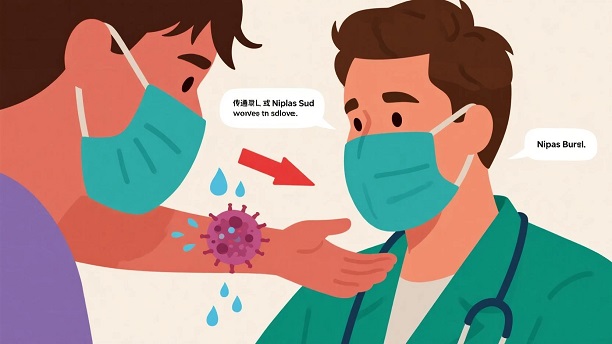
Nipah virus spreads through close contact with:
- Saliva
- Respiratory droplets from coughing
- Mucus and nasal secretions
- Bodily fluids
- Contaminated surfaces (less common but possible)
This means infection risk increases when:
- Caring for a sick family member
- Sharing close living spaces
- Providing hospital care without protective equipment
Unlike measles or COVID-19, Nipah virus does not appear to spread easily through casual airborne contact. Transmission usually requires direct, close exposure.
Who Is More Likely to Spread Nipah Virus?
Research has identified certain patterns among people who transmitted the virus to others.
1. Patients With Breathing Problems
People with respiratory symptoms such as coughing or pneumonia-like illness were much more likely to infect others. This is because:
- The virus is present in respiratory secretions
- Coughing spreads droplets to close contacts
2. Severe Cases of Illness
Transmission was most common when patients were very ill, especially those who later died. Severe disease may mean:
- Higher viral load
- More bodily fluid exposure
- Increased need for hands-on care
3. Older Adults
Most transmission events in the study came from patients over 45 years old. The reason is not fully understood but may relate to:
- More severe symptoms
- Biological differences in immune response
4. Male Patients
Men appeared more likely to spread infection, though researchers are still unsure why. It does not seem to be simply due to having more social contacts.
Dr. McLee Tembo explains:
“The key factor is not gender itself, but severity of symptoms — especially respiratory involvement. Anyone with breathing symptoms during a Nipah infection should be treated as highly infectious.”
When Is a Person Most Contagious?
People are most likely to transmit Nipah virus during the acute symptomatic phase, meaning:
- When fever is present
- When breathing problems begin
- When neurological symptoms develop
There is currently no strong evidence that people spread the virus before symptoms appear.
How Do Outbreaks Usually Start?
Before person-to-person spread occurs, most outbreaks begin with animal-to-human transmission, commonly from:
- Drinking raw date palm sap contaminated by bats
- Contact with infected pigs
- Exposure to bat saliva, urine, or fruit partially eaten by bats
Stopping the first cases from spreading to others is critical.
How Can Nipah Virus Transmission Be Prevented?
There is no specific cure and no widely available vaccine yet, so prevention is essential.
In Healthcare Settings
- Use gloves, masks, and protective gowns
- Isolate suspected patients
- Limit visitors
- Strict hand hygiene
At Home
If caring for a sick person:
- Avoid contact with saliva and respiratory secretions
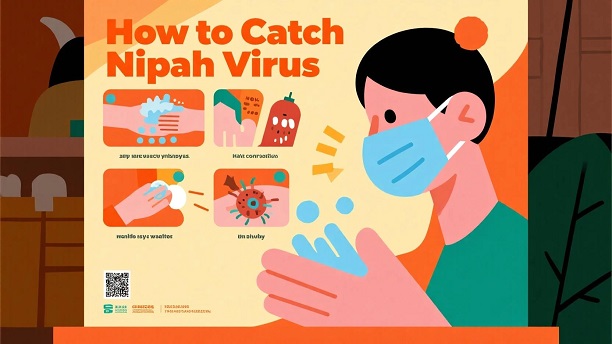
- Wash hands frequently with soap
- Use masks when close to the patient
- Do not share utensils, bedding, or towels
In Communities at Risk
- Avoid raw date palm sap
- Wash fruits thoroughly
- Avoid contact with bats or sick animals
Is Nipah Virus a Pandemic Threat?
Scientists monitor Nipah closely because:
- It has a high death rate
- It can spread between people
- It can cause hospital outbreaks
However, it currently does not spread easily enough between humans to cause a global pandemic like influenza or COVID-19. Still, early detection and infection control remain vital.
When to Seek Medical Care
Seek urgent medical help if someone with possible exposure develops:
- Fever with severe headache
- Confusion or unusual drowsiness
- Seizures
- Difficulty breathing
Early supportive care improves survival chances.
Frequently Asked Questions (FAQs) About Nipah Virus
1. How does Nipah virus spread from person to person?
Nipah virus spreads through close contact with an infected person’s saliva, respiratory droplets, mucus, and other bodily fluids. Transmission often happens while caring for a sick patient at home or in hospitals without proper protective equipment.
2. Is Nipah virus airborne like COVID-19?
No. Nipah virus does not spread easily through the air over long distances. It mainly spreads through direct contact with respiratory secretions or body fluids, especially during close caregiving situations.
3. When is a Nipah patient most contagious?
People are most infectious during the symptomatic phase, particularly when they have:
- Fever
- Cough or breathing problems
- Severe illness
Transmission is more likely when respiratory symptoms are present.
4. Who is most likely to transmit Nipah virus to others?
Studies show transmission is more common in patients who:
- Have breathing difficulties
- Are severely ill
- Are older adults
These patients may release more virus through respiratory secretions.
5. Can Nipah virus spread before symptoms appear?
There is no strong evidence that people spread Nipah virus before symptoms begin. Most transmission happens when the person is already visibly ill.
6. What are the first symptoms of Nipah virus infection?
Early symptoms include:
- Fever
- Headache
- Muscle pain
- Fatigue
These can progress to brain inflammation (encephalitis), confusion, seizures, and breathing difficulties.
7. Is there a cure or vaccine for Nipah virus?
Currently, there is no specific antiviral cure and no widely available vaccine. Treatment focuses on supportive medical care and managing complications.
8. How can families prevent Nipah virus spread at home?
- Avoid contact with saliva and respiratory secretions
- Wash hands frequently
- Use masks when near the sick person
- Do not share utensils, towels, or bedding
9. How do outbreaks usually start?
Most outbreaks begin when humans are exposed to infected animals, especially fruit bats, or consume raw date palm sap contaminated by bats. Person-to-person spread may follow.
10. Should Nipah virus be a global concern?
Yes. Although outbreaks are currently rare, Nipah virus is closely monitored because of its high death rate and potential to spread in healthcare settings if infection control measures are weak.
Key Takeaways
- Nipah virus can spread from person to person through close contact with respiratory secretions and body fluids.
- Transmission risk is higher in severe cases, especially those with breathing problems.
- Protective measures in hospitals and homes are crucial.
- Avoiding animal sources like contaminated palm sap helps stop outbreaks before they grow.
Dr. McLee Tembo concludes:
“Awareness and infection control save lives. Rapid isolation, protective care, and community education are our strongest tools against Nipah virus.”
About NFH Clinic
NFH Clinic is committed to providing evidence-based medical education and community-focused healthcare guidance. Our medical team reviews emerging health threats to keep our community informed and protected.
Share:
Related Articles: