Knowing that cherries are good for you is one thing. Actually keeping them fresh and finding new ways to eat them before they go soft is a different challenge altogether. This quick guide covers cherry season, proper storage, and easy ways to work cherries into meals you already eat.
For the full breakdown of nutrition facts and health benefits, see our guide to the health benefits of cherries.
When Are Cherries in Season?
Fresh cherries have a fairly short window. In most regions, peak season runs from late spring through early summer, typically May through August depending on where you live and the variety. Outside of that window, fresh cherries at the store tend to be more expensive and less flavorful, since they’ve usually traveled further to reach the shelf.
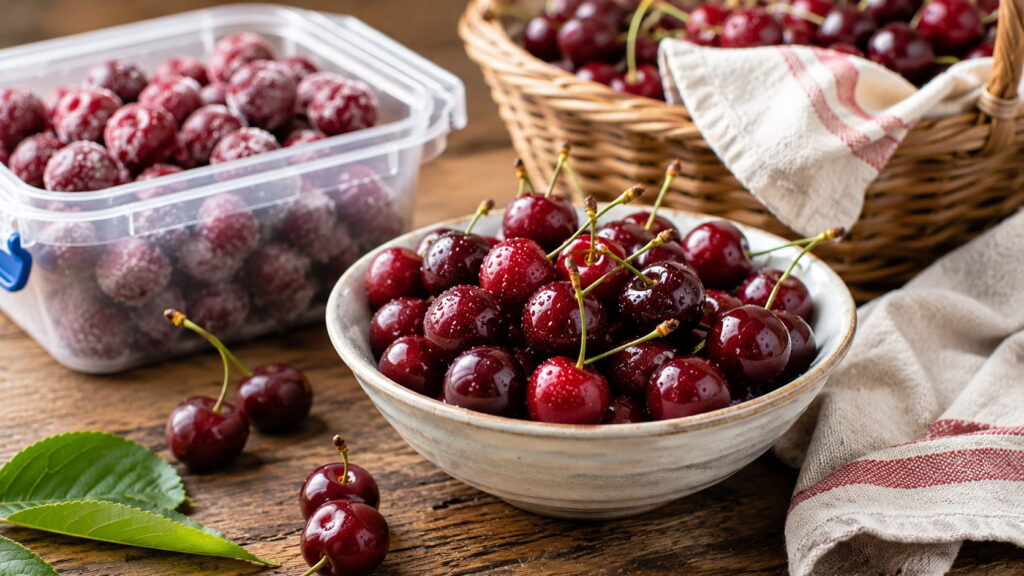
Frozen cherries solve this problem. They’re picked and flash-frozen at peak ripeness, which locks in most of the antioxidants and nutrients, so you’re not losing much by reaching for the freezer bag in December.
How to Store Fresh Cherries
Cherries are delicate and start losing quality quickly once picked. A few simple habits go a long way:
- Refrigerate immediately. Don’t leave cherries sitting at room temperature; the cold slows spoilage significantly.
- Don’t wash them until you’re ready to eat. Excess moisture speeds up mold growth, so rinse just before eating or cooking.
- Keep them dry and loosely packed. A shallow container lined with a paper towel helps absorb excess moisture better than a sealed bag.
- Expect about one week of freshness. Fresh cherries generally hold up for five to seven days in the fridge before quality drops off.
How to Store Cherries in the Freezer
If you’ve bought more than you can eat in a week, freezing is the easiest way to avoid waste:
- Wash and thoroughly dry the cherries.
- Remove the pits if you plan to use them in smoothies or baking later.
- Spread them in a single layer on a baking sheet and freeze for a few hours.
- Transfer to a freezer bag once solid, so they don’t clump together.
Properly frozen cherries keep well for up to a year without a major drop in nutritional value.
Best Ways to Eat Cherries
Beyond snacking on them straight from the bowl, cherries fit easily into meals you’re probably already making:
- Yogurt or cottage cheese, stirred in fresh or thawed from frozen
- Oatmeal or overnight oats, added at the end for texture
- Smoothies, where frozen cherries add natural sweetness without extra sugar
- Salads, paired with feta or goat cheese and a light vinaigrette
- Roasted or grilled, which brings out a deeper, jammier sweetness
- Frozen as a simple dessert, similar to grapes, for a low-calorie sweet treat
A Simple Rule of Thumb
If you’re buying cherries to eat within the week, go fresh. If you want cherries on hand for smoothies, baking, or general cooking year-round, frozen is the more practical and often more affordable choice. Either way, you’re getting the same core nutrition, the difference is really just convenience and timing.
This article is for informational purposes and does not replace personalized medical advice.
Related Articles: