Overview Summary
Red yeast rice is a fermented rice product containing monacolin K, a compound chemically identical to lovastatin. Clinical studies show it can lower LDL cholesterol by 15–25%, making it a potential option for individuals with mild to moderate hypercholesterolemia. However, because it acts like a statin, it may cause similar side effects including muscle pain and liver enzyme elevations. Patients should consult a healthcare professional before use, particularly if they have liver disease, take cholesterol medications, or are pregnant.
Quick Facts: Red Yeast Rice
Medical Classification:
Dietary supplement containing statin-like compounds
Primary Use:
LDL cholesterol reduction in selected patients
Mechanism of Action:
Inhibits HMG-CoA reductase (same pathway as statins)
Typical LDL Reduction:
Approximately 15–25% (product-dependent)
Active Compound:
Monacolin K (lovastatin analogue)
Prescription Equivalent:
Pharmacologically similar to low-dose statin therapy
Common Concerns:
Muscle pain, liver enzyme elevation, drug interactions
Not Recommended For:
Pregnancy, liver disease, concurrent statin therapy
Monitoring Advised:
Lipid profile, liver function tests
Clinical Evidence Level:
Moderate for LDL lowering; limited for long-term outcomes
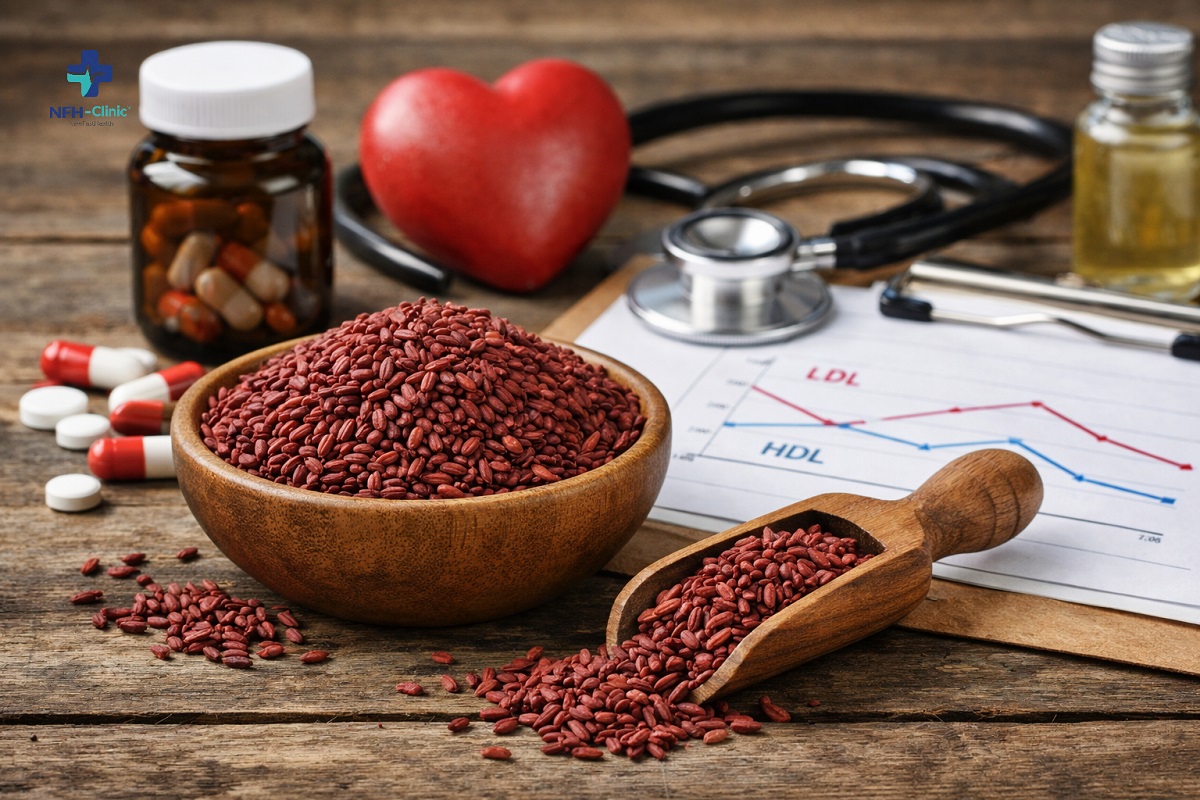
Red Yeast Rice Benefits for Cholesterol: Effectiveness, Safety & Statin Comparison
Red yeast rice has emerged as one of the most widely discussed natural supplements for cholesterol management and cardiovascular risk reduction. Frequently marketed as a natural alternative to statin therapy, red yeast rice contains biologically active compounds capable of lowering LDL cholesterol levels. As interest grows in non-prescription cholesterol treatments, many patients ask whether red yeast rice is an effective and safe strategy for managing hyperlipidemia, preventing heart disease, or reducing dependence on prescription medications.
Understanding the clinical benefits, limitations, and safety considerations of red yeast rice is essential before incorporating it into a cholesterol-lowering plan.
What Is Red Yeast Rice?
Red yeast rice is produced by fermenting rice with the yeast Monascus purpureus. During fermentation, the yeast generates compounds called monacolins.
The most medically relevant compound is:
- Monacolin K – chemically identical to lovastatin, a prescription cholesterol-lowering medication.
Because of this, red yeast rice is not just a “food supplement” — it can act pharmacologically like a statin drug.
How Red Yeast Rice Works in the Body
The cholesterol-lowering effects of red yeast rice are primarily attributed to monacolin K. This compound inhibits HMG-CoA reductase, the rate-limiting enzyme in hepatic cholesterol synthesis. By reducing endogenous cholesterol production, the liver increases LDL receptor expression, enhancing clearance of LDL particles from circulation.
From a pharmacologic standpoint, this mechanism is identical to that of lovastatin. As a result, red yeast rice should be viewed not simply as a nutritional supplement, but as a biologically active lipid-lowering agent.
Clinical implication:
Patients may experience both the benefits and risks associated with statin therapy.
How Does Red Yeast Rice Lower Cholesterol?
Monacolin K works by blocking:
- HMG-CoA reductase — the key liver enzyme responsible for cholesterol production.
This results in:
- Reduced LDL cholesterol (bad cholesterol)
- Modest effects on total cholesterol
- Variable effects on HDL cholesterol (good cholesterol)
In clinical terms, red yeast rice behaves similarly to a low-dose statin.
Evidence-Based Benefits of Red Yeast Rice
1. Reduction of LDL Cholesterol
Multiple randomized controlled trials show:
- LDL reduction typically ranges 15–25%
Clinical interpretation:
- Comparable to low-intensity statin therapy
- Useful for mild-to-moderate hypercholesterolemia in selected patients
Evidence summary:
- Studies demonstrate statistically significant LDL lowering versus placebo
- Effects depend heavily on monacolin K content (which varies widely by product)
Clinical Evidence
Randomized controlled trials and meta-analyses have demonstrated that standardized red yeast rice preparations can reduce LDL cholesterol by approximately 15–25%. The magnitude of reduction depends largely on monacolin content and baseline lipid levels.
Clinical interpretation:
- Comparable to low-intensity statin therapy
- May benefit patients with mild LDL elevation
- Not a substitute for high-intensity statins in high-risk patients
Notably, variability among commercial products can lead to inconsistent therapeutic effects.
2. Potential Cardiovascular Risk Reduction
Some long-term studies (primarily from China) suggest:
- Lower rates of cardiac events in high-risk patients
However:
- Data quality varies
- Many studies used standardized pharmaceutical-grade extracts
Clinical caution:
- Benefits seen with regulated preparations may not apply to over-the-counter supplements with inconsistent dosing
3. Improved Lipid Profile
Observed effects may include:
- Lower total cholesterol
- Reduced triglycerides (modest)
- Minimal or inconsistent HDL increases
4. Anti-Inflammatory Effects
Some studies report reductions in:
- CRP (C-reactive protein)
Clinical meaning:
- Inflammation plays a role in atherosclerosis
- Effects are supportive but not primary therapy
5. Use in Statin-Intolerant Patients (Carefully Selected)
In certain individuals:
- Lower-dose monacolin exposure may be tolerated
But important nuance:
- Because monacolin K is lovastatin, muscle symptoms can still occur
Patient-Centered Clinical Examples
Case Example 1: Mild LDL Elevation
Patient: 46-year-old with LDL 162 mg/dL
History: No cardiovascular disease, exercises regularly
Concern: Hesitant about prescription statins
Clinical approach:
- Lifestyle optimization first (diet, weight, activity)
- Discuss red yeast rice as an option
- Baseline liver function tests recommended
- Recheck lipids after 8–12 weeks
Outcome (typical scenario):
- LDL reduced ~18%
- Continued monitoring required
Case Example 2: Statin Side Effects
Patient: 58-year-old stopped statin due to muscle aches
Question: “Can I switch to red yeast rice?”
Clinical interpretation:
- Red yeast rice contains statin-like compounds
- Muscle symptoms may recur
- CK and liver monitoring advisable
- Alternative non-statin therapies may be safer
Case Example 3: High-Risk Patient
Patient: Prior heart attack
Considering: Replacing statin with red yeast rice
Clinical recommendation:
- Not appropriate
- Prescription statins have proven mortality reduction
- Supplements lack equivalent outcome evidence
Safety Considerations: What Many Articles Omit
1. Inconsistent Monacolin Content
Major issue:
- Supplements vary dramatically in monacolin K levels
- Some contain negligible amounts
- Others approach prescription drug potency
Implication:
- Unpredictable effectiveness and safety
2. Statin-Like Side Effects
Possible adverse effects:
- Muscle pain (myalgia)
- Elevated CK
- Liver enzyme elevation
- Rare rhabdomyolysis
Patients often misunderstand:
“Natural” does not mean “side-effect free.”
3. Liver Toxicity Risk
Especially important in:
- Pre-existing liver disease
- Alcohol misuse
- Combined statin therapy
4. Drug Interactions
Potential interactions with:
- Statins
- Certain antibiotics (macrolides)
- Antifungals
- Grapefruit products
Mechanism:
- CYP3A4 metabolism interference
5. Citrinin Contamination
Quality concern:
- Some products contain citrinin, a nephrotoxic mycotoxin
Clinical implication:
- Kidney risk with poorly regulated supplements
Safety, Side Effects, and Medical Risks
Despite its natural origin, red yeast rice may produce side effects similar to prescription statins.
Potential Adverse Effects
Patients may experience:
- Muscle pain or weakness
- Elevated creatine kinase (CK)
- Liver enzyme abnormalities
- Rare cases of statin-associated myopathy
Individuals reporting unexplained muscle soreness, fatigue, or dark urine should seek medical evaluation.
Liver Health Considerations
Because monacolin K affects hepatic metabolism, red yeast rice may increase the risk of liver enzyme elevation. Patients with pre-existing liver disease or those consuming excessive alcohol should avoid unsupervised use.
Drug Interactions
Red yeast rice may interact with:
- Statins
- Macrolide antibiotics
- Azole antifungals
- Grapefruit products
These interactions may increase the risk of muscle toxicity.
Who Should Avoid Red Yeast Rice?
Red yeast rice is not recommended for:
- Pregnancy or breastfeeding
- Active liver disease
- History of statin-induced myopathy
- Concurrent statin use (unless supervised)
- Significant kidney disease
- High cardiovascular-risk patients needing proven therapy
How to Use Red Yeast Rice
Typical studied doses:
- 1,200–2,400 mg/day
Clinical best practice:
- Choose reputable brands with third-party testing
- Obtain baseline:
- Lipid profile
- Liver function tests
- Reassess at 8–12 weeks
Is Red Yeast Rice Right for You?
Red yeast rice may be appropriate for:
✔ Adults with mild to moderate LDL elevation
✔ Patients unable to tolerate low-dose statins
✔ Individuals seeking adjunct lifestyle therapy
It is not appropriate for:
✖ Patients with established cardiovascular disease requiring aggressive LDL reduction
✖ Pregnancy or breastfeeding
✖ Active liver disease
✖ History of statin-induced muscle injury
Clinical consultation helps determine whether benefits outweigh risks.
Red Yeast Rice vs Statins: Clinical Comparison
Patients frequently ask whether red yeast rice can replace prescription statins. While both may lower cholesterol, important differences exist in potency, regulation, safety monitoring, and cardiovascular outcome data.
Comparison Overview
| Feature | Red Yeast Rice | Prescription Statins |
|---|---|---|
| Active Compound | Monacolin K (lovastatin analogue) | Regulated statin medications |
| Mechanism of Action | Inhibits HMG-CoA reductase | Inhibits HMG-CoA reductase |
| LDL Reduction | ~15–25% (variable) | 30–60% depending on intensity |
| Dose Consistency | Highly variable by brand | Precisely standardized |
| Regulation | Dietary supplement | Strict pharmaceutical regulation |
| Outcome Evidence | Limited / mixed | Strong evidence for heart attack & stroke reduction |
| Side Effects | Statin-like possible | Well-characterized |
| Monitoring Required | Advisable but inconsistent | Standard clinical protocols |
| Drug Interactions | Yes | Yes |
| Appropriate For | Selected low-risk patients | Mild to very high-risk patients |
Key Clinical Differences
1. Potency and Predictability
Statins provide predictable LDL reductions based on dosage and drug selection. Red yeast rice effectiveness varies due to inconsistent monacolin K concentrations across supplements.
Clinical implication:
Patients may experience unreliable cholesterol lowering.
2. Cardiovascular Outcome Protection
Prescription statins have robust evidence demonstrating reduction in:
- Heart attacks
- Strokes
- Cardiovascular mortality
Red yeast rice lacks comparable large-scale global outcome trials.
Clinical implication:
Statins remain the standard of care for moderate to high-risk patients.
3. Safety Monitoring
Statin therapy includes established monitoring guidelines for:
- Liver enzymes
- Muscle toxicity
- Drug interactions
Supplement use often occurs without structured laboratory surveillance.
4. Misconception: “Natural Means Safer”
Because red yeast rice contains a statin-identical compound, risks such as muscle pain and liver enzyme elevation may still occur.
When Red Yeast Rice May Be Considered
✔ Mild LDL elevation
✔ Low cardiovascular risk
✔ Patient refusal of statins
✔ Adjunct to lifestyle therapy
When Statins Are Clearly Preferred
✔ Established heart disease
✔ Diabetes with elevated LDL
✔ Prior stroke or heart attack
✔ Very high LDL levels
✔ Familial hypercholesterolemia
Clinical Bottom Line of the Comparison
Red yeast rice may offer modest LDL reduction, but it does not replace prescription statins for patients requiring evidence-based cardiovascular protection. Treatment decisions should consider overall risk profile, LDL targets, and tolerance to therapy.
Frequently Asked Questions
Is red yeast rice effective for lowering cholesterol?
Clinical studies show that standardized red yeast rice preparations can reduce LDL cholesterol by approximately 15–25%. However, effectiveness varies significantly between commercial products due to inconsistent monacolin K content.
Is red yeast rice a natural statin?
Yes. Red yeast rice contains monacolin K, a compound chemically identical to lovastatin. This means it works through the same cholesterol-lowering pathway as statin medications.
Can red yeast rice replace prescription statins?
For most patients, no. Prescription statins have strong evidence demonstrating reduction in heart attacks and strokes. Red yeast rice may be considered only in selected low-risk individuals under medical supervision.
What are the side effects of red yeast rice?
Possible side effects include:
- Muscle pain or weakness
- Liver enzyme elevations
- Digestive discomfort
- Rare statin-associated myopathy
Patients experiencing unexplained muscle symptoms should seek medical evaluation.
Does red yeast rice damage the liver?
In some individuals, red yeast rice may elevate liver enzymes, particularly at higher doses or when combined with other cholesterol-lowering medications. Liver function monitoring is advisable.
Who should not take red yeast rice?
Avoid use if you:
- Are pregnant or breastfeeding
- Have liver disease
- Have a history of statin-induced muscle injury
- Take prescription statins (unless supervised)
How long does red yeast rice take to lower cholesterol?
Lipid improvements are typically observed within 6–12 weeks, though individual responses vary.
Is red yeast rice safer than statins?
Not necessarily. Because it contains a statin-like compound, similar side effects may occur. Additionally, supplement quality and dosing are less regulated.
Can red yeast rice cause muscle pain?
Yes. Muscle aches, weakness, or cramps may occur, similar to statin therapy.
What should I monitor while taking red yeast rice?
Clinicians may recommend:
- Lipid profile
- Liver enzymes (ALT/AST)
- Creatine kinase (if muscle symptoms occur)
Clinical Bottom Line
Red yeast rice can meaningfully reduce LDL cholesterol, but it should not be mistaken for a harmless herbal remedy. Its active compound functions identically to a statin medication, carrying both therapeutic potential and clinically relevant risks.
For carefully selected low-risk individuals, red yeast rice may serve as part of a cholesterol-management strategy under professional supervision. However, patients at moderate or high cardiovascular risk should rely on evidence-based prescription therapies with proven outcome benefits.
Informed decision-making, laboratory monitoring, and medical guidance remain essential for safe use.
Key Takeaways for Patients
- Effective for mild-to-moderate LDL reduction
- Acts like a low-dose statin
- Quality and dosing vary widely
- Side effects and interactions are real
- Medical guidance is strongly recommended
Related Articles: