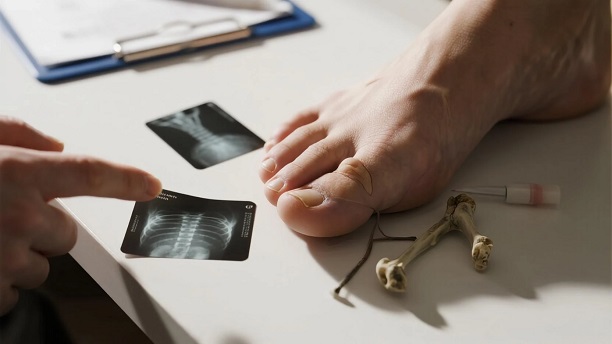
Stubbing your toe can hurt — a lot. But how do you know if it’s just a bad bruise or an actual broken toe?
A toe fracture is more common than many people realize. In fact, toe injuries are among the most frequent foot injuries treated in clinics. Knowing the signs early helps prevent long-term complications like chronic pain, improper healing, or joint stiffness.
“People often ignore toe injuries thinking they’ll ‘walk it off,’ but untreated fractures can heal incorrectly and cause lifelong discomfort,” says Dr. McLee Tembo, NFH Clinic.
Let’s break it down clearly.
What Is a Broken Toe?
A broken toe (toe fracture) occurs when one of the small bones in your toe cracks or breaks due to trauma. This usually happens from:
- Stubbing the toe hard against an object
- Dropping something heavy on the foot
- Sports injuries
- Falls or accidents
Even a small impact can cause a fracture because toe bones are thin and vulnerable.
Main Symptoms of a Broken Toe
Not all toe pain means a fracture, but the following signs strongly suggest a broken bone rather than a sprain.
1. Immediate, Intense Pain
Pain from a fracture is usually sharp and severe right after the injury. It often worsens when trying to walk or move the toe.
2. Swelling That Doesn’t Improve
Swelling is normal after injury, but with a fracture it can:
- Appear quickly
- Last for several days
- Make the toe look noticeably larger
3. Bruising That Spreads
Deep bruising or a black-and-blue color may appear within hours and can spread into the foot.
4. Deformity
This is one of the clearest signs. The toe may:
- Look crooked
- Be bent unnaturally
- Point in the wrong direction
5. Difficulty Walking
If putting weight on the foot causes sharp pain, you may have a fracture rather than a mild injury.
6. Limited Toe Movement
You may not be able to move the toe at all, or movement causes severe pain.
7. Numbness or Cold Sensation
Tingling, numbness, or the toe turning pale or blue can signal nerve or blood flow issues — this requires urgent care.
8. A “Pop” at Time of Injury
Some patients report hearing or feeling a pop when the bone breaks, though this does not happen in every case.
Broken Toe vs. Sprained Toe: How to Tell the Difference
| Symptom | Sprain | Fracture |
|---|---|---|
| Pain level | Moderate | Severe |
| Deformity | Rare | Common |
| Bruising | Mild | Significant |
| Walking ability | Possible with discomfort | Often very painful |
| Healing time | 1–3 weeks | 4–8+ weeks |
If symptoms are severe or not improving after 24–48 hours, a fracture is more likely.
When to Seek Immediate Medical Attention
Go to a clinic or emergency department immediately if:
- The toe is clearly deformed
- Bone is visible through the skin (open fracture)
- The toe turns blue, white, or numb
- There is severe bleeding
- The injury involves the big toe
- You have diabetes or poor circulation
“The big toe is crucial for balance and walking. Fractures here should always be evaluated with an X-ray,” advises Dr. McLee Tembo.
First Aid for a Suspected Broken Toe
While waiting to see a doctor:
1. Rest
Avoid walking or putting weight on the foot.
2. Ice
Apply ice wrapped in cloth for 15–20 minutes every 2–3 hours.
3. Elevate
Raise the foot above heart level to reduce swelling.
4. Buddy Taping
Gently tape the injured toe to the neighboring toe with soft padding between them. Do not tape tightly — this can reduce circulation.
5. Wear Stiff-Soled Shoes
A firm shoe limits movement and protects the toe.
Do You Always Need an X-Ray?
Yes — if symptoms suggest a fracture.
An X-ray confirms:
- Whether the bone is broken
- If pieces are out of place
- If surgery or special treatment is needed
Ignoring a fracture can lead to improper healing and long-term joint problems.
How Long Does a Broken Toe Take to Heal?
Most simple toe fractures heal in:
4 to 6 weeks (sometimes up to 8 weeks)
However, healing time depends on:
- Which toe is broken
- Severity of fracture
- Your age and health
- Whether you follow treatment instructions
Treatment Options
Treatment may include:
- Buddy taping
- Protective footwear
- Crutches to reduce weight bearing
- Pain relief medication
- Splints or casting (for serious cases)
- Surgery (rare, but needed for severe displacement)
Possible Complications If Untreated
Without proper care, a broken toe may cause:
- Chronic pain
- Arthritis in the joint
- Deformity
- Difficulty walking
- Permanent stiffness
FAQs: How to Know If Your Toe Is Broken
How do I know if my toe is broken or just bruised?
A broken toe usually causes severe pain, swelling, bruising, and difficulty walking. The toe may look crooked or deformed. Bruising alone without severe pain or deformity may indicate a soft tissue injury instead.
Can I walk on a broken toe?
Walking is often painful and may worsen the injury. Limited weight bearing is advised until a medical professional evaluates the toe, especially if pain is severe or swelling increases.
How long does a broken toe take to heal?
Most simple toe fractures heal in 4 to 6 weeks, though some may take up to 8 weeks depending on severity, age, and overall health.
Do all broken toes need an X-ray?
Yes. An X-ray confirms the fracture, shows whether bones are out of alignment, and helps determine the correct treatment. Some fractures require more than just buddy taping.
What happens if a broken toe is not treated?
Untreated fractures can heal improperly, leading to chronic pain, arthritis, deformity, and difficulty walking.
Is buddy taping enough for a broken toe?
Buddy taping can help stabilize minor fractures, but it should be done after medical evaluation. Severe fractures, especially involving the big toe, may need additional treatment.
When should I go to the hospital for a toe injury?
Seek immediate care if the toe is deformed, bone is visible, there is numbness or color change (blue/white), severe bleeding, or if the big toe is injured.
Can a broken toe heal on its own?
Some minor fractures may heal with rest and protection, but medical assessment ensures proper alignment and prevents long-term complications.
Final Thoughts
Toe injuries may seem minor, but fractures are common and often overlooked. If pain is severe, swelling persists, or the toe looks abnormal, it’s safer to get checked.
“Early diagnosis means faster healing and fewer complications,” says Dr. McLee Tembo.
If you suspect a broken toe, seek medical assessment to ensure proper recovery.
Related Articles: