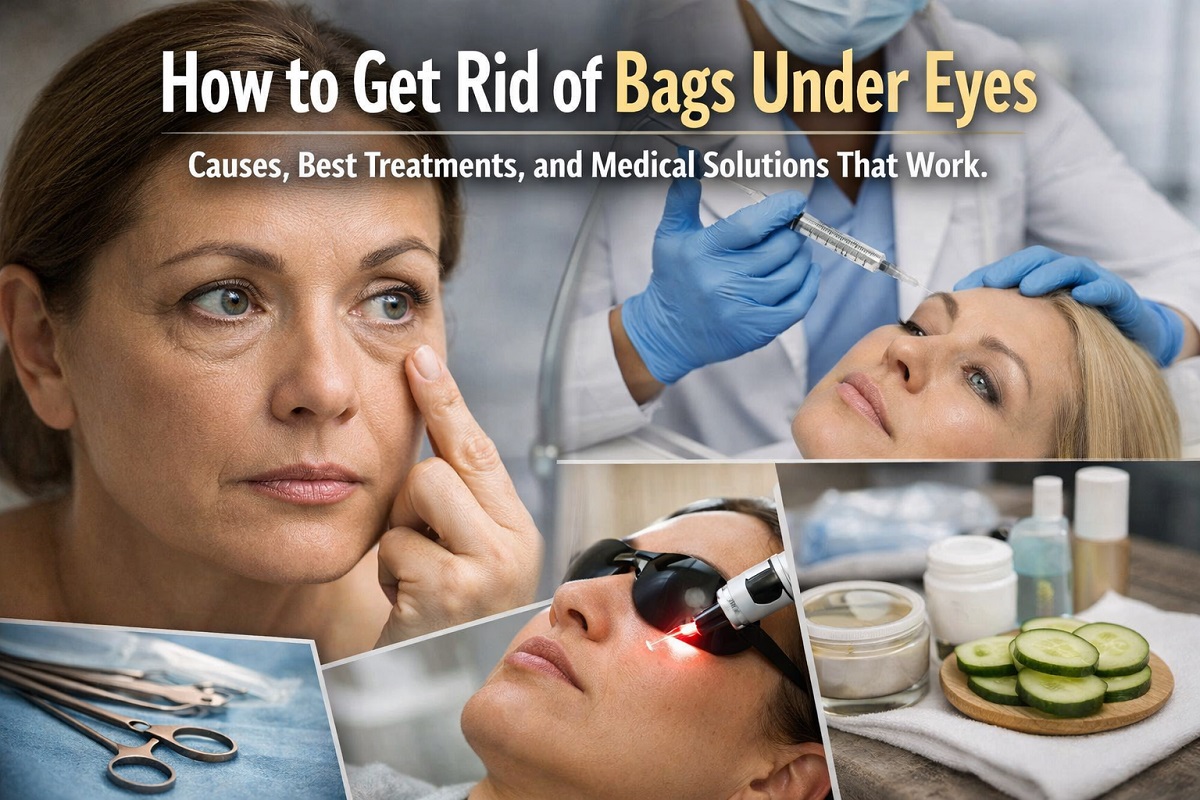
Under-eye bags are a common cosmetic and medical concern affecting millions of people worldwide. Many patients seek professional under eye bags treatment because puffiness can make them look older, tired, or unhealthy even when they feel well.
In medical practice, under-eye bags usually develop due to aging, fluid retention, allergies, lifestyle factors, or genetics. While they are usually harmless, effective treatment depends on identifying the underlying cause.
Modern dermatology and cosmetic treatment options, along with preventive care and lifestyle changes, can significantly reduce or permanently remove eye bags in many patients.
Understanding what causes under-eye bags and the best treatment options is the first step toward achieving healthier, more youthful-looking skin.
What Causes Bags Under Eyes?
Under-eye bags are usually caused by aging, fluid retention, allergies, or lack of sleep. The most effective treatments include cold compresses, proper sleep, reducing salt intake, using medical-grade eye creams, and treating underlying allergies. In some cases, dermatologist treatments such as laser therapy, fillers, or cosmetic procedures may be required to remove under-eye bags permanently.
Under-eye bags form when the tissue structures and muscles supporting the eyelids weaken. This allows fat and fluid to accumulate under the eyes, creating visible swelling.
- How to get rid of eye bags permanently without surgery
- Best dermatologist treatment for under eye bags
- How to reduce eye bags fast naturally
- What causes eye bags and how to treat them
- Best medical treatment for eye bags
Why Under-Eye Bags Happen and Why They Matter
Under-eye bags are one of the most common cosmetic and dermatologic concerns seen in clinical practice. They affect both men and women and can appear as puffiness, swelling, or loose skin beneath the eyes. While under-eye bags are usually harmless, they can make a person look tired, older, or unwell—even when they feel healthy.
From a medical perspective, under-eye bags develop due to a combination of aging, fluid retention, fat redistribution, skin thinning, and lifestyle factors. Understanding the true cause is essential because treatment effectiveness depends on the underlying mechanism.
Key medical insight:
Under-eye bags are not always caused by fatigue. In many patients, they result from structural changes in the skin and tissues that cannot be reversed by sleep alone.
Common contributing factors include:
- Aging and collagen loss
- Fluid retention, especially in the morning
- Allergies and sinus congestion
- Genetics and inherited facial structure
- Chronic sleep deprivation
- High salt intake
- Smoking and alcohol use
- Sun damage
When these factors combine, the delicate tissue under the eyes weakens, allowing fat and fluid to accumulate.
The Biology Behind Under-Eye Bags: What Happens Under the Skin
The skin under your eyes is among the thinnest in the entire body. As you age, the body produces less collagen and elastin—the proteins responsible for firmness and elasticity.
This leads to:
- Skin thinning
- Muscle weakening
- Fat shifting forward
- Fluid accumulation
These changes create visible puffiness and shadows.
Clinical evidence:
Dermatology research confirms that collagen production declines by approximately 1% per year after age 20, accelerating visible aging, including under-eye bags.
Patient example (NFH Clinic case):
A 44-year-old woman presented with persistent under-eye puffiness despite sleeping well. Examination showed fat pad protrusion due to age-related tissue weakening—not fatigue. Lifestyle measures helped slightly, but structural changes required targeted skincare and medical treatment.
This illustrates an important point:
Not all under-eye bags respond to home remedies. Cause determines outcome.
How to Get Rid of Bags Under Eyes
The best treatment for under eye bags depends on the cause. Fluid-related eye bags often improve with home treatment, while aging-related eye bags may require dermatologist treatment or cosmetic procedures.
Below are medically supported and clinically relevant treatments, starting with the most effective conservative options.
1. Cold Compress: First-Line Medical Recommendation
Cold therapy causes blood vessels to constrict, reducing swelling and inflammation.
How to use:
- Apply a cold compress for 10–15 minutes
- Use once or twice daily
- Cold spoons, gel masks, or chilled cloths work well
Why it works medically:
Cold reduces vascular leakage and fluid accumulation.
Clinical outcome:
Patients with fluid-related puffiness often see improvement within days.
2. Improve Sleep Quality and Sleep Position
Sleep deprivation increases cortisol, leading to fluid retention and inflammation.
Medical recommendations:
- Sleep 7–9 hours nightly
- Sleep with head slightly elevated
- Avoid sleeping face-down
Clinical observation:
Morning puffiness often improves significantly when sleep posture is corrected.
Patient example:
A 36-year-old man reduced under-eye swelling by 60% after adjusting sleep position and increasing sleep duration.
3. Reduce Salt Intake
Excess salt causes the body to retain fluid.
This fluid collects in areas with thin skin, especially under the eyes.
Evidence-based recommendations:
- Limit processed foods
- Reduce sodium intake
- Increase water intake
Expected outcome:
Reduction in morning puffiness within 1–2 weeks.
4. Treat Allergies Properly
Allergies are one of the most overlooked causes of under-eye bags.
Allergic reactions release histamine, causing:
- Swelling
- Fluid retention
- Blood vessel dilation
Effective treatments include:
- Antihistamines
- Avoiding allergens
- Treating sinus congestion
Clinical evidence:
Treating allergies often significantly reduces chronic puffiness.
5. Use Medical-Grade Eye Creams (Evidence-Based Ingredients)
Not all eye creams work. Only certain ingredients have clinical evidence.
Look for:
- Retinol – increases collagen
- Caffeine – reduces swelling
- Hyaluronic acid – improves hydration
- Vitamin C – improves skin thickness
Expected results timeline:
- Initial improvement: 4–8 weeks
- Maximum improvement: 3–6 months
6. Protect Skin From Sun Damage
Sun exposure accelerates collagen breakdown.
This worsens:
- Skin thinning
- Wrinkles
- Under-eye bags
Medical recommendations:
- Use sunscreen SPF 30 or higher
- Wear sunglasses
- Avoid excessive sun exposure
Evidence:
Daily sunscreen significantly slows skin aging.
7. Lifestyle Improvements That Make a Real Difference
Lifestyle changes improve circulation and skin health.
Most effective habits:
- Regular exercise
- Proper hydration
- Smoking cessation
- Limiting alcohol
Clinical outcomes:
Patients who stop smoking often show visible skin improvement within months.
Natural Remedies That Help Reduce Eye Bags
What Helps and What Has Limited Evidence. Some natural remedies can help, but results vary.
Remedies With Moderate Support
These primarily work by reducing swelling temporarily.
Examples:
- Cold cucumber slices
- Cold tea bags (contain caffeine)
- Chilled spoons
These improve circulation temporarily.
Remedies With Limited Scientific Evidence
Some popular remedies lack strong medical proof but may help skin hydration.
Examples include:
- Coconut oil
- Rose water
- Potato juice
These do not reverse structural fat changes.
Important Medical Clarification
Natural remedies cannot remove fat pads or tighten severely loose skin.
They provide supportive, not curative, treatment.
When Home Remedies Are Not Enough: Medical Treatments That Work
For persistent or severe under-eye bags, medical treatment may be required.
Evidence-Based Medical Options
Dermatologic treatments
- Laser therapy
- Chemical peels
- Radiofrequency tightening
These stimulate collagen production.
Injectable treatments
Fillers improve structural support.
Surgical treatment (Blepharoplasty)
This is the most effective permanent treatment.
Clinical success rate:
Over 90% patient satisfaction.
When Under-Eye Bags May Indicate a Medical Condition
In rare cases, under-eye bags may signal:
- Thyroid disease
- Kidney problems
- Chronic allergies
Seek medical evaluation if:
- Swelling is severe
- Occurs suddenly
- Is painful
Medical Treatments for Under Eye Bags
If under-eye bags do not improve with home treatments, professional medical treatment may be required. Dermatologist and cosmetic clinic procedures can provide significant and long-lasting improvement.
Common medical treatments include:
Laser treatment
Laser therapy tightens skin and stimulates collagen production.
Dermal fillers
These restore lost volume and reduce shadow appearance.
Chemical peels
Improve skin thickness and texture.
Blepharoplasty surgery
This cosmetic procedure removes excess fat and skin permanently.
Many patients experience significant improvement after professional cosmetic treatment.
How to Prevent Bags Under Eyes
Prevention: How to Stop Under-Eye Bags Before They Start.
- Prevent aging
- Skin treatment
- Skin protection
Prevention is more effective than treatment.
Most effective prevention strategies:
- Use sunscreen daily
- Sleep adequately
- Stay hydrated
- Avoid smoking
- Manage allergies
What Works Best Based on Medical Evidence
Most effective non-medical treatments:
- Cold compress
- Sleep improvement
- Allergy treatment
- Sodium reduction
Most effective medical treatments:
- Retinol creams
- Laser therapy
- Surgical correction
Real Patient Case: NFH Clinic Clinical Example
A 52-year-old patient presented with long-standing under-eye bags.
Lifestyle changes improved puffiness by approximately 30%.
However, structural fat pads required dermatologic treatment.
After laser therapy:
- Skin firmness improved
- Puffiness reduced significantly
- Patient satisfaction was high
When to See a Doctor
Consult a healthcare professional if under-eye bags:
- appear suddenly
- are severe
- do not improve with treatment
Professional medical evaluation may identify underlying health conditions.
Frequently Asked Questions
What is the best treatment for under eye bags?
Dermatologist treatments, cosmetic procedures, and medical-grade eye creams provide the most effective results.
Can eye bags be removed permanently?
Yes. Cosmetic surgery such as blepharoplasty can permanently remove eye bags.
What causes eye bags?
Aging, fluid retention, allergies, and genetics.
How much does eye bag removal cost?
Costs vary depending on treatment type and clinic.
How long does it take to reduce under-eye bags?
- Fluid-related bags: days to weeks
- Skin-related bags: months
- Fat-related bags: require medical treatment
Can drinking water reduce eye bags?
Yes. Dehydration worsens puffiness.
Hydration improves circulation and reduces swelling.
Are under-eye bags permanent?
Not always.
Cause determines permanence.
Fluid-related bags are reversible.
Fat-related bags may be permanent.
Conclusion
Under-eye bags are a common condition caused by aging, fluid retention, allergies, and lifestyle factors. While home remedies may provide improvement, persistent or severe cases often require dermatologist treatment or cosmetic procedures.
Early prevention, proper skin care, and professional medical treatment when necessary provide the best long-term results.
Related Articles: