

Check your medicine cabinet before you reach for your next allergy pill.
A nationwide allergy medication cross contamination recall is now active, and it involves one of the most common antihistamines on pharmacy shelves. If you or a family member uses generic cetirizine for hay fever, hives, or seasonal allergies, this is worth five minutes of your time today.
I’m McLee Tembo, Health Consultant and Founder of NFH Clinic (newfasthealth.com). Over the years, medication recalls have generated understandable anxiety among patients because many people aren’t sure whether to stop treatment immediately or wait for medical advice. This one is no different, so let’s break down exactly what happened, why it matters, and what you should do next — in plain language, without the panic.
In Short
This allergy medication cross contamination recall affects four lots of generic cetirizine hydrochloride tablets distributed by Rising Pharma Holdings after possible contamination with ranitidine. If your bottle matches one of the affected lot numbers, stop using it, contact the manufacturer for return instructions, and seek medical advice if you develop any allergic symptoms.
What Triggered This Allergy Medication Recall
Unique Pharmaceutical Laboratories, a division of J.B. Chemicals & Pharmaceuticals Ltd. based in Panoli, Gujarat, issued a voluntary nationwide recall on July 18, 2026. The FDA published the notice two days later, on July 20.
The affected product is Cetirizine Hydrochloride Tablets USP 5 mg, sold in 100-count HDPE bottles under NDC 16571-401-10 and distributed across the US by Rising Pharma Holdings Inc.
Here’s the part that should get your attention: the recall isn’t about a labeling error or a packaging defect. It’s about cross contamination with ranitidine, a completely different drug that was once used to treat heartburn and acid reflux before it was pulled from the market over safety concerns of its own.
So instead of a bottle containing only cetirizine, some tablets may also carry traces of ranitidine — a drug your body was never meant to receive when you’re just trying to stop a runny nose.
How the Problem Was Found
According to the FDA announcement, a pharmacy technician spotted the issue first. While counting out tablets for a prescription, they noticed something off: some tablets had small red dots and a discolored appearance instead of the clean, uniform look cetirizine tablets should have. That visual red flag led to testing, and testing confirmed ranitidine contamination.
It’s a good reminder that pharmacists and technicians are often the last line of defense between a manufacturing slip and a patient. In this case, that attention to detail likely prevented a much larger problem.
Cetirizine hydrochloride 5 mg tablets from this manufacturer are small, white, oval, film-coated tablets, typically imprinted with either “CTN” or “5” depending on the specific batch and tablet die used.
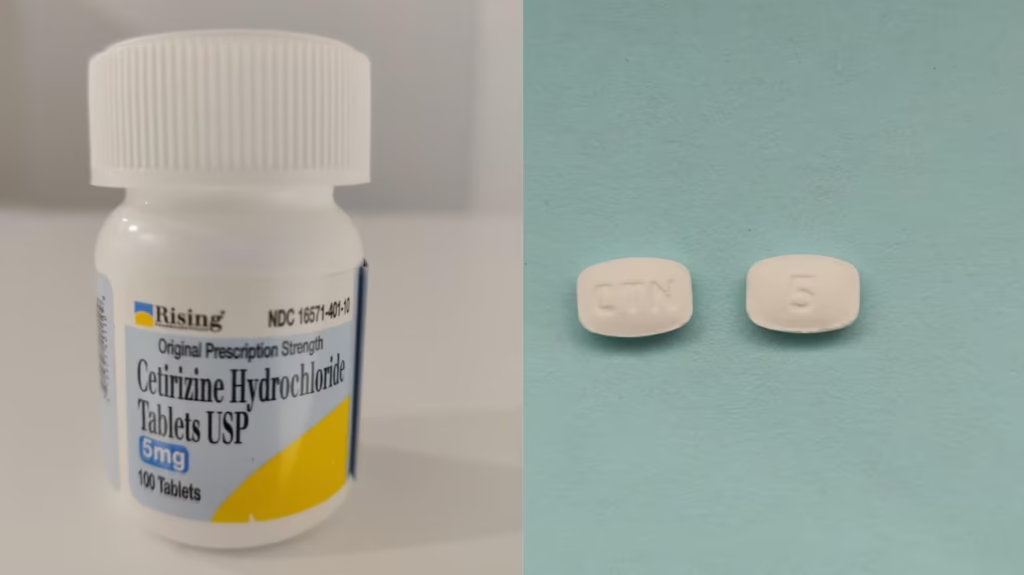
If you’re inspecting your own bottle, the imprint code alone doesn’t tell you whether a tablet is affected — the recall was triggered by visible red discoloration spots on the tablets, not by the imprint itself. So the most reliable check is still the lot number on the bottle label, not the appearance of an individual pill. Still, if you notice red or discolored specks on any tablets in your bottle, regardless of the imprint, it’s worth setting that bottle aside and following the steps below, even if the lot number doesn’t appear to match.
How Could Cross Contamination Happen?
The FDA’s announcement doesn’t spell out the exact root cause, but pharmaceutical cross contamination like this typically traces back to one of a few things:
- Shared manufacturing equipment. If the same production line or machinery is used for multiple drugs without a full changeover, trace residue from one product can end up in the next batch.
- Incomplete cleaning validation. Facilities are supposed to prove, through testing, that equipment is fully clean between drug runs. A gap in that process can let contamination slip through.
- A packaging or supply-chain mix-up. Occasionally, contamination happens further down the line, when raw materials or components are mishandled before final packaging.
- Quality control catching it late. In this case, it wasn’t lab testing that flagged the issue first, it was a pharmacy technician noticing tablets that looked slightly off during a routine count.
This is one of the reasons manufacturing contamination recalls tend to happen quietly and get caught before harm occurs. The checks built into the system, from in-house quality control to pharmacists physically inspecting tablets, are designed to catch exactly this kind of problem.
Why Ranitidine Contamination Is Genuinely Dangerous
If you have a sensitivity or allergy to ranitidine or related compounds, taking a contaminated cetirizine tablet could trigger a reaction that has nothing to do with your allergies and everything to do with anaphylaxis.
The FDA’s risk statement lists several possible reactions, including:
- Severe hypersensitivity reactions and anaphylaxis
- Dangerously low blood pressure (hypotension)
- Difficulty breathing (dyspnea) or swallowing
- Swelling of the throat and face
- Widespread itching (pruritus) and hives (urticaria)
- Loss of consciousness
Every one of those is classified as life-threatening. That’s a serious list for a drug most people buy off the shelf without a second thought.
If you or someone you’re with develops throat swelling, wheezing, difficulty breathing, or fainting after taking cetirizine, call emergency services immediately. Don’t wait to schedule a doctor’s appointment or an online consultation — those symptoms need urgent, in-person care right away.
The good news, as of the FDA’s latest update, is that no adverse events have been reported yet in connection with this recall. That’s reassuring, but it doesn’t mean the risk isn’t real — it means the recall caught the problem before widespread harm occurred.
Timeline of This Recall
- July 18, 2026 — Unique Pharmaceutical Laboratories voluntarily initiates the recall.
- July 20, 2026 — The FDA publishes the recall notice publicly.
- Current status — No adverse events or injuries have been reported to date.
A note on recall classification: at the time of writing, the FDA had not yet assigned this recall an official classification (Class I, II, or III), which indicates the severity level the agency assigns based on risk. We’ll update this article with the classification and the date it’s confirmed once the FDA publishes it in its enforcement report.
Which Cetirizine Lots Are Affected by This Recall
Not every bottle of cetirizine is part of this recall. This recall is limited to the 5 mg tablet strength in 100-count bottles under NDC 16571-401-10 — it doesn’t apply to other strengths, chewables, liquids, or dissolvable tablet formats. Within that specific product, four lots are involved, all carrying an expiration date of October 2028.
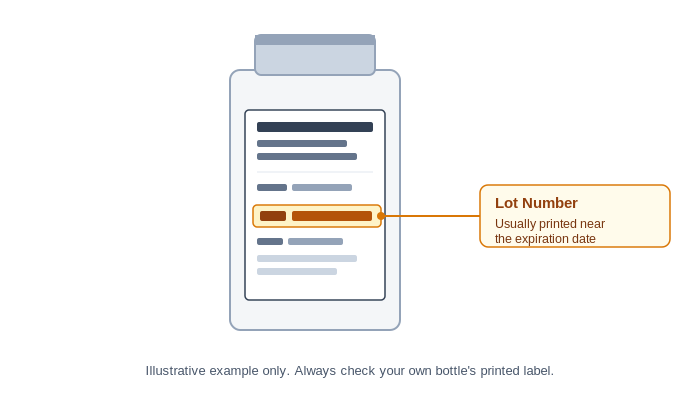
Not sure where to look? The lot number is typically printed right next to the expiration date on the bottle label, as shown below:
| Lot Number | Expiration Date | Recall Status |
|---|---|---|
| GY825029 | 10/2028 | Recalled |
| GY825030 | 10/2028 | Recalled |
| GY825031 | 10/2028 | Recalled |
| GY825032 | 10/2028 | Recalled |
Any lot number outside this list, on this same NDC, is not part of this recall.
You’ll find the lot number printed on the bottle label, usually near the expiration date. If your bottle matches any of these four lots, stop taking it and set it aside.
What to Do If Your Allergy Medication Is Recalled
If you have a bottle of generic cetirizine at home, take these steps today:
- Check the NDC number. Look for 16571-401-10 on the label.
- Check the lot number. Compare it against the four listed above.
- Look at the tablets themselves. Genuine tablets are small, white, oval, and film-coated. Any tablet with visible red or discolored spots should be treated as suspect, even if you’re unsure of the lot number.
- Stop using the product if the lot matches or the tablets look discolored, even if you haven’t noticed anything unusual otherwise.
- Don’t just throw it away yet. Contact Rising Pharma Holdings for return instructions at 1-844-874-7464, or by emailing [email protected] or [email protected].
- Talk to your doctor if you’ve taken tablets from an affected lot and experienced swelling, hives, breathing trouble, or dizziness, even mild symptoms.
- Report any reaction to the FDA’s MedWatch program, either online or by calling 1-800-332-1088.
If your bottle doesn’t match the affected lots, you’re fine to continue using it as directed. There’s no need to stop all cetirizine use out of caution — only the four lots listed above are involved.
Should You Stop Taking All Cetirizine?
No. This is an important distinction during any allergy medication cross contamination recall: checking the lot number is more useful than stopping all allergy medicine out of caution.
Only the four lots listed above, from this specific manufacturer and NDC, are affected. Cetirizine from other manufacturers, and brand-name Zyrtec, are not part of this recall. If your bottle doesn’t match the NDC and lot numbers above, there’s no reason to stop using it.
Can Children Take Unaffected Cetirizine?
Yes, as long as the product isn’t from one of the four recalled lots. Children’s cetirizine and pediatric formulations aren’t listed in this recall at all — it applies specifically to the 5 mg tablet product distributed by Rising Pharma Holdings. That said, if your child has taken tablets from an affected lot, or you’re simply unsure which product you have, it’s worth checking with your pediatrician before giving another dose.
A Quick Word on Generic Medications
I want to be clear about something, because I’ve had a few patients ask if this means generics are “less safe” than brand-name drugs. They’re not. Recalls like this happen across the industry, brand names included, and they exist specifically because quality control systems are designed to catch problems before they reach patients at scale.
What this recall really tells us is that the system worked as intended. A technician noticed a physical defect, testing confirmed contamination, and the company pulled the product voluntarily rather than waiting for regulators to force the issue. That’s the process functioning correctly, even though it’s unsettling to be on the receiving end of the news.
That said, it’s still worth building the habit of glancing at lot numbers whenever a recall makes headlines, especially for medications you or your children take regularly.
Related Topics Worth Reading
If this recall has you thinking more broadly about medication safety, these are worth exploring on our site: seasonal allergies and hay fever treatment, how antihistamines work, understanding FDA drug recalls, and recognizing the early signs of anaphylaxis.
How NFH Clinic Can Help
At NFH Clinic, we hear from people every week who are managing seasonal allergies, medication sensitivities, or unexplained reactions and aren’t sure whether what they’re feeling is normal or something to escalate. If you’ve taken a recalled cetirizine tablet and you’re experiencing symptoms, or you simply want guidance on switching to a safer allergy management plan, our online consultants are available to walk you through it.
You don’t need to wait for a scheduled doctor’s visit to get clarity on a recall like this. A quick online consultation can help you decide whether your symptoms need urgent care or whether you’re simply okay to switch medications and move on with your day.
Frequently Asked Questions
Is Zyrtec itself affected by this recall?
No. This recall affects a specific generic cetirizine product manufactured by Unique Pharmaceutical Laboratories and distributed by Rising Pharma Holdings, not brand-name Zyrtec.
What if I already took a tablet from a recalled lot and feel fine?
Most people affected by this recall likely won’t experience any reaction, especially if they don’t have a ranitidine sensitivity. Still, it’s worth monitoring for delayed symptoms like hives, swelling, or breathing changes over the next 24 to 48 hours, and reaching out to a doctor if anything feels off.
Can I just throw the bottle away?
It’s better to contact Rising Pharma Holdings first for return or disposal instructions, since recalled pharmaceutical products are sometimes handled differently than regular medication waste.
How do I know if my cetirizine is from a different, unaffected batch?
Check the lot number on your bottle against the four numbers listed in this article. If it doesn’t match, your product isn’t part of this recall.
Can I return the recalled medication to my pharmacy?
Your pharmacy may be able to accept the return or direct you to the manufacturer. Either way, contact Rising Pharma Holdings at 1-844-874-7464 for official return instructions rather than disposing of it yourself.
Why was ranitidine recalled in the first place?
Ranitidine, sold under brand names like Zantac, was withdrawn from the US market in 2020 after testing found it could develop unsafe levels of a probable carcinogen over time. It’s no longer manufactured or sold as an approved drug, which is part of why its presence in a cetirizine tablet is such an unusual and serious finding.
How common are medication cross contamination recalls?
They’re uncommon but not unheard of. Most recalls involve labeling errors, dosage inconsistencies, or microbial contamination. A cross contamination recall involving an entirely different active ingredient, like this one, is rarer and tends to draw more regulatory attention.
Can I switch to another allergy medicine immediately?
Yes. If you stop using a recalled lot, you can typically switch to a different cetirizine product, a different antihistamine, or your usual allergy treatment without any waiting period. If you’re unsure which option is best for you, a quick conversation with a pharmacist or an online consultant can help.
Is this recall worldwide or only in the United States?
Based on the FDA notice, this is a US nationwide recall managed by the American distributor, Rising Pharma Holdings. There’s no indication of an international recall tied to this specific announcement.
Do the tablet imprint codes tell me if my pills are affected?
Not on their own. Genuine tablets from this manufacturer are small, white, oval tablets, and different batches may carry different imprint codes. The recall was identified by visible red discoloration on the tablets, not by imprint code, so the lot number on your bottle is still the most reliable way to check whether your product is affected.
Sources
This article is based on the official public recall announcement and related regulatory resources:
- FDA Recall Notice — Unique Pharmaceutical Laboratories, Cetirizine Hydrochloride Tablets USP 5 mg
- FDA Enforcement Reports Database
- Rising Pharma Holdings Recall Announcement and Consumer Contact Information
- FDA MedWatch Adverse Event Reporting Program